

 效果预览
效果预览
 购买印刷品
购买印刷品 分享
分享 分享
分享
 详情
详情

 下载
下载
 相似作品
相似作品 X射线
X射线 幻灯片播放
幻灯片播放The quebec celebrations

 展开详情
展开详情




































从与原作比例一致的预设尺寸中进行选择。

您可以输入自定义尺寸,以适配特定的画框或空间。如果所选尺寸与原图比例不符,我们将通过裁剪作品或添加手绘元素来扩展画面。数字样稿将在制作开始前发送给您确认。
请注意,屏幕预览无法准确反映实际的裁剪或扩展效果,只有样稿才能真实呈现最终的构图。
虽然我们提供定制尺寸服务,但为了保留原作比例,建议您从预设列表中选择尺寸。
下单后,OriginalUniqueArt.com 团队将通过电子邮件联系客户获取具体要求,并提供效果预览图。


 玻璃选项仅适用于110厘米以下的尺寸。

The quebec celebrations
复制材质
复制品尺寸
-


最终总价
$ 575
艺术家简介
John Martin: Architect of the Sublime
John Martin (1789–1854) wasn’t merely a painter; he was an architect of the sublime, a visionary who conjured landscapes of immense scale and terrifying beauty. Born in Haydon Bridge, Northumberland, into a family steeped in artistic tradition – his father a fencing master and his brothers involved in heraldry and even arson – Martin's early life instilled within him a deep appreciation for both meticulous craft and dramatic storytelling. His apprenticeship with a china painter provided a foundational skill set, but it was the influence of Bonaface Musso, an Italian artist who taught him perspective and engraving techniques, that truly ignited his artistic fire. This formative period laid the groundwork for the monumental canvases and haunting prints that would define his career.Early Works and the Rise of a Romantic Vision
Martin’s early works, primarily watercolors depicting landscapes of the River Thames Valley, demonstrated an emerging talent for capturing atmospheric effects and conveying a sense of vastness. However, it was his foray into oil painting in 1811 that truly announced his arrival on the London art scene. His paintings immediately garnered attention, not just for their technical skill but for their unsettling power – scenes of biblical catastrophes, apocalyptic landscapes, and figures dwarfed by overwhelming natural forces. These early pieces were characterized by a deliberate obscurity, with tiny, almost lost human forms set against colossal backgrounds, creating an immediate sense of awe and dread. This technique, heavily influenced by the works of Claude Lorrain and the Baroque masters, established Martin as a key figure in the burgeoning Romantic movement. The Royal Academy initially rejected his submissions, but persistent efforts eventually secured him exhibition space, solidifying his position within the artistic community.The Power of Print: Engravings and Public Appeal
Martin’s fame wasn't solely built on canvas; it was significantly amplified by his engravings. He meticulously reproduced his own paintings, often with subtle variations and additions, creating a series of prints that captivated the public imagination. These weren’t mere copies; they were reinterpretations, imbued with an even greater sense of drama and mystery. Works like *The Deluge* (1837) and *The Fall of Nineveh* became instant sensations, selling in enormous quantities and establishing Martin as the most popular painter of his day. The accessibility of prints allowed a wider audience to experience his vision – a world dominated by colossal landscapes, biblical narratives, and the overwhelming power of nature. This success was even recognized by European royalty; the French Academy presented him with medals and honors, acknowledging his unique contribution to the art world.Major Themes and Influences
Martin’s work is profoundly shaped by a complex interplay of influences. The Baroque masters – particularly Claude Lorrain – provided him with a model for dramatic landscape composition, while Milton's *Paradise Lost* instilled within him a fascination with biblical narratives and the consequences of human transgression. The writings of Edmund Burke on the sublime—the experience of awe mixed with terror—were central to his artistic philosophy. He sought to evoke this feeling in his viewers, not through simple beauty but through the depiction of overwhelming scale, dramatic light and shadow, and a sense of impending doom. His paintings frequently depict scenes of destruction – floods, earthquakes, battles – reflecting a pessimistic view of humanity’s place within the universe. The influence of Gothic art is also evident in his use of dark colors, intricate details, and a pervasive atmosphere of foreboding.Legacy and Historical Significance
Despite initial critical acclaim, Martin faced considerable opposition from critics like John Ruskin, who dismissed his work as overly gloomy and lacking in moral substance. However, his influence on subsequent generations of artists is undeniable. His exploration of the sublime—the experience of awe mixed with terror—became a defining characteristic of Romanticism and continues to resonate today. Artists such as Caspar David Friedrich and J.M.W. Turner built upon Martin’s foundation, pushing the boundaries of landscape painting and exploring themes of nature's power and humanity’s vulnerability. John Martin remains a pivotal figure in art history, not just for his stunning visual achievements but for his profound exploration of the human condition within the vastness of the universe—a testament to the enduring power of the sublime.
amédée forestier
1854 - 1930 , France
艺术家简介
- Artistic Movement Or Style: Impressionism, Portraiture
- Artists Or Movements Influenced By This Artist:
- Post-Impressionism
- American Modernism
- Artists Who Influenced This Artist:
- William Merritt Chase
- Jean-Léon Gérôme
- Date Of Birth: January 12, 1856
- Date Of Death: November 3, 1925
- Full Name: John Singer Sargent
- Nationality: American
- Notable Artworks:
- Madame X
- Carnation Women
- The Daughters of Edward Darley Boit
- Place Of Birth: Florence, Italy
相关文章

配送与退货
APS 提供全球范围内的艺术品运输,具备博物馆级别的照护、全程追踪,以及 30 天退款保证。从报关支持到 Priority Production,信赖透明的服务、安全的包装,以及为收藏家、设计师和画廊提供的可靠交付。
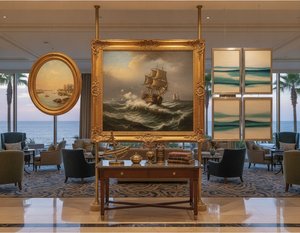
Premium Nautical & Maritime Art: High-Quality Seascape Reproductions for Luxury Hotel and Professional Interiors
Elevate professional spaces with premium nautical & maritime art. OriginalUniqueArt.com offers high-quality seascape reproductions, hand-painted oils, and custom murals for hotels and hospitality. Reliable bulk ordering, multiple sizes, global shipping, and VAT invoices for designers.
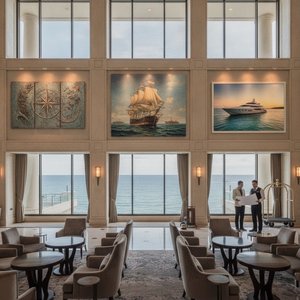
Premium Nautical Artworks for Professional Interiors: A Procurement Guide to Maritime Reproductions for Hotels & Large-Scale Projects
Elevate hospitality interiors with premium nautical art reproductions from APS. We provide professional procurement of hand-painted maritime oil paintings, scalable multi-panel layouts, and custom sizing for hotels & corporate spaces. Reliable global shipping and bulk order efficiency.

The Enduring Legacy of Oil on Canvas: Technique, History & Aesthetic Impact
Explore the rich history & techniques of oil painting – from Renaissance masters to Impressionism. Discover pigments, layering methods, and why this timeless medium endures. Expert insights for artists & art enthusiasts.
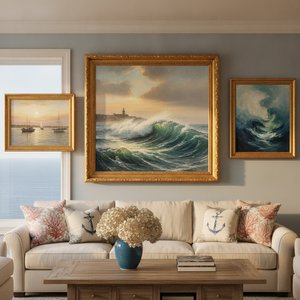
Bring the Ocean Home: Captivating Maritime Paintings to Transform Your Space with Timeless Elegance
Transform your home with breathtaking maritime oil paintings. From serene seascapes to dramatic nautical scenes, discover hand-painted reproductions that bring the ocean's soul to your space. Expertly crafted for collectors seeking timeless elegance and coastal tranquility.

