切换至版画销售渠道
 展开全文
展开全文







































 对于任何边长超过 105 厘米(约 41 英寸)的艺术品或复制品,画框将以拆解后的组件形式发货。此方法可确保安全送达并防止运输过程中的损坏。


A Visionary Echo of Byzantium in Florentine Faith
Ambrogio Lorenzetti’s “Altarpiece of St Proculus,” completed around 1332, stands as a remarkable testament to the burgeoning artistic spirit of Florence during the Trecento period. More than just a depiction of religious iconography—the Virgin Mary cradling Christ flanked by Saint Nicholas and Saint Proculus—it embodies a synthesis of Byzantine elegance with nascent naturalism, reflecting the broader intellectual currents reshaping Europe at the time.
- Subject Matter: The central panel portrays the Madonna and Child, a motif deeply rooted in Christian tradition symbolizing divine motherhood and spiritual purity. Alongside them stand Saint Nicholas of Bari and St Proculus, revered saints known for their piety and miraculous healing powers—figures prominent within Florentine ecclesiastical circles.
- Style & Technique: Lorenzetti’s masterful application of tempera on wood demonstrates a meticulous attention to detail and textural nuance. The fresco technique employed showcases the artist's understanding of layering pigments to achieve luminous effects, characteristic of Byzantine art but increasingly adopted by Florentine painters seeking greater realism.
- Historical Context: Florence was experiencing a period of significant artistic innovation following Giotto’s groundbreaking advancements in portraying human emotion and anatomy. Lorenzetti’s work aligns with this trend, signaling a move away from stylized representations toward more expressive depictions of sacred subjects—a pivotal step towards the Renaissance.
- Symbolism: The composition is laden with symbolic significance. The arched doorway framing the saints represents divine grace and access to holiness. The gestures of Mary and Christ convey compassion and serenity, reinforcing the spiritual message conveyed by the altarpiece.
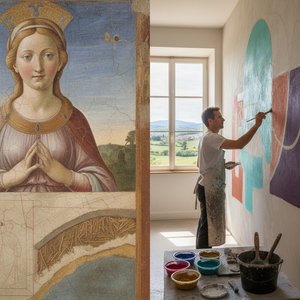
The image itself—captured in a photograph—reveals a scene bathed in muted hues, hinting at the passage of time and the fragility of artistic preservation. Yet, it retains an undeniable aura of solemn beauty, transporting viewers back to a moment when faith and artistry converged to create a masterpiece that continues to inspire contemplation.
Further research into Lorenzetti’s oeuvre reveals his collaboration with Taddeo Gaddi—a fellow Florentine painter who profoundly influenced Giotto's style—and the broader artistic landscape of Siena during the same era. Examining similar works like “Good & Bad Government” illuminates Lorenzetti’s commitment to conveying moral lessons through visual storytelling, cementing his place as a visionary artist whose legacy resonates across centuries.
Consider commissioning a high-quality reproduction of “Altarpiece of St Proculus” – a tangible connection to Florentine artistic heritage and an opportunity to adorn your home with a piece that embodies timeless beauty and spiritual contemplation.
常见问题与解答
"Altarpiece of St Proculus" 是 Trecento Florentine Style 运动中著名的艺术作品吗?
在馆藏的 Trecento Florentine Style 作品中,"Altarpiece of St Proculus" 的流行程度被记录为 Iconic。
建议将"Altarpiece of St Proculus"用于何处及何种用途?
针对 安布罗吉奥·洛伦塞蒂 的《Altarpiece of St Proculus》,我们为您提供以下两项建议:用途为 (Accent),适宜空间为 (Living Room)。
安布罗吉奥·洛伦塞蒂 的《Altarpiece of St Proculus》 的创作媒介和创作日期是什么?
安布罗吉奥·洛伦塞蒂 的《Altarpiece of St Proculus》 的创作媒介为 Tempera,创作于 1332 年。
 实景预览
实景预览
 分享
分享 分享
分享
 详情
详情 指南
指南

 下载作品
下载作品
 相似作品
相似作品 X射线
X射线 幻灯片播放
幻灯片播放 问答
问答 统计数据
统计数据