切换至版画销售渠道
 展开全文
展开全文







































 对于任何边长超过 105 厘米(约 41 英寸)的艺术品或复制品,画框将以拆解后的组件形式发货。此方法可确保安全送达并防止运输过程中的损坏。


Alphonse Mucha: The Enchanting Symbolism of Nude
Alphonse Maria Mucha stands as one of the most recognizable figures of Art Nouveau, an artistic movement that flourished between 1890 and 1910 across Europe. Born in Brno, Czech Republic, in 1860, Mucha rejected the rigid academic traditions of his time, forging a path toward a uniquely expressive style rooted in observation and imagination.
His artistic journey began with studies at Prague’s Academy of Fine Arts, where he quickly recognized the limitations of conventional methods. Driven by an innate desire for innovation, he relocated to Paris in 1887, establishing himself amidst a vibrant intellectual milieu and immersing himself in the burgeoning Art Nouveau aesthetic.
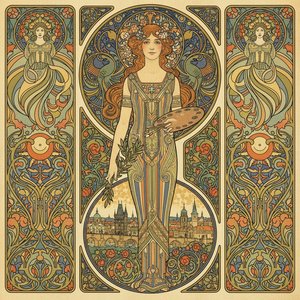
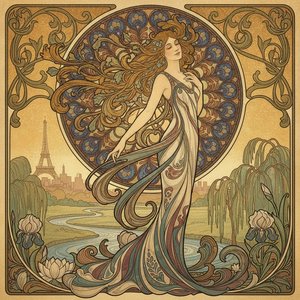
Mucha's signature style is instantly identifiable: flowing lines reminiscent of plant stems and vines dominate his compositions, creating a mesmerizing sense of movement. Organic forms intertwine seamlessly with geometric shapes—particularly spirals—reflecting the influence of mathematicians like Ernst Haeckel and embodying the belief in harmony between nature and science that characterized the era.
The painting “Nude,” often referred to as “La Femme Nue,” exemplifies Mucha’s masterful technique. Employing tempera on canvas, he achieved remarkable luminosity and textural depth through meticulous layering of pigments. The artist skillfully utilized glazing—applying thin translucent layers over opaque colors—to build up subtle gradations of tone and color, capturing the ethereal beauty of the female nude with unparalleled sensitivity.
Beyond its aesthetic merits, “Nude” is laden with symbolic significance. Mucha’s depictions of women frequently explore themes of femininity, purity, and spiritual awakening. The veiled face—a recurring motif in his oeuvre—represents modesty and contemplation, inviting viewers to engage in a dialogue about inner beauty and transcendence.
Historically situated within the broader context of Art Nouveau's fascination with mythology and folklore, “Nude” draws inspiration from classical ideals of feminine grace. It echoes the artistic explorations undertaken by Gustave Moreau and Piero Dorazio, artists who similarly sought to elevate art beyond mere decorative function into a vehicle for conveying profound emotional and intellectual ideas.
The painting’s impact extends far beyond its time, continuing to inspire contemporary artists and designers. Its elegant simplicity combined with evocative symbolism ensures that “Nude” remains a timeless masterpiece—a testament to Mucha's visionary artistry and the enduring allure of Art Nouveau’s enchanting vision of beauty.
常见问题与解答
建议将 莫奈 (Mò Nèi) 的《Nude》 悬挂在哪个空间?
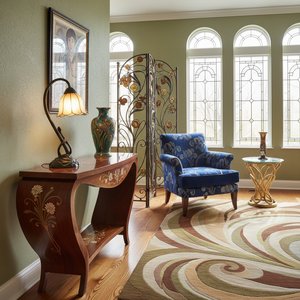
莫奈 (Mò Nèi) 的《Nude》 的推荐陈列空间为 Living Room。当然,该建议也可根据您的室内装饰进行灵活调整。
"Nude" 的色彩之间是如何相互关联的?
莫奈 (Mò Nèi) 的《Nude》 的色彩呈现出一种 Unified Palette 的和谐感。这种和谐感描述了色彩之间的相互关系。
莫奈 (Mò Nèi) 的《Nude》 中呈现了哪些主题?
莫奈 (Mò Nèi) 的《Nude》 描绘了:nude woman, bedtime veil, art nouveau style, feminine idealization, organic forms, decorative elements, parisian painting。
 实景预览
实景预览
 分享
分享 分享
分享
 详情
详情 指南
指南

 下载作品
下载作品
 相似作品
相似作品 X射线
X射线 幻灯片播放
幻灯片播放 问答
问答 统计数据
统计数据