
 效果预览
效果预览
 购买印刷品
购买印刷品 分享
分享 分享
分享
 详情
详情

 下载
下载
 相似作品
相似作品 X射线
X射线 幻灯片播放
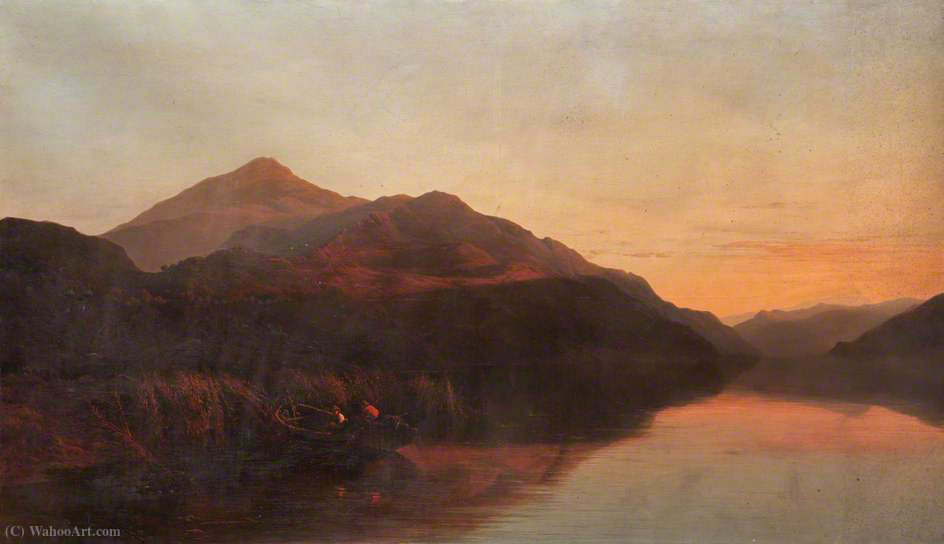
幻灯片播放Landscape
 展开详情
展开详情
购买高分辨率增强版数字图像,其品质远超在线预览。
每一份文件都由我们的内部专家使用先进工具与专业的后期润色技术精心打造。我们确保每一张图像都具备卓越的清晰度、精准的色彩还原度以及细腻的细节表现。
最终文件将在 72 小时内通过电子邮件交付,并针对专业、编辑及印刷用途进行了优化。其品质与顶级设计工作室、出版社和画廊所信赖的标准完全一致。
每份数字图像订单均包含
专业数字图像交付,品质保障
选择 OriginalUniqueArt.com,您获得的不仅仅是一张图像——您收到的是经过专业级增强、精雕细琢的数字艺术作品,并享有满意保证。以下是您的订单中自动包含的所有内容:

邮件快速送达
您的高分辨率数字图像文件将在下单后 72 小时内通过电子邮件发送给您 —— 即可立即使用。

AI 增强型数字文件
您的艺术品经过专业优化,结合先进的 AI 技术与人工修饰,确保呈现极致的细节、清晰度与色彩准确度。

终身免费重发服务
不小心删除了文件或找不到了?没关系——我们将随时为您免费重发。

无需进口费用,始终如一
即刻拥有您的艺术作品,无需支付任何关税、税费或运费——数字下载始终免税。

色彩精准保证
我们通过专业工具与色彩管理技术,确保您的数字图像尽可能真实地还原原作色彩。

60天满意保证
如果您对所购买的数字图像不满意,我们将在60天内为您进行修改或退还100%的款项——无需任何解释。

100% 退款保证
如果不满意?在收到数字文件后的60天内,我们为您提供全额退款——无需任何理由。

批量订单优惠
购买 3 张图片可享 10% 折扣 - 购买 5 张可享 15% 折扣 - 购买 10+ 张可享 20% 折扣。非常适合创意项目、画廊和机构使用。
艺术家简介
Alfred Walter Williams: A Victorian Master of Atmospheric Landscapes
Alfred Walter Williams (18 July 1824 – 16 December 1905) emerged from the fertile artistic lineage of the Williams family, a group renowned for their evocative depictions of the English countryside during the Victorian era. Born in Southwark, London—one of identical twins tragically lost shortly after birth—Williams’ path to becoming a respected landscape painter was largely shaped by his father, Edward Williams, a successful artist who instilled in him the fundamentals of technique and a deep appreciation for capturing the nuances of light and atmosphere. Unlike many artists of his time, Williams received no formal artistic training beyond his father's guidance, yet he developed a distinctive style that would firmly establish him within the celebrated “Williams School of Painters.”Family Legacy and The Barnes School
Williams’ family history is inextricably linked to art. His father, Edward, was a prominent figure in the London art scene, and his siblings—Charles, Henry John Boddington, George Augustus Williams, Arthur Gilbert, and Sidney Richard Percy—all pursued careers as landscape artists. This familial connection fostered a shared artistic environment and a collective pursuit of capturing the beauty of Britain’s diverse landscapes. The family's residence near Barnes, London, became synonymous with this artistic community, earning them the moniker “the Barnes School.” Situated in a rapidly developing area on the south side of the Thames, Barnes offered a unique blend of rural charm and urban proximity, providing an ideal setting for these artists to work and exchange ideas. The large coach house within their home was transformed into a family studio, a testament to their dedication and a lasting symbol of this artistic hub.Artistic Style and Notable Works
Williams’ paintings are characterized by a masterful command of light, color, and atmosphere—elements that define the hallmark of the Williams School. His works frequently depict scenes of the Thames River, rolling Welsh moors, and quiet English villages, often imbued with a sense of melancholy and romanticism. He skillfully employed loose brushwork and subtle tonal variations to create an illusion of depth and movement, drawing viewers into the heart of his landscapes. Unlike some of his contemporaries who focused on detailed representation, Williams prioritized capturing the *feeling* of a place—the dampness of the air, the shifting shadows, and the overall mood of the scene. Notable works include depictions of misty riverbanks, dramatic mountain vistas, and pastoral scenes populated by grazing cattle, all rendered with a quiet dignity and an understated elegance. His paintings were exhibited regularly at prestigious venues such as the Royal Academy, the Society of British Artists, and various London galleries, solidifying his reputation within the art world.Life and Career Developments
Williams’ career spanned several decades, marked by consistent artistic growth and recognition. Initially exhibiting at the Royal Academy from 1843 until 1890, he continued to showcase his work with other organizations throughout his life. He moved from Cromer Street in London to 32 Castelnau, Barnes, in 1846, establishing a family studio within the spacious coach house. This move coincided with an increase in the family’s financial stability, allowing them to pursue their artistic endeavors more freely. In 1888, he married Ann Hutchence (née Thornton) and became stepfather to Rose Priscilla and Ada Louisa Hutchence. Later, he relocated to 40 Croydon Road, Reigate, near his brother Arthur Gilbert, in 1895. Williams’ artistic output continued until his death in Croydon in 1905, leaving behind a substantial body of work that continues to be admired for its atmospheric beauty and quiet emotional resonance.Legacy and Recognition
Alfred Walter Williams' contribution to Victorian landscape painting is significant. As a key member of the Williams School of Painters, he helped establish a distinct artistic tradition characterized by a focus on capturing the essence of the English countryside. His works are now held in prominent museums across the United Kingdom, including the Victoria and Albert Museum, the National Museums Liverpool, and the Sunderland Museum and Winter Gardens, ensuring that his art continues to be appreciated by generations to come. His paintings remain valuable examples of 19th-century British watercolor art, offering a glimpse into the artistic sensibilities and cultural values of the Victorian era. His legacy endures as a testament to the power of observation, skill, and a deep connection to the natural world.
Alfred Walter Williams
1824 - 1905 , United Kingdom
基本信息
- Artistic Movement Or Style: Victorian Landscape
- Artists Or Movements Influenced By This Artist: ['Williams School of Painters']
- Artists Who Influenced This Artist: ['Edward Williams']
- Date Of Birth: 18 July 1824
- Date Of Death: 1905
- Full Name: Alfred Walter Williams
- Nationality: British
- Notable Artworks:
- Scenes of the Thames
- Welsh Moor Landscapes
- Place Of Birth: Southwark, UK

