切换至版画销售渠道
 展开全文
展开全文







































 对于任何边长超过 105 厘米(约 41 英寸)的艺术品或复制品,画框将以拆解后的组件形式发货。此方法可确保安全送达并防止运输过程中的损坏。


A Moment Frozen in Time: Alfred Stieglitz’s “Katherine” (1905)
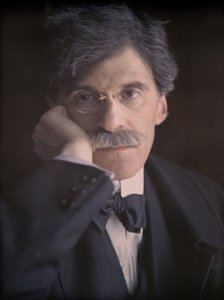
Alfred Stieglitz's "Katherine," created in 1905, is more than just a photograph; it’s a poignant snapshot of early 20th-century life and a testament to Stieglitz’s groundbreaking vision. This intimate portrait, measuring 20 x 17 cm, captures a young girl – Katherine – lost in the pages of a book, her gaze directed towards the viewer with an almost unsettling directness. The stark black and white tones amplify the image's inherent drama, drawing attention to the textures of her dress and the delicate curve of her hand holding the volume. The photograph’s power resides not just in its technical execution – a hallmark of Stieglitz’s meticulous approach – but also in the palpable sense of nostalgia it evokes, transporting us back to a time when childhood innocence seemed particularly vulnerable.
Pictorialism and the Rise of Photography as Art
- Historical Context: “Katherine” was produced during a pivotal moment for photography. Stieglitz, along with other artists like Edward Steichen, was instrumental in establishing photography as a legitimate art form, challenging the prevailing view that it was merely a mechanical process for documenting reality.
- Pictorialist Movement: Stieglitz’s work aligns perfectly with the Pictorialist movement, which sought to emulate the expressive qualities of painting through careful composition, soft focus, and manipulated printing techniques. This is evident in the photograph's gentle tones and deliberate blurring, creating an almost dreamlike quality.
- Stieglitz’s Influence: Stieglitz’s influence extended beyond simply producing beautiful images; he actively promoted photography as a serious artistic medium through exhibitions like the Photo-Secession group, laying the groundwork for future generations of photographers.
Symbolism and Narrative within the Frame
The seemingly simple composition of “Katherine” is rich with symbolic potential. The girl’s intense gaze suggests a contemplative spirit, perhaps hinting at the anxieties and uncertainties of the era. The book she holds represents knowledge, imagination, and escape – themes frequently explored in Stieglitz's work. Notably, the inclusion of the knife nearby introduces an element of unease and ambiguity. While its precise meaning remains open to interpretation, it could symbolize vulnerability, danger, or even the creative process itself—a tool for shaping ideas and realities. The partially visible figure on the left adds another layer of complexity, suggesting a hidden narrative or perhaps representing the societal constraints placed upon young women at the time.
Technique and Reproduction – A Legacy Preserved
OriginalUniqueArt’s hand-painted reproductions meticulously recreate Stieglitz's original vision. Utilizing archival quality materials and employing skilled artisans, each reproduction captures the nuances of light, shadow, and texture that define this iconic image. The process begins with a high-resolution scan of the original photograph, followed by painstaking manual painting to faithfully reproduce every detail. This ensures that the emotional impact and artistic merit of “Katherine” are preserved for generations to come. The resulting reproduction offers an unparalleled opportunity to own a piece of photographic history – a tangible connection to one of the most influential figures in the art world.
常见问题与解答
哪里可以找到与 阿尔弗雷德·斯蒂格利茨 的《Katherine (1905)》 风格相似的艺术品?
与“Katherine (1905)”相似的作品已列在艺术品的 相似作品 页面中。
《Katherine (1905)》这一Pictorialist Photography风格的作品传达了怎样的情感基调?
"Katherine (1905)" 在 Pictorialist Photography 运动中蕴含着 Nostalgic 的情感基调。
哪家博物馆收藏了《Katherine (1905)》的原作?
阿尔弗雷德·斯蒂格利茨 的《Katherine (1905)》 的原作收藏于 阿蒙·卡特美国艺术博物馆, 沃斯堡, 美国。通过复制品,您也可以在居家环境中欣赏这部杰作。
 分享
分享 分享
分享
 详情
详情 指南
指南

 下载作品
下载作品
 相似作品
相似作品 幻灯片播放
幻灯片播放 Q&A
Q&A 统计数据
统计数据