切换至版画销售渠道
 展开全文
展开全文







































 对于任何边长超过 105 厘米(约 41 英寸)的艺术品或复制品,画框将以拆解后的组件形式发货。此方法可确保安全送达并防止运输过程中的损坏。


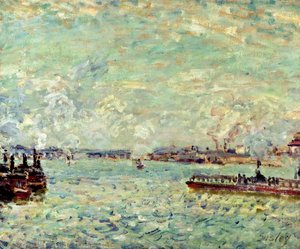
A Moment Frozen in Light: Alfred Sisley's The Moret Bridge
- Subject Matter
- Style and Technique
- Historical Context & Impressionism
- Symbolic Resonance & Emotional Impact
Decoding Impressionist Technique
At the heart of The Moret Bridge lies Sisley's dedication to Impressionist technique. Notice the deliberate application of loose, visible brushstrokes; this isn’t an attempt at photographic realism but rather an exploration of how light and color interact. The artist expertly captures the play of sunlight on the water, creating shimmering reflections that dance across the surface. Similarly, he subtly renders the textures of the buildings – the rough stone, the weathered wood – through layered paint application, giving a tangible sense of materiality. This technique, characteristic of Impressionism, isn't simply about what is seen; it’s about *how* it is perceived – the immediate sensory experience of light and color. The flattened perspective, a hallmark of the movement, further enhances this immersive quality, drawing the viewer into the scene as if they were standing on the riverbank themselves.A Window into 19th-Century France
Painted in 1892, The Moret Bridge offers a poignant glimpse into late 19th-century French life. Sisley’s focus on landscapes and everyday scenes – bridges, rivers, small towns – reflects a broader trend within the Impressionist movement: a desire to move away from grand historical or mythological subjects and instead capture the beauty of ordinary moments. The painting speaks to a time when artists were increasingly interested in exploring the effects of light and atmosphere, rejecting traditional academic approaches to representation. Sisley’s work aligns with his contemporaries, Monet, Renoir, and Pissarro, all of whom sought to revolutionize art by prioritizing subjective perception over objective reality.Beyond the Surface: Symbolism and Emotional Resonance
The Moret Bridge transcends a simple landscape painting; it evokes a powerful sense of nostalgia, tranquility, and perhaps even a wistful contemplation of rural life. The bridge itself – a symbol of connection and transition – subtly reinforces this feeling. The scene’s stillness and the soft light contribute to an atmosphere of peace and serenity, inviting the viewer to escape the bustle of modern life and immerse themselves in a moment of quiet beauty. Sisley's ability to transform a seemingly mundane setting into a captivating work of art speaks to his profound understanding of human emotion and his remarkable artistic skill. Considered alongside related works like *The Loing Flowing under the Moret Bridge* and *The Moret Bridge and Mills under Snow*, The Moret Bridge solidifies Sisley’s place as a pivotal figure in the Impressionist movement, demonstrating his enduring ability to capture the essence of light, color, and the beauty of the natural world.常见问题与解答
阿尔弗雷德·西斯莱 还有哪些别名?
阿尔弗雷德·西斯莱 也以 西斯莱, 阿尔弗雷德·西斯利 等其他名称为人所知。
阿尔弗雷德·西斯莱 的《The Moret Bridge》展现了怎样的色彩和谐感?
阿尔弗雷德·西斯莱 的《The Moret Bridge》 的色彩呈现出一种 Discordant Palette 的和谐感。这种和谐感描述了色彩之间的相互关系。
阿尔弗雷德·西斯莱 的作品《The Moret Bridge》知名度如何?
阿尔弗雷德·西斯莱 的《The Moret Bridge》 的知名度处于 Recognized 水平。这一分类反映了该作品被广泛认可的程度。
 实景预览
实景预览
 分享
分享 分享
分享
 详情
详情 指南
指南

 下载作品
下载作品
 相似作品
相似作品 X射线
X射线 幻灯片播放
幻灯片播放 Q&A
Q&A 统计数据
统计数据