

 效果预览
效果预览
 购买手绘画作
 分享
分享 分享
分享
 详情
详情

 下载
下载
 相似作品
相似作品 X射线
X射线 幻灯片播放
幻灯片播放Drouth Stricken Area
 Oil On Canvas
- WallArt
- Contemporary Realism
 1934
1934- 19th Century
 107.0 x 76.0 cm
 达拉斯艺术博物馆
 展开详情
展开详情




P118B $10

P118H $10

P118W $10

P438Z $10

P508JH $12

P508YH $12

P805H $10

P805Z $10

P919BZ $10

P919G $10

P919XJ $10

P959ZH $10

P968JZ $12

W106C $8

W218G $10

W218JH $8

W218Y $10

W307PJ $10

W316G $10

W316PJ $8

W316Y $10

W398PJ $8

W4111J $10

W500HY $15

W500JH $15

W692G $12

W849H $8

W940BG $15

W953PJ $8




从与原作比例一致的预设尺寸中进行选择。

您可以输入自定义尺寸,以适配特定的画框或空间。如果您选择的尺寸与原图比例不符,我们将对作品进行裁剪,或通过镜像填充/纯色填充边缘的方式来扩展图像。在开始制作之前,我们会向您发送一份数字效果图供您确认。
请注意,屏幕上的预览并不能反映实际的裁剪或扩展效果。只有效果图才能准确展示最终的构图。
虽然我们提供定制尺寸,但为了保持原图比例,我们建议您从预设列表中选择尺寸。


 玻璃选项仅适用于110厘米以下的尺寸。

Drouth Stricken Area
艺术微喷/版画
复制品尺寸
-


最终总价
$ 80
Alexandre Hogue’s “Drouth Stricken Area”: A Testament to Resilience in the American Dust Bowl
Alexandre Hogue's "Drouth Stricken Area," painted in 1934, is more than just a depiction of a desolate landscape; it’s a poignant and deeply affecting record of an era – the harrowing years of the Dust Bowl. Measuring 107 x 76 cm, this oil on canvas offers a starkly beautiful portrayal of survival against overwhelming odds, solidifying Hogue's place as a visionary chronicler of American realism.
A Landscape Forged by Despair and Determination
The painting immediately commands attention with its central figure: a weathered windmill, standing tall yet vulnerable amidst the vast expanse of a barren field. This iconic image speaks directly to the plight of farmers struggling against relentless dust storms that choked the land and shattered livelihoods. The color palette – dominated by ochres, browns, and grays – perfectly captures the oppressive atmosphere of drought and decay. Scattered throughout this desolate scene are essential elements of rural life: two birds perched on a fence post, symbolizing fragile hope; cows and horses, representing the livestock upon which many families depended; and figures of people, adding a human element to the overwhelming natural forces.
Technique and Style – The Realist Vision of Alexandre Hogue
Hogue’s artistic style is firmly rooted in American realism. His meticulous brushwork and attention to detail are evident in the rendering of the rough textures of the soil, the weathered wood of the windmill, and the individual features of the animals. The composition itself is carefully constructed, drawing the viewer's eye towards the central subject while simultaneously conveying a sense of scale and isolation. His training at Minneapolis College of Art and Design, combined with his early work as an illustrator for the Dallas Morning News, honed his skills in capturing light and shadow, contributing to the painting’s powerful emotional impact. The use of impasto – thick layers of paint – adds further texture and depth, enhancing the sense of physicality within the scene.
Symbolism and Historical Context: Echoes of the Dust Bowl
"Drouth Stricken Area" is inextricably linked to the historical context of the 1930s Dust Bowl. This period, marked by severe drought, unsustainable farming practices, and devastating dust storms, profoundly impacted the American Midwest. Hogue’s painting serves as a visual testament to this hardship, reflecting the economic and psychological toll it took on families who lost their farms and livelihoods. The lone figures within the scene represent the resilience of the human spirit in the face of unimaginable adversity – a quiet dignity amidst devastation. The artist's mother's influence, emphasizing a connection with nature and respect for the earth, is subtly reflected in the painting’s core message.
Emotional Impact and Artistic Legacy
Ultimately, “Drouth Stricken Area” transcends its historical context to offer a timeless meditation on humanity's relationship with the environment. It evokes feelings of melancholy, empathy, and awe at the power of nature. This painting is a significant work in Hogue’s oeuvre and a powerful example of American realist art. A hand-painted reproduction offers an opportunity to own a piece of this important historical narrative and appreciate Hogue's masterful skill and profound vision.
艺术家简介
Alexandre Hogue: A Visionary of the Dust Bowl Landscape
Alexandre Hogue (1898-1994) stands as a pivotal figure in American realist painting, particularly renowned for his unflinching depictions of the devastation wrought by the Dust Bowl era. Born in Memphis, Missouri, he possessed an innate connection to the natural world instilled by his mother—a woman who profoundly shaped his artistic worldview with the simple yet powerful mantra: “...conjured up visions of a great female figure under the ground everywhere- so i would tread easy on the ground.” This formative influence permeated his oeuvre, informing his exploration of themes like environmental responsibility and the human condition’s relationship to the forces of nature. Hogue's artistic journey began with formal training at Minneapolis College of Art and Design before relocating to Dallas in 1925 where he established himself as an illustrator for the Dallas Morning News. Recognizing the transformative potential of European art education, he embarked on a formative trip to New York City in 1921, immersing himself in museums and honing his skills alongside prominent calligraphy artists. His artistic sensibilities were further refined through collaborations with advertising firms and continued observation of the Southwest landscape. The Dallas Nine—a collective of influential Southwestern painters—recognized Hogue’s talent early on, cementing his place within a movement dedicated to capturing the stark realities of rural America during the Great Depression. He achieved particular acclaim for his monumental canvases portraying desolate Dust Bowl landscapes—images imbued with palpable emotion and conveying both the grandeur and fragility of the American frontier. Notable works include “Dust Bowl” and “Drouth Stricken Area,” which exemplify Hogue’s masterful technique – characterized by meticulous detail, subdued color palettes, and a deliberate emphasis on textural qualities that mirrored the ravaged earth itself. Throughout his prolific career spanning from 1931 to 1963, Hogue served as Head of Art Department at Texas State College for Women and subsequently at Hockaday Junior College, nurturing generations of aspiring artists. His legacy extended beyond teaching; he founded the Alexandre Hogue Gallery in Tulsa, Oklahoma—a testament to his enduring influence on the artistic landscape of the region. He remained a resident of Tulsa until his passing in 1994, leaving behind an impressive body of work that continues to inspire contemplation and appreciation for the beauty found amidst hardship. His artistic output reflects not only technical prowess but also a deep philosophical engagement with the environment—a conviction rooted in his mother’s guiding principle. Hogue's paintings serve as poignant reminders of humanity's vulnerability before the forces of nature, urging viewers to consider our responsibilities toward preserving the planet's delicate ecosystems. Alexandre Hogue remains an important artist for understanding the visual representation of the Dust Bowl era and its lasting impact on American art history.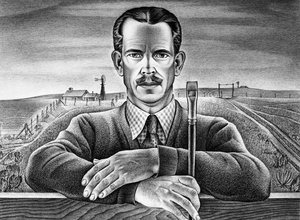
Alexandre Hogue
1898 - 1994 , United States of America
艺术家简介
- Artistic Movement Or Style: Dallas Nine; Realist
- Artists Or Movements Influenced By This Artist: ['Regionalism art']
- Artists Who Influenced This Artist: ['Charles Franklin Reaugh']
- Date Of Birth: February 22, 1898
- Date Of Death: July 22, 1994
- Full Name: Alexandre Hogue
- Nationality: American
- Notable Artworks:
- Young Girl in Purple
- Dust Bowl
- Drouth Stricken Area
- Place Of Birth: Memphis, United States
相关文章

American Realism's Defining Works: 10 Masterpieces for Your Home
Explore 10 defining American Realism masterpieces – Hopper, Homer & more. Discover the stories behind these iconic paintings and bring timeless art to your home with OriginalUniqueArt's museum-quality reproductions. Explore the full collection online.

The Unvarnished Truth: A Cultural Journey Through the Soul of American Realism
Explore the profound beauty of American Realism. From the Ashcan School's urban grit to intimate portraits, discover how artists captured the authentic soul of a nation through unvarnished truth and masterful observation.
二十世纪初美国现实主义绘画:社会批判与艺术表现的崛起
深入探索二十世纪初美国现实主义绘画的社会批判与艺术创新。了解“八人”、“灰罐派”等先驱运动,以及大萧条时期对工人阶级生活的深刻描绘。OriginalUniqueArt提供高品质油画复制、定制服务和专业艺术咨询。
American Realism: Capturing the Raw Soul of a Nation Through the Lens of Art History
Explore the profound depth of American Realism. From the gritty Ashcan School to poignant social landscapes, discover how masters captured the raw soul of a nation through evocative oil paintings and timeless art history.
Benjamin Shahn: Social Realism & the Poetics of American Identity
Explore the powerful social realism of Benjamin Shahn (1898-1969). Discover his iconic murals, poignant Dust Bowl paintings & unique synthesis of Jewish identity and American Modernism. Learn about this influential artist's legacy.

