切换至版画销售渠道
 展开全文
展开全文







































 对于任何边长超过 105 厘米(约 41 英寸)的艺术品或复制品,画框将以拆解后的组件形式发货。此方法可确保安全送达并防止运输过程中的损坏。


The Enigmatic Portrait of Fanny Clapp
Alexandre Cabanel’s “Portrait of Miss Fanny Clapp,” painted in 1881, is more than a simple likeness; it's a meticulously crafted distillation of the academic ideals that defined French art during the Second Empire. The painting immediately draws the eye with its serene composure and the subtle elegance of its subject, yet beneath this surface lies a complex interplay of light, shadow, and symbolic detail, inviting contemplation long after the initial viewing. It’s a testament to Cabanel's mastery of capturing not just appearance, but also an aura of refined beauty – a hallmark of his most celebrated works.
Yale University Art Gallery
A Masterclass in Academic Technique
Cabanel’s approach is rooted firmly in the traditions of the École des Beaux-Arts, a school that prioritized anatomical accuracy, precise rendering, and a deep understanding of classical art. “Portrait of Miss Fanny Clapp” exemplifies this commitment to realism, achieved through painstaking attention to detail. Note the incredibly smooth transitions between light and shadow – a technique known as *sfumato*, subtly employed to create an illusion of volume and depth. The delicate modeling of her dress, the intricate folds of her lace, and the soft texture of her skin are all rendered with remarkable precision. The artist’s brushstrokes are almost invisible, seamlessly blending together to produce a polished, finished effect – a hallmark of Cabanel's style.
The composition itself is carefully balanced, adhering to classical principles of harmony and proportion. The subject is positioned slightly off-center, creating a sense of dynamism within the frame. The dark background serves not as a distraction, but rather as a powerful foil, emphasizing the luminosity and grace of Miss Clapp herself.
Symbolism and Context: A Glimpse into Belle Époque Society
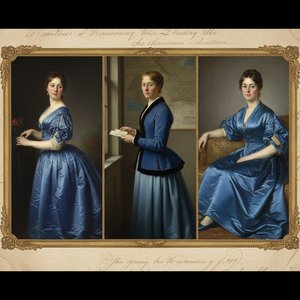
Painted during the Second Empire (1852-1870), “Portrait of Miss Fanny Clapp” offers a fascinating window into the social and artistic landscape of 19th-century France. The painting reflects the prevailing values of the era – an emphasis on beauty, refinement, and aristocratic ideals. The subject’s attire—a light blue dress adorned with delicate lace—is indicative of the fashionable styles of the time, while her poised posture and serene expression convey a sense of dignity and composure. It's important to note that portraits like this were often commissioned by wealthy patrons who sought to immortalize themselves or their families in an idealized manner.
The inclusion of details such as the necklace—a symbol of wealth and status—further reinforces the painting’s connection to the upper echelons of Parisian society. Furthermore, the somber background, a common feature in portraits of this period, suggests a certain formality and restraint – reflecting the societal expectations placed upon women during that era.
A Legacy of Beauty: Reproductions and Artistic Inspiration
Alexandre Cabanel’s “Portrait of Miss Fanny Clapp” remains a captivating work of art, admired for its technical brilliance and evocative beauty. Today, high-quality reproductions are available through platforms like OriginalUniqueArt, allowing art lovers to experience the painting's allure in their own homes. These meticulously crafted prints capture the essence of Cabanel’s original masterpiece, offering a tangible connection to this significant work of art history. Whether you appreciate the elegance of academic painting or simply seek a stunning addition to your décor, “Portrait of Miss Fanny Clapp” continues to inspire and enchant.
常见问题与解答
卡巴内尔 的《Fanny Clapp》 的推荐打印尺寸是多少?
建议为 卡巴内尔 的《Fanny Clapp》 制作 Medium 的复制品。尺寸可以在保持比例不变的情况下进行调整。
卡巴内尔 的《Fanny Clapp》 传达了怎样的情感?
“Fanny Clapp” 传达出一种 Romantic 的情感。这种情感基调描述了作品给人的印象。
卡巴内尔 的作品《Fanny Clapp》是否属于公有领域?其原因是什么?
卡巴内尔 的《Fanny Clapp》 已进入 属于公有领域 —— 其版权已过期。版权保护期自艺术家逝世之日起计算,该艺术家于 1889 年逝世。
 实景预览
实景预览
 分享
分享 分享
分享
 详情
详情 指南
指南

 下载作品
下载作品
 相似作品
相似作品 X射线
X射线 幻灯片播放
幻灯片播放 Q&A
Q&A 统计数据
统计数据