

 效果预览
效果预览
 分享
分享 分享
分享
 详情
详情

 下载
下载
 相似作品
相似作品 X射线
X射线 幻灯片播放
幻灯片播放 统计数据
统计数据Objets

 展开详情
展开详情
手工油画复制品
由我们的艺术家按需定制,为您提供您所选尺寸及画框的布面手工油画。 ( 切换至版画销售渠道 切换至数字图像销售渠道)




































从与原作比例一致的预设尺寸中进行选择。

您可以输入自定义尺寸,以适配特定的画框或空间。如果所选尺寸与原图比例不符,我们将通过裁剪作品或添加手绘元素来扩展画面。数字样稿将在制作开始前发送给您确认。
请注意,屏幕预览无法准确反映实际的裁剪或扩展效果,只有样稿才能真实呈现最终的构图。
虽然我们提供定制尺寸服务,但为了保留原作比例,建议您从预设列表中选择尺寸。
下单后,OriginalUniqueArt.com 团队将通过电子邮件联系客户获取具体要求,并提供效果预览图。


 玻璃选项仅适用于110厘米以下的尺寸。

Objets
复制材质
复制品尺寸
-


最终总价
$ 300
艺术家简介
Alecos Kontopoulos: A Pioneer of Greek Abstract Expressionism
Alecos Kontopoulos (1904-1975) stands as a monumental figure in the evolution of Greek art, a bridge between traditional aesthetics and the radical experimentation of modern abstraction. Born in Lamia, Greece, his artistic journey was marked by a profound engagement with social realities, philosophical inquiry, and an unwavering pursuit of visual language that transcended representational forms. Kontopoulos’s career wasn't simply about stylistic shifts; it represented a fundamental reimagining of how art could engage with the complexities of the 20th century, solidifying his place as one of Greece’s most influential artists.Early Influences and Artistic Training
Kontopoulos’s early artistic development was shaped by a confluence of influences. Initially apprenticed to the icon painter George Sarafianos, he gained a foundational understanding of Byzantine techniques and religious iconography – a discipline that instilled in him a meticulous attention to detail and a deep appreciation for color and texture. This traditional training provided a crucial counterpoint to the later explorations of abstraction. He then enrolled at the School of Fine Arts in Athens, where he studied under prominent figures like Georgios Iakovidis, Dimitrios Geraniotis, Pavlos Mathiopoulos, and Nikolaos Ransom. Crucially, his time in Paris from 1930 to 1932 proved transformative. Studying under P. Le Doux and H. Morisset exposed him to the burgeoning avant-garde movements of Europe – Cubism, Futurism, and early Abstraction – broadening his artistic horizons significantly. This period wasn't merely about absorbing new styles; it was a process of critical engagement, leading him to question established conventions and seek alternative modes of expression.The Transition to Abstract Art: A Response to Social and Political Turmoil
Kontopoulos’s shift towards abstraction around 1947 wasn't a stylistic choice made in isolation; it was deeply intertwined with the turbulent political landscape of post-war Greece. Witnessing the hardships, social injustices, and the oppressive atmosphere of the occupation, he felt compelled to move beyond representational art as a means of conveying deeper truths. His abstract works became vehicles for expressing internal emotions, philosophical concepts, and critiques of societal norms. He began utilizing simplified geometric forms, bold colors, and often, a deliberate lack of tonal gradation – rejecting traditional notions of perspective and realism in favor of pure visual impact. This period saw the emergence of his most iconic pieces, characterized by their raw emotional intensity and symbolic weight. The influence of figures like Kandinsky and Malevich is evident, but Kontopoulos forged a distinctly Greek voice within this broader abstract vocabulary.Key Themes and Artistic Techniques
Kontopoulos’s oeuvre is rich in symbolism and intellectual depth. Recurring themes include the human condition, social responsibility, spirituality, and the relationship between art and life. His works frequently explore concepts of faith, doubt, and the search for meaning in a world grappling with uncertainty. Technically, Kontopoulos was a master of color theory, employing vibrant hues to evoke specific emotions and create dynamic visual relationships. He often utilized layering techniques, building up complex compositions through multiple applications of paint, creating surfaces that shimmered with texture and depth. His later works are particularly notable for their use of “force,” a term he himself coined, referring to the inherent energy and dynamism within his paintings – an attempt to capture not just visual form but also the underlying currents of existence.Legacy and Recognition
Alecos Kontopoulos’s impact on Greek art is undeniable. He played a pivotal role in introducing abstract expressionism to Greece, challenging established artistic conventions and paving the way for subsequent generations of artists. His work was exhibited internationally at prestigious venues such as the Biennales of São Paulo (1953, 1955, 1957), Alexandria (1959), and Venice (1960). He received numerous accolades, including the Guggenheim Prize in 1950 (which he famously declined as a protest against the Greek dictatorship) and the First State Prize in 1973. After his death in 1975, Kontopoulos’s legacy was preserved through the establishment of the Alekos Kontopoulos Library in Agia Paraskevi – a testament to his intellectual curiosity and commitment to artistic education – and the Alekos Kontopoulos Gallery in Lamia, which continues to showcase his work. Today, his paintings are held in prominent collections throughout Greece and internationally, ensuring that this visionary artist’s profound contribution to modern art endures.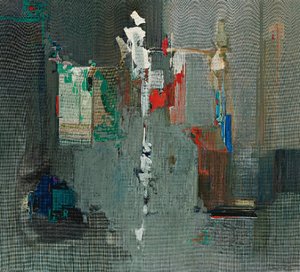
alecos kontopoulos
1904 - 1975
艺术家简介
- Artistic Movement Or Style:
- Abstract Art
- Social Realism
- Artists Or Movements Influenced By This Artist:
- P. Le Daux
- H. Morisset
- Artists Who Influenced This Artist: ['G. Sarafianos']
- Date Of Birth: 1904, Lamia, Greece
- Date Of Death: 1975, Athens, Greece
- Full Name: Alecos Kontopoulos
- Nationality: Greek
- Notable Artworks:
- Night is Coming
- Force
- Armchair
- Place Of Birth: Lamia, Greece