 Preview
 购买版画
购买版画 分享
分享 分享
分享
 详情
详情

 下载
下载
 相似作品
相似作品 X射线
X射线 幻灯片播放
幻灯片播放Landscape

 展开详情
展开详情




P118B $10

P118H $10

P118W $10

P438Z $10

P508JH $12

P508YH $12

P805H $10

P805Z $10

P919BZ $10

P919G $10

P919XJ $10

P959ZH $10

P968JZ $12

W106C $8

W218G $10

W218JH $8

W218Y $10

W307PJ $10

W316G $10

W316PJ $8

W316Y $10

W398PJ $8

W4111J $10

W500HY $15

W500JH $15

W692G $12

W849H $8

W940BG $15

W953PJ $8




从与原作比例一致的预设尺寸中进行选择。

您可以输入自定义尺寸,以适配特定的画框或空间。如果所选尺寸与原图比例不符,我们将通过裁剪作品或添加手绘元素来扩展画面。数字样稿将在制作开始前发送给您确认。
请注意,屏幕预览无法准确反映实际的裁剪或扩展效果,只有样稿才能真实呈现最终的构图。
虽然我们提供定制尺寸服务,但为了保留原作比例,建议您从预设列表中选择尺寸。
下单后,OriginalUniqueArt.com 团队将通过电子邮件联系客户获取具体要求,并提供效果预览图。


 玻璃选项仅适用于110厘米以下的尺寸。

Landscape
复制材质
复制品尺寸
-


最终总价
-
作品详情
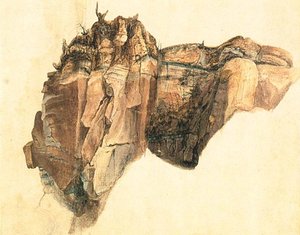
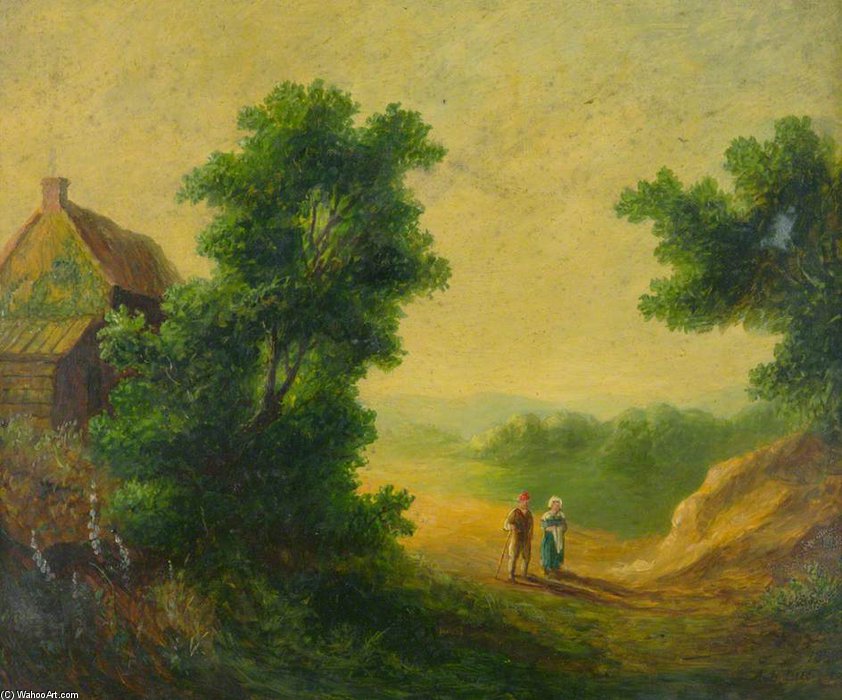
A Moment of Rural Harmony: Albrecht Dürer’s ‘Landscape’
- Albrecht Dürer's “Landscape” is more than just a depiction of a serene vista; it’s a carefully constructed meditation on the relationship between humanity and nature, rendered with the meticulous precision that defined the Northern Renaissance master. Painted around 1505, this work embodies Dürer’s fascination with observation and his desire to capture not merely what he saw, but also the underlying order of the natural world. The scene unfolds with a quiet dignity, inviting the viewer into a moment of contemplative peace – a feeling deeply resonant within the artistic currents of the time.
- The artist's mastery is immediately apparent in the rendering of detail. The figures, rendered with a realism that anticipates later developments in art, are not idealized but presented as ordinary people engaged in a simple activity. Their attire—practical and unassuming—suggests a life rooted in the land, reflecting Dürer’s own interest in the lives of common folk and his belief in the dignity of labor. The rolling hills, meticulously painted with varying shades of green and brown, create a sense of depth and perspective, while the dense foliage adds to the painting's lushness and vitality.
Technique and Materials: A Northern Renaissance Vision
- “Landscape” was executed in oil on panel, a technique favored by Dürer for its ability to achieve subtle gradations of tone and color. The use of layering—a hallmark of Dürer’s approach—allows him to build up the image gradually, creating a rich and complex surface texture. Note the careful modeling of form, particularly in the figures and the thatched roof of the small building; these details demonstrate Dürer's commitment to anatomical accuracy and his understanding of how light interacts with three-dimensional objects.
- Dürer’s palette is restrained yet harmonious, dominated by earthy tones—ochres, browns, greens, and blues—that evoke the colors of the natural world. The subtle use of light and shadow further enhances the painting's realism, creating a sense of depth and atmosphere. This careful attention to detail reflects Dürer’s belief that art should be both beautiful and instructive, offering viewers a glimpse into the underlying order of the universe.
Historical Context: The Northern Renaissance and Humanism
- “Landscape” was created during a pivotal moment in European history – the rise of the Northern Renaissance. Unlike its Italian counterpart, which was dominated by classical ideals and focused on religious themes, the Northern Renaissance emphasized realism, observation, and human experience. Dürer’s work reflects this shift, moving away from purely symbolic representations to more naturalistic depictions of the world.
- The painting also embodies the humanist values that were gaining prominence during this period. Humanism placed a renewed emphasis on human potential and achievement, celebrating the beauty and dignity of human life. The scene’s focus on ordinary people engaged in everyday activities—walking, talking, enjoying the landscape—reflects this humanist perspective.
Symbolic Resonance: Nature as Reflection
- Beyond its technical brilliance, “Landscape” carries a profound symbolic resonance. The depiction of a peaceful rural scene suggests a longing for simplicity and harmony – values that were increasingly valued during the Renaissance. The landscape itself can be interpreted as a reflection of the human soul, suggesting that inner peace and contentment are found in connection with nature.
- The inclusion of the small building with the thatched roof adds to the painting’s pastoral charm, evoking images of rural life and traditional values. It reinforces the theme of harmony between humanity and nature, reminding us of a time when people lived closer to the land and valued its bounty. This artwork stands as a testament to Dürer's ability to capture not just a scene, but an entire worldview.
艺术家简介
阿尔布雷希特·丢勒:文艺复兴时期的德国艺术巨匠
阿尔布雷希特·丢勒(Albrecht Dürer,1471-1528),一位名字与德国文艺复兴紧密相连的艺术家,诞生于纽伦堡这座充满活力的手工艺者之城。他的父亲,阿尔布雷希特·丢勒老,是一位成功的金匠,来自匈牙利移民,将精湛的手工艺传统带到了这里。在金属的光泽和一丝不苟的制作过程中,年轻的阿尔布雷希特最早感受到艺术的萌芽。尽管他的父亲最初希望他继承家族手艺,但很快就显现出他非凡的绘画天赋。十三岁时,他进入了纽伦堡著名艺术家迈克尔·沃尔格穆特的作坊学习,这不仅仅是技术上的训练,更是一次沉浸式的体验——接触着精美的插图书籍、绘制的画卷,以及新兴的木刻版画艺术。沃尔格穆特的工作室产量惊人,包括为《纽伦堡编年史》创作的大量插图,为丢勒提供了设计、构图和图像制作技巧的无与伦比的基础。1484年创作的一幅银笔自画像,即使在今天看来也令人叹为观止,证明了他早期的艺术天赋。
意大利的影响:艺术成熟之路
丢勒的抱负远不止于纽伦堡的城墙之内。他怀着对绘画技艺精益求精的渴望和无尽的好奇心,于1494年踏上了前往意大利的第一段旅程。这并非简单的观光旅行,而是一次朝圣之旅,直奔文艺复兴艺术的中心。在那里,他接触到了拉斐尔、乔凡尼·贝利尼和列奥纳多·达·芬奇等大师的作品——他们重新定义了形式、透视和人性的表达的可能性。这次经历对他产生了深远的影响。丢勒汲取了古典主题、和谐构图以及微妙的晕染法,但从未放弃他北方艺术一贯的对细节的精细刻画和象征意义的深刻理解。1505年至1507年间,他又一次前往意大利,进一步巩固了这些影响,使他能够研究古罗马遗迹,并深化他对人体解剖学和比例的理解。这种北方艺术的精确与意大利文艺复兴的优雅相结合,成为了丢勒独特艺术风格的标志。
技法精湛:绘画、版画与木刻
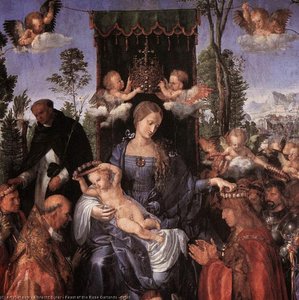
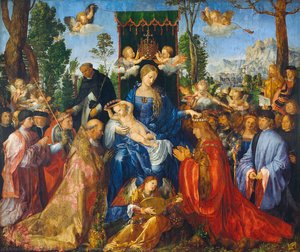
丢勒是一位技艺精湛的多面手,每一种媒介都为他提供了独特的创作途径。他的油画作品虽然数量不多,却展现了他对油彩的卓越掌控能力,以及捕捉人物外貌和心理深度的能力。《玫瑰花环节》等作品体现了受威尼斯色彩主义影响的鲜艳色调。然而,他在版画领域——尤其是铜版画和木刻——真正掀起了艺术实践的革命。他将这些技法从单纯的复制手段提升为独立的艺术形式,能够传达复杂的叙事和深刻的情感。《启示录》系列(1498年),一组以《圣约翰启示录》为主题的木刻版画,展示了他对这种媒介的精湛掌握,尽管它存在固有的局限性。稍后的铜版画作品,如《沉思一》(1514年)和《圣杰罗姆书房》(1514年),证明了他的无与伦比的技巧——构图复杂,充满象征意义,并以令人惊叹的精确度执行。他不仅仅描绘现实,更赋予它多层知识和精神意义。
理论家与创新者:阿尔布雷希特·丢勒的遗产
丢勒不仅是一位艺术家,还是一位学者、理论家和创新者,致力于理解艺术创作背后的基本原理。他坚信艺术具有数学基础,并致力于建立一种科学的方法来表示现实。他对几何学、比例和人体解剖学的著作——尤其是1528年出版的《论人体的比例》,对于当时的时代具有开创性意义,证明了他对严谨观察和理性分析的承诺。这些著作不仅仅是学术练习;它们旨在提升艺术家的地位,从单纯的手工艺者转变为知识型从业者。丢勒的遗产超越了他的个人作品。他弥合了北方传统与意大利文艺复兴理想之间的差距,将古典主题引入北方艺术,同时保持其独特的风格。他的理论贡献帮助建立了一种新的艺术实践框架,激励了后世无数艺术家以他的技术精湛、创新精神和深刻的远见为榜样。他至今仍是西方艺术史上最重要的代表人物之一。
影响与持久的影响
- 迈克尔·沃尔格穆特: 丢勒最初的导师,提供了绘画、木刻等基本技能。
- 列奥纳多·达·芬奇: 激发了丢勒对解剖学、透视和晕染法的探索。
- 拉斐尔: 影响了丢勒的构图和谐与理想化形式。
- 乔凡尼·贝利尼: 为丢勒理解色彩和威尼斯绘画传统做出了贡献。
丢勒的影响在几个世纪的艺术史上回荡。他对现实主义的细致刻画、对版画创新性的运用以及他的理论著作,至今仍在激励着艺术家和学者。他证明了艺术既可以技术精湛,又可以具有深刻的智力深度——这种遗产继续塑造着当今的艺术格局。他的作品是观察的力量、知识追求和人类创造美丽与意义的不懈愿望的见证。
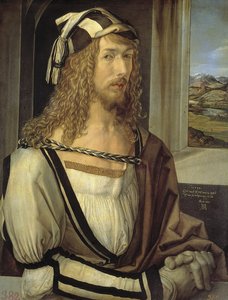
阿尔布雷希特·丢勒
1471 - 1528 , 意大利
艺术家简介
- Artistic Movement Or Style: 德国文艺复兴
- Artists Or Movements Influenced By This Artist: ['北方文艺复兴']
- Artists Who Influenced This Artist:
- 列奥纳多·达·芬奇
- 拉斐尔
- 乔凡尼·贝利尼
- Date Of Birth: 1471年5月21日
- Date Of Death: 1528年4月6日
- Full Name: 阿尔布雷希特·丢勒
- Nationality: 德国人
- Notable Artworks:
- 《启示录》系列
- 《沉思一号》
- 圣杰罗姆在书房
- Place Of Birth: 纽伦堡,意大利
相关文章
日耳曼文艺复兴:人文主义的觉醒与艺术革新 - 重塑欧洲文明的辉煌篇章
探索日耳曼文艺复兴的人文主义与艺术革新!OriginalUniqueArt 提供高品质手绘油画复制品、定制服务及专业艺术咨询,重现大师经典,点亮您的空间。值得信赖的艺术品收藏专家。

Albrecht Dürer: A Renaissance Master's Legacy of Innovation and Self-Portraiture
Explore the life & art of Albrecht Dürer, a pivotal German Renaissance master. Discover his groundbreaking printmaking techniques, iconic self-portraits, and lasting influence on Western art history. A deep dive into innovation & symbolism.
Albrecht Altdorfer: Innovation, Spirituality & the Northern Renaissance Landscape
Explore the groundbreaking art of Albrecht Altdorfer, a pioneer of the Northern Renaissance's Danube School. Discover his innovative landscapes, spiritual symbolism & lasting influence on German painting.
Etching Masters: 10 Legendary Prints That Revolutionized Art | OriginalUniqueArt
Journey through 10 legendary etching masterpieces by Rembrandt, Dürer & Goya. Explore the history of printmaking and discover timeless art for your home. Find museum-quality reproductions at OriginalUniqueArt.com.
北文艺坛巅峰:十幅定义时代的艺术巨作 | OriginalUniqueArt
探索北文艺复兴的辉煌!本文精选十幅定义时代的艺术杰作,从凡·艾克到鲁本斯,揭秘大师背后的故事与技法。 感受文艺复兴的魅力,为您的家注入艺术灵感。 博物馆级复制品尽在OriginalUniqueArt.com,探索完整画集!