切换至版画销售渠道
 展开全文
展开全文







































 对于任何边长超过 105 厘米(约 41 英寸)的艺术品或复制品,画框将以拆解后的组件形式发货。此方法可确保安全送达并防止运输过程中的损坏。


A Divine Encounter in Ink
In the quiet, meticulously rendered world of Albrecht Dürer’s Annunciation, time seems to suspend itself within a single, breathless moment of revelation. This exquisite pen and ink drawing serves as a profound window into the Northern Renaissance, capturing the exact instant when the Archangel Gabriel descends to deliver a celestial message to the Virgin Mary. The composition is a masterclass in architectural depth, where every line and shadow works in harmony to create a sacred space that feels both physically tangible and spiritually transcendent. As the viewer’s eye wanders through the intricate layers of the chamber, one is struck by the profound stillness that permeates the scene—a silence heavy with the weight of divine destiny.
The artistry on display is nothing short of breathtaking, showcasing Dürer’s unparalleled ability to manipulate light and line. Utilizing a sophisticated technique of hatching and cross-hatching, the artist breathes life into stone, fabric, and flesh. The architectural elements—the soaring arches, the sturdy columns, and the complex geometric patterns of the ceiling—are rendered with a precision that rivals the finest engravings of the era. These structural forms do more than merely frame the figures; they create a sense of monumental stability that contrasts beautifully with the ethereal, fleeting nature of the angelic visitation. The play of light, seemingly emanating from a singular, divine source, casts deep, dramatic shadows that define the volume of the room and imbue the entire scene with a palpable sense of three-dimensional reality.
Symbolism and the Renaissance Spirit
Beyond its technical brilliance, the Annunciation is a tapestry of rich symbolism designed to guide the faithful through a journey of contemplation. Every detail within this richly decorated chamber serves a higher purpose. The architectural grandeur reflects the majesty of the divine presence, while the meticulous textures of the drapery and surfaces evoke the tactile reality of the earthly realm being touched by the heavenly. Dürer’s mastery of Mannerist spatial illusion allows the viewer to step into this sacred dialogue, making the theological themes of faith, humility, and revelation feel intimately accessible. The way the angel is positioned upon the staircase suggests a bridge between the celestial heights and the terrestrial world, a visual metaphor for the Incarnation itself.
For the discerning collector or interior designer, this piece offers much more than mere decoration; it provides a focal point of intellectual and emotional depth. A high-quality reproduction of this work brings with it the prestige of the German Renaissance, offering a sophisticated aesthetic that complements both classical and contemporary settings. The monochromatic elegance of the ink work allows it to integrate seamlessly into diverse color palettes, while its intricate detail rewards prolonged study, making it a conversation piece that inspires awe. To possess such a work is to invite a sense of historical continuity and spiritual serenity into one's personal sanctuary, celebrating the enduring power of Dürer’s visionary genius.
常见问题与解答
阿尔布雷希特·丢勒 的《Annunciation》 是如何将 Renaissance 与艺术家的祖籍国联系在一起的?
《Annunciation》由出生于 意大利 的 阿尔布雷希特·丢勒 在 Renaissance 运动背景下创作而成。艺术家的原籍地使这部作品与 意大利 艺术家所实践的 Renaissance 风格紧密相连。
阿尔布雷希特·丢勒 的《Annunciation》 使用了怎样的色调?
阿尔布雷希特·丢勒 的《Annunciation》 采用了 Neutrals 色调,这一色调概括了作品整体的色彩特征。
《Annunciation》这一Renaissance风格的作品传达了怎样的情感基调?
"Annunciation" 在 Renaissance 运动中蕴含着 Spiritual 的情感基调。
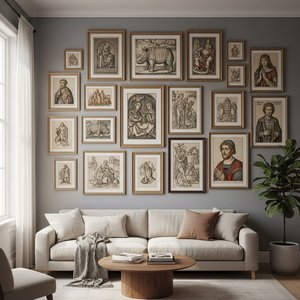
 实景预览
实景预览
 分享
分享 分享
分享
 详情
详情 指南
指南

 下载作品
下载作品
 相似作品
相似作品 X射线
X射线 幻灯片播放
幻灯片播放 Q&A
Q&A 统计数据
统计数据