

 效果预览
效果预览
 购买印刷品
购买印刷品 分享
分享 分享
分享
 详情
详情

 下载
下载
 相似作品
相似作品 X射线
X射线 幻灯片播放
幻灯片播放Karalama (calligraphy exercise)
 Ink On Paper
- Islamic Calligraphy
 1500
1500- Early Modern
 26.0 x 35.0 cm
 萨克普·萨班哲博物馆
 展开详情
展开详情




P118B $10

P118H $10

P118W $10

P438Z $10

P508JH $12

P508YH $12

P805H $10

P805Z $10

P919BZ $10

P919G $10

P919XJ $10

P959ZH $10

P968JZ $12

W106C $8

W218G $10

W218JH $8

W218Y $10

W307PJ $10

W316G $10

W316PJ $8

W316Y $10

W398PJ $8

W4111J $10

W500HY $15

W500JH $15

W692G $12

W849H $8

W940BG $15

W953PJ $8




从与原作比例一致的预设尺寸中进行选择。

您可以输入自定义尺寸,以适配特定的画框或空间。如果所选尺寸与原图比例不符,我们将通过裁剪作品或添加手绘元素来扩展画面。数字样稿将在制作开始前发送给您确认。
请注意,屏幕预览无法准确反映实际的裁剪或扩展效果,只有样稿才能真实呈现最终的构图。
虽然我们提供定制尺寸服务,但为了保留原作比例,建议您从预设列表中选择尺寸。
下单后,OriginalUniqueArt.com 团队将通过电子邮件联系客户获取具体要求,并提供效果预览图。


 玻璃选项仅适用于110厘米以下的尺寸。

Karalama (calligraphy exercise)
复制材质
复制品尺寸
-


最终总价
$ 300
作品详情
The Dance of Ink and Spirit
In the delicate interplay of ink and parchment, Karalama (calligraphy exercise) offers a profound window into the soul of Ottoman mastery. This exquisite piece, dating back to the year 1500, is far more than a mere practice sheet; it is a rhythmic meditation captured in motion. The artwork features the fluid, sweeping curves of Arabic script, where each stroke carries the weight of intention and the grace of a dancer. As the eye wanders across the yellowish, aged surface, one feels the passage of centuries, as if peering through a veil into the very heart of the 16th-century workshop. The cursive script possesses an organic complexity, creating a sense of depth that draws the viewer into a labyrinth of linguistic beauty and spiritual devotion.
The technique employed by the legendary Ahmed Karahisari reveals a sophisticated command over the medium. Beyond the primary calligraphic flow, the composition is punctuated by ethereal decorative elements that elevate the work from exercise to ornament. Tiny, shimmering gold dots are scattered across the page like celestial dust, catching the light and providing a rhythmic counterpoint to the dark ink. Small, delicate circles are interspersed throughout, adding structural visual interest and guiding the viewer's gaze through the intricate web of characters. This meticulous application of gold and ink demonstrates a mastery of balance, where the spontaneity of a "sketch" meets the precision of high art.
A Legacy Written in Gold
To understand this work is to understand the era of the Sun of Calligraphy himself. Ahmed Karahisari, a titan of the Ottoman Golden Age, lived during the transformative reign of Sultan Suleyman the Magnificent. His life was deeply rooted in Sufi scholarship, and this spiritual foundation is palpable in every loop and ligature of his writing. The piece embodies the revitalization of the Thuluth and Naskh scripts, showcasing a style that sought to harmonize the mathematical precision of Islamic geometry with the emotional fluidity of divine praise. For the collector or the lover of history, this artwork serves as a tangible connection to the intellectual and artistic zenith of the Ottoman Empire.
For those looking to integrate such profound beauty into a contemporary space, Karalama offers an unparalleled emotional impact. Its warm, antique palette makes it a versatile centerpiece for sophisticated interior design, providing a sense of timelessness and quiet contemplation. Whether placed in a sunlit library or a modern gallery setting, the piece radiates an aura of wisdom and tranquility. Owning a high-quality reproduction of this masterpiece is not merely about acquiring decor; it is about inviting the rhythmic, golden legacy of Karahisari into one's personal sanctuary, ensuring that the echoes of 1500 continue to resonate in the modern world.
艺术家简介
Ahmed Karahisari: The Sun of Calligraphy
Ahmed Şemseddîn Karahisârî (1468–1566), often referred to as Karahisari, stands as one of the titans of Ottoman calligraphy—a figure whose influence reverberates through centuries of Islamic art and scholarship. Born in Afyonkarahisar, Turkey, his exact birthdate remains elusive, shrouded in the mists of Ottoman archival records. Yet, what is undeniably certain is that he ascended to unparalleled renown during the reign of Sultan Suleyman I (1520–1566), earning the moniker *Shams al-Khatt*, “The Sun of Calligraphy,” a testament to his mastery and transformative vision for the art form.- Early Life & Education: Karahisari’s formative years unfolded in Istanbul, where he pursued rigorous Sufi scholarship—a cornerstone of Ottoman intellectual life—laying the groundwork for his lifelong dedication to Islamic calligraphy. Precise details regarding his teacher remain debated amongst scholars; sources cite Yahyâ Sufî and Esadullah-ı Kirmânî as potential mentors, reflecting the diverse influences shaping Ottoman artistic sensibilities.
- Stylistic Innovation: Unlike many of his contemporaries who adhered to Sheikh Hamdullah’s established style—characterized by elegant curves and meticulous ornamentation—Karahisari embarked on a daring quest to revive the aesthetic principles championed by Yaqut al-Musta'simi, an Abbasid calligrapher whose work predated Hamdullah’s innovations. This deliberate divergence signaled a pivotal moment in Ottoman calligraphy history.
A Revolutionary Approach to Script
Karahisari didn’t merely replicate existing styles; he fundamentally reimagined them, elevating the best examples of Thuluth and Naskh scripts to new heights of artistic excellence. His distinctive style—characterized by a bold confidence and an unwavering commitment to precision—was initially met with resistance within Ottoman circles. However, his legacy endured through the teachings of Hasan Çelebi, Karahisari’s adoptive son, who became himself a celebrated calligrapher, perpetuating the master's influence for generations. This stylistic breakthrough cemented Karahisari’s position as one of the “Three Great Calligraphers” alongside Sheikh Hamdullah and Hafiz Osman—a trio whose contributions irrevocably shaped the trajectory of Islamic calligraphy.The Magnificent Mus'haf: A Testament to Artistic Achievement
Perhaps Karahisari’s most enduring achievement resides in his monumental mus'haf—a meticulously crafted copy of the Qurʾan commissioned by Suleyman I—which now graces the Topkapi Palace Museum Library. This masterpiece exemplifies Karahisari’s unparalleled skill and embodies the zenith of Ottoman calligraphy during Suleyman’s reign. Beyond this singular work, numerous other Qurʾanic manuscripts bearing his signature are housed in Istanbul's museum collections, demonstrating the breadth of his artistic output.Influence & Legacy
Karahisari’s influence extended far beyond his immediate disciples; he profoundly impacted Ottoman art and culture as a whole. His work aligns seamlessly with the broader aesthetic currents of the Ottoman Period—particularly the vibrant artistic movement spearheaded by Osman Hamdi Bey and Şeker Ahmed Paşa—artists who similarly embraced innovation and sought to elevate Islamic art to new levels of grandeur. The enduring fascination with Karahisari’s style underscores his indelible mark on Islamic calligraphy history, securing his place as a visionary artist whose legacy continues to inspire scholars and practitioners alike. His contribution solidified the importance of reviving classical artistic traditions while simultaneously pushing boundaries.
ahmed karahisari
1468 - , Turkey
艺术家简介
- Artistic Movement Or Style: Ottoman Period (before 1600), Süleyman the Magnificent Period (1520–1566)
- Artists Or Movements Influenced By This Artist: ['Osman Hamdi Bey']
- Artists Who Influenced This Artist:
- Yaqut al-Musta’simi
- Sheikh Hamdullah
- Date Of Birth: Around 1468
- Date Of Death: 1566
- Full Name: Ahmed Şemseddîn Karahisârî
- Nationality: Turkish
- Notable Artworks: ["The Mus'haf for Suleiman the Magnificent"]
- Place Of Birth: Karahisar, Turkey
相关文章

Golden Glow: How to Use Metallic Gold Artworks to Elevate Your Home Decor with Timeless Luxury
Discover how to elevate your home with the timeless elegance of metallic gold artworks. From sculptural metal pieces to gilded oil paintings, learn expert interior design tips for integrating luxurious gold accents into your space with sophistication and grace.
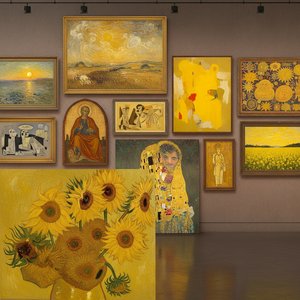
Golden Hues: 10 Masterpieces Dominated by Chrome Yellow | OriginalUniqueArt
Immerse yourself in golden light! Explore 10 famous paintings dominated by 'Chrome Yellow', from Van Gogh’s Sunflowers to Monet's Haystacks. Discover the stories behind these iconic Impressionist & Post-Impressionist masterpieces and find museum-quality art reproductions at OriginalUniqueArt.com.
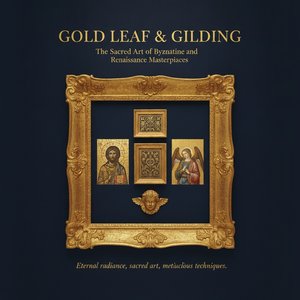
The Sacred Glow: Mastering Gold Leaf and Gilding in Byzantine Art
Explore the divine mastery of Byzantine gold leaf and gilding. Discover how ancient artisans used gold ground and mosaics to create celestial light, a timeless legacy of spiritual splendor and technical excellence in sacred art history.
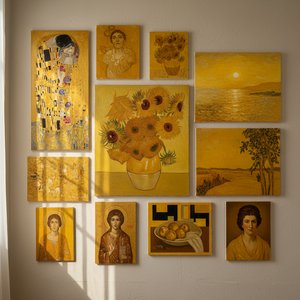
Golden Hues: Top 10 Paintings Dominated by Yellow Ochre |
Explore 10 iconic paintings bathed in golden yellow ochre! From Van Gogh's sunflowers to Monet’s haystacks, discover the stories behind these masterpieces. Find museum-quality art reproductions & elevate your home decor on .
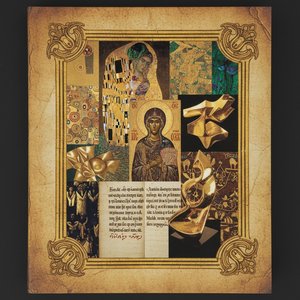
The Allure of Gold in Art History: Symbolism, Technique & Cultural Significance
Explore the rich history of gold in art! Discover symbolism, techniques & cultural significance from ancient civilizations to Klimt's masterpieces. Expert insights for collectors at OriginalUniqueArt.

