
 效果预览
效果预览
 购买印刷品
购买印刷品 分享
分享 分享
分享
 详情
详情

 下载
下载
 相似作品
相似作品 X射线
X射线 幻灯片播放
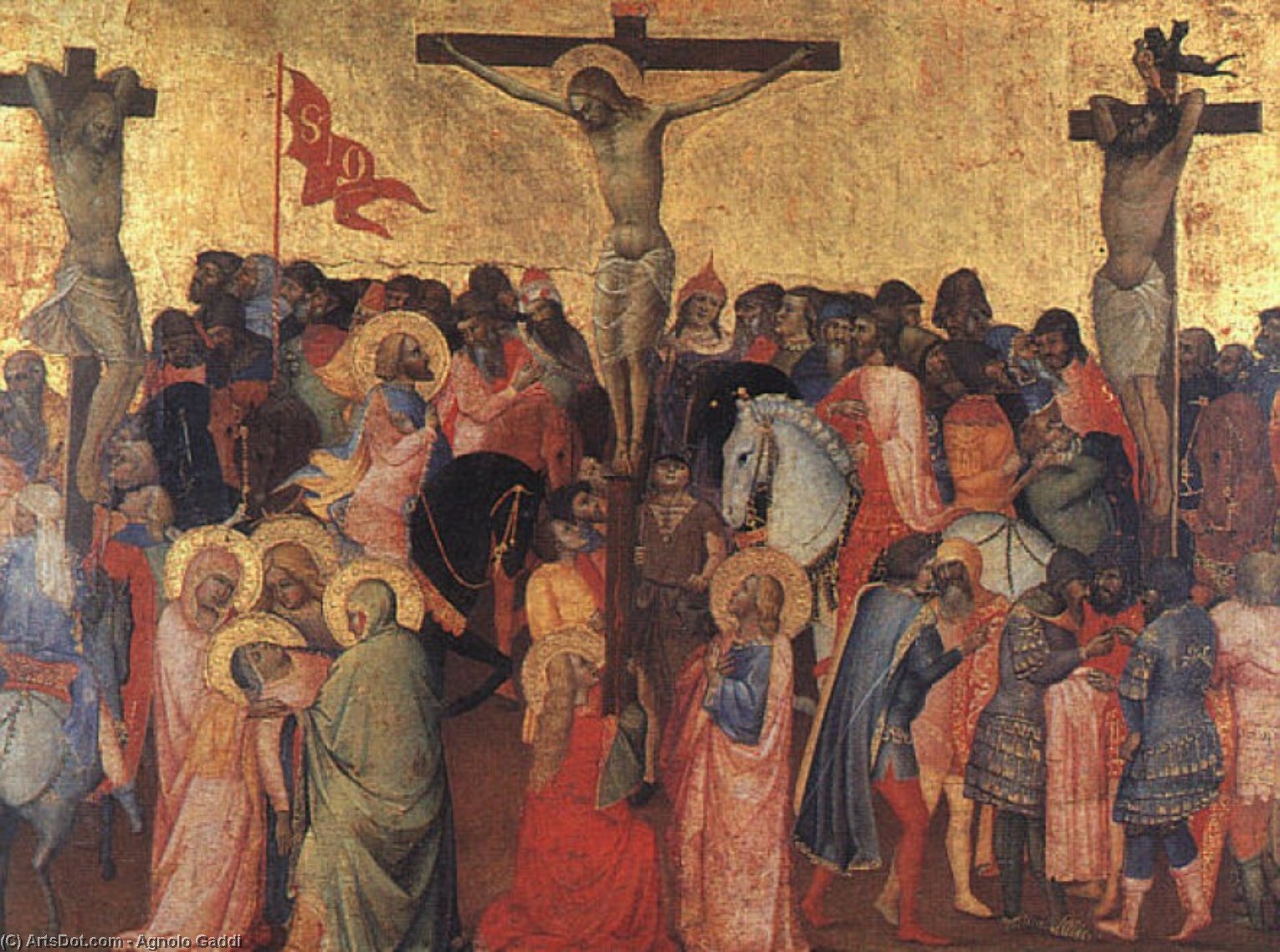
幻灯片播放Crucifixion
 Oil On Panel
- Gothic Revival
 1390
1390 57.0 x 77.0 cm
 乌菲兹美术馆
 展开详情
展开详情
购买高分辨率增强版数字图像,其品质远超在线预览。
每一份文件都由我们的内部专家使用先进工具与专业的后期润色技术精心打造。我们确保每一张图像都具备卓越的清晰度、精准的色彩还原度以及细腻的细节表现。
最终文件将在 72 小时内通过电子邮件交付,并针对专业、编辑及印刷用途进行了优化。其品质与顶级设计工作室、出版社和画廊所信赖的标准完全一致。
每份数字图像订单均包含
专业数字图像交付,品质保障
选择 OriginalUniqueArt.com,您获得的不仅仅是一张图像——您收到的是经过专业级增强、精雕细琢的数字艺术作品,并享有满意保证。以下是您的订单中自动包含的所有内容:

邮件快速送达
您的高分辨率数字图像文件将在下单后 72 小时内通过电子邮件发送给您 —— 即可立即使用。

AI 增强型数字文件
您的艺术品经过专业优化,结合先进的 AI 技术与人工修饰,确保呈现极致的细节、清晰度与色彩准确度。

终身免费重发服务
不小心删除了文件或找不到了?没关系——我们将随时为您免费重发。

无需进口费用,始终如一
即刻拥有您的艺术作品,无需支付任何关税、税费或运费——数字下载始终免税。

色彩精准保证
我们通过专业工具与色彩管理技术,确保您的数字图像尽可能真实地还原原作色彩。

60天满意保证
如果您对所购买的数字图像不满意,我们将在60天内为您进行修改或退还100%的款项——无需任何解释。

100% 退款保证
如果不满意?在收到数字文件后的60天内,我们为您提供全额退款——无需任何理由。

批量订单优惠
购买 3 张图片可享 10% 折扣 - 购买 5 张可享 15% 折扣 - 购买 10+ 张可享 20% 折扣。非常适合创意项目、画廊和机构使用。
藏品详情
The Crucifixion by Agnolo Gaddi: A Window into Florentine Gothic
The painting “Crucifixion” by Agnolo Gaddi, created in 1390, is more than just a depiction of a pivotal moment in Christian history; it’s a vibrant testament to the burgeoning artistic spirit of Florence during the late Medieval period. Housed within the hallowed halls of the Galleria degli Uffizi, this tempera painting offers a profound glimpse into the evolving style of a master craftsman – Gaddi himself – and his deep connection to the legacy of Giotto di Bondone. Measuring just 57 x 77 cm, its intimate scale belies the emotional weight it carries, inviting viewers to contemplate the suffering and sacrifice at its core.
Gaddi’s work immediately distinguishes itself within the Gothic tradition, yet subtly anticipates the stylistic shifts that would define the Early Renaissance. The composition is remarkably balanced, a careful orchestration of figures arranged around the central image of Christ on the cross. Notice the deliberate positioning – soldiers and mourners cluster at the base, creating a sense of earthly sorrow, while angels ascend above, representing divine compassion. A striking detail is the presence of a horse to the right, adding depth and dynamism to the scene, a touch uncommon in purely religious depictions of this era. The artist’s skill lies not just in anatomical accuracy – though it's evident – but in conveying a palpable sense of drama and emotional intensity.
A Glimpse into Technique and Materials
The painting is executed in tempera, a medium favored by artists during the Gothic period due to its luminosity and ability to create rich colors. Observe how Gaddi masterfully layered the pigments, building up textures and creating subtle gradations of light and shadow. The use of gold leaf, particularly around Christ’s figure and the haloed angels, further enhances the painting's spiritual aura and draws the eye towards these focal points. The attention to detail is remarkable; from the folds of Christ’s garments to the expressions on the faces of the onlookers, every element contributes to a sense of realism and immediacy.
Furthermore, Gaddi demonstrates an understanding of perspective – though it's not fully developed as in later Renaissance works. The figures are arranged in a shallow space, creating a sense of depth that is both engaging and emotionally resonant. The overall effect is one of controlled chaos, reflecting the dramatic nature of the event being depicted while maintaining a formal, balanced composition.
Historical Context: Florence at the Dawn of a New Era
To fully appreciate “Crucifixion,” it’s essential to understand the historical context in which it was created. Florence during the 14th century was a crucible of artistic innovation, fueled by wealth, political stability, and a renewed interest in classical antiquity. Giotto di Bondone, who had revolutionized painting with his naturalistic style, exerted a profound influence on subsequent generations of artists, including Gaddi. Gaddi’s work represents a direct continuation of Giotto's legacy, yet he subtly departs from it, introducing elements that foreshadow the stylistic developments of the Renaissance.
Agnolo Gaddi himself was deeply connected to this artistic lineage; he was the son of Taddeo Gaddi, who had been a devoted pupil of Giotto. This familial connection placed him at the heart of Florence’s artistic community and ensured that he remained immersed in the innovative spirit of the time. His work reflects not only his own talent but also the collective artistic consciousness of his era.
Symbolism and Emotional Resonance
The painting is laden with symbolism, inviting viewers to contemplate profound theological themes. The crucifixion itself represents sacrifice, redemption, and the promise of salvation. The figures surrounding Christ – soldiers, mourners, and angels – embody a range of human emotions: grief, despair, compassion, and hope. The horse, often associated with royalty and power, may symbolize the suffering of the Roman Empire under Christ’s rule.
Ultimately, “Crucifixion” is not merely a historical depiction; it's an emotionally charged meditation on faith, suffering, and redemption. It invites viewers to connect with the human drama at its core and to contemplate the enduring significance of this central event in Christian theology. Reproductions of this masterpiece offer a tangible connection to this remarkable artistic achievement, allowing us to experience its beauty and power firsthand.
艺术家简介
佛罗伦萨的传承:阿尼洛·加迪的生命与艺术
阿尼洛·加迪(Agnolo Gaddi)约出生于1350年的佛罗伦萨,在意大利绘画史上占据着一个迷人且关键的地位。他不仅仅是一位艺术家,更是一个强大艺术血脉的继承者。作为塔德奥·加迪(Taddeo Gaddi)之子,他承袭了其父那份深厚的身世——塔德奥本人曾是革命性大师乔托·迪·邦多纳(Giotto di Bondone)最忠诚且才华横溢的弟子。这种家族纽带使阿尼洛从一开始便置身于14世纪佛罗伦萨艺术创新的风暴中心。虽然他常被描述为直接承袭乔托风格的最后一位佛罗伦萨伟大画家,但若仅仅将他视为一名模仿者,则是一种极大的误读。加迪并非只是在延续传统,他正在微妙地转化传统,在晚期哥特式的感性与早期文艺复远兴起的前景之间架起了一座桥梁。尽管与同时代的一些人相比,他的生平记载相对较少,但却展现出一位深深植根于佛罗伦萨艺术与商业脉络中的人物——那是一个充满创造力与经济繁荣的城市。他并不只专注于绘画;史料表明,他在晚年还从事过商业活动,这展现了著名艺术家传记中鲜少见到的务实一面。脱离乔托的阴影:艺术的发展与影响
在加迪早期的作品中,乔托的影响力是无可置疑的。乔托湿壁画中所特有的宏伟人物、情感共鸣以及叙事清晰度,在阿尼洛的初期绘画中均有体现。然而,加迪很快便发展出了属于自己的独特风格。如果说乔托偏好雄浑的简约,那么加迪则拥抱了一种更为精致的优雅,融入了复杂的细节与更强的装饰性华丽感。哥特式的影响在他的作品中尤为显著——他对戏剧性的光影效果、质感丰富的织物以及对华丽美感的整体追求。这并不是说他抛弃了乔托开创的自然主义;相反,他在其中叠加了一层复杂的审美感知,以反映佛罗伦萨社会不断演变的品味。他不惧怕色彩的实验,运用鲜艳的色调与细腻的渐变来创造极具视觉冲击力的构图。创作于1395年的《最后的晚餐》便是这种乔托式稳重与哥特式精致融合的典范——整个场景既充满了庄严感,又不失精妙绝伦的细节。他在父亲指导下接受的训练,也使他掌握了湿壁画技艺,这成为了他许多重要委约作品的核心所在。石与彩的杰作:核心作品与艺术委约
阿尼洛·加迪的艺术声望很大程度上建立在他于佛罗伦萨圣十字大殿(Basilica di Santa Croce)创作的大量湿壁画之上。这些描绘《真十字架传奇》宏伟场景的作品,见证了他作为叙事画家的卓越技巧以及驾驭复杂构图的能力。这一系列作品在巴罗内利礼拜堂(Cappella Baroncelli)和唱诗班席位中展开,讲述了从发现树种到最终用于基督受难的全过程。这些不仅仅是插图,更是充满生命力的戏剧,生动的形象穿梭于精心描绘的建筑景观之中。除了圣十字大殿,加迪还承接了许多祭坛画和虔诚画板的委约,展示了他作为艺术家的多面性。现藏于华盛顿国家美术馆的《圣母加冕》便是一个绝佳范例——它以明亮的光辉描绘了天上的荣耀,充满了细腻的细节与优雅的人物形象。他的《圣母与圣婴》系列作品通常点缀着圣徒与天使,展现了他捕捉母性温柔与神圣恩典的敏锐触觉。此外,他还为兰齐凉廊(Loggia dei Lanzi)设计了三叶形装饰,证明其才华已从绘画延伸到了装饰艺术领域。导师与遗产:加迪对意大利艺术的影响
阿尼洛·加迪不仅是一位画家,更是一位教育家。他的学生中包括切尼诺·切尼尼(Cennino Cennini),后者后来成为了极具影响力的艺术理论家,并撰写了《艺术之书》(Il Libro dell'Arte)——这部论著成为了后世几代艺术家的奠基之作。这种师徒传承凸显了加迪致力于传递知识与技艺的决心,确保了佛罗伦萨艺术传统的延续。虽然他没有像乔托那样开创一个新的画派,但他的影响力是无处不在的。他帮助完善并传播了乔托风格,为早期文艺复兴的创新铺平了道路。乔治·瓦萨里在其具有里程碑意义的《艺苑名人传》中,也认可了加迪的重要性,从而巩固了他在意大利艺术史正典中的地位。尽管有时会被其父辈的光芒所掩盖,但阿尼洛·加迪依然是一位关键人物——一位凭借高超技艺在艺术时代交替之际游刃有余的大师,留下了一份关于美、虔诚与持久影响力的宝贵遗产。进一步探索
- 博物馆与馆藏: 可以在德国利德瑙博物馆(Lindenau-Museum)、华盛顿国家美术馆(National Gallery of Art)以及佛罗伦萨乌菲兹美术馆(Galleria degli Uffizi)探索阿尼洛·加迪的作品。
- 在线资源: 通过维基百科 (https://en.wikipedia.org/wiki/Agnolo_Gaddi) 和华盛顿国家美术馆网站 (https://www.nga.gov/artists/1327-agnolo-gaddi) 等资源深入了解他的生平与艺术。
- 背景研究: 为了充分领略加迪的作品,建议研究乔托与塔德奥·加迪的艺术,并关注14世纪佛罗伦萨绘画的宏观背景。

阿尼奥洛·加迪
1350 - 1396 , 意大利
基本信息
- Artistic Movement Or Style: 哥特式,早期文艺复兴
- Artists Or Movements Influenced By This Artist: ['Cennino Cennini']
- Artists Who Influenced This Artist:
- Taddeo Gaddi
- Giotto
- Date Of Birth: 1350年
- Date Of Death: 1396年
- Full Name: 阿尼奥洛·加迪 (Agnolo Gaddi)
- Nationality: 意大利
- Notable Artworks:
- 最后的晚餐
- 耶稣受难
- 真十字架的发现
- Place Of Birth: 意大利,佛罗伦萨

