切换至版画销售渠道
 展开全文
展开全文







































 对于任何边长超过 105 厘米(约 41 英寸)的艺术品或复制品,画框将以拆解后的组件形式发货。此方法可确保安全送达并防止运输过程中的损坏。


A Nocturnal Reverie: The Ethereal World of Aert van der Neer
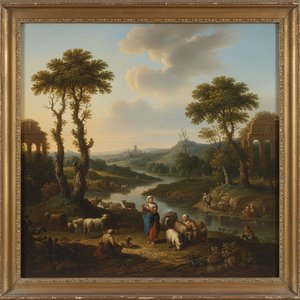
In the heart of the Dutch Golden Age, a period defined by unparalleled artistic flourishing, Aert van der Neer emerged as a master of the unseen. While many of his contemporaries sought to capture the grandeur of sweeping vistas or the heroic narratives of history, van der Neer turned his gaze toward the quiet, the shadowed, and the silvered moments of the natural world. His 1646 masterpiece, "Landscape with Windmill," serves as a profound testament to this singular vision. The painting invites the viewer into a tranquil, nocturnal realm where a meandering river reflects the soft, diffused light of a sky caught between dusk and dawn. It is not merely a depiction of a Dutch landscape; it is an invitation to experience the stillness of a world suspended in time, rendered with a psychological depth that resonates long after the first glance.
The composition is a masterclass in atmospheric balance. A winding waterway leads the eye through a lush, verdant foreground, where the dark silhouettes of trees provide a structural weight to the scene. As the gaze travels deeper into the canvas, the presence of a windmill on the right horizon introduces a subtle touch of human industry, yet it remains harmoniously integrated into the natural rhythm of the landscape. The color palette is intentionally restrained, dominated by earthy tones and deep greens, punctuated by the delicate blues of the water and sky. This careful orchestration of color creates a sense of profound serenity, making the work an ideal centerpiece for those seeking to bring a sense of calm, contemplative elegance to a sophisticated interior.
Technique and the Alchemy of Light
What truly distinguishes van der Neer from his peers is his extraordinary ability to manipulate light. He was a pioneer of the nocturnal genre, specializing in scenes lit only by the ethereal glow of moonlight or the flickering warmth of distant fires. In "Landscape with Windmill," we see the fruits of his meticulous technique—a process of delicate glazing where thin, translucent washes of oil paint are layered to achieve a luminous, almost breathing quality. This method allows the light to appear as if it is emanating from within the canvas itself, capturing the elusive shimmer of frost or the soft diffusion of mist.
For the discerning collector or interior designer, the technical brilliance of this work offers more than just visual beauty; it offers texture and depth. The way the artist captures the interplay between shadow and light creates a dynamic visual experience that changes depending on the ambient lighting of a room. To possess a reproduction of such a piece is to bring a fragment of seventeenth-century Dutch mastery into a modern space, providing a window into a world where every brushstroke was dedicated to capturing the fleeting, magical essence of the atmosphere.
Historical Resonance and Emotional Depth
To understand "Landscape with Windmill" is to understand the soul of the Dutch Republic in the mid-seventeenth century. This was an era of significant social and intellectual transformation, yet van der Neer found his inspiration in the enduring, quiet cycles of nature. His work avoids the flamboyant and the loud, opting instead for a restrained realism that speaks to the human condition—specifically our capacity for solitude and reflection. There is a palpable sense of melancholy in the cool tones and the vast, quiet sky, yet it is a beautiful melancholy, one that celebrates the majesty of the natural world even in its most somber moments.
For those looking to curate an art collection that evokes emotion and tells a story, van der Neer’s work provides an unparalleled opportunity. His landscapes do not demand attention through spectacle; they earn it through intimacy. Whether placed in a quiet study, a grand library, or a contemporary living space, this painting acts as a meditative anchor, offering a sense of peace and a connection to the timeless beauty of the Dutch masters. It is a piece that does not just decorate a wall—it transforms an environment.
常见问题与解答
"Landscape with Windmill"创作于何时,属于哪种艺术流派?
"Landscape with Windmill"创作于1646年,属于Dutch Golden Age Landscape运动时期的作品。其创作年代与艺术流派确立了该作品在艺术史上的地位。
"Landscape with Windmill" 有艺术版画出售吗?
您可以在阿特·范·德·内尔 的《Landscape with Windmill》的艺术版画页面直接订购其版画:采用棉质帆布或档案级画布纸制作的艺术版画。
阿特·范·德·内尔 的《Landscape with Windmill》 属于哪种艺术流派?
阿特·范·德·内尔 的《Landscape with Windmill》 属于 Dutch Golden Age Landscape 流派,该流派为这件作品提供了风格背景。
 实景预览
实景预览
 分享
分享 分享
分享
 详情
详情 指南
指南

 下载作品
下载作品
 相似作品
相似作品 X射线
X射线 幻灯片播放
幻灯片播放 问答
问答 统计数据
统计数据