
 效果预览
效果预览
 切换至手工绘画版
 分享
分享 分享
分享
 详情
详情

 下载
下载
 相似作品
相似作品 X射线
X射线 幻灯片播放
幻灯片播放Self-Portrait


 展开详情
展开详情




P118B $10

P118H $10

P118W $10

P438Z $10

P508JH $12

P508YH $12

P805H $10

P805Z $10

P919BZ $10

P919G $10

P919XJ $10

P959ZH $10

P968JZ $12

W106C $8

W218G $10

W218JH $8

W218Y $10

W307PJ $10

W316G $10

W316PJ $8

W316Y $10

W398PJ $8

W4111J $10

W500HY $15

W500JH $15

W692G $12

W849H $8

W940BG $15

W953PJ $8




从与原作比例一致的预设尺寸中进行选择。

您可以输入自定义尺寸,以适配特定的画框或空间。如果您选择的尺寸与原图比例不符,我们将对作品进行裁剪,或通过镜像填充/纯色填充边缘的方式来扩展图像。在开始制作之前,我们会向您发送一份数字效果图供您确认。
请注意,屏幕上的预览并不能反映实际的裁剪或扩展效果。只有效果图才能准确展示最终的构图。
虽然我们提供定制尺寸,但为了保持原图比例,我们建议您从预设列表中选择尺寸。


 玻璃选项仅适用于110厘米以下的尺寸。

Self-Portrait
艺术微喷/版画
复制品尺寸
-


最终总价
$ 80
藏品详情
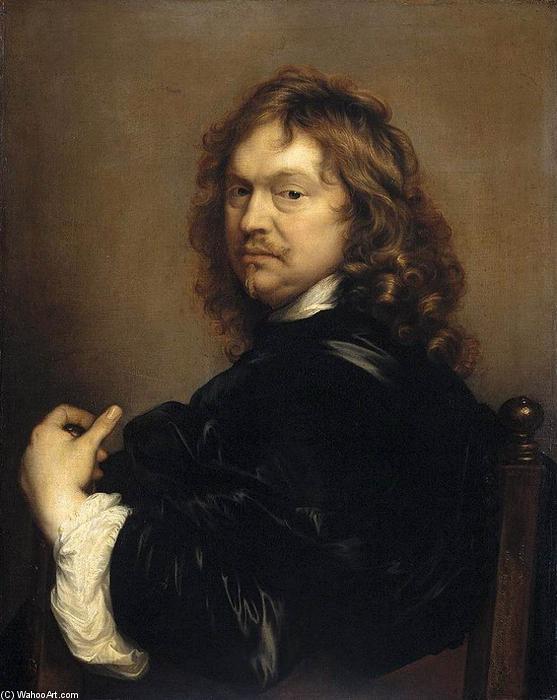
A Window into the Seventeenth Century: Adriaen Hanneman’s Self-Portrait
Adriaen Hanneman's 1656 self-portrait offers a remarkably intimate glimpse into the world of a Dutch Golden Age artist, revealing not just his likeness but also the social and intellectual currents of his time. This painting transcends a simple depiction of an individual; it’s a carefully constructed statement about identity, status, and the burgeoning artistic conventions of the era. The work immediately draws the eye with its restrained elegance – a deliberate choice that speaks volumes about Hanneman's considered approach to portraiture.
- The Figure: Seated in a comfortable chair, likely of considerable quality given the detail, the subject presents himself as a man of means and standing. His posture is upright, suggesting confidence and self-awareness. The dark coat, adorned with a crisp white collar – a hallmark of 17th-century Dutch attire – immediately establishes his social position.
- The Face: Hanneman’s face is the focal point, rendered with meticulous realism. The subtle lines etched around his eyes and mouth hint at experience and perhaps contemplation. His mustache and beard are carefully executed, adding to the authenticity of the portrait and reflecting prevailing male beauty standards. Crucially, his expression isn't overtly cheerful or dramatic; it’s a quiet seriousness, suggesting an intellectual bent – a man accustomed to thought and observation.
- Background & Composition: The stark simplicity of the background—a plain wall—is a masterstroke. It serves to isolate the subject entirely, amplifying his importance within the frame and directing all attention towards his personality and bearing. This technique was common in portraiture during this period, prioritizing the individual over elaborate settings.
A Masterclass in Dutch Portrait Technique
Hanneman’s skill lies not just in capturing likeness but also in employing a sophisticated understanding of light, shadow, and texture. The painting is executed with a realistic style, demonstrating a deep knowledge of anatomy and the effects of light on form. Notice how he uses subtle gradations of tone to create a sense of volume and depth – particularly evident in the rendering of the clothing and the folds of his hair. This masterful use of chiaroscuro (the contrast between light and dark) lends the portrait a three-dimensional quality, making it feel remarkably lifelike.
- Brushwork: The brushstrokes are generally smooth and controlled, reflecting Hanneman’s training under Jan Antonisz. van Ravesteyn the Younger. Van Ravesteyn instilled in him a precise, sculptural approach to rendering form – a legacy that is clearly visible in the carefully modeled features of the face and the detailed fabric of the coat.
- Color Palette: The muted tones—primarily blacks, whites, and browns—are typical of Dutch portraiture during this period. These restrained colors allowed Hanneman to focus on capturing subtle nuances of expression and texture rather than relying on vibrant hues.
Historical Context & Artistic Influences
Created in 1656, this self-portrait is firmly rooted within the Dutch Golden Age – a period of unprecedented artistic flourishing fueled by wealth, trade, and intellectual curiosity. Hanneman’s work reflects the influence of his contemporary, Anthony van Dyck, whose elegant and dynamic portraits were immensely popular throughout Europe. Hanneman's early years in England further shaped his style, exposing him to new trends and broadening his artistic horizons. His time with Constantijn Huygens, a prominent poet and composer, also suggests an engagement with the intellectual life of the court.
Interestingly, Hanneman’s background as a Catholic in a predominantly Protestant Netherlands subtly informed his career trajectory, potentially influencing his subject matter and patronage networks.Symbolism & Emotional Resonance
Beyond its technical brilliance, the self-portrait carries a subtle symbolic weight. The serious expression on Hanneman's face suggests an introspective nature – perhaps reflecting his role as an artist grappling with questions of identity and representation. The formality of his attire speaks to his social standing, while the quiet dignity of his pose conveys a sense of self-assuredness. Ultimately, this painting is not merely a likeness; it’s a carefully constructed portrait of a man, a time, and an artistic sensibility – inviting us to contemplate the complexities of human experience within the context of 17th-century Dutch society.
相关文章

荷兰黄金时代:十幅定义艺术史的巨作 | OriginalUniqueArt
探索荷兰黄金时代的艺术巅峰! 伦勃朗、维米尔等大师名作,带您领略巴洛克艺术的辉煌。高清画作、博物馆级品质,点亮您的家居空间。OriginalUniqueArt.com 提供精选艺术复制品和定制装饰方案。立即在线探索全系列!

荷兰黄金时代绘画:文化创新中的现实主义反思
深入探索荷兰黄金时代绘画的文化创新与现实主义反思。本文解读伦勃朗、维米尔等大师的作品,并结合玛莉特·韦斯特曼的图像学研究,揭示艺术史背后的社会语境与现代性意识觉醒。

Ferdinand Bol (1616-1680): A Dutch Master of Portraiture & Dramatic Light
Explore the captivating world of Ferdinand Bol (1616-1680), a master Dutch portraitist deeply influenced by Rembrandt. Discover his life, style, and enduring legacy with OriginalUniqueArt.

Rembrandt van Rijn: A Life Illuminated – Innovation, Emotion, and the Dutch Golden Age
Explore the life & art of Rembrandt van Rijn, a Dutch Golden Age master. Discover his innovative techniques, iconic paintings like 'The Night Watch', and enduring legacy. Expert insights for collectors & enthusiasts.
Gerard van Honthorst: Illuminating the Dutch Golden Age with Caravaggism & Courtly Grace
Explore the captivating world of Gerard van Honthorst, a Dutch Golden Age master renowned for his dramatic chiaroscuro & courtly portraits. Discover his life, art, and lasting influence on Baroque painting.

