

 实景预览
实景预览
 发送
发送 分享
分享
 详情
详情 指南
指南

 下载图片
下载图片
 相似作品
相似作品 X射线
X射线 幻灯片播放
幻灯片播放 统计数据
统计数据Self-portrait


 阅读全文
阅读全文
艺术微喷/版画
博物馆级艺术微喷或帆布版画,制作高效,并提供多种饰面选择。 ( 订购此收藏品的纯手工复刻画作 切换至数字图像销售渠道)




































您可以从与原作比例一致的预设尺寸中进行选择。

请输入您所需的宽度和高度,以适配您的画框或墙面。由于印刷品只能进行裁剪,无法超出原图尺寸,因此若比例不一致,画面的一部分将会被裁切。在正式印刷之前,我们会为您发送一份数字效果图供您确认。本页面显示的图片并非最终裁剪后的效果——只有效果图才能展示真实的裁剪情况。


 玻璃选项仅适用于110厘米以下的尺寸。

Self-portrait
艺术微喷/版画
复刻品尺寸说明
-


总计金额
¥ 538
艺术家简介
The Luminous Legacy of Ádám Mányoki
In the grand tapestry of the European Baroque, few threads are as intricately woven or as emotionally resonant as those spun by Ádám Mányoki. Born in 1673 in the modest village of Szokolya, Hungary, Mányoki’s journey from the son of a struggling Protestant pastor to a celebrated court painter is a testament to the transformative power of raw talent. His early years were defined by the quiet hardships of a rural parish, yet his destiny was redirected by the intervention of Dölfer, a German officer who recognized the boy's burgeoning genius. This pivotal mentorship provided Mányoki with an education that would eventually carry him across the most vibrant artistic hubs of Europe, from the scholarly halls of Lüneburg and Hamburg to the sophisticated ateliers of Hanover and Paris.
The evolution of Mányoki’s style was a continuous dialogue with the masters of his era. In Paris, under the guidance of Nicolas de Largillière, he absorbed the elegance and fluid grace characteristic of the French Baroque, learning to infuse his subjects with a sense of aristocratic poise. This was further enriched by his immersion in the Dutch Republic, where the mastery of light and shadow—the very essence of the Dutch tradition—deepened his ability to capture the psychological nuances of the human face. His work became a sophisticated synthesis of these diverse influences: the structural grandeur of German training, the refined elegance of French portraiture, and the atmospheric depth of the Netherlands.
A Wanderer Through Royal Courts
Mányoki’s career was as much a geographical odyssey as an artistic one, marked by his service to some of the most powerful figures in 18th-century Europe. His arrival in Berlin in 1703 secured him a prestigious position as a court painter for King Frederick William I of Prussia, a role that demanded both technical precision and the ability to convey royal dignity. However, his spirit remained restless and nomadic. In 1707, he entered the service of Francis II Rákóczi, following the Prince into Poland. This period of wandering brought him into contact with the Polish elite, leading to significant commissions, including a notable portrait of King Augustus II.
As his reputation grew, so did the breadth of his patronage. His travels took him through Prague and Vienna, where he captured the likenesses of Emperor Charles VI and the young archduchesses Maria Theresa and Maria Anna. Each new court offered a fresh canvas for his developing mastery of the portrait genre. Whether painting the high nobility of Hungary or the monarchs of Poland and Prussia, Mányoki possessed a singular ability to render not just the physical likeness, but the very gravitas and inner character of his sitters. His later years in Dresden and Leipzig saw him serving Augustus III of Poland, further cementing his status as one of the most significant portraitists of his age.
The Twilight of a Master
Despite the heights of his professional success, the final chapters of Mányoki’s life were marked by a poignant irony. The man who had captured the splendor of kings ended his days in the shadows of poverty and personal struggle. After resigning from his court position in 1753 due to unpaid salaries—a common grievance among artists of the era—he succumbed to the distractions of alchemy, a pursuit that famously drained his remaining wealth. He passed away in Dresden in 1757, an impoverished figure whose death required the charity of friends.
Yet, the historical significance of Ádám Mányoki remains undiminished by his personal decline. His contribution to the Baroque tradition lies in his ability to bridge regional styles into a cohesive, international language of portraiture. He remains a vital figure in Hungarian art history, representing a period when Central European artists moved seamlessly between the cultural epicenters of Europe. Today, his works serve as windows into the 18th century, offering us more than mere likenesses; they offer an enduring glimpse into the light, shadow, and soul of a bygone era.

Ádám Mányoki
1673 - 1757
快速概览
- Full Name: Ádám Mányoki
- Nationality: Hungarian
- Date Of Birth: 1673
- Date Of Death: 1757
- Place Of Birth: Szokolya, Hungary
- Notable Artworks:
- Portrait of Jan Szembek.
- Portrait of Adam Mányoki
- Artistic Movement Or Style: Baroque Painting
- Artists Who Influenced This Artist: ['Andreas Scheits']
- Artists Or Movements Influenced By This Artist: ['Nicolas de Largillière']
相关文章

Baroque Classicism: The Grandeur of Order and Drama in 17th-Century Art History
Explore the profound elegance of Baroque Classicism. Discover how 17th-century masters synthesized dramatic emotion with classical order through the lens of the Counter-Reformation and the works of legends like Carlo Maratta and Andrea Sacchi.

巴洛克古典主义:十七世纪艺术中的戏剧性与秩序融合
深入探索17世纪巴洛克古典主义艺术的戏剧性与秩序之美。卡拉瓦乔、鲁本斯等大师作品解析,揭秘宗教改革下的艺术策略,并了解凡尔赛宫的辉煌历史。OriginalUniqueArt.com为您提供专业的艺术鉴赏与定制服务。

巴洛克戏剧性:将辉煌与情感融入当代室内设计
探索巴洛克艺术的辉煌与奢华!OriginalUniqueArt提供精湛的手工油画复制、定制服务和专业艺术咨询,助您将经典作品融入当代室内设计,提升家居品味。投资艺术,传承价值。
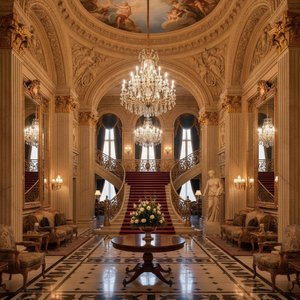
Baroque Classicism: A Professional Guide to Integrating Timeless Grandeur into Luxury Hotel Interiors
Elevate luxury hospitality with Baroque Classicism. Our guide for hotel designers explores integrating grand, classical oil reproductions into professional interiors. Discover efficient bulk procurement, custom sizing, and large-format murals to create timeless, high-impact spaces.

巴洛克艺术巅峰:十部巨作定义时代,点亮您的臻品格调
探索巴洛克艺术的辉煌!本文精选十部巨作,带您领略卡拉瓦乔、伦勃朗等大师的光影魔法与戏剧张力。从黄金时代到宗教绘画,感受奢华与精致。OriginalUniqueArt.com为您提供博物馆品质的艺术复制品和家居装饰灵感。尽在OriginalUniqueArt.com!