Portrait of Том Томсон

The 100 Most Famous Том Томсон Paintings, a Gallery Selection

Updated Жовтень 2026 · ranked by our popularity score (searches, visits and orders for each work) · 130 works by Том Томсон in our catalogue

In short

Of all the originals Том Томсон left, the most famous is Thunderhead (1913), in the collection of the Національна галерея Канади, Оттава. Close behind it come Pine Cones (1916) and The Fisherman (1917). Our catalog holds 130 works by Том Томсон; the gallery has kept the 100 the world admires most, each shown with its date, its museum and its story.

1877 – 1917, Кларент Impressionism Most works: Національна галерея Канади

Том Томсон's top 10 paintings: the gallery's choice

1
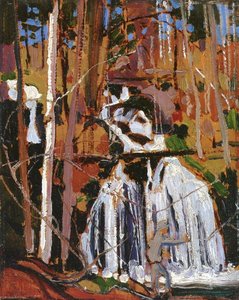
Thunderhead (1913) by Том Томсон

Thunderhead

1913 · Black and White Photography · Національна галерея Канади, Оттава

Tom Thomson was born in 1877 in Claremont, Canada. A pioneer of the Canadian wilderness, his brief career ended with his death in 1917. Through works like Thunderhead, Thomson established a visual language for the northern landscape. He acted as a crucial precursor to the Group of Seven, providing a foundational influence on their collective direction. Although he died before their formal establishment, he is widely considered an unofficial member…

2
Pine Cones (1916) by Том Томсон

Pine Cones

There is a stillness in this piece that comes from its lack of perspective. By avoiding the illusion of space, the work focuses entirely on the surface. The viewer is drawn to the small, dark geometric patterns and the way the light catches the delicate holes in the crochet. It feels less like a window into another world and more like a fragment of a domestic history, preserved in thread.…

3
The Fisherman (1917) by Том Томсон

The Fisherman

1917 · Oil · Art Gallery of Alberta, Едмонтон

Tom Thomson's "The Fisherman" isn't merely a depiction of a solitary figure casting his line; it’s a profound immersion into the heart of Canadian wilderness, a distilled essence of the early 20th century’s burgeoning interest in capturing the soul of the land. Painted in 1917, during a pivotal period for both Thomson and the nascent Group of Seven, this oil on wood panel vibrates with an almost palpable sense of…

4
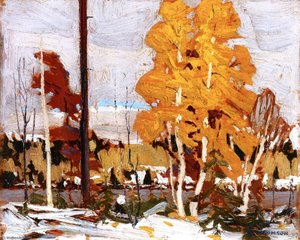
The Birch Grove, Autumn (1916) by Том Томсон

The Birch Grove, Autumn

1916 · Oil · Art Gallery of Hamilton, Гамільтон

In the quiet, transformative moments of the Canadian wilderness, few works capture the ephemeral beauty of the changing seasons as poignantly as Tom Thomson’s “The Birch Grove, Autumn.” Created in 1916, this masterpiece serves as a breathtaking window into the soul of Ontario's boreal forests. The painting presents a quintessential autumnal landscape, where a grove of birch trees stands bathed in a soft, diffused light against the backdrop of a…

5
Morning (1915) by Том Томсон

Morning

1915 · Tom Thomson Art Gallery, Торонто

Tom Thomson’s “Morning,” painted in 1915, isn't merely a landscape; it’s a distilled moment of profound serenity captured on wood-pulp board. This evocative piece, now readily available as a meticulously crafted reproduction at AllPaintingsStore.com, transports the viewer to the heart of Ontario's wilderness – a place where the air is crisp with anticipation and the promise of a new day hangs heavy in the mist.

6
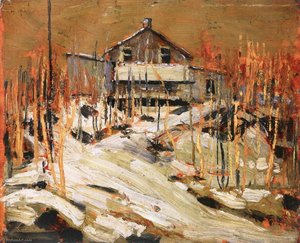
Fraser's Lodge (1915) by Том Томсон

Fraser's Lodge

1915 · Oil On Canvas · Art Gallery of Alberta, Едмонтон

Fraser’s Lodge – A Vision of Winter Solitude Tom Thomson's *Fraser’s Lodge*, painted in April 1915, stands as one of his most celebrated landscapes—a testament to the artist’s ability to distill the essence of Ontario’s boreal forest into a single, breathtaking image. Located at the Tom Thomson Art Gallery in Owen Sound, this piece embodies Thomson's signature Impressionistic style: loose brushstrokes dance across the canvas, capturing not precise details but…

7
Near Grand Lake, Algonquin Park (1916) by Том Томсон

Near Grand Lake, Algonquin Park

1916 · Oil

The scene unfolds in the heart of the Canadian wilderness within the work titled Near Grand Lake, Algonquin Park. Painted by Tom Thomson in 1916, this landscape captures a specific moment of seasonal transition. The air feels heavy with the presence of autumn, as the trees prepare for the coming change. Every brushstroke seeks to hold the essence of this northern terrain, where the wildness of the woods meets the…

The Том Томсон selection continues, 11 to 100

11Tamarack Swamp, Dawn (1916) by Том ТомсонTamarack Swamp, Dawn1916 · Національна галерея Канади 12Snow and Rocks (1916) by Том ТомсонSnow and Rocks1916 · Національна галерея Канади 13Thunder Cloud (1912) by Том ТомсонThunder Cloud1912 · Національна галерея Канади 14Spruce and Maple (1916) by Том ТомсонSpruce and Maple1916 · Національна галерея Канади 15White Frost (1914) by Том ТомсонWhite Frost1914 · Національна галерея Канади 16Rocky Shore and Sky (1915) by Том ТомсонRocky Shore and Sky1915 · Національна галерея Канади 17Tamarack Swamp (1916) by Том ТомсонTamarack Swamp1916 · Національна галерея Канади 18Northern Spring (1915) by Том ТомсонNorthern Spring1915 · Національна галерея Канади 19Sunset Sky (1915) by Том ТомсонSunset Sky1915 · Національна галерея Канади 20Grey Sky (1914) by Том ТомсонGrey Sky1914 · Національна галерея Канади 21Tamarack (1915) by Том ТомсонTamarack1915 · Національна галерея Канади 22Trees and Stump above a Shore (1916) by Том ТомсонTrees and Stump above a Shore1916 · Національна галерея Канади 23Logging, Spring, Algonquin Park (1916) by Том ТомсонLogging, Spring, Algonquin Park1916 24Little Cauchon Lake (1916) by Том ТомсонLittle Cauchon Lake1916 25Twisted Maple (1914) by Том ТомсонTwisted Maple1914 · McMichael Canadian Art Collection 26Near Owen Sound (1911) by Том ТомсонNear Owen Sound1911 · Національна галерея Канади 27Nocturne by Том ТомсонNocturneНаціональна галерея Канади 28In the Woods by Том ТомсонIn the WoodsНаціональна галерея Канади 29Snow in the Woods by Том ТомсонSnow in the WoodsНаціональна галерея Канади 30Near Owen Sound (1911) by Том ТомсонNear Owen Sound1911 31White Birches, Round Lake (1915) by Том ТомсонWhite Birches, Round Lake1915 · Національна галерея Канади 32The Enchanted Stream, Midnight (1916) by Том ТомсонThe Enchanted Stream, Midnight1916 · Національна галерея Канади 33MacCallum's Island (1914) by Том ТомсонMacCallum's Island1914 · Національна галерея Канади 34The Brook (1914) by Том ТомсонThe Brook1914 · Національна галерея Канади 35Decorative Panel (II) (1915) by Том ТомсонDecorative Panel (II)1915 · Національна галерея Канади 36Canoe Lake (1913) by Том ТомсонCanoe Lake1913 · Національна галерея Канади 37Decorative Panel (I) (1915) by Том ТомсонDecorative Panel (I)1915 · Національна галерея Канади 38Thunderhead: Pink Cloud over a Lake (1915) by Том ТомсонThunderhead: Pink Cloud over a Lake1915 · Національна галерея Канади 39Blue Clouds, Wooded Hills, and Marshes (1915) by Том ТомсонBlue Clouds, Wooded Hills, and Marshes1915 · Національна галерея Канади 40Autumn Foliage (1916) by Том ТомсонAutumn Foliage1916 · Національна галерея Канади 41Forest Undergrowth III (1915) by Том ТомсонForest Undergrowth III1915 · Національна галерея Канади 42Forest Undergrowth II (1915) by Том ТомсонForest Undergrowth II1915 · Національна галерея Канади 43Forest Undergrowth I (1915) by Том ТомсонForest Undergrowth I1915 · Національна галерея Канади 44Thaw in the Woods (1916) by Том ТомсонThaw in the Woods1916 · Національна галерея Канади 45Cranberry Marsh (1916) by Том ТомсонCranberry Marsh1916 · Національна галерея Канади 46Snow Pillars in the Sky (1915) by Том ТомсонSnow Pillars in the Sky1915 · Національна галерея Канади 47Lumber Camp, Night (1916) by Том ТомсонLumber Camp, Night1916 · Національна галерея Канади 48Autumn Birches and Poplars, Canoe Lake (1914) by Том ТомсонAutumn Birches and Poplars, Canoe Lake1914 · Національна галерея Канади 49The Lily Pond (1914) by Том ТомсонThe Lily Pond1914 · Національна галерея Канади 50Frost-laden Cedars, Big Cauchon Lake (1915) by Том ТомсонFrost-laden Cedars, Big Cauchon Lake1915 · Національна галерея Канади 51Lake in Algonquin Park (1913) by Том ТомсонLake in Algonquin Park1913 · Національна галерея Канади 52Pine Island, Georgian Bay (1915) by Том ТомсонPine Island, Georgian Bay1915 · Національна галерея Канади 53The Silent Lake (1913) by Том ТомсонThe Silent Lake1913 · Національна галерея Канади 54The Breaking of the Ice (1916) by Том ТомсонThe Breaking of the Ice1916 · Національна галерея Канади 55The Hill in Autumn (1914) by Том ТомсонThe Hill in Autumn1914 · Національна галерея Канади 56Nocturne: The Birches (1916) by Том ТомсонNocturne: The Birches1916 · Національна галерея Канади 57Evening Wind: Wooded Point and Rough Water (1914) by Том ТомсонEvening Wind: Wooded Point and Rough Water1914 · Національна галерея Канади 58Approaching Snowstorm (1915) by Том ТомсонApproaching Snowstorm1915 · Національна галерея Канади 59Petawawa Gorges (1914) by Том ТомсонPetawawa Gorges1914 · Національна галерея Канади 60Spring (1916) by Том ТомсонSpring1916 · Національна галерея Канади 61Smoke Lake (1912) by Том ТомсонSmoke Lake1912 · Національна галерея Канади 62Timber Chute (1916) by Том ТомсонTimber Chute1916 · Національна галерея Канади 63First Snow in Autumn (1916) by Том ТомсонFirst Snow in Autumn1916 · Національна галерея Канади 64On Georgian Bay (1914) by Том ТомсонOn Georgian Bay1914 · Національна галерея Канади 65Winter in the Woods (1916) by Том ТомсонWinter in the Woods1916 · Національна галерея Канади 66Red Leaves (1914) by Том ТомсонRed Leaves1914 · Національна галерея Канади 67Swift Water (1916) by Том ТомсонSwift Water1916 · Національна галерея Канади 68Lake, Shore and Sky (1913) by Том ТомсонLake, Shore and Sky1913 · Національна галерея Канади 69Ice in Spring (1916) by Том ТомсонIce in Spring1916 · Національна галерея Канади 70Birch by a Lake with Big Cloud (1916) by Том ТомсонBirch by a Lake with Big Cloud1916 · Національна галерея Канади 71Lake in Autumn (1916) by Том ТомсонLake in Autumn1916 · Національна галерея Канади 72Trees, Red Hill, and Sunset Sky (1916) by Том ТомсонTrees, Red Hill, and Sunset Sky1916 · Національна галерея Канади 73Petawawa (1916) by Том ТомсонPetawawa1916 · Національна галерея Канади 74Snow in the Woods (I) (1915) by Том ТомсонSnow in the Woods (I)1915 · Національна галерея Канади 75Moose at Night (1916) by Том ТомсонMoose at Night1916 · Національна галерея Канади 76Stormy Sky (1915) by Том ТомсонStormy Sky1915 · Національна галерея Канади 77Birches (1916) by Том ТомсонBirches1916 · Національна галерея Канади 78Portage, Ragged Lake (1917) by Том ТомсонPortage, Ragged Lake1917 · Національна галерея Канади 79March (1916) by Том ТомсонMarch1916 · Національна галерея Канади 80Clouds ("The Zeppelins") (1915) by Том ТомсонClouds ("The Zeppelins")1915 · Національна галерея Канади 81Birch Woods in Autumn (1916) by Том ТомсонBirch Woods in Autumn1916 · Національна галерея Канади 82Maple Woods, Bare Trunks (1915) by Том ТомсонMaple Woods, Bare Trunks1915 · Національна галерея Канади 83The Marsh, Early Spring (1916) by Том ТомсонThe Marsh, Early Spring1916 · Національна галерея Канади 84Burnt Country, Evening (1914) by Том ТомсонBurnt Country, Evening1914 · Національна галерея Канади 85Campfire (1916) by Том ТомсонCampfire1916 · Національна галерея Канади 86Giant's Tomb, Georgian Bay (1914) by Том ТомсонGiant's Tomb, Georgian Bay1914 · Національна галерея Канади 87View over a Lake, Autumn (1916) by Том ТомсонView over a Lake, Autumn1916 · Національна галерея Канади 88Snow in the Woods (II) (1915) by Том ТомсонSnow in the Woods (II)1915 · Національна галерея Канади 89Birches (1915) by Том ТомсонBirches1915 · Національна галерея Канади 90Boats (1916) by Том ТомсонBoats1916 · Art Gallery of Ontario 91Lake, Shore, and Sky (1913) by Том ТомсонLake, Shore, and Sky1913 92Burned Over Land (1916) by Том ТомсонBurned Over Land1916 93Grey Day in the North (1913) by Том ТомсонGrey Day in the North1913 94Moonlight (1915) by Том ТомсонMoonlight1915 95Drowned Land (1912) by Том ТомсонDrowned Land1912 96Early Spring in Cauchon Lake (1916) by Том ТомсонEarly Spring in Cauchon Lake1916 97Evening, Pine Island (1914) by Том ТомсонEvening, Pine Island1914 98Maple Saplings, October (1917) by Том ТомсонMaple Saplings, October1917 99First Snow, Canoe Lake (1915) by Том ТомсонFirst Snow, Canoe Lake1915 100First Snow in Autumn (1916) by Том ТомсонFirst Snow in Autumn1916

The subjects that held Том Томсон's eye

The four subjects that come back most often in these originals, each with its finest example.

The museums that keep Том Томсон's originals

The 6 museums that hold the most of the paintings on this page.

Museum City Works by Том Томсон Paintings from this list
Національна галерея Канади, ОттаваНаціональна галерея Канади Оттава 87 Thunderhead, Pine Cones, Decorative Panel (III)
Art Gallery of Alberta, ЕдмонтонArt Gallery of Alberta Едмонтон 2 The Fisherman, Fraser's Lodge
Art Gallery of Ontario, ТоронтоArt Gallery of Ontario Торонто 5 Boats
Art Gallery of Hamilton, ГамільтонArt Gallery of Hamilton Гамільтон 1 The Birch Grove, Autumn
Tom Thomson Art Gallery, ТоронтоTom Thomson Art Gallery Торонто 1 Morning
McMichael Canadian Art Collection, ВонMcMichael Canadian Art Collection Вон 1 Twisted Maple

Том Томсон year by year: the originals that define each

Том Томсон's dated works in this selection cover only 7 years, from 1911 to 1917: a brief career, shown here year by year.

Works per year

Pick a year to see its originals.

Collectors' questions about Том Томсон's paintings

Which work is Том Томсон most famous for?Reveal the answer

Thunderhead (1913), Національна галерея Канади, Оттава. Pine Cones (1916) and The Fisherman (1917) come next.

What age was Том Томсон when Thunderhead was made?Reveal the answer

36 years old: Thunderhead dates from 1913, and Том Томсон was born in 1877.

What are the ten most famous Том Томсон paintings?Reveal the answer

Thunderhead, Pine Cones, The Fisherman, The Birch Grove, Autumn, Morning, Fraser's Lodge, Near Grand Lake, Algonquin Park, The Hill in Autumn, Lakeside, Spring, Algonquin Park and Decorative Panel (III). The ranking above gives each one's year and museum.

How many paintings did Том Томсон leave?Reveal the answer

Our catalog holds 130 works by Том Томсон, dated from 1911 to 1917.

In which museums do Том Томсон's masterpieces hang?Reveal the answer

Mostly in Національна галерея Канади (Оттава), Art Gallery of Alberta (Едмонтон) and Art Gallery of Ontario (Торонто). The museum table above lists them all.

In which years did Том Томсон paint the most famous works?Reveal the answer

In 1916: 38 of the 100 works on this page were made then, Pine Cones among them.

What are the first and the last famous originals of Том Томсон?Reveal the answer

On this page, the earliest is Near Owen Sound (1911) and the latest The Fisherman (1917).

Which subjects did Том Томсон choose most often?Reveal the answer

Landscape (5), Waterfall (2) and Canadianart (2), across the 100 works on this page.

Which technique did Том Томсон use most?Reveal the answer

Oil, for 3 of the 100 works on this page.

To which art movement does Том Томсон belong?Reveal the answer

Impressionism and Post-impressionism, judging by the originals on this page.

Which Том Томсон works hang at the Національна галерея Канади?Reveal the answer

Thunderhead, Pine Cones and Decorative Panel (III): the Національна галерея Канади, Оттава holds 78 of the works on this page.

Can I commission a reproduction of a Том Томсон painting?Reveal the answer

Yes, as a reproduction: the original stays in its museum, but any painting on this page can be painted by hand for you, made to order one at a time, from the painting's own page.

Том Томсон: life and work

A Pioneer of the Canadian Wilderness

Thomas John Thomson, affectionately known simply as Tom Thomson to generations of Canadians, remains a pivotal and somewhat enigmatic figure in the nation’s artistic heritage. Though his active career spanned only a handful of years – tragically cut short at the age of thirty-nine – he indelibly shaped the course of Canadian art, acting as a crucial precursor to the renowned Group of Seven and leaving behind a legacy of evocative landscapes that continue to resonate deeply with audiences today. His story is one of late blossoming, of a restless spirit finding its voice in the untamed beauty of Ontario’s wilderness, and of an enduring mystery surrounding his untimely death.

From Rural Beginnings to Artistic Awakening

Born August 5, 1877, in Claremont, Ontario, Thomson's early life was deeply rooted in the rhythms of rural existence. He grew up as one of ten children within a large farming family – a reality that instilled within him a profound connection to the natural world—though initially expressed through other pursuits. His formal education was intermittent, punctuated by periods of illness and practical necessity. Before dedicating himself wholeheartedly to art, Thomson explored various trades: he worked at an iron foundry, briefly attended business college, and even ventured west to Seattle where he honed his skills as a commercial artist. This period proved formative; it wasn’t merely about acquiring technical proficiency in penmanship and design at firms like Maring & Ladd, but also about encountering individuals who would later become central figures in the burgeoning Canadian art scene – J.E.H. MacDonald and Lawren Harris among them. These connections provided a crucial intellectual and artistic environment that nurtured his latent talent. However, it was the discovery of Algonquin Park in 1912 that truly ignited Thomson’s artistic passion. Guided by MacDonald's encouragement, he began to sketch the park’s breathtaking vistas, embarking on a journey of self-discovery through landscape painting—a path that would ultimately define his career.

The Evolution of a Distinctive Style

Thomson’s early paintings reveal a promising but unrefined talent. While demonstrating an understanding of composition and color, they lacked the distinctive voice that would come to define his mature work. He began with realistic depictions of the landscape, capturing its forms and colors with careful attention to detail. However, over time, his style underwent a dramatic transformation. He moved away from conventional techniques—such as meticulous realism—embracing a bolder, more expressive approach characterized by vivid colors, thickly applied paint – *impasto* – and dynamic brushstrokes. These weren’t merely representations of the landscape; they were visceral interpretations, conveying the energy, atmosphere, and emotional intensity of the Canadian wilderness. He experimented with different techniques, incorporating elements of Impressionism and Post-Impressionism into his work. His subject matter remained almost exclusively landscapes: towering trees, expansive skies, shimmering lakes, winding rivers, and the subtle nuances of light and shadow across the terrain. He captured not just what he *saw*, but how it *felt* to be immersed in that environment—a crucial element that distinguished his art from earlier landscape traditions. This ability to infuse his paintings with a sense of immediacy and emotional resonance set him apart from his contemporaries.

Influences and Artistic Connections

Thomson’s artistic development was profoundly shaped by the connections he forged during his time working as a commercial artist in Toronto. He encountered artists like J.E.H. MacDonald, who became a mentor and friend, encouraging him to pursue landscape painting with greater intensity. MacDonald's influence is evident in Thomson’s later work—particularly in his use of color and composition. He also benefited from the atmosphere of artistic experimentation fostered by Grip Limited, where he worked alongside other emerging artists such as Franklin Carmichael and Frederick Varley. These interactions exposed him to new ideas and techniques, pushing him to develop a more individualistic style. The influence of European art—particularly Impressionism and Post-Impressionism—is also discernible in his work, although Thomson adapted these influences to suit the unique character of the Canadian landscape. His early exposure to the works of artists like Monet and Van Gogh undoubtedly played a role in shaping his expressive approach to color and brushwork.

Legacy and Lasting Influence

Paintings like The Jack Pine, *The West Wind*, *Moonlight Sail*, and *Birch Grove, Autumn* have become iconic representations of Canadian identity and the nation’s natural beauty—images that resonate deeply with Canadians today. Though he died before the formal establishment of the Group of Seven in 1920, Thomson is widely considered an unofficial member – a foundational influence whose artistic vision paved the way for their groundbreaking work. His embrace of bold colors, expressive brushwork, and uniquely Canadian subject matter profoundly shaped the group’s direction. His legacy extends far beyond his own paintings; he inspired generations of Canadian artists to explore the themes and landscapes of their homeland. The circumstances surrounding his death in July 1917—a drowning accident in Canoe Lake—remain shrouded in mystery, adding to the mystique that surrounds his life and art. Was it a tragic accident, or something more? This ambiguity has fueled speculation for decades, further cementing Thomson’s place as a legendary figure in Canadian culture. Today, his works are primarily held in major Canadian institutions such as the Art Gallery of Ontario, the National Gallery of Canada, the McMichael Canadian Art Collection, and the Tom Thomson Art Gallery—ensuring that his vision continues to inspire and captivate audiences for years to come. He stands as a testament to the power of artistic expression to capture the essence of a nation’s soul.

A Lasting Symbol

Thomson is rightfully recognized as a pioneer of Canadian modern art, breaking away from European traditions and forging a uniquely Canadian aesthetic. His paintings are more than just landscapes; they are powerful symbols of Canada's wilderness and national identity. The enduring popularity of his work speaks to its timeless quality and universal appeal. He didn’t simply paint what he saw; he painted how it *felt* to be Canadian, to be connected to the vastness and beauty of the northern landscape. His legacy continues to grow, solidifying his position as one of Canada's most beloved and important artists—a true icon of the nation’s artistic heritage.

All 130 works by Том Томсон →