

 Переглянути в інтер'єрі
 Надіслати як листівку
 Поділитися
 Деталі витвору
 Посібник

 Завантажити
 Схожі екземпляри
 Рентгенівське дослідження
 Слайд-шоу
 Q&A
Q&A Статистика
Fraser's Lodge


 Розгорнути текст
Олійная репродукція ручної роботи
Написана вручну олією на полотні у вашому розмірі та рамі, виготовлена на замовлення нашими художниками. ( Перейти до друку Перейти до цифрових зображень)




P118B ₴10

P118H ₴10

P118W ₴10

P438Z ₴10

P508JH ₴12

P508YH ₴12

P805H ₴10

P805Z ₴10

P919BZ ₴10

P919G ₴10

P919XJ ₴10

P959ZH ₴10

P968JZ ₴12

W106C ₴8

W218G ₴10

W218JH ₴8

W218Y ₴10

W307PJ ₴10

W316G ₴10

W316PJ ₴8

W316Y ₴10

W398PJ ₴8

W4111J ₴10

W500HY ₴15

W500JH ₴15

W692G ₴12

W849H ₴8

W940BG ₴15

W953PJ ₴8




Обирайте з наших стандартних розмірів, що відповідають оригінальним пропорціям твору мистецтва.

Введіть необхідну ширину та висоту, щоб картина підійшла до вашої рами або стіни. Оскільки це ручний розпис, для зміни пропорцій художник може дописати трохи більше по краях або дещо обрізати композицію — вибір за вами. Перед початком роботи ми надішлемо вам цифровий макет для затвердження. Зображення, показане на цій сторінці, не є реальним результатом — лише макет відображає майбутній вигляд.
Після оформлення замовлення команда OriginalUniqueArt.com зв'яжеться з клієнтом електронною поштою для отримання інструкцій та надасть попередній макет
Доставка по всьому світу () за 3–4 тижні замість стандартних 5 тижнів. (29 Жовтень). Без жодних компромісів у якості.

Безкоштовна експрес-доставка по всьому світу

Високоякісне лляне полотно

Повне страхове покриття доставки

Гарантія повернення митних зборів

Гарантія точного відтворення кольорів

Політика повернення протягом 100 днів (лише у разі виявлення дефектів)

Гарантія повернення 100% коштів

Пропозиція на оптові замовлення
 Скляний варіант доступний лише для розмірів до 110 см

Fraser's Lodge
Матеріал репродукції
Розмір репродукції
-


Підсумкова вартість
₴ 13460
Fraser’s Lodge – A Vision of Winter Solitude
Tom Thomson's *Fraser’s Lodge*, painted in April 1915, stands as one of his most celebrated landscapes—a testament to the artist’s ability to distill the essence of Ontario’s boreal forest into a single, breathtaking image. Located at the Tom Thomson Art Gallery in Owen Sound, this piece embodies Thomson's signature Impressionistic style: loose brushstrokes dance across the canvas, capturing not precise details but rather the shimmering interplay of light and shadow as it filters through the dense evergreen canopy. The painting’s palette is dominated by muted greens and browns—the dominant hues of winter foliage—accentuated by splashes of crimson from distant maple trees, hinting at the promise of spring.- Composition: Thomson skillfully employs a pyramidal composition, anchoring the eye to the central cabin nestled amongst towering pines and firs. This arrangement conveys a sense of stability amidst the wildness surrounding it, mirroring the quiet resilience of nature itself.
- Technique: Thomson utilized a technique known as alla prima—painting directly onto wet canvas without underpainting—allowing for rapid execution and capturing fleeting moments of atmospheric effect. Thickly applied paint creates textural surfaces that evoke the rugged beauty of the Canadian wilderness.
- Symbolism: The cabin represents human presence within the natural world, albeit a modest one. Its simplicity speaks to a harmonious relationship between man and environment—a core theme in Thomson’s oeuvre. The dominant pines symbolize strength and endurance, mirroring the enduring spirit of Ontario's boreal forests.
Historical Context – Thomson’s Algonquin Explorations
Thomson’s fascination with Algonquin Park stemmed from a profound desire to reconnect with his roots—the Scottish Highlands where his ancestors had emigrated centuries earlier. Inspired by J.E.H. MacDonald's encouragement, Thomson embarked on extended expeditions into the park during the summers of 1912 and 1913, documenting its landscapes with meticulous detail. These journeys solidified his artistic vision and fueled his belief in the transformative power of experiencing nature firsthand. The painting reflects this period of intense observation and creative inspiration—a pivotal moment in Thomson’s artistic development.Emotional Impact – Tranquility Amidst Decay
*Fraser’s Lodge* isn't merely a depiction of a winter scene; it’s an invitation to contemplate the beauty of decay—the inevitable cycle of seasonal change that underscores the grandeur of the natural world. Thomson captures not just the visual splendor but also the palpable stillness of the forest, conveying a feeling of profound solitude and contemplation. The muted colors and textured brushstrokes evoke a sense of melancholy yet simultaneously celebrate the enduring spirit of Ontario’s wilderness. It's a painting that lingers in the mind long after viewing—a reminder of the sublime power of art to transport us beyond the everyday into realms of beauty and emotion.Provenance & Recognition
The artwork was exhibited at the Arts Centre of Greater Victoria in 1959, followed by a journey to Fine Arts Gallery, University of British Columbia, Vancouver, Canada, in 1959 and Confederation Art Gallery and Museum, Charlottetown, Prince Edward Island, Canada, in 1965. It was subsequently displayed at Edmonton Art Gallery, Edmonton, Alberta, Canada, in 1973; Barbican Art Gallery, London, England, in 1991; Musée du Québec, Quebec City, Quebec, Canada, in 2001; and Art Gallery of Ontario, Toronto, Ontario, Canada, in 2002. It is considered one of Thomson’s most important works and has been reproduced extensively in scholarly publications and artistic catalogues.Питання та відповіді
Який це вид твору мистецтва: «Fraser's Lodge» роботи Том Томпсон?
У каталозі «Fraser's Lodge» роботи Том Томпсон класифіковано як WallArt. Ця категорія допомагає знаходити схожі твори.
У якому році було створено «Fraser's Lodge» роботи Том Томпсон?
«Fraser's Lodge» датована 1915 роком. Ця дата дозволяє визначити місце твору в творчому шляху Том Томпсон та відповідну епоху.
Чи дозволено законом відтворювати «Fraser's Lodge» роботи Том Томпсон, що зберігається в Art Gallery of Alberta?
Статус авторського права на «Fraser's Lodge» роботи Том Томпсон є чітким: цей твір перебуває у є суспільним надбанням — термін дії авторського права закінчився. Його перебування в Art Gallery of Alberta не змінює цього статусу.
Біографія митця
A Pioneer of the Canadian Wilderness
Thomas John Thomson, affectionately known simply as Tom Thomson to generations of Canadians, remains a pivotal and somewhat enigmatic figure in the nation’s artistic heritage. Though his active career spanned only a handful of years – tragically cut short at the age of thirty-nine – he indelibly shaped the course of Canadian art, acting as a crucial precursor to the renowned Group of Seven and leaving behind a legacy of evocative landscapes that continue to resonate deeply with audiences today. His story is one of late blossoming, of a restless spirit finding its voice in the untamed beauty of Ontario’s wilderness, and of an enduring mystery surrounding his untimely death.From Rural Beginnings to Artistic Awakening
Born August 5, 1877, in Claremont, Ontario, Thomson's early life was deeply rooted in the rhythms of rural existence. He grew up as one of ten children within a large farming family – a reality that instilled within him a profound connection to the natural world—though initially expressed through other pursuits. His formal education was intermittent, punctuated by periods of illness and practical necessity. Before dedicating himself wholeheartedly to art, Thomson explored various trades: he worked at an iron foundry, briefly attended business college, and even ventured west to Seattle where he honed his skills as a commercial artist. This period proved formative; it wasn’t merely about acquiring technical proficiency in penmanship and design at firms like Maring & Ladd, but also about encountering individuals who would later become central figures in the burgeoning Canadian art scene – J.E.H. MacDonald and Lawren Harris among them. These connections provided a crucial intellectual and artistic environment that nurtured his latent talent. However, it was the discovery of Algonquin Park in 1912 that truly ignited Thomson’s artistic passion. Guided by MacDonald's encouragement, he began to sketch the park’s breathtaking vistas, embarking on a journey of self-discovery through landscape painting—a path that would ultimately define his career.The Evolution of a Distinctive Style
Thomson’s early paintings reveal a promising but unrefined talent. While demonstrating an understanding of composition and color, they lacked the distinctive voice that would come to define his mature work. He began with realistic depictions of the landscape, capturing its forms and colors with careful attention to detail. However, over time, his style underwent a dramatic transformation. He moved away from conventional techniques—such as meticulous realism—embracing a bolder, more expressive approach characterized by vivid colors, thickly applied paint – *impasto* – and dynamic brushstrokes. These weren’t merely representations of the landscape; they were visceral interpretations, conveying the energy, atmosphere, and emotional intensity of the Canadian wilderness. He experimented with different techniques, incorporating elements of Impressionism and Post-Impressionism into his work. His subject matter remained almost exclusively landscapes: towering trees, expansive skies, shimmering lakes, winding rivers, and the subtle nuances of light and shadow across the terrain. He captured not just what he *saw*, but how it *felt* to be immersed in that environment—a crucial element that distinguished his art from earlier landscape traditions. This ability to infuse his paintings with a sense of immediacy and emotional resonance set him apart from his contemporaries.Influences and Artistic Connections
Thomson’s artistic development was profoundly shaped by the connections he forged during his time working as a commercial artist in Toronto. He encountered artists like J.E.H. MacDonald, who became a mentor and friend, encouraging him to pursue landscape painting with greater intensity. MacDonald's influence is evident in Thomson’s later work—particularly in his use of color and composition. He also benefited from the atmosphere of artistic experimentation fostered by Grip Limited, where he worked alongside other emerging artists such as Franklin Carmichael and Frederick Varley. These interactions exposed him to new ideas and techniques, pushing him to develop a more individualistic style. The influence of European art—particularly Impressionism and Post-Impressionism—is also discernible in his work, although Thomson adapted these influences to suit the unique character of the Canadian landscape. His early exposure to the works of artists like Monet and Van Gogh undoubtedly played a role in shaping his expressive approach to color and brushwork.Legacy and Lasting Influence
Paintings like The Jack Pine, *The West Wind*, *Moonlight Sail*, and *Birch Grove, Autumn* have become iconic representations of Canadian identity and the nation’s natural beauty—images that resonate deeply with Canadians today. Though he died before the formal establishment of the Group of Seven in 1920, Thomson is widely considered an unofficial member – a foundational influence whose artistic vision paved the way for their groundbreaking work. His embrace of bold colors, expressive brushwork, and uniquely Canadian subject matter profoundly shaped the group’s direction. His legacy extends far beyond his own paintings; he inspired generations of Canadian artists to explore the themes and landscapes of their homeland. The circumstances surrounding his death in July 1917—a drowning accident in Canoe Lake—remain shrouded in mystery, adding to the mystique that surrounds his life and art. Was it a tragic accident, or something more? This ambiguity has fueled speculation for decades, further cementing Thomson’s place as a legendary figure in Canadian culture. Today, his works are primarily held in major Canadian institutions such as the Art Gallery of Ontario, the National Gallery of Canada, the McMichael Canadian Art Collection, and the Tom Thomson Art Gallery—ensuring that his vision continues to inspire and captivate audiences for years to come. He stands as a testament to the power of artistic expression to capture the essence of a nation’s soul.A Lasting Symbol
Thomson is rightfully recognized as a pioneer of Canadian modern art, breaking away from European traditions and forging a uniquely Canadian aesthetic. His paintings are more than just landscapes; they are powerful symbols of Canada's wilderness and national identity. The enduring popularity of his work speaks to its timeless quality and universal appeal. He didn’t simply paint what he saw; he painted how it *felt* to be Canadian, to be connected to the vastness and beauty of the northern landscape. His legacy continues to grow, solidifying his position as one of Canada's most beloved and important artists—a true icon of the nation’s artistic heritage.
Том Томпсон
1877 - 1917 , Канада
Короткі факти
- Artistic Movement Or Style: Канадський модернізм
- Artists Or Movements Influenced By This Artist: ['Group of Seven']
- Artists Who Influenced This Artist:
- J.E.H. MacDonald
- Lawren Harris
- Date Of Birth: 5 серпня 1877
- Date Of Death: 8 липня 1917
- Full Name: Thomas John Thomson
- Nationality: Канадський
- Notable Artworks:
- The Jack Pine
- West Wind
- Moonlight Sail
- Place Of Birth: Кларент, Канада
Пов'язані статті
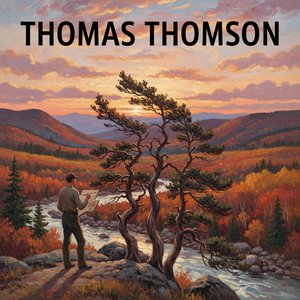
Thomas Thomson: Pioneering Canadian Landscape & the Pursuit of National Identity
Explore the evocative landscapes of Tom Thomson, a pivotal figure in Canadian art & precursor to the Group of Seven. Discover his bold style, lasting legacy, and profound impact on shaping a national artistic identity.

Топ-10 шедеврів імпресіонізму: пейзажі, що змінили мистецтво | OriginalUniqueArt
Відкрийте для себе 10 шедеврів імпресіонізму, що змінили пейзажне мистецтво! Дізнайтесь історії Моне, Ренуара та інших майстрів. Купіть репродукції картин імпресіоністів преміум-якості на OriginalUniqueArt.com і додайте елегантності вашому інтер'єру. Дослідіть колекцію онлайн!

Топ-10 шедеврів імпресіонізму: пейзажі, що змінили світ мистецтва | OriginalUniqueArt
Відкрийте для себе 10 шедеврів імпресіонізму, що змінили пейзажне мистецтво! Дізнайтесь історії Моне, Ренуара та інших майстрів. Купіть репродукції картин високої якості на OriginalUniqueArt.com – музейне мистецтво для вашого дому.

Arthur Lismer: A Pioneer of Canadian Modernism & the Group of Seven's Visionary Spirit
Explore the life & art of Arthur Lismer, a pivotal figure in Canadian Modernism and founding member of the Group of Seven. Discover his landscapes, teaching legacy & lasting influence on Canadian art history.

George Agnew Reid: A Canadian Impressionist's Pursuit of Light, Colour, and National Identity
Explore the life & work of George Agnew Reid, a pivotal figure in Canadian Impressionism. Discover his genre paintings, mural commissions, and lasting influence on art education & national identity. A comprehensive guide for collectors & enthusiasts.