Портрет Ernst Barlach

12 найвідоміших картин Ernst Barlach, кожна з яких є унікальною

Оновлено Листопад 2026 · за рейтингом нашої популярності (кількість пошукових запитів, переглядів та замовлень для кожної роботи) · 12 робіт Ernst Barlach у нашому каталозі

Коротко кажучи

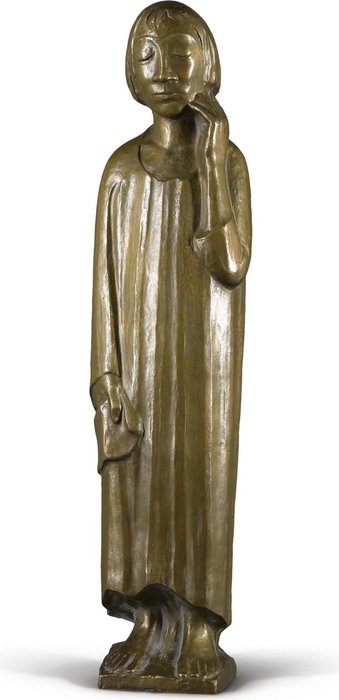
Frenzy (Der Berserker) (1910) — це картина Ernst Barlach, яка привертає найбільше уваги; оригінал зберігається в Nelson-Atkins Museum of Art, Канзас-Сіті. Після цього погляд переходить на Man in Ecstasy (1912) та The Flutist (1936). Серед 12 робіт Ernst Barlach у нашому каталозі ці 12 є найвідомішими: кожна з них — унікальний оригінал із зазначенням року створення, музею та причини її безсмертя.

1870 – 1938 Expressionism Найбільше робіт: Nelson-Atkins Museum of Art

Топ-10 картин Ernst Barlach крізь призму галереї

1
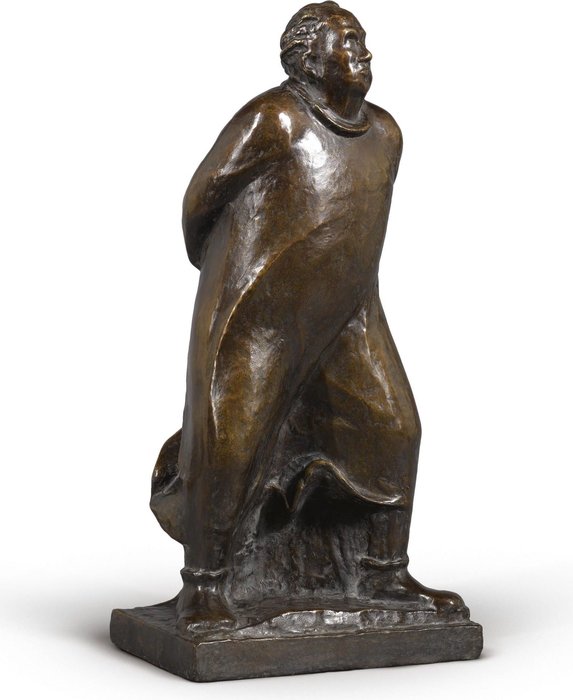
Frenzy (Der Berserker) (1910) авторства Ernst Barlach

Frenzy (Der Berserker)

1910 · Bronze · Nelson-Atkins Museum of Art, Канзас-Сіті

In the heavy, bronze contours of Ernst Barlach’s Frenzy (Der Berserker), one does not merely observe a sculpture; one encounters a visceral eruption of human emotion. Created in 1910, this masterpiece stands as a profound testament to the power of German Expressionism, capturing a moment where physical form and psychological turmoil become indistinguishable. The figure, cast in enduring bronze, presents a powerful, solid silhouette that seems to vibrate with an…

5
The Singing Man (1928) авторства Ernst Barlach

The Singing Man

1928

Ernst Barlach ist einer der bedeutendsten Bildhauer des deutschen Expressionismus. Geprägt durch die erschütternden Erfahrungen des Ersten Weltkriegs und später in radikaler Opposition zur rassistisch definierten nationalsozialistischen Propaganda einer Volksgemeinschaft befasste er sich mit dem Individuum, häufig in dessen existenzieller Einsamkeit und Not, aber auch in Momenten des unmittelbaren und als glücklich erlebten Daseins. Der singende Mann wirkt in seiner zurückgelehnten Haltung gelöst und lauscht mit Freude und ein wenig…

7
Shepherd in a Storm (1908) авторства Ernst Barlach

Shepherd in a Storm

1908 · Wood · Kunsthalle Bremen, Бремен

In the evocative sculpture Shepherd in a Storm, created in 1908 by the German Expressionist master Ernst Barlach, we encounter a profound meditation on human resilience. The piece captures a moment of intense struggle, where a shepherd, with his head bowed and hat pulled low against the elements, battles an unseen, relentless wind. This atmospheric tension serves as a powerful metaphor for the adversities and tempests that define the human…

Знамениті картини Ernst Barlach, з 11 по 12

Теми, що привертали увагу Ernst Barlach

Чотири сюжети, які найчастіше зустрічаються в цих оригіналах, кожен із найкращим прикладом.

Музеї, у яких зберігаються оригінали Ernst Barlach

5 музеїв, у яких зберігається найбільша кількість картин із цього списку.

Музей Місто Твори Ernst Barlach Картини зі цього списку
Nelson-Atkins Museum of Art, Канзас-СітіNelson-Atkins Museum of Art Канзас-Сіті 1 Frenzy (Der Berserker)
Aichi Prefectural Museum of Art, НагояAichi Prefectural Museum of Art Нагоя 1 Man in Ecstasy
Lehmbruck Museum, DüsseldorfLehmbruck Museum Düsseldorf 1 The Flutist
Staatliche Kunsthalle Karlsruhe, КарлсруеStaatliche Kunsthalle Karlsruhe Карлсруе 1 Panic Terror
Kunsthalle Bremen, БременKunsthalle Bremen Бремен 1 Shepherd in a Storm

Ernst Barlach крізь десятиліття: одна унікальна оригінальна робота для кожного

Роботи за десятиліттями

Оберіть десятиліття, щоб побачити оригінальний твір, який його визначає.

Картини Ernst Barlach: запитання до галереї

Яка найвідоміша робота Ernst Barlach?Дізнатися відповідь

Frenzy (Der Berserker) (1910), Nelson-Atkins Museum of Art, Канзас-Сіті. Далі йдуть Man in Ecstasy (1912) та The Flutist (1936).

У якому віці Ernst Barlach створив(ла) Frenzy (Der Berserker)?Дізнатися відповідь

40 років: Frenzy (Der Berserker) датована 1910 роком, а Ernst Barlach народився(-лася) у 1870.

Які десять найвідоміших картин Ernst Barlach?Дізнатися відповідь

Frenzy (Der Berserker), Man in Ecstasy, The Flutist, Panic Terror, The Singing Man, Untitled (727), Shepherd in a Storm, Untitled (305), Untitled (207) та Untitled (902). У рейтингу вище вказано рік створення та музей для кожної картини.

Скільки відомих робіт належить Ernst Barlach?Дізнатися відповідь

Наш каталог містить 12 робіт Ernst Barlach, датованих періодом з 1908 по 1936.

Де можна побачити найвідоміші оригінали Ernst Barlach?Дізнатися відповідь

Переважно в Nelson-Atkins Museum of Art (Канзас-Сіті), Aichi Prefectural Museum of Art (Нагоя) та Lehmbruck Museum (Düsseldorf). У таблиці музеїв вище наведено їхній повний перелік.

У який період Ernst Barlach створив свої найвідоміші картини?Дізнатися відповідь

У 1910s: 3 із 12 робіт на цій сторінці були створені тоді, серед них Frenzy (Der Berserker).

Яка з найвідоміших картин Ernst Barlach була написана найраніше, а яка — найпізніше?Дізнатися відповідь

На цій сторінці найдавніша робота датована Shepherd in a Storm (1908), а найновіша — The Flutist (1936).

Якими матеріалами найчастіше користувався Ernst Barlach?Дізнатися відповідь

Wood, для 2 із 12 робіт на цій сторінці.

До якого напряму належить творчість Ernst Barlach?Дізнатися відповідь

Expressionism, судячи з оригіналів на цій сторінці.

Ernst Barlach: портрет художника

Ernst Barlach: Life and Legacy

Early Life and Education

  • Born in Wedel, Holstein (Germany) on January 2nd, 1870, Ernst Heinrich Barlach was the eldest of four sons.
  • His father, Dr. Georg Barlach, was a physician who died when Ernst was fourteen, leading to a move with his family.
  • He received his early education in Ratzeburg and Schönberg, growing up in a devout Lutheran household.
  • Barlach began his artistic training at the Gewerbeschule Hamburg (Hamburg School of Applied Arts) from 1888 to 1891.
  • He continued his studies at the Königliche Akademie der bildenden Künste zu Dresden (Royal Academy of Fine Arts in Dresden) between 1891 and 1895, creating his first major sculpture, Die Krautpflückerin (The Herb Plucker).
  • He briefly studied at the Académie Julian in Paris from 1895 to 1897 but remained critical of simply copying French styles.

Artistic Development and Influences

  • Initially, Barlach worked in an Art Nouveau style, creating illustrations for the magazine Jugend and ceramic sculptures.
  • A pivotal trip to Russia in 1906 profoundly influenced his artistic direction, exposing him to new perspectives and a more expressive aesthetic.
  • Financial support from art dealer Paul Cassirer allowed Barlach to develop his unique style, focusing on the emotional intensity of human figures.
  • He drew inspiration from early Gothic art, particularly its dramatic drapery and spiritual yearning.
  • Barlach’s work also reflects influences from Russian folk art and a growing interest in portraying the lives of ordinary people.

Key Themes and Artistic Style

  • Barlach's sculptures, prints, and writings often explored themes of human suffering, spiritual longing, and social injustice.
  • His figures are characterized by their elongated forms, expressive gestures, and a sense of inner turmoil.
  • He frequently used wood carving and bronze as his primary mediums, emphasizing the tactile qualities of these materials.
  • The Singing Man, Frenzy (Der Berserker), and Shepherd in a Storm are examples of his emotionally charged and symbolic works.

World War I and its Aftermath

  • Initially, Barlach was a patriotic supporter of World War I, anticipating artistic renewal through conflict.
  • His experience as an infantry soldier from 1915 to 1916 profoundly changed his views, transforming him into a staunch pacifist.
  • The horrors of war became a central theme in his subsequent work, leading to powerful anti-war sculptures like Der Rächer (The Avenger).

Recognition and Controversy

  • Barlach gained significant recognition after the war, becoming a member of prestigious art academies in Prussia and Munich.
  • However, his anti-war stance and expressive style drew criticism during the rise of Nazism.
  • His works were labeled as “degenerate art” by the Nazi regime and confiscated from museums.
  • The Magdeburg Cenotaph, a WWI memorial depicting the pain and futility of war, sparked intense controversy and was temporarily removed.

Legacy and Historical Significance

  • Ernst Barlach died in Güstrow, Mecklenburg, on October 24th, 1938, but his artistic legacy endures.
  • He is considered one of the most important German Expressionist sculptors of the 20th century.
  • His work continues to resonate with audiences today, offering a powerful commentary on the human condition and the devastating consequences of war.
  • Barlach’s commitment to artistic integrity in the face of political oppression makes him an important figure in art history.