Портрет Балтаз

100 найвідоміших картин Балтаз, кожна з яких є унікальною

Оновлено Жовтень 2026 · за рейтингом нашої популярності (кількість пошукових запитів, переглядів та замовлень для кожної роботи) · 200 робіт Балтаз у нашому каталозі

Коротко кажучи

Вулиця (1933) — це картина Балтаз, яка привертає найбільше уваги. Після цього погляд переходить на Дівчина з кішкою (1937) та The Guitar Lesson (1934). Серед 200 робіт Балтаз у нашому каталозі ці 100 є найвідомішими: кожна з них — унікальний оригінал із зазначенням року створення, музею та причини її безсмертя.

1908 – 2001, Париж Symbolism Найбільше робіт: Art Institute of Chicago

Топ-10 картин Балтаз крізь призму галереї

1
Вулиця (1933) роботи Балтаз

Вулиця

1933 · Олія на полотні

Картина Балтаса «Вулиця» (1933) — це захоплююче зображення міського життя, що поєднує реаліму з тонким сюрреалізмом, створюючи сцену, яка притягує увагу та спонукає до роздумів. Це масштабне полотно (195 х 240 см) закарбовує гамірну вулицю, наповнену різноманітними персонажами, зайнятими різними справами, пропонуючи глядачеві можливість зазирнути у повсякденні ритми міського буття.

2
Дівчина з кішкою (1937) роботи Балтаз

Дівчина з кішкою

1937 · Олія на полотні · Art Institute of Chicago, Чикаго

«Дівчина з котом» (1937) — це захоплюючий шедевр Балтауса, відомого своїми мрійливими композиціями та психологічно насиченими портретаami. Цей витвір мистецтва запрошує глядача в інтимну мить між молодою дівчиною та її пухнастим супутником, викликаючи відчуття спокою та глибокої інтроспекції.

3
The Guitar Lesson (1934) роботи Балтаз

The Guitar Lesson

1934 · Oil On Canvas

The air in the room feels heavy, thick with a silence that is not peaceful. A young girl lies arched across the lap of a woman, her body a pale curve against the darker tones of the setting. The teacher’s hands are positioned with a clinical, almost musical intent, yet the gesture is fraught with a strange, unsettling weight. One hand reaches toward the girl's hair, pulling it downward, while…

4
La Patience (Solitaire) роботи Балтаз

La Patience (Solitaire)

Oil On Canvas

A young woman leans over a small wooden table, her body forming a heavy diagonal that pulls the eye toward the lower right corner of the canvas. She is caught in a moment of stillness, her posture suggesting a quiet, inward focus. The room is defined by the sharp, vertical rhythm of window blinds, their white and tan stripes cutting through the warmth of the scene. Deep reds, ochres, and…

5
Guitar lesson (1934) роботи Балтаз

Guitar lesson

1934 · Олія на полотні

The painting depicts a provocative encounter between a music teacher, a woman in her early twenties, and a student, a girl thought to be about twelve years old. The teacher has thrown the girl across her lap, pulling her black dress up over her waist. The girl is naked from her navel to her knees, though her lower legs are covered by white socks. The teacher's hand yanks a chunk…

6
Girl at the window (1955) роботи Балтаз

Girl at the window

1955 · Oil On Canvas

In this 1957 portrait, we find ourselves in a room defined by a profound sense of stillness. A woman sits in a chair, her gaze directed toward the greenery visible through a window. The composition is anchored by the starkness of a white wall, which provides a sharp contrast to the lush, natural life outside. There is a certain weight to the atmosphere, a feeling of suspended time that invites…

10
The white skirt (1937) роботи Балтаз

The white skirt

1937 · Oil On Canvas

In the hushed atmosphere of Balthus’s 1937 masterpiece, The White Skirt, we are invited into a moment of profound stillness. The painting presents a solitary young woman seated within the embrace of an armchair, her presence commanding yet deeply introspective. There is an undeniable gravity to the composition; the figure does not merely sit, she exists in a state of quiet contemplation that seems to suspend time itself. As one…

Знамениті картини Балтаз, з 11 по 100

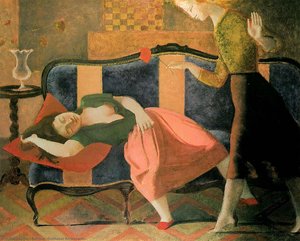
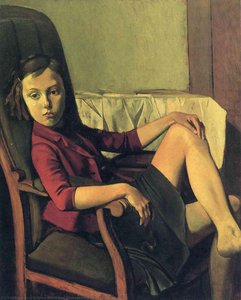
11Children Blanchard (1937) роботи БалтазChildren Blanchard1937 12Therese роботи БалтазTherese 13Naked in the mirror (1981) роботи БалтазNaked in the mirror1981 14The Dream (1955) роботи БалтазThe Dream1955 15Thérèse Dreaming (1938) роботи БалтазThérèse Dreaming1938 16Large landscape trees (the triangular field) (1955) роботи БалтазLarge landscape trees (the triangular field)1955 17Nude at Rest (1977) роботи БалтазNude at Rest1977 18The Mountain роботи БалтазThe Mountain 19Figure in Front of a Mantel (1955) роботи БалтазFigure in Front of a Mantel1955 20Study to ''Guitar lesson'' (1934) роботи БалтазStudy to ''Guitar lesson''1934 21Self-Portrait (detail) (1940) роботи БалтазSelf-Portrait (detail)1940 22The Cat in the Mirror (1988) роботи БалтазThe Cat in the Mirror1988 23Patience (1955) роботи БалтазPatience1955 24Getting Up (1977) роботи БалтазGetting Up1977 25Terese Dreaming роботи БалтазTerese Dreaming 26La Place du Pantheon (1929) роботи БалтазLa Place du Pantheon1929 · Ізраїльський музей 27Window (1933) роботи БалтазWindow1933 28Landscape Champrovent (1942) роботи БалтазLandscape Champrovent1942 29The victim (1939) роботи БалтазThe victim1939 30The heyday (1945) роботи БалтазThe heyday1945 31Reclining Nude (1945) роботи БалтазReclining Nude1945 32The Cat (detail) (1949) роботи БалтазThe Cat (detail)1949 33The toilet (1957) роботи БалтазThe toilet1957 34Coffee Cup (1959) роботи БалтазCoffee Cup1959 35Girl preparing for the bath (blue cloth) (1958) роботи БалтазGirl preparing for the bath (blue cloth)1958 36The moth (1959) роботи БалтазThe moth1959 37The Three Sisters (1964) роботи БалтазThe Three Sisters1964 38Katia asleep (1969) роботи БалтазKatia asleep1969 39Study for the painting ''Nude Resting'' (1972) роботи БалтазStudy for the painting ''Nude Resting''1972 40Bare rest (1977) роботи БалтазBare rest1977 41Waiting (1995) роботи БалтазWaiting1995 42Cat with mirror III Detalj 1Thomas Ammann Fi (1994) роботи БалтазCat with mirror III Detalj 1Thomas Ammann Fi1994 43Still Life with Lamp (1958) роботи БалтазStill Life with Lamp1958 44Study for Girl with a window роботи БалтазStudy for Girl with a window 45The enthronement of Ogier роботи БалтазThe enthronement of Ogier 46Lucrecia y Tarquino роботи БалтазLucrecia y Tarquino 47Roger and his son роботи БалтазRoger and his son 48Tadzio II, a disgrace in the lido роботи БалтазTadzio II, a disgrace in the lido 49Solitaire роботи БалтазSolitaire 50The Living Room роботи БалтазThe Living Room 51Moroccan Horseman and his Horse роботи БалтазMoroccan Horseman and his Horse 52Nude with Cat (1949) роботи БалтазNude with Cat1949 53The Cat in the Mirror (1990) роботи БалтазThe Cat in the Mirror1990 54Drawing room (1942) роботи БалтазDrawing room1942 55Reclining Woman роботи БалтазReclining Woman 56Portrait of Frederick роботи БалтазPortrait of Frederick 57The Brat роботи БалтазThe Brat 58Study for Nude with Cat роботи БалтазStudy for Nude with Cat 59Girl with Crossed Arms роботи БалтазGirl with Crossed Arms 60Strumpelpeter, front view роботи БалтазStrumpelpeter, front view 61Portrait of Frederick1 роботи БалтазPortrait of Frederick1 62Portrait of Louis -René des Forêts роботи БалтазPortrait of Louis -René des Forêts 63Girl kneeling, her arms on a chair роботи БалтазGirl kneeling, her arms on a chair 64Girl with a Beret роботи БалтазGirl with a Beret 65Ganimedes I роботи БалтазGanimedes I 66Ogier Lahire Brother in arms1 роботи БалтазOgier Lahire Brother in arms1 67Roberte attacked by spirits роботи БалтазRoberte attacked by spirits 68Self-portrait роботи БалтазSelf-portrait 69Colette profile роботи БалтазColette profile 70The balcony роботи БалтазThe balcony 71Roberte, the afternoon роботи БалтазRoberte, the afternoon 72The parallel роботи БалтазThe parallel 73Milady con el verdugo de Lille роботи БалтазMilady con el verdugo de Lille 74Impotence and seduction роботи БалтазImpotence and seduction 75The test time роботи БалтазThe test time 76Study for the dream I (front) роботи БалтазStudy for the dream I (front) 77Alice роботи БалтазAlice 78The Afternoon Nap роботи БалтазThe Afternoon Nap 79Lena arms crossed роботи БалтазLena arms crossed 80Bust of young woman роботи БалтазBust of young woman 81Descend to the basement роботи БалтазDescend to the basement 82Lahire and young Ogier de Beauseant роботи БалтазLahire and young Ogier de Beauseant 83Hairy Beauty роботи БалтазHairy Beauty 84Nude on a Chaise Longue роботи БалтазNude on a Chaise Longue 85Brother and Sister роботи БалтазBrother and Sister 86Woman with Violin роботи БалтазWoman with Violin 87Nude with Arms Raised роботи БалтазNude with Arms Raised 88The large enclosure II роботи БалтазThe large enclosure II 89The First Communicants (1926) роботи БалтазThe First Communicants1926 90The Barracks (1933) роботи БалтазThe Barracks1933 91Wash and Cathy (1933) роботи БалтазWash and Cathy1933 92The Fear of Ghosts (1933) роботи БалтазThe Fear of Ghosts1933 93Thérèse (1938) роботи БалтазThérèse1938 94Lady Abdy (1935) роботи БалтазLady Abdy1935 95Cathy (1935) роботи БалтазCathy1935 96Study for the Dream I (1935) роботи БалтазStudy for the Dream I1935 97Still life (1937) роботи БалтазStill life1937 98The white skirt (1937) роботи БалтазThe white skirt1937 99Joan Miro and his daughter Dolores (1937) роботи БалтазJoan Miro and his daughter Dolores1937 100Andre Derain (1936) роботи БалтазAndre Derain1936

Теми, що привертали увагу Балтаз

Чотири сюжети, які найчастіше зустрічаються в цих оригіналах, кожен із найкращим прикладом.

Музеї, у яких зберігаються оригінали Балтаз

2 музеїв, у яких зберігається більшість картин із цього списку.

Музеї Місто Твори Балтаз Картини з цього списку
Art Institute of Chicago, ЧикагоArt Institute of Chicago Чикаго 1 Дівчина з кішкою
Ізраїльський музей, ЄрусалимІзраїльський музей Єрусалим 1 La Place du Pantheon

Балтаз крізь десятиліття: одна унікальна оригінальна робота для кожного

Роботи за десятиліття

Оберіть десятиліття, щоб побачити оригінальний твір, який його визначає.

Картини Балтаз: запитання до галереї

Яка найвідоміша робота Балтаз?Дізнатися відповідь

Вулиця (1933). Далі йдуть Дівчина з кішкою (1937) та The Guitar Lesson (1934).

У якому віці Балтаз створив(ла) Вулиця?Дізнатися відповідь

25 років: Вулиця датована 1933 роком, а Балтаз народився(-лася) у 1908.

Які десять найвідоміших картин Балтаз?Дізнатися відповідь

Вулиця, Дівчина з кішкою, The Guitar Lesson, La Patience (Solitaire), Guitar lesson, Girl at the window, The King of the Cats, The Cat in the Mediterranean, Le passage du Commerce Saint-Andre Private та The white skirt. У рейтингу вище вказано рік створення та музей для кожної картини.

Скільки відомих робіт належить Балтаз?Дізнатися відповідь

Наш каталог містить 200 робіт Балтаз, датованих періодом з 1926 по 1995.

Де можна побачити найвідоміші оригінали Балтаз?Дізнатися відповідь

Переважно в Art Institute of Chicago (Чикаго) та Ізраїльський музей (Єрусалим). У таблиці музеїв вище наведено їхній повний перелік.

У який період Балтаз створив свої найвідоміші картини?Дізнатися відповідь

У 1930s: 22 із 100 робіт на цій сторінці були створені тоді, серед них Вулиця.

Яка з найвідоміших картин Балтаз була написана найраніше, а яка — найпізніше?Дізнатися відповідь

На цій сторінці найдавніша робота датована The First Communicants (1926), а найновіша — Waiting (1995).

Яким сюжетам віддавав перевагу Балтаз?Дізнатися відповідь

Nudes (11), Women (8) та Nude figure (7), у 100 роботах на цій сторінці.

Якими матеріалами найчастіше користувався Балтаз?Дізнатися відповідь

Oil On Canvas, для 9 із 100 робіт на цій сторінці.

До якого напряму належить творчість Балтаз?Дізнатися відповідь

Symbolism, судячи з оригіналів на цій сторінці.

Балтаз: портрет художника

A World Apart: The Enigmatic Vision of Balthus

Balthasar Klossowski de Rola, universally known as Balthus, remains one of the most compelling and persistently debated figures in 20th-century art. Born in Paris on February 29, 1908, into a family steeped in intellectual and artistic circles—his father, Erich Klossowski, was a respected art historian, while his mother, Baladine Klossowska, possessed a remarkable artistic sensibility herself—his life unfolded as a deliberate rejection of prevailing artistic trends. He wasn’t driven by a desire to break with tradition; rather, he sought to revitalize classical forms with a distinctly modern sensibility, crafting a world uniquely his own – a realm often unsettling, perpetually captivating. From the outset, Balthus cultivated an aura of mystery, resisting biographical interpretations and insisting that his paintings should be experienced directly, without the mediation of external commentary.

Early Years: A Nomadic Existence and Artistic Foundations

Balthus’s early life was marked by a constant state of flux. The outbreak of World War I dramatically disrupted his upbringing, forcing his family to relocate repeatedly. His father, a Prussian art historian, had previously lived in East Prussia (now part of Russia), while his mother, Baladine, was born into a Polish noble family. This itinerant existence instilled within him a profound sense of displacement and introspection – an experience that would profoundly shape the themes and mood of his artistic output. He began drawing at a remarkably young age, demonstrating an exceptional aptitude for capturing form and atmosphere. Crucially, he received early encouragement from Rainer Maria Rilke, who recognized his talent and fostered his artistic inclinations during his mother’s relationship with the poet. This formative period instilled in Balthus a deep appreciation for psychological depth and symbolic resonance, profoundly influencing his approach to representation. He absorbed influences from diverse sources – pre-Renaissance Italian painters like Piero della Francesca and Simone Martini, alongside literary figures such as Emily Brontë and Lewis Carroll—creating an artistic language that defied easy categorization, blending classical restraint with a subtle undercurrent of unease.

The Shaping Years: Italy and the Renaissance Revival

A pivotal moment in Balthus’s development occurred when he traveled to Italy in 1924. This immersion in the art of the Italian Renaissance proved transformative. He became utterly captivated by the frescoes of Masaccio, Paolo Uccello, and Piero della Francesca – masters who had perfected the illusion of depth and light. These artists' meticulous attention to detail, their ability to imbue inanimate objects with a sense of life, and their mastery of perspective profoundly influenced Balthus’s technique. He sought to emulate their pale, powdery surfaces, striving for a similar ethereal quality in his own paintings. This period marked a decisive shift towards a more classical style, one that would become the hallmark of his mature work. It was during this time that he adopted the pseudonym “Balthus,” a name derived from his childhood nickname and imbued with an air of deliberate obscurity.

Controversy and Recognition: The Unsettling Beauty

Balthus’s early public exhibitions sparked immediate controversy, largely due to the suggestive nature of his paintings. Works like *The Guitar Lesson* (1933-35), depicting a young girl receiving instruction from an older man, ignited debate about the artist's intentions and the potential for erotic interpretation. Critics were divided – some lauded the painting’s psychological complexity and technical mastery, while others condemned its perceived obscenity. Balthus deliberately cultivated this ambiguity, resisting attempts to impose definitive interpretations on his work. He understood that controversy was an integral part of his artistic practice, a means of challenging conventional notions of beauty and prompting viewers to confront uncomfortable truths about desire, power, and the human condition. Throughout the 1930s and 40s, he continued to develop his distinctive style, characterized by elongated figures, dramatic lighting, and a meticulous attention to detail – often depicting adolescent girls in states of reverie or contemplation.

A Legacy of Introspection: Later Works and Enduring Influence

Despite the persistent controversy surrounding his work, Balthus achieved significant recognition during his lifetime. He held major exhibitions at the Museum of Modern Art in New York (1956), throughout Europe, and was appointed director of the Académie de France in Rome in 1961 – a prestigious position that further cemented his standing within the artistic establishment. His influence can be seen in the work of numerous contemporary artists, including Jan Saudek, Will Barnet, and Duane Michals, who share his interest in figurative painting, psychological realism, and the exploration of complex emotional states. Balthus’s enduring appeal lies not only in his technical virtuosity but also in his ability to tap into universal human experiences – the longing for connection, the fear of isolation, and the search for meaning in a chaotic world. His paintings are not merely images; they are portals into a realm of dreams, anxieties, and unspoken desires—a testament to the enduring power of art to challenge our perceptions and illuminate the hidden corners of the human soul. He died in 2001, leaving behind a body of work that continues to provoke, intrigue, and inspire debate.

Усі 200 робіт Балтаз →