Портрет Теодор Жеріко

100 найвідоміших картин Теодор Жеріко, кожна з яких є унікальною

Оновлено Листопад 2026 · за рейтингом нашої популярності (кількість пошукових запитів, переглядів та замовлень для кожної роботи) · 183 робіт Теодор Жеріко у нашому каталозі

Коротко кажучи

Балса Медузы (1818) — це картина Теодор Жеріко, яка привертає найбільше уваги; оригінал зберігається в Лувр, Париж. Після цього погляд переходить на Nymph and Satyr (Jupiter and Antiope) (1820) та The Oath of Brutus after the Death of Lucretia (1815). Серед 183 робіт Теодор Жеріко у нашому каталозі ці 100 є найвідомішими: кожна з них — унікальний оригінал із зазначенням року створення, музею та причини її безсмертя.

1791 – 1824, Руан Romantic painting Найбільше робіт: Лувр

Топ-10 картин Теодор Жеріко крізь призму галереї

1
Балса Медузы (1818) авторства Теодор Жеріко

Балса Медузы

1818 · Олія на полотні · Лувр, Париж

Життя та творчість Жана-Луї Андре Теодора Жерикальда Жан-Луї Андре Теодор Жерикальд (фр.: Жан-Луї Андр Théodore Gericault; 26 вересня 1791 р. – 26 січня 1824 р.) був французьким живописцем і літографом. Його найвідомішою картиною є «Раф Медузи». Хоча його життя було коротким, він був одним із піонерів романтичного руху. Він народився в Руані, Франція, у світі, що стояв на межі драматичних змін. Прибувши до Парижа з родиною, Теодор успадкував комфортне існування…

2
Nymph and Satyr (Jupiter and Antiope) (1820) авторства Теодор Жеріко

Nymph and Satyr (Jupiter and Antiope)

1820 · Acrylic On Canvas · Musée des Beaux-Arts et de la Céramique, Руан

The Allure of the Divine Encounter: Géricault’s *Nymph and Satyr* Jean-Louis André Théodore Géricault's *Nymph and Satyr*, painted in 1819, isn’t merely a depiction of a mythological scene; it’s a profound exploration of desire, transgression, and the inherent tension between innocence and primal instinct. Born amidst the tumultuous backdrop of post-revolutionary France, Géricault, already recognized for his dramatic intensity, sought to capture not just a narrative but an emotional truth—a…

3
The Oath of Brutus after the Death of Lucretia (1815) авторства Теодор Жеріко

The Oath of Brutus after the Death of Lucretia

1815 · Oil On Canvas · Художній музей Нельсона-Аткінса, Канзас-Сіті

The Oath of Brutus after the Death of Lucretia is an oil on canvas by Théodore Géricault. This history painting captures a moment of heavy, political consequence. The artist, Théodore Géricault, rendered the scene with a focus on the weight of human resolve. It emerged from his studio about 1815.

4
Lions in a Mountainous Landscape (1818) авторства Теодор Жеріко

Lions in a Mountainous Landscape

1818 · Oil · Метрополітен-музей, Нью-Йорк

Six lions occupy a remote, spectrally illuminated lair. The scene is set within a rugged, mountainous landscape, perhaps the Atlas Mountains of Morocco. Four lions dominate the foreground and middle ground, their bodies locked in a moment of intense interaction or struggle. One lion rests on the left, while two others clash in the center, and a fourth occupies the right. High above this animal drama, a solitary figure watches…

5
The Kiss (1822) авторства Теодор Жеріко

The Kiss

1822 · Acrylic On Canvas · Музей Тиссена-Борнмізеса, Мадрид

Théodore Géricault's "The Kiss," painted in 1816, isn’t merely a depiction of lovers entwined; it’s a visceral embodiment of the burgeoning Romantic movement’s fascination with raw emotion, dramatic intensity, and the sublime. This arresting work, housed within the Thyssen-Bornemisza Museum in Madrid, transcends simple representation to become a profound meditation on passion, vulnerability, and the very essence of human connection. Géricault, already a figure known for his unflinching portrayals of…

6
Wounded Soldiers Retrating from Russia (1814) авторства Теодор Жеріко

Wounded Soldiers Retrating from Russia

1814 · Acrylic On Canvas · Musée des Beaux-Arts, Руан

A Symphony of Suffering: Géricault’s “Wounded Soldiers Retrating from Russia” Jean-Louis André Théodore Géricault's "Wounded Soldiers Retrating from Russia" is not merely a painting; it’s a visceral embodiment of the horrors and human cost of war, rendered with an unprecedented level of realism and emotional intensity for its time. Completed in 1814, this monumental canvas—measuring a commanding 250 x 206 cm—captures a pivotal moment during Napoleon's disastrous invasion of Russia,…

7
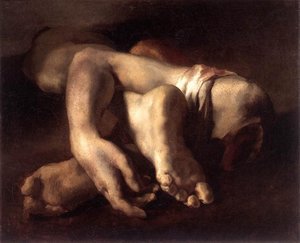
Study of Feet and Hands (1818) авторства Теодор Жеріко

Study of Feet and Hands

1818 · Oil On Canvas · Музей Фабра, Монпельє

Jean-Louis André Théodore Géricault's "Study of Feet and Hands," painted in 1818, isn’t a grand statement of Romantic drama like his monumental “The Raft of the Medusa.” Instead, it offers a profoundly intimate glimpse into the artist’s meticulous process and a poignant meditation on the human form. This unassuming oil painting—measuring a modest 52 x 64 cm—is far more than just a preparatory sketch; it's a concentrated distillation of Géricault’s…

8
The Raft of the Medusa (detail) (1818) авторства Теодор Жеріко

The Raft of the Medusa (detail)

1818 · Oil On Canvas · Лувр, Париж

Jean-Louis André Théodore Géricault's "The Raft of the Medusa," a monumental detail from his 1818 painting, isn’t merely a depiction of shipwreck; it’s a visceral plunge into the depths of human suffering and political indictment. The scene, rendered with a dramatic intensity characteristic of Romanticism, captures the harrowing aftermath of the French frigate *Medusa*'s wreck off the coast of Mauritania in 1816. This disaster, largely attributed to the incompetence and…

9
Leda and the Swan (1817) авторства Теодор Жеріко

Leda and the Swan

1817 · Watercolor · Лувр, Париж

In this study created about 1817, Théodore Géricault captures a moment of profound transformation and divine intrusion. The artwork, titled Leda and the Swan, brings the ancient Greek myth to life through a raw, immediate lens. We witness the instant where the boundaries between the mortal and the divine begin to blur. Leda, an Aetolian princess, finds herself intertwined with a large swan, a creature that is actually Zeus in…

10
The Wreck (1821) авторства Теодор Жеріко

The Wreck

1821 · Oil On Canvas · Лувр, Париж

Théodore Géricault's "The Wreck," painted in 1821, isn’t merely a seascape; it’s a visceral confrontation with the sublime—a raw depiction of humanity’s vulnerability against the overwhelming force of nature. Born amidst the turbulent currents of post-revolutionary France, Géricault, a figure both lauded and controversial within the burgeoning Romantic movement, channeled his own anxieties and the era's fascination with dramatic events into this monumental canvas. The painting immediately commands attention not…

Знамениті картини Теодор Жеріко, з 11 по 100

11The Horse Race (1816) авторства Теодор ЖерікоThe Horse Race1816 · Музей Тиссена-Борнмізеса 12Swiss Guard and Wounded Veteran (1819) авторства Теодор ЖерікоSwiss Guard and Wounded Veteran1819 · Лувр 13Mazeppa (1823) авторства Теодор ЖерікоMazeppa1823 · Шато де Шантії 14Two Horses (1809) авторства Теодор ЖерікоTwo Horses1809 · The Phillips Collection 15A Turk (Mustapha) (1820) авторства Теодор ЖерікоA Turk (Mustapha)1820 · Лувр 16A Carabinier with his Horse (1814) авторства Теодор ЖерікоA Carabinier with his Horse1814 · Musée des Beaux-Arts 17Riderless Horse Races (detail) (1817) авторства Теодор ЖерікоRiderless Horse Races (detail)1817 · Лувр 18Boxers (1818) авторства Теодор ЖерікоBoxers1818 · Шато де Шантії 19Horse Market: Five Horses at the Stake (1816) авторства Теодор ЖерікоHorse Market: Five Horses at the Stake1816 · Лувр 20The Epsom Derby (1821) авторства Теодор ЖерікоThe Epsom Derby1821 · Лувр 21Mounted Trumpeters of Napoleon's Imperial Guard (1813) авторства Теодор ЖерікоMounted Trumpeters of Napoleon's Imperial Guard1813 · Національна галерея мистецтв 22Three Lovers (1817) авторства Теодор ЖерікоThree Lovers1817 · Музей Дж. Пола Гетті 23Portrait of Simon Bonnesoeur-Bourginire (1812) авторства Теодор ЖерікоPortrait of Simon Bonnesoeur-Bourginire1812 · Minneapolis Institute of Art 24Equestrian portrait of Wincenty Krasiński. (1814) авторства Теодор ЖерікоEquestrian portrait of Wincenty Krasiński.1814 · Національний музей у Варшаві 25The Wounded Cuirassier, study (1814) авторства Теодор ЖерікоThe Wounded Cuirassier, study1814 · Бруклінський музей 26Lion devouring a horse авторства Теодор ЖерікоLion devouring a horseШато де Шантії 27Français Étude de bras et de main realisé par Géricault por son oeuvre Le Radeau de la Méduse (1819) авторства Теодор ЖерікоFrançais Étude de bras et de main realisé par Géricault por son oeuvre Le Radeau de la Méduse1819 28Untitled (ARJCHM) авторства Теодор ЖерікоUntitled (ARJCHM)Лувр 29Scene from the Epidemic of Yellow Fever in Cadiz (1819) авторства Теодор ЖерікоScene from the Epidemic of Yellow Fever in Cadiz1819 · Virginia Museum of Fine Arts 30Head of a Drowned Man (1819) авторства Теодор ЖерікоHead of a Drowned Man1819 31Portrait of a Young Man (1818) авторства Теодор ЖерікоPortrait of a Young Man1818 · Minneapolis Institute of Art 32A study for a nude. (1801) авторства Теодор ЖерікоA study for a nude.1801 · Національний музей у Варшаві 33Study of a Model (1818) авторства Теодор ЖерікоStudy of a Model1818 · Музей Дж. Пола Гетті 34The Martyrdom of Saint Peter (1814) авторства Теодор ЖерікоThe Martyrdom of Saint Peter1814 · Kunstmuseum Basel 35The Scotsman (1801) авторства Теодор ЖерікоThe Scotsman1801 · Petit Palais 36Mater dolorosa, Copy after Ribera (1811) авторства Теодор ЖерікоMater dolorosa, Copy after Ribera1811 · Kunstmuseum Basel 37Lion in Repose авторства Теодор ЖерікоLion in ReposeWalters Art Museum 38Equestrian Portrait of Jérôme Bonaparte, after Antoine-Jean GROS (1813) авторства Теодор ЖерікоEquestrian Portrait of Jérôme Bonaparte, after Antoine-Jean GROS1813 · Musée Eugène Delacroix 39Justice and Divine Vengeance Pursuing Crime (1811) авторства Теодор ЖерікоJustice and Divine Vengeance Pursuing Crime1811 40Lying Lions (1812) авторства Теодор ЖерікоLying Lions1812 41The Trumpeter of the Orleans Hussars (1813) авторства Теодор ЖерікоThe Trumpeter of the Orleans Hussars1813 42The Trumpeter of the Lancers of the Guard (1813) авторства Теодор ЖерікоThe Trumpeter of the Lancers of the Guard1813 · Burrell Collection 43The horse is out of the stable (1810) авторства Теодор ЖерікоThe horse is out of the stable1810 · Музей Конде 44Un carabinier, vu à mi-corps (1814) авторства Теодор ЖерікоUn carabinier, vu à mi-corps1814 45Portrait of Louise Vernet (1812) авторства Теодор ЖерікоPortrait of Louise Vernet1812 46Head of a woundet Man (1814) авторства Теодор ЖерікоHead of a woundet Man1814 · Музей Вальраф-Ріхтарта 47Untitled (ARJCJD) (1814) авторства Теодор ЖерікоUntitled (ARJCJD)1814 48The Monomaniac of Child Abduction (1822) авторства Теодор ЖерікоThe Monomaniac of Child Abduction1822 49Horse Race, Moving to the Right (1820) авторства Теодор ЖерікоHorse Race, Moving to the Right1820 · Musée des Beaux-Arts de Caen 50The Raft of the Medusa (1818) авторства Теодор ЖерікоThe Raft of the Medusa1818 51Etude d'un homme nu (Study of a Nude Man) (1817) авторства Теодор ЖерікоEtude d'un homme nu (Study of a Nude Man)1817 · The New Art Gallery Walsall 52Mounted Jockey (1821) авторства Теодор ЖерікоMounted Jockey1821 · Virginia Museum of Fine Arts 53Portrait of a Negro (1822) авторства Теодор ЖерікоPortrait of a Negro1822 · Buffalo AKG Art Museum 54Portrait Study of a Youth (1819) авторства Теодор ЖерікоPortrait Study of a Youth1819 · Kimbell Art Museum 55The White Horse Tavern (1821) авторства Теодор ЖерікоThe White Horse Tavern1821 · Fogg Museum 56Cattle Market (1817) авторства Теодор ЖерікоCattle Market1817 · Fogg Museum 57Fighting Horses (1820) авторства Теодор ЖерікоFighting Horses1820 · Клівлендський музей мистецтва 58Wounded Soldiers in a Cart (1815) авторства Теодор ЖерікоWounded Soldiers in a Cart1815 · Fitzwilliam Museum 59Shipwrecked on a Beach (The Tempest) (1822) авторства Теодор ЖерікоShipwrecked on a Beach (The Tempest)1822 · Yale University Art Gallery 60Alexandre Colin (1815) авторства Теодор ЖерікоAlexandre Colin1815 61The Raft of the Medusa (1818) авторства Теодор ЖерікоThe Raft of the Medusa1818 62Course de Chevaux montés allant à gauche, au moment du départ (1822) авторства Теодор ЖерікоCourse de Chevaux montés allant à gauche, au moment du départ1822 63Francisco de Moncada Marqués d'Aytona (1815) авторства Теодор ЖерікоFrancisco de Moncada Marqués d'Aytona1815 · Amsterdam Museum 64Riderless Racers at Rome (1817) авторства Теодор ЖерікоRiderless Racers at Rome1817 · Walters Art Museum 65Trumpeter of the Hussars (1817) авторства Теодор ЖерікоTrumpeter of the Hussars1817 66Nude Warrior with a Spear (1816) авторства Теодор ЖерікоNude Warrior with a Spear1816 · Національна галерея мистецтв 67The Wild Horse Race at Rome (1817) авторства Теодор ЖерікоThe Wild Horse Race at Rome1817 68The Raft of the Medusa, Detalj, (1819) авторства Теодор ЖерікоThe Raft of the Medusa, Detalj,1819 69Portrait of a Negro (1800) авторства Теодор ЖерікоPortrait of a Negro1800 · Palácio Nacional da Ajuda 70Head of a Youth (1824) авторства Теодор ЖерікоHead of a Youth1824 · Art Gallery of South Australia 71Portrait d'homme (1825) авторства Теодор ЖерікоPortrait d'homme1825 · Музей Фабра 72Equestrian Portrait of Charles V (1814) авторства Теодор ЖерікоEquestrian Portrait of Charles V1814 · Fine Arts Museums of San Francisco 73Chestnut horse in a stable (1814) авторства Теодор ЖерікоChestnut horse in a stable1814 · Cantor Arts Center at Stanford University 74Horses of the Auvergne (1822) авторства Теодор ЖерікоHorses of the Auvergne1822 · University of Michigan Museum of Art 75A Prancing Grey Horse (1812) авторства Теодор ЖерікоA Prancing Grey Horse1812 · Burrell Collection 76The Raft of the Medusa (Le Radeau de la Méduse) - Théodore Géricault (2026) авторства Теодор ЖерікоThe Raft of the Medusa (Le Radeau de la Méduse) - Théodore Géricault2026 77Sheet of Figure Studies (1818) авторства Теодор ЖерікоSheet of Figure Studies1818 · Галерея Куртолада 78Portrait of an Artist in His Studio (1820) авторства Теодор ЖерікоPortrait of an Artist in His Studio1820 · Лувр 79An Officer of the Chasseurs Commanding a Charge (1812) авторства Теодор ЖерікоAn Officer of the Chasseurs Commanding a Charge1812 · Лувр 80Study of a nude man авторства Теодор ЖерікоStudy of a nude manНаціональний музей у Варшаві 81The Plaster Kiln (1823) авторства Теодор ЖерікоThe Plaster Kiln1823 · Лувр 82Officer of Chasseurs à Cheval of the Imperial Guard Charging (1812) авторства Теодор ЖерікоOfficer of Chasseurs à Cheval of the Imperial Guard Charging1812 83Dogs Fighting Bears (1814) авторства Теодор ЖерікоDogs Fighting Bears1814 · Foundation E.G. Bührle Collection 84Cheval gris au râtelier (1811) авторства Теодор ЖерікоCheval gris au râtelier1811 85Untitled (ARJCGT) (1814) авторства Теодор ЖерікоUntitled (ARJCGT)1814 86The Woman with Gambling Mania, ca (1822) авторства Теодор ЖерікоThe Woman with Gambling Mania, ca1822 87Deutsch Firmenschild für einen Hufschmied, Detail (1814) авторства Теодор ЖерікоDeutsch Firmenschild für einen Hufschmied, Detail1814 88Italian Landscape with Tomb (1818) авторства Теодор ЖерікоItalian Landscape with Tomb1818 · Petit Palais 89A Cart Loaded with Kegs (1822) авторства Теодор ЖерікоA Cart Loaded with Kegs1822 · Rhode Island School of Design Museum of Art 90Cinq chevaux vus par la croupe (1821) авторства Теодор ЖерікоCinq chevaux vus par la croupe1821 91The Race of the Riderless Horses (1817) авторства Теодор ЖерікоThe Race of the Riderless Horses1817 · Музей Дж. Пола Гетті 92Dervish in His Stall (1820) авторства Теодор ЖерікоDervish in His Stall1820 93Untitled (ARJCHB) (1819) авторства Теодор ЖерікоUntitled (ARJCHB)1819 94Untitled (ARJCJF) (1818) авторства Теодор ЖерікоUntitled (ARJCJF)1818 95Untitled (ARJCHV) (1817) авторства Теодор ЖерікоUntitled (ARJCHV)1817 · Palais des Beaux-Arts de Lille 96German Der Page Mazeppa (1820) авторства Теодор ЖерікоGerman Der Page Mazeppa1820 97English Anatomical Pieces (1819) авторства Теодор ЖерікоEnglish Anatomical Pieces1819 · Musée des Beaux-Arts de Rouen 98A Shipwreck (1817) авторства Теодор ЖерікоA Shipwreck1817 99Français Têtes coupées English Cut heads Português Cabeças cortadas (1818) авторства Теодор ЖерікоFrançais Têtes coupées English Cut heads Português Cabeças cortadas1818 100English Study of Feet and Hands (1819) авторства Теодор ЖерікоEnglish Study of Feet and Hands1819

Знамениті картини Теодор Жеріко за періодами творчості

Теми, що привертали увагу Теодор Жеріко

Чотири сюжети, які найчастіше зустрічаються в цих оригіналах, кожен із найкращим прикладом.

Музеї, у яких зберігаються оригінали Теодор Жеріко

8 музеїв, у яких зберігається найбільша кількість картин із цього списку.

Музей Місто Твори Теодор Жеріко Картини зі цього списку
Лувр, ПарижЛувр Париж 19 Балса Медузы, The Raft of the Medusa (detail), Leda and the Swan
Шато де Шантії, ШантіїШато де Шантії Шантії 6 Mazeppa, Boxers, Lion devouring a horse
Музей Дж. Пола Гетті, Лос-АнджелесМузей Дж. Пола Гетті Лос-Анджелес 3 Three Lovers, Study of a Model, The Race of the Riderless Horses
Національний музей у Варшаві, ВаршаваНаціональний музей у Варшаві Варшава 3 Equestrian portrait of Wincenty Krasiński., A study for a nude., Study of a nude man
Burrell Collection, ГлазгоBurrell Collection Глазго 8 The Trumpeter of the Lancers of the Guard, A Prancing Grey Horse
Музей Фабра, МонпельєМузей Фабра Монпельє 4 Study of Feet and Hands, Portrait d'homme
Petit Palais, ПарижPetit Palais Париж 3 The Scotsman, Italian Landscape with Tomb
Музей Тиссена-Борнмізеса, МадридМузей Тиссена-Борнмізеса Мадрид 2 The Kiss, The Horse Race

Теодор Жеріко крізь десятиліття: одна унікальна оригінальна робота для кожного

Роботи за десятиліттями

Оберіть десятиліття, щоб побачити оригінальний твір, який його визначає.

Картини Теодор Жеріко: запитання до галереї

Яка найвідоміша робота Теодор Жеріко?Дізнатися відповідь

Балса Медузы (1818), Лувр, Париж. Далі йдуть Nymph and Satyr (Jupiter and Antiope) (1820) та The Oath of Brutus after the Death of Lucretia (1815).

У якому віці Теодор Жеріко створив(ла) Балса Медузы?Дізнатися відповідь

27 років: Балса Медузы датована 1818 роком, а Теодор Жеріко народився(-лася) у 1791.

Які десять найвідоміших картин Теодор Жеріко?Дізнатися відповідь

Балса Медузы, Nymph and Satyr (Jupiter and Antiope), The Oath of Brutus after the Death of Lucretia, Lions in a Mountainous Landscape, The Kiss, Wounded Soldiers Retrating from Russia, Study of Feet and Hands, The Raft of the Medusa (detail), Leda and the Swan та The Wreck. У рейтингу вище вказано рік створення та музей для кожної картини.

Скільки відомих робіт належить Теодор Жеріко?Дізнатися відповідь

Наш каталог містить 183 робіт Теодор Жеріко, датованих періодом з 1800 по 1824.

Де можна побачити найвідоміші оригінали Теодор Жеріко?Дізнатися відповідь

Переважно в Лувр (Париж), Шато де Шантії (Шантії) та Музей Дж. Пола Гетті (Лос-Анджелес). У таблиці музеїв вище наведено їхній повний перелік.

У який період Теодор Жеріко створив свої найвідоміші картини?Дізнатися відповідь

У 1810s: 67 із 100 робіт на цій сторінці були створені тоді, серед них Балса Медузы.

Яка з найвідоміших картин Теодор Жеріко була написана найраніше, а яка — найпізніше?Дізнатися відповідь

На цій сторінці найдавніша робота датована Portrait of a Negro (1800), а найновіша — Head of a Youth (1824).

Яким сюжетам віддавав перевагу Теодор Жеріко?Дізнатися відповідь

Man (27), Horse (19) та Landscape (12), у 100 роботах на цій сторінці.

Якими матеріалами найчастіше користувався Теодор Жеріко?Дізнатися відповідь

Oil On Canvas, для 47 із 100 робіт на цій сторінці.

До якого напряму належить творчість Теодор Жеріко?Дізнатися відповідь

Romantic painting, судячи з оригіналів на цій сторінці.

Які оригінальні роботи Теодор Жеріко можна побачити в Лувр?Дізнатися відповідь

Балса Медузы, The Raft of the Medusa (detail) та Leda and the Swan: Лувр, Париж зберігає 13 робіт із цієї сторінки.

Теодор Жеріко: портрет художника

A Life Forged in Romantic Fire

Jean-Louis André Théodore Géricault, a name that resonates with the burgeoning spirit of French Romanticism, was born into a world poised on the brink of dramatic change. Arriving in Rouen, France, in 1791, his early life unfolded amidst the echoes of revolution and the rising tide of Napoleonic ambition. Though inheriting a comfortable existence through his family’s legal and business ventures – including a tobacco enterprise – Géricault's destiny lay not in law or commerce but within the realm of artistic expression. His initial training under Carle Vernet, a master of English sporting art, instilled in him a keen eye for anatomy and movement, particularly evident in his depictions of horses. However, it was his subsequent studies with Pierre-Narcisse Guérin that provided a foundation in classical composition, though Géricault’s restless spirit soon led him to seek knowledge independently within the hallowed halls of the Louvre.

The Louvre as Academy: A Dialogue with Masters

From 1810 to 1815, the Louvre became Géricault's true academy. He immersed himself in the works of the Old Masters – Rubens, Titian, Velázquez, and Rembrandt – not merely copying their techniques but engaging in a profound dialogue with their artistic philosophies. This period was crucial in shaping his distinctive style, characterized by dramatic chiaroscuro, dynamic compositions, and an intense emotionality that set him apart from his contemporaries. He wasn’t simply replicating; he was absorbing the essence of these masters, internalizing their approaches to light, shadow, and human form. This self-directed education fostered a unique artistic voice, one that would soon challenge the prevailing Neoclassical conventions. His early works, like *The Charging Chasseur* (1812), already hinted at this emerging sensibility, showcasing a boldness of execution and a fascination with movement reminiscent of Rubens’ energetic canvases. He continued to explore equestrian themes, honing his skills in depicting the power and grace of horses – a subject that would remain a recurring motif throughout his career.

The Raft of the Medusa: A Monument to Human Suffering

Géricault's name is inextricably linked with *The Raft of the Medusa* (1818-1819), a monumental canvas that transcends mere historical depiction and becomes a searing indictment of human fallibility and societal injustice. Inspired by the harrowing true story of the shipwreck of the French frigate Méduse in 1816, where negligence and incompetence led to unimaginable suffering for its passengers, the painting is a visceral portrayal of desperation, hope, and despair. Géricault undertook meticulous research – interviewing survivors, studying corpses at hospitals, and even constructing a scale model of the raft itself to ensure accuracy – resulting in a work that isn’t simply a depiction of tragedy; it’s an immersive experience that confronts viewers with the raw reality of human suffering. The composition, built around two pyramidal structures – one representing despair and death, the other embodying hope and potential rescue – creates a dynamic tension that draws the eye across the canvas. *The Raft of the Medusa* was controversial upon its exhibition at the Salon of 1819, sparking political debate and solidifying Géricault’s reputation as a daring and unconventional artist. The painting's impact extended beyond the art world, becoming a symbol of governmental incompetence and human resilience in the face of unimaginable hardship.

Beyond Tragedy: Military Themes and Artistic Legacy

While *The Raft of the Medusa* remains his most celebrated achievement, Géricault’s artistic output extended beyond this singular masterpiece. He continually returned to military themes, evident in works like *Wounded Cuirassier* (1814) and *The Derby of Epsom* (1821), demonstrating a fascination with drama and expressive force. These paintings reveal his continued exploration of human emotion under duress, often focusing on the physical and psychological toll of conflict. He also ventured into portraiture and lithography, further expanding his artistic repertoire. Sadly, Géricault’s life was cut short by illness at the age of 32 in 1824, following years of suffering from riding accidents and a chronic tubercular infection. His premature death robbed the art world of a prodigious talent, but his influence on subsequent generations of artists – particularly Eugène Delacroix – was profound. He is remembered as a pioneer of Romanticism, an artist who dared to confront difficult truths and imbue his work with a powerful emotional resonance that continues to captivate audiences today. His bronze figure reclines, brush in hand, on his tomb at Père Lachaise Cemetery in Paris, above a low-relief panel depicting the harrowing scene from *The Raft of the Medusa* – a fitting tribute to an artist who dedicated his life to capturing the complexities and contradictions of the human condition.

Key Characteristics & Influences

  • Romanticism: Géricault is considered one of the first French Romantic painters, moving away from Neoclassical ideals towards emotional intensity and dramatic expression.
  • Dramatic Composition: His paintings are known for their dynamic compositions, often utilizing diagonal lines and contrasting light and shadow to create a sense of movement and tension.
  • Realism & Research: Géricault was committed to realism, conducting extensive research – including studying corpses and interviewing survivors – to ensure the accuracy and emotional impact of his work.
  • Influence of Old Masters: He drew inspiration from Baroque masters like Rubens, Titian, and Velázquez, adopting their techniques for dramatic lighting and expressive brushwork.
  • Focus on Human Suffering: His art often depicts scenes of tragedy, despair, and the darker aspects of human experience, reflecting a Romantic fascination with intense emotions.