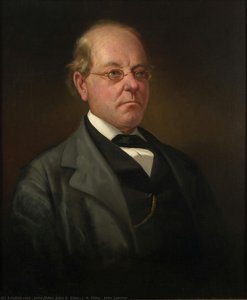
Портрет John Adams Elder

8 найвідоміших картин John Adams Elder, кожна з яких є унікальною

Оновлено Листопад 2026 · за рейтингом нашої популярності (кількість пошукових запитів, переглядів та замовлень для кожної роботи) · 8 робіт John Adams Elder у нашому каталозі

Коротко кажучи

Prison Scene (1854) — це картина John Adams Elder, яка привертає найбільше уваги; оригінал зберігається в Смитсонівський музей американського мистецтва, Вашингтон, округ Колумбія. Після цього погляд переходить на The Scout’s Return (1870) та William B. Giles (1800). Серед 8 робіт John Adams Elder у нашому каталозі ці 8 є найвідомішими: кожна з них — унікальний оригінал із зазначенням року створення, музею та причини її безсмертя.

1833 – 1895, Fredericksburg Найбільше робіт: Library of Virginia

Топ-10 картин John Adams Elder крізь призму галереї

1
Prison Scene (1854) авторства John Adams Elder

Prison Scene

1854 · Oil On Canvas · Смитсонівський музей американського мистецтва, Вашингтон, округ Колумбія

Deep within a stone cell, the air feels heavy with the weight of an unspoken tragedy. A single, piercing light descends from a high, barred window, slicing through the gloom to illuminate a moment of profound human connection. In this pool of brightness, a man and a woman cling to an infant, their embrace a desperate attempt to hold onto a fragment of life amidst the encroaching darkness. The child,…

3
William B. Giles (1800) авторства John Adams Elder

William B. Giles

1800 · Oil · Library of Virginia, Річмонд

John Adams Elder rendered this mid-19th century portrait of William B. Giles, a prominent Virginian who exerted significant influence within the public arena. The work captures a man deeply embedded in the political and social complexities of his era. Giles was recognized for his independent and stirring presence in American life, often engaging in vigorous public debate.

4
John Letcher (1800) авторства John Adams Elder

John Letcher

1800 · Oil On Canvas · Library of Virginia, Річмонд

The subject of this oil on canvas is a man positioned in a bust-length view. He wears a dark vest over a white shirt, accented by a bow tie. A pair of glasses rests upon his nose, and a mustache covers his upper lip. His gaze is directed toward the viewer with a steady, stern expression. The composition includes two other figures in the background, one situated to the left…

Теми, що привертали увагу John Adams Elder

Чотири сюжети, які найчастіше зустрічаються в цих оригіналах, кожен із найкращим прикладом.

Музеї, у яких зберігаються оригінали John Adams Elder

5 музеїв, у яких зберігається найбільша кількість картин із цього списку.

Музей Місто Твори John Adams Elder Картини зі цього списку
Library of Virginia, РічмондLibrary of Virginia Річмонд 3 William B. Giles, John Letcher, Joseph Johnson
The Mint Museum, ШарлоттThe Mint Museum Шарлотт 2 Bust of Charlotte Augusta, Princess of Wales, Breath
Смитсонівський музей американського мистецтва, Вашингтон, округ КолумбіяСмитсонівський музей американського мистецтва Вашингтон, округ Колумбія 1 Prison Scene
Virginia Museum of Fine Arts, РічмондVirginia Museum of Fine Arts Річмонд 1 The Scout’s Return
Національна портретна галерея, ЛондонНаціональна портретна галерея Лондон 1 Robert Edward Lee

John Adams Elder крізь роки: унікальні оригінали кожного твору

Довга кар'єра у 23 роках, від 1854 до 1876: найвідоміші оригінальні роботи John Adams Elder, представлені за роками.

Роботи за роками

Оберіть рік, щоб переглянути оригінали.

Картини John Adams Elder: запитання до галереї

Яка найвідоміша робота John Adams Elder?Дізнатися відповідь

Prison Scene (1854), Смитсонівський музей американського мистецтва, Вашингтон, округ Колумбія. Далі йдуть The Scout’s Return (1870) та William B. Giles (1800).

У якому віці John Adams Elder створив(ла) Prison Scene?Дізнатися відповідь

21 років: Prison Scene датована 1854 роком, а John Adams Elder народився(-лася) у 1833.

Скільки відомих робіт належить John Adams Elder?Дізнатися відповідь

Наш каталог містить 8 робіт John Adams Elder, датованих періодом з 1854 по 1876.

Де можна побачити найвідоміші оригінали John Adams Elder?Дізнатися відповідь

Переважно в Library of Virginia (Річмонд), The Mint Museum (Шарлотт) та Смитсонівський музей американського мистецтва (Вашингтон, округ Колумбія). У таблиці музеїв вище наведено їхній повний перелік.

Яка з найвідоміших картин John Adams Elder була написана найраніше, а яка — найпізніше?Дізнатися відповідь

На цій сторінці найдавніша робота датована Prison Scene (1854), а найновіша — Robert Edward Lee (1876).

Яким сюжетам віддавав перевагу John Adams Elder?Дізнатися відповідь

Man (3), Suit (2) та Mustache (2), у 8 роботах на цій сторінці.

Якими матеріалами найчастіше користувався John Adams Elder?Дізнатися відповідь

Oil On Canvas, для 2 із 8 робіт на цій сторінці.

Які оригінальні роботи John Adams Elder можна побачити в Library of Virginia?Дізнатися відповідь

William B. Giles, John Letcher та Joseph Johnson: Library of Virginia, Річмонд зберігає 3 робіт із цієї сторінки.

John Adams Elder: портрет художника

A Visionary of the Virginia Landscape: The Life and Legacy of John Elder

Born in the historic heart of Fredericksburg, Virginia, on February 3, 1833, John Adams Elder emerged as a profound voice in nineteenth-century American art. The son of a shoemaker, John Douglas Elder, his early life was rooted in a world of meticulous craftsmanship—a heritage that would later manifest in the breathtaking precision of his brushwork. While his beginnings were humble, his artistic spirit was anything but; even as a young child, he demonstrated an innate ability to transform simple materials into art, famously painting a decorative screen for his mother at the tender age of seven. This early spark of creativity, nurtured by a keen eye for detail and an observant nature, laid the foundation for a career that would eventually capture the very soul of the American South.

As he matured, Elder’s artistic journey took him beyond the borders of Virginia, leading him to New York in 1850 to further refine his technical prowess. It was during this period of expansion and study that his style began to coalesce, blending a rigorous commitment to realism with an evocative, atmospheric sensibility. Though much of his formal training remains shrouded in the quietude of history, his work suggests a deep engagement with the masters of light and perspective. One can sense the influence of great landscape traditions in his ability to modulate tone and capture the ephemeral qualities of the sky and mist, creating canvases that feel less like static images and more like living, breathing moments frozen in time.

Mastery of Light and the American Spirit

Elder’s oeuvre is a magnificent tapestry of landscapes, portraits, and historical chronicles, each piece serving as a window into a bygone era. He possessed a singular ability to render the serene vistas of the Shenandoah Valley with such palpable accuracy that the viewer can almost feel the mountain breeze. His masterpiece, “Breath,” painted in 1873, stands as a testament to this skill; housed in the Mint Museum, it remains an enduring icon of the American landscape, celebrated for its ability to evoke the quiet majesty of the mountains through subtle light and profound emotional resonance.

Beyond the tranquil beauty of nature, Elder was a chronicler of his time, particularly regarding the tumultuous years of the Civil War. His portraits and historical scenes offer a poignant look at the figures and the atmosphere of the Southern experience. Through his work, we encounter notable personalities such as:

  • Robert E. Lee, captured with the dignity befitting his historical stature;
  • John Letcher, reflecting the political landscape of Virginia;
  • Joseph Johnson, a piece that highlights Elder's ability to blend portraiture with narrative depth;
  • Jubal Early and Edward Johnson, figures that ground his work in the historical reality of the era.

This duality—the ability to capture both the eternal stillness of a mountain range and the heavy, human drama of conflict—is what defines Elder’s greatness. His portraits were never merely likenesses; they were studies in character, imbued with a psychological depth that mirrored the complexity of the era itself.

An Enduring Artistic Legacy

The significance of John Elder extends far beyond the borders of Virginia. He was an artist who bridged the gap between the meticulous detail of traditional realism and the expressive, atmospheric possibilities of the burgeoning landscape movement. His work serves as a vital historical record, preserving the faces, the landscapes, and the very atmosphere of nineteenth-century America for future generations. Even as he moved through the challenges of his era, his commitment to capturing the essence of his surroundings remained unshakable.

Today, the works of J.A. Elder continue to inspire awe in museums across the United States. His legacy is not found merely in the pigments on a canvas, but in the way he taught us to look at the American landscape—not just as scenery, but as a vessel for memory, emotion, and national identity. Through his eyes, the Shenandoah Valley remains forever vibrant, and the historical echoes of the Civil War remain perpetually present, reminding us of the profound beauty and the enduring complexity of the human story.