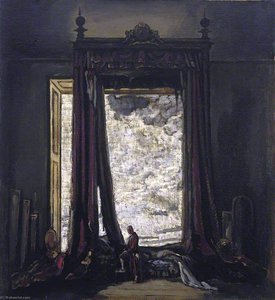
Портрет Джеймс Ф’єрріер Прайд

Картини Джеймс Ф’єрріер Прайд: 31 найвідоміших у погляді галереї

Оновлено Листопад 2026 · за рейтингом нашої популярності (кількість пошукових запитів, переглядів та замовлень для кожної роботи) · 37 робіт Джеймс Ф’єрріер Прайд у нашому каталозі

Коротко кажучи

На думку експертів галереї, найвідоміший витвір Джеймс Ф’єрріер Прайд — це Ellen Terry as Nance Oldfield (1906). A Romantic Landscape (1908) та The Slum (1916) доповнюють тріо, яке впізнає кожне око. З 37 робіт Джеймс Ф’єрріер Прайд у нашому каталозі галерея представляє 31 найвідоміших нижче — кожна з них є оригіналом із зазначенням року створення, музею та унікальних особливостей.

1866 – 1941, Единбург Glasgow school realism Найбільше робіт: Шотландська національна галерея сучасного мистецтва

Топ 10 картин художника Джеймс Ф’єрріер Прайд у галереї

1
Ellen Terry as Nance Oldfield (1906) авторства Джеймс Ф’єрріер Прайд

Ellen Terry as Nance Oldfield

1906 · Oil On Board

The stage is a void of dark tones, a heavy silence captured in oil and varnish. Within this gloom, a single figure emerges, caught in a moment of sudden, sweeping motion. She is Nance Oldfield, her body angled with a theatrical urgency that defies the stillness of the canvas. One arm reaches into the darkness, a gesture of longing or perhaps a command to an unseen audience. The light does…

2
A Romantic Landscape (1908) авторства Джеймс Ф’єрріер Прайд

A Romantic Landscape

1908 · Acrylic On Canvas · Leeds Art Gallery, Лідс

James Ferrier Pryde's "A Romantic Landscape," painted in 1908, isn’t merely a depiction of a picturesque scene; it’s a carefully constructed invitation into the heart of a bygone era. This oil painting, measuring a substantial 119 x 104 cm, captures a group of figures nestled within a verdant woodland, their presence subtly interwoven with the grandeur and mystery of nature. The composition immediately draws the eye to the central trio…

3
The Slum (1916) авторства Джеймс Ф’єрріер Прайд

The Slum

James Ferrier Pryde’s “The Slum,” painted in 1916, isn't merely a depiction of a neglected corner of Edinburgh; it’s a profound meditation on poverty, social injustice, and the encroaching shadows of modernity. Born amidst the artistic ferment of Glasgow’s School of Art, Pryde developed a distinctive style—a masterful blend of atmospheric realism and subtle symbolism—that resonated deeply with the anxieties of his time. This painting, now housed in the Ashmolean…

Картини художника Джеймс Ф’єрріер Прайд, від 11 до 31 місця в рейтингу

Теми, що привертали увагу Джеймс Ф’єрріер Прайд

Чотири сюжети, які найчастіше зустрічаються в цих оригіналах, кожен із найкращим прикладом.

Музеї, у яких зберігаються оригінали Джеймс Ф’єрріер Прайд

8 музеїв, у яких зберігається найбільша кількість картин із цього списку.

Музей Місто Твори Джеймс Ф’єрріер Прайд Картини зі цього списку
Шотландська національна галерея сучасного мистецтва, ЕдінбургШотландська національна галерея сучасного мистецтва Едінбург 2 Lumber A Silhouette, An Ancient Harbour
Leeds Art Gallery, ЛідсLeeds Art Gallery Лідс 1 A Romantic Landscape
Ашмолеанський музей мистецтва та археології, ОксфордАшмолеанський музей мистецтва та археології Оксфорд 1 The Slum
Government Art Collection, ЛондонGovernment Art Collection Лондон 1 Монумент
Національна Trust, КембриджНаціональна Trust Кембридж 1 Allegory The 'Victory' Monolith
New Walk Museum - Art Gallery, ЛестерNew Walk Museum - Art Gallery Лестер 1 The Monument
The Fleming Collection, LondonThe Fleming Collection London 1 The Unknown Corner
Swindon Art Gallery, SwindonSwindon Art Gallery Swindon 1 Невідома

Джеймс Ф’єрріер Прайд, одна фірмова картина за десятиліття

Роботи за десятиліттями

Оберіть десятиліття, щоб побачити оригінальний твір, який його визначає.

Картини Джеймс Ф’єрріер Прайд: відповіді галереї

Яка картина Джеймс Ф’єрріер Прайд є найвідомішою серед усіх?Дізнатися відповідь

Ellen Terry as Nance Oldfield (1906). Далі йдуть A Romantic Landscape (1908) та The Slum (1916).

Скільки років було Джеймс Ф’єрріер Прайд, коли він/вона завершив/завершила Ellen Terry as Nance Oldfield?Дізнатися відповідь

40 років: Ellen Terry as Nance Oldfield датована 1906 роком, а Джеймс Ф’єрріер Прайд народився(-лася) у 1866.

Які 10 найкращих картин Джеймс Ф’єрріер Прайд?Дізнатися відповідь

Ellen Terry as Nance Oldfield, A Romantic Landscape, The Slum, Moll Cutpurse (The Roaring Girl), John Price, John Price, Cartouche, The Deserted Garden, The Birdcage та The Black Pillar. У рейтингу вище вказано рік створення та музей для кожної картини.

Скільки творів створив Джеймс Ф’єрріер Прайд?Дізнатися відповідь

Наш каталог містить 37 робіт Джеймс Ф’єрріер Прайд, датованих періодом з 1902 по 1940.

Де висять найвідоміші оригінали робіт Джеймс Ф’єрріер Прайд?Дізнатися відповідь

Переважно в Шотландська національна галерея сучасного мистецтва (Едінбург), Leeds Art Gallery (Лідс) та Ашмолеанський музей мистецтва та археології (Оксфорд). У таблиці музеїв вище наведено їхній повний перелік.

Коли Джеймс Ф’єрріер Прайд створив свої найвідоміші картини?Дізнатися відповідь

У 1900s: 9 із 31 робіт на цій сторінці були створені тоді, серед них Ellen Terry as Nance Oldfield.

Які найранніші та найпізніші відомі роботи Джеймс Ф’єрріер Прайд?Дізнатися відповідь

На цій сторінці найдавніша робота датована Moll Cutpurse (The Roaring Girl) (1902), а найновіша — The Untouchables (1940).

До яких сюжетів Джеймс Ф’єрріер Прайд звертався найчастіше?Дізнатися відповідь

Architecture (3), Period clothing (2) та Landscape (2), у 31 роботах на цій сторінці.

У якій техніці найчастіше працював Джеймс Ф’єрріер Прайд?Дізнатися відповідь

Acrylic On Canvas, для 3 із 31 робіт на цій сторінці.

З яким напрямом пов'язаний Джеймс Ф’єрріер Прайд?Дізнатися відповідь

Glasgow school realism та Romanticism, судячи з оригіналів на цій сторінці.

Які оригінальні роботи Джеймс Ф’єрріер Прайд зберігаються в Шотландська національна галерея сучасного мистецтва?Дізнатися відповідь

Lumber A Silhouette та An Ancient Harbour: Шотландська національна галерея сучасного мистецтва, Едінбург зберігає 2 робіт із цієї сторінки.

Джеймс Ф’єрріер Прайд: художник

A Life Etched in Atmosphere: The World of James Ferrier Pryde

James Ferrier Pryde, born on March 30, 1866, in Edinburgh, Scotland, was an artist whose work transcended mere representation. He wasn’t simply a painter or a graphic designer; he was a weaver of atmosphere, a chronicler of mood, and a pioneer who reshaped the visual landscape of his time. His lineage was steeped in artistic heritage – related to the celebrated Scottish painters Robert Scott Lauder and James Eckford Lauder – providing him with an early exposure to the world of art and shaping his future trajectory. His father, David Pryde, served as headmaster of Edinburgh Ladies’ College, fostering a home environment that valued education and creativity, nurturing in young James a deep appreciation for both intellectual pursuits and artistic expression. Formal training began at the Royal Scottish Academy from 1885 to 1888, laying the groundwork for a career that would ultimately defy easy categorization, blending influences from various movements while forging his own distinctive style.

The Beggarstaffs: A Revolution in Poster Design

Pryde’s most enduring legacy rests within his collaboration with William Nicholson as part of “The Beggarstaffs,” a partnership that ignited a revolution in poster design during the 1890s. Prior to this groundbreaking union, posters were often cluttered, illustrative, and overwhelmingly functional – mere advertisements designed to convey information quickly. Pryde and Nicholson deliberately dismantled these conventions, embracing bold compositions, striking imagery, and a theatrical sensibility previously unseen in commercial art. They stripped away unnecessary detail, focusing instead on creating visually arresting designs that demanded attention and evoked emotion. Their posters weren’t simply meant to sell products; they were statements – declarations of artistic intent that elevated poster design from a utilitarian necessity to a legitimate form of artistic expression. The partnership eschewed the established norms of the time, producing work characterized by an audacious confidence and intellectual stimulation. The Beggarstaffs' designs frequently featured enigmatic figures, dramatic lighting, and a sense of mystery, drawing inspiration from the works of Edgar Allan Poe and other sources of gothic literature. This deliberate departure from convention earned them both critical acclaim and a devoted following. The partnership dissolved in 1899, but the impact of The Beggarstaffs reverberated throughout the graphic design world for decades to come, influencing countless artists and shaping the aesthetic sensibilities of the early 20th century.

Atmospheric Visions: A Painterly Language

While celebrated for his contributions to graphic design, Pryde’s true passion resided in painting. He developed a deeply personal style centered around atmospheric architectural scenes – not straightforward depictions of buildings, but evocative explorations of mood and emotion. His canvases frequently featured structures dwarfing the human figures within them, emphasizing our fragility against the weight of history and time. Broad brushwork, dramatic lighting effects, and a masterful use of color were hallmarks of his technique, creating an almost palpable atmosphere that drew the viewer into the scene. The influence of Giovanni Battista Piranesi’s etchings is readily apparent in Pryde's monumental compositions and fascination with architectural ruins – he wasn’t interested in precise representation; rather, he sought to capture the *feeling* of a place, its history, and its inherent melancholy. His paintings often feel like fragments of dreams, hauntingly beautiful and subtly unsettling. He frequently depicted Edinburgh landmarks—the Royal Scottish Academy building, Melville Monument—transforming them into symbols of grandeur and isolation.

A Multifaceted Artist: Stagecraft and Recognition

Pryde’s artistic pursuits weren't confined to painting and design. He briefly pursued an acting career between 1894 and 1899, a period that undoubtedly informed his theatrical sensibility and understanding of spatial dynamics. This foray into the performing arts brought him into contact with influential figures like Edward Gordon Craig, who recognized Pryde’s exceptional talent as a painter despite acknowledging his limitations as an actor. He became actively involved in artistic societies, becoming an associate of the International Society of Sculptors, Painters and Gravers in 1901 and later serving as its vice-president in 1921. In 1930, he brought his visual artistry to the stage, designing sets for Paul Robeson’s production of *Othello* at the Savoy Theatre, demonstrating a versatility that extended beyond the canvas. Despite holding only two solo exhibitions during his lifetime – one at the Baillie Gallery in 1911 and another at the Leicester Galleries in 1933 – Pryde received recognition from patrons like Viscountess Cowdray and was lauded by critics such as Frank Rutter, who described him as “stupendous.”

A Lasting Legacy

James Ferrier Pryde passed away on February 24, 1941, in London. While he didn’t align himself with any specific artistic movement, his unique style and contributions to early 20th-century art are increasingly recognized. A memorial exhibition held in 1949, touring Edinburgh, Brighton, and London, helped revive interest in his work. Though exhibitions of his paintings remain relatively infrequent, a growing number of his works are held in public collections, ensuring that his atmospheric visions continue to captivate audiences. Pryde’s legacy rests not only on the beauty of his individual artworks but also on the profound impact of The Beggarstaffs' innovative graphic design, which continues to inspire artists and designers today. He remains a compelling figure—a painter who dared to explore the emotional power of architecture and a designer who helped redefine the very language of visual communication.