Портрет James Peel

Картини James Peel: 41 найвідоміших у погляді галереї

Оновлено Листопад 2026 · за рейтингом нашої популярності (кількість пошукових запитів, переглядів та замовлень для кожної роботи) · 41 робіт James Peel у нашому каталозі

Коротко кажучи

На думку експертів галереї, найвідоміший витвір James Peel — це Landscape in the Glaslyn Valley (1877). The Tinker (1842) та Snowdon (1870) доповнюють тріо, яке впізнає кожне око. З 41 робіт James Peel у нашому каталозі галерея представляє 41 найвідоміших нижче — кожна з них є оригіналом із зазначенням року створення, музею та унікальних особливостей.

1811 – 1906, Newcastle upon Tyne Romanticism Найбільше робіт: Darlington Library

Топ 10 картин художника James Peel у галереї

1
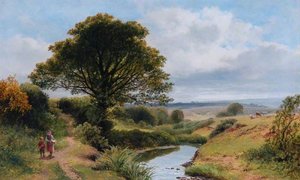
Landscape in the Glaslyn Valley (1877) авторства James Peel

Landscape in the Glaslyn Valley

1877 · Oil On Canvas

Landscape in the Glaslyn Valley is a work by the English painter James Peel. Created about 1877, this oil on canvas presents a quiet, natural scene that captures the essence of a specific topography. The composition focuses on the interplay between the ruggedness of the mountains and the steady presence of the river valley below.

2
The Tinker (1842) авторства James Peel

The Tinker

1842 · Oil · Darlington Library, Дарлінгтон

A man and a child occupy the foreground of this 1842 composition, positioned before a building with a single visible window. The man, likely a traveling tinker, sits on the ground amidst his tools, holding a bucket. His posture suggests a brief respite from the labor of his trade. Nearby, a suitcase rests in the lower left corner, while a chair and a bowl sit close to the central figure.…

3
Snowdon (1870) авторства James Peel

Snowdon

We are looking at Snowdon, a work by James Peel dating from 1870. This piece reflects the artist's deep connection to the landscapes of the United Kingdom, particularly the rugged terrains of Wales. Peel was born in Newcastle upon Tyne, United Kingdom, and his career was defined by a sincere, naturalistic approach to the British countryside. He spent much of his life observing the subtle shifts in light and atmosphere…

5
Landscape with a River (1877) авторства James Peel

Landscape with a River

1877 · Oil On Canvas

Landscape with a River is a work by the English painter James Peel. Created in 1877, the painting captures a serene countryside scene featuring a church positioned in the background. The composition focuses on a peaceful atmosphere where trees surround the structure and five cows graze near the water's edge.

Картини художника James Peel, від 11 до 41 місця в рейтингу

Теми, що привертали увагу James Peel

Чотири сюжети, які найчастіше зустрічаються в цих оригіналах, кожен із найкращим прикладом.

Музеї, у яких зберігаються оригінали James Peel

8 музеїв, у яких зберігається найбільша кількість картин із цього списку.

Музей Місто Твори James Peel Картини зі цього списку
Darlington Library, ДарлінгтонDarlington Library Дарлінгтон 8 The Tinker, Landscape with Cows, Landscape with Fisherman
Laing Art Gallery, Ньюкасл-апон-ТайнLaing Art Gallery Ньюкасл-апон-Тайн 4 Pont y Pant and the Lledr Valley, Mill near Sheppard, Devon, Cotherstone, Yorkshire
Llyfrgell Genedlaethol Cymru / The National Library of Wales, AberystwythLlyfrgell Genedlaethol Cymru / The National Library of Wales Aberystwyth 3 Snowdon, Hauling Logs near Rhuddlan Castle, Moel Siabod, North Wales
Sunderland Museum - Winter Gardens, SunderlandSunderland Museum - Winter Gardens Sunderland 3 Landscape in Cumberland, Sunrise on Loughrigg, Cumbria, Borrowdale, Cumbria
Harris Museum - Art Gallery, ПрестонHarris Museum - Art Gallery Престон 1 Totteridge, near Hampstead
Campbeltown Museum, CampbeltownCampbeltown Museum Campbeltown 1 James McAllister Hall ( )
Wolverhampton Art Gallery, ВулвергемптонWolverhampton Art Gallery Вулвергемптон 1 Near Rosthwaite
Leeds Art Gallery, ЛідсLeeds Art Gallery Лідс 1 Cyfyng Falls

James Peel, одна фірмова картина за десятиліття

Роботи за десятиліттями

Оберіть десятиліття, щоб побачити оригінальний твір, який його визначає.

Картини James Peel: відповіді галереї

Яка картина James Peel є найвідомішою серед усіх?Дізнатися відповідь

Landscape in the Glaslyn Valley (1877). Далі йдуть The Tinker (1842) та Snowdon (1870).

Скільки років було James Peel, коли він/вона завершив/завершила Landscape in the Glaslyn Valley?Дізнатися відповідь

66 років: Landscape in the Glaslyn Valley датована 1877 роком, а James Peel народився(-лася) у 1811.

Які 10 найкращих картин James Peel?Дізнатися відповідь

Landscape in the Glaslyn Valley, The Tinker, Snowdon, Hauling Logs near Rhuddlan Castle, Landscape with a River, Pont y Pant and the Lledr Valley, Landscape River and Mountains, Totteridge, near Hampstead, Landscape та Landscape with Cows. У рейтингу вище вказано рік створення та музей для кожної картини.

Скільки творів створив James Peel?Дізнатися відповідь

Наш каталог містить 41 робіт James Peel, датованих періодом з 1842 по 1900.

Де висять найвідоміші оригінали робіт James Peel?Дізнатися відповідь

Переважно в Darlington Library (Дарлінгтон), Laing Art Gallery (Ньюкасл-апон-Тайн) та Llyfrgell Genedlaethol Cymru / The National Library of Wales (Aberystwyth). У таблиці музеїв вище наведено їхній повний перелік.

Коли James Peel створив свої найвідоміші картини?Дізнатися відповідь

У 1870s: 6 із 41 робіт на цій сторінці були створені тоді, серед них Landscape in the Glaslyn Valley.

Які найранніші та найпізніші відомі роботи James Peel?Дізнатися відповідь

На цій сторінці найдавніша робота датована The Tinker (1842), а найновіша — Landscape River and Mountains (1900).

До яких сюжетів James Peel звертався найчастіше?Дізнатися відповідь

Landscape (5), River (4) та Trees (3), у 41 роботах на цій сторінці.

У якій техніці найчастіше працював James Peel?Дізнатися відповідь

Oil On Canvas, для 4 із 41 робіт на цій сторінці.

З яким напрямом пов'язаний James Peel?Дізнатися відповідь

Romanticism, судячи з оригіналів на цій сторінці.

Які оригінальні роботи James Peel зберігаються в Darlington Library?Дізнатися відповідь

The Tinker, Landscape with Cows та Landscape with Fisherman: Darlington Library, Дарлінгтон зберігає 8 робіт із цієї сторінки.

James Peel: художник

James Peel: A Painter of Northern Light

Born in Newcastle upon Tyne in 1811, James Peel’s life and artistic journey were inextricably linked to the rugged beauty of northern England – specifically, Northumberland, Yorkshire, and Wales. His early years, steeped in the industrial heritage of his father's woollen drapery business, provided a grounding in observation and an appreciation for the changing landscapes around him. Unlike many artists of his era who sought grand, idealized vistas, Peel’s work possessed a remarkable intimacy, capturing not just the scenery but also the subtle textures, atmospheric conditions, and quiet rhythms of rural life. His artistic development was nurtured by Alexander Dalziel, a skilled wood engraver, who recognized Peel's innate talent for drawing and encouraged his pursuit of painting.

Peel’s formal training began at Bruce’s School in Newcastle, where he honed his skills alongside notable figures like Sir Charles Mark Palmer and John Collingwood Bruce. However, it was a move to London in 1840 that truly propelled his career forward. Initially drawn to portraiture – producing striking copies of works by Wilkie Collins, including ‘Blind Fiddler’ and ‘The Village Festival,’ both housed within the National Gallery – Peel soon gravitated towards landscape painting. This shift reflected a deeper connection with the natural world, an impulse he would consistently pursue throughout his career.

A Palette of Northern Moods

Peel's artistic style is characterized by a remarkable sensitivity to light and atmosphere. He wasn’t interested in dramatic sunsets or sweeping vistas; instead, he meticulously rendered the subtle shifts in color and tone that defined the northern skies – the bruised purples of impending rain, the hazy greys of misty mornings, and the golden hues of late afternoon. His brushwork was precise yet fluid, conveying a sense of immediacy and spontaneity. He frequently depicted scenes of everyday rural life: shepherds tending their flocks, farmers working in their fields, and villagers engaged in their routines. These weren’t romanticized depictions; they were honest portrayals of a hardworking people living in harmony with the land.

A key element of Peel's technique was his masterful rendering of trees – an obsession that became almost synonymous with his name. He possessed an extraordinary ability to capture their intricate forms, the play of light and shadow on their bark, and the way they stood sentinel against the sky. Works like ‘A Lane in Berwickshire’ and ‘Cotherstone, Yorkshire,’ now residing in the Laing Art Gallery in Newcastle, exemplify this skill, showcasing a deep understanding of tree structure and an almost tactile quality to his brushstrokes.

Royal Recognition and Artistic Circles

Peel's dedication and talent quickly gained him recognition within the established art world. He began exhibiting at the Royal Academy in 1843 and subsequently joined the Royal Society of British Artists, a prestigious organization that championed English landscape painting. His work was consistently praised for its sincerity, technical skill, and evocative portrayal of northern landscapes. He wasn’t merely documenting scenery; he was conveying a feeling – a sense of quiet contemplation, rustic charm, and deep connection to the land.

Peel's artistic circle extended beyond the Royal Academy. He actively participated in “free” exhibitions organized by figures like Ford Madox Brown and William Bell Scott, challenging the established norms of the art market and advocating for greater accessibility to art. These initiatives demonstrated his commitment to fostering a vibrant and inclusive artistic community.

Legacy and Enduring Appeal

James Peel died in Reading in 1906, leaving behind a substantial body of work that continues to resonate with viewers today. His paintings are not grand statements but intimate glimpses into the heart of northern England – a region he loved deeply and captured with remarkable honesty and skill. His influence can be seen in subsequent generations of landscape artists who sought to emulate his sensitivity to light, his meticulous technique, and his profound appreciation for the beauty of the natural world.

Peel’s legacy extends beyond his artistic achievements. He represents a pivotal moment in British art history – a time when landscape painting moved away from idealized representations and embraced a more direct and personal approach. His work serves as a reminder that true artistry lies not just in technical skill but also in the ability to capture the essence of a place and its people.