Abstract Expressionism · 1970
Composition (І 웅Ро, 1970)
І 웅Ро (1904–1989) створив Composition. Дата створення — 1970. Він належить до напряму Abstract Expressionism. Виконано в Collage. Екземпляр зберігається в Музей Лі Унгно у Тейгу, Південна Корея. Розмір: 120 × 65 cm
- 1970
- Collage
- 120 × 65 cm
- Музей Лі Унгно, Тейгу

 Переглянути в інтер'єрі

 Картина олією ручної роботи
 Надіслати як листівку
 Поділитися
 Інформаційна картка


 Завантажити
 Схожі екземпляри
 Рентгенівське дослідження
 Слайд-шоу
 Питання та відповіді

 Статистика
Composition коротко
- Назва
- Composition
- Художник
- І 웅Ро (1904–1989)
- Рік народження митця
- Сеул, Південна Корея
- Дата
- 1970
- Матеріал
- Collage
- Розміри
- 120 × 65 cm
- Де подивитися
- Музей Лі Унгно, Тейгу, Південна Корея
- Період
- Modern
- Сюжет
- abstract, collage, texture, color field, korean art, organic forms
Що зображено на Composition?
A Symphony of Texture and Tradition
In the evocative masterpiece Composition, created in 1970, the legendary Korean artist Lee Ungno (Yi Eungro) achieves a breathtaking synthesis of Eastern materiality and Western abstraction. This vertical work serves as a profound testament to the artist's lifelong quest to modernize traditional Korean aesthetics through a global lens. At first glance, the viewer is swept into a dense, rhythmic dance of ochre, gold, and amber tones that seem to pulse with an internal, primal energy. The painting does not merely sit upon the canvas; it breathes through a complex layering of textures that challenge the very boundaries between painting and collage.
Lee Ungno’s technical brilliance in this period lies in his revolutionary use of hanji—traditional Korean mulberry paper—as a foundational element. By integrating cotton wool and other tactile materials, he moved beyond the mere application of pigment to create a sculptural surface. The technique involves tearing, reassembling, and painting over fragments of medium, a process that mirrors the fragmented yet unified nature of memory and history. This method allows the artist to achieve an aesthetically harmonious unity, where the "alien" elements of the collage are absorbed into a singular, cohesive whole, contrasting sharply with the more analytical approach found in Western collage traditions.
The Emotional Resonance of Abstract Form
The visual language of Composition is one of controlled chaos. There is no singular focal point to anchor the eye; instead, the viewer’s gaze wanders through a labyrinth of overlapping organic shapes and thick, irregular lines. Subtle traces of darker blue delineate certain forms, providing a necessary tension against the overwhelming warmth of the palette. This lack of a traditional subject matter invites a deeply personal, subjective interpretation. To the collector or interior designer, the piece offers a sense of dynamic movement and dreamlike introspection, making it an ideal centerpiece for spaces that require a sophisticated yet emotionally charged atmosphere.
Beyond its formal qualities, the work carries a profound historical weight. Having navigated the complexities of life in both Seoul and Paris, Lee Ungno utilized this composition to bridge two worlds. The piece evokes a sense of ancient landscapes reimagined through the lens of mid-century expressionism. It is an art of layers—both physical and metaphorical—where the soft texture of cotton wool meets the ruggedness of heavy brushstrokes. For those seeking to adorn a collection with a piece that embodies resilience, innovation, and the beautiful tension between tradition and modernity, this reproduction of Composition offers an unparalleled opportunity to possess a fragment of art history's most transformative era.
У якому музеї зберігається Composition?
Музей Лі Унгно
Тейгу, Південна Корея
Симфонія туші та модернізму: Спадщина Лі Инно У самому серці культурного ландшафту Дечхона Музей Лі Инно постає як глибоке свідчення трансформаційної сили художнього бачення. Цей заклад слугує містком між епохами, пропонуючи рідкісну можливість зазирнути в душу людини, яка зуміла успішно синтезувати медитативну вагомість східного живопису тушшю з відважними, експериментальними межами західного модернізму. Переступити поріг цього музею — означає увійти у простір, де давні традиції корейської каліграфії зустрічаються з електричною енергією європейського абстрактного експресіонізму, створюючи діалог, що резонує крізь покоління.
Зображення високої роздільної здатності Composition

Захищено авторським правом: ці файли призначені лише для особистого ознайомлення і не надають права на переопублікацію.
І 웅Ро, Composition (1970).
І 웅Ро (1904–1989), Composition, 1970, collage, Музей Лі Унгно, Тейгу, Південна Корея. Зображення: OriginalUniqueArt.com.
Відповіді на запитання про Composition
Де сьогодні можна побачити «Composition» роботи І 웅Ро?
«Composition» роботи І 웅Ро експонується в Музей Лі Унгно, Тейгу, Південна Корея. У описі музею йдеться про оригінальний твір, а не про репродукції.
У якому році було створено "Composition"?
«Composition» роботи І 웅Ро було створено у 1970 році.
Яка техніка виконання у «Composition» роботи І 웅Ро?
Для створення «Composition» І 웅Ро використав(ла) техніку Collage. Саме ця техніка визначає матеріальну природу оригінального твору.
Які розміри оригінального твору «Composition» роботи І 웅Ро?
Розмір оригіналу «Composition» роботи І 웅Ро становить 120 x 65 cm.
Які сюжети зображені у «Composition» роботи І 웅Ро?
Тематика, представлена у «Composition» роботи І 웅Ро, включає abstract, collage, texture, color field, korean art, organic forms, dynamic composition, warm palette. Разом вони підсумовують зміст твору.
Чи можна вільно відтворювати зображення «Composition» роботи І 웅Ро?
Щодо авторського права, «Composition» є все ще перебуває під захистом авторського права.
Хто є автором "Composition"?
«Composition» було створено І 웅Ро. Інформація на цій сторінці описує оригінальний твір І 웅Ро.
До якого художнього напряму належить «Composition» роботи І 웅Ро?
«Composition» — це твір у стилі Abstract Expressionism. Назва течії вказує на художню традицію, до якої належить цей твір.
Який етап творчого розвитку І 웅Ро представляє твір "Composition"?
«Composition» належить до Mature Period І 웅Ро.
Про художника І 웅Ро

1904–1989, Південна Корея
І 웅Ро
**ранні роки та навчання** Лі Унгно, також відомий як І Йонгро, був французьким художником та графіком корейського походження, що народився в Сеулі, Південна Корея, у 1904 році. Його ранні роки були позначені коротким навчанням у школі Хонсон Ботонг Хаккьо (홍성보통학교, 홍城초등학교, 洪城普通學校), після чого з 1920 року він присвятив себе вивченню живопису під керівництвом Йомдже Сон Те-хо. **мистецька кар'єра в Кореї та Японії** Мистецька кар'єра Лі Унгно розпочалася по-справжньому, коли він переїхав до Сеула у 1922 році, ставши учнем видатного каліграфа, живописця та фотографа Хаеган Кім Гю-джіна. Саме тоді він опанував техніку написання «чотирьох благородних рослин» у стилі «Хаеган».
Також за участю І 웅Ро
 Untitled1969
 I Ching 64 Hexagrams Sequence(澤風大過)1974
 People1979
 The travels of Marco Polo Series1980
Есе до твору Composition
 20th century Korean paintersYoo Youngkuk graduated from Tokyo's Bunka Gakuin University in 1938, helping to forge a new visual language for a nation in transition.
 Spontaneity and Matter: Distinguishing CoBrA from Art InformelJean Dubuffet mixed sand, tar, and gravel into his 1947 works to create sculptural surfaces. Why did post-war artists reject traditional or…
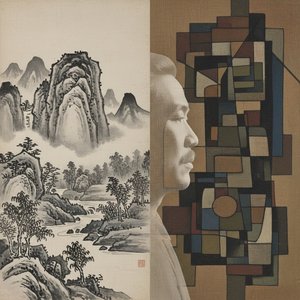 Yi Eungro: Bridging East & West in the Landscape of Korean ModernismExplore the captivating world of Yi Eungro (Lee Ungno), a pivotal figure in Korean modernism. Discover his unique fusion of Eastern and Wes…