Переглянути в інтер'єрі
 Надіслати
 Поділитися
 Деталі
 Посібник

 Завантажити
 Схожі предмети колекціонування
 Рентгенівське дослідження
 Слайд-шоу
 Статистика переглядів
Driftwood


 Читати далі
Гікле / Художній принт
Музейна якість друку جيкле або на полотні з оперативним виготовленням та різноманітними варіантами фінішної обробки. ( Купити картину ручної роботи Перейти до цифрових зображень)




P118B ₴10

P118H ₴10

P118W ₴10

P438Z ₴10

P508JH ₴12

P508YH ₴12

P805H ₴10

P805Z ₴10

P919BZ ₴10

P919G ₴10

P919XJ ₴10

P959ZH ₴10

P968JZ ₴12

W106C ₴8

W218G ₴10

W218JH ₴8

W218Y ₴10

W307PJ ₴10

W316G ₴10

W316PJ ₴8

W316Y ₴10

W398PJ ₴8

W4111J ₴10

W500HY ₴15

W500JH ₴15

W692G ₴12

W849H ₴8

W940BG ₴15

W953PJ ₴8




Обирайте з наших стандартних розмірів, що відповідають оригінальним пропорціям твору мистецтва.

Введіть необхідну ширину та висоту, щоб принт ідеально підійшов до вашої рами або стіни. Принт можна лише обрізати, але не можна зробити більшим за оригінал, тому при зміні пропорцій частина зображення буде втрачена. Перед друком ми надсилаємо вам цифровий макет для затвердження. Зображення на цій сторінці не відображає реальну обрізку — її можна побачити лише на макеті.
Доставка по всьому світу () за 2 тижні замість стандартних 4/5 тижнів. (22 Жовтень)

Безкоштовна експрес-доставка по всьому світу

Високоякісне лляне полотно

Повне страхове покриття доставки

Гарантія повернення митних зборів

Гарантія точного відтворення кольорів

Політика повернення протягом 100 днів (лише у разі виявлення дефектів)

Гарантія повернення 100% коштів

Знижка на оптові замовлення
 Скляний варіант доступний лише для розмірів до 110 см

Driftwood
Гікле / Художній принт
Розмір репродукції
-


Загальна вартість
₴ 3585
A Masterpiece of Coastal Drama: Winslow Homer’s Driftwood
Winslow Homer's “Driftwood,” completed in 1909, stands as a testament to the artist’s unparalleled ability to distill the sublime beauty and terrifying power of the ocean into a single canvas. More than just a depiction of a seascape, it embodies Homer’s profound engagement with the relationship between humanity and the natural world—a connection explored throughout his prolific career.
- Composition & Technique: Homer employs bold brushstrokes and vibrant hues to convey the dynamism of crashing waves against rugged rocks. The textured surface reflects the artist's meticulous attention to detail, mirroring the physicality of the scene. Thick impasto creates a palpable sense of movement and energy, capturing the raw force of the sea’s assault on the shoreline.
- Subject Matter & Narrative: The painting portrays a solitary figure attempting to retrieve a sizable piece of driftwood—a symbol of resilience amidst adversity—carried ashore by turbulent currents. This simple yet evocative action serves as a microcosm of Homer's broader fascination with confronting nature’s challenges head-on.
Historical Context & Artistic Influences
Painted during Homer’s twilight years, “Driftwood” resonates deeply within the context of late 19th-century American art. Homer drew inspiration from Romantic painters like Turner and Ryder, whose dramatic seascapes championed the sublime—the awe-inspiring grandeur of nature that simultaneously inspires terror and reverence. These influences are evident in Homer’s masterful use of light and shadow to heighten the emotional impact of his compositions.
Symbolism & Emotional Resonance
Beyond its visual splendor, “Driftwood” carries significant symbolic weight. The driftwood itself represents perseverance and adaptation—the ability to endure hardship while maintaining one's integrity. The bird circling overhead symbolizes freedom and aspiration, contrasting with the grounded figure battling against the relentless force of the ocean. Ultimately, Homer’s painting invites contemplation on humanity’s place within the vastness of nature, prompting viewers to confront their own vulnerability alongside its majesty.
Location & Legacy
“Driftwood” resides in the Museum of Fine Arts Boston, where it continues to captivate audiences with its arresting imagery and emotional depth. Its enduring appeal underscores Homer’s legacy as one of America's foremost landscape painters—an artist who dared to confront the sublime and translate its grandeur onto canvas.
- Further Exploration: Interested in delving deeper into Homer’s oeuvre? Consider examining “Undertow,” another masterful seascape showcasing his distinctive style. Alternatively, explore the works of Claude Monet and Joaquin Sorolla Y Bastida on OriginalUniqueArt.com for a broader appreciation of Impressionist aesthetics.
Запитання та відповіді
Як поєднуються контраст і гармонія у творі "Driftwood"?
Колірна композиція «Driftwood» Вінслоу Гомер поєднує в собі Заява контраст із Диссонуюча палітра гармонією.
Якому етапу кар'єри Вінслоу Гомер відповідає дата створення «Driftwood» (1909 рік)?
Дата 1909 дозволяє віднести «Driftwood» до Mature Period творчого розвитку Вінслоу Гомер.
Скільки років було Вінслоу Гомер, коли створювався твір "Driftwood" у 1909 році?
Вінслоу Гомер створив(ла) «Driftwood» у віці 73 років. Митець народився(лася) у 1836, а дата створення твору — 1909.
Біографія митця
Winslow Homer: A Brush With the American Spirit
Winslow Homer, born in Boston in 1836, wasn’t sculpted by the traditional European art academies that shaped so many of his contemporaries. Instead, he emerged from a distinctly American experience, one rooted in practicality and observation. His journey began not with grand historical canvases, but as a commercial illustrator at the tender age of twelve for Harper's Weekly. This early apprenticeship was formative, honing an exceptional ability to capture scenes with clarity and detail – skills that would become hallmarks of his mature work. He wasn’t learning perspective in Paris; he was learning to *see* America, its people, and its unfolding story. The bustling streets of Boston, the quiet dignity of rural New England life, these were his first subjects, rendered with a precision born of necessity for the demands of print media. This foundation allowed him to transition into painting, initially in watercolor, before fully embracing the expressive potential of oil paints.From Pastoral Scenes to the Raw Power of Nature
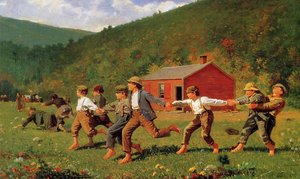
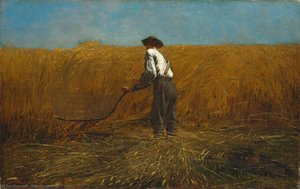
Homer’s early paintings often depicted idyllic scenes – children playing, farmers tending their fields, quiet moments of domesticity. These works, while charming, hinted at a deeper artistic sensibility waiting to be unleashed. The catalyst for this transformation was undoubtedly the Civil War. As a war correspondent for Harper's Weekly, Homer witnessed firsthand the brutal realities of conflict. He didn’t focus on heroic battles or grand strategies; instead, he documented the everyday lives of soldiers and civilians, the quiet moments of grief and resilience amidst chaos. This experience profoundly altered his artistic vision. The pastoral scenes gave way to more challenging subjects: veterans grappling with trauma, freed slaves navigating a new world, and the stark beauty of landscapes touched by hardship. He began to explore themes of struggle, isolation, and humanity’s precar He wasn't interested in imitating European styles; he wanted to create an art that was uniquely American, reflecting its landscapes, its people, and its challenges. His style also evolved, becoming bolder and more direct, reflecting the raw emotional impact of what he had witnessed. Breezing Up (A Fair Wind), painted in 1876, exemplifies this skill – a quintessential depiction of American maritime life, brimming with energy and movement. The Gulf Stream, created decades later, is perhaps his most iconic work, a powerful and symbolic portrayal of a lone man battling the forces of nature, a metaphor for human struggle against overwhelming odds. He possessed an extraordinary ability to capture light, whether it was the dazzling glare of the sun on the ocean or the soft glow of twilight over a rural landscape. This mastery extended to his watercolors, where he achieved remarkable atmospheric effects through vibrant colors and delicate washes. Innocence, a poignant portrayal of childhood set against the backdrop of nature, and **Man of Science** demonstrating his skill in capturing human psychology, are testaments to this commitment.Mastering Light, Texture, and the American Landscape
Winslow Homer's artistic technique is immediately recognizable for its solidity and texture. He wasn’t interested in fleeting impressions; he wanted to build up a sense of tangible reality on the canvas. His oil paintings are characterized by a direct painting approach – layers of paint applied with confidence, creating depth and luminosity. He wasn’t simply painting what he saw; he was conveying a feeling, an emotional truth about the human condition. His unwavering dedication to capturing the essence of American life—from the serene beauty of coastal vistas to the arduous realities of rural existence—established him as a cornerstone of American Realism.A Legacy Forged in American Realism
His influence can be seen in the work of later American painters who sought to depict their own country with similar directness and emotional depth. He wasn’t interested in imitating European styles; he wanted to create an art that was uniquely American, reflecting its landscapes, its people, and its challenges. His legacy lies in his ability to portray America with honesty and authenticity, without romanticizing or idealizing it. He remained a pivotal figure in the development of American Realism, securing his place as one of America’s most important and enduring artists.- His work continues to inspire contemporary artists.
- Homer remains a cornerstone of American Realism.
Вінслоу Гомер
1836 - 1910 , США
Довідкова інформація
- Artistic Movement Or Style: Американський Реалізм
- Artists Or Movements Influenced By This Artist: ['Американські художники']
- Artists Who Influenced This Artist:
- Барбізоньський Школа
- Кубер
- Мілет
- Date Of Birth: 3 жовтня 1836 р.
- Date Of Death: 1910 р.
- Full Name: Winslow Homer
- Nationality: Американський
- Notable Artworks:
- Бриз Вітер
- Течія Густини
- Ніна
- Place Of Birth: Бостон, США
Схожі статті

Evocations of Place: A Historical Journey Through Landscape Art
Explore the rich history of landscape art with OriginalUniqueArt. Discover renowned artists, movements like Impressionism & Romanticism, and expert guidance for collecting timeless pieces. Find your perfect serene escape today!

Herman Herzog: Capturing American Landscapes & the Pursuit of Domestic Idealism
Explore the captivating landscapes of Herman Herzog, a pivotal American artist known for his realistic depictions of Yosemite & Florida scenes. Discover his legacy, artistic journey, and market value with OriginalUniqueArt.
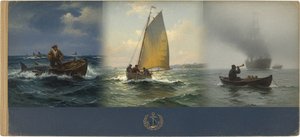
Топ-25 шедеврів Вінслова Гомера: мистецтво, що оживає у вашому домі | OriginalUniqueArt
Відкрийте для себе 25 найкращих картин Вінслова Гомера – американського імпресіоніста, майстра морських пейзажів та жанрових сцен. Історія мистецтва, техніки живопису та емоційний вплив шедеврів. Репродукції картин на OriginalUniqueArt.com!

Топ-10 шедеврів американського реалізму: мистецтво правдивого відображення життя | OriginalUniqueArt
Відкрийте для себе 10 шедеврів американського реалізму! Дослідіть історії Ендрю Уайєта, Хопера та інших видатних художників. Купіть репродукції картин преміум-якості для вашого дому на OriginalUniqueArt.com.

Grant Wood & American Regionalism: Identity, Myth & the Rural Landscape
Explore the world of Grant Wood & American Regionalism with OriginalUniqueArt. Discover the symbolism behind 'American Gothic', recurring themes, and the movement's lasting impact on art history. High-quality reproductions available.