Arts and Crafts Movement · 1876
(Вільям Морріс, 1876)
Вільям Морріс (1834–1896) створив . Дата створення — 1876. Він належить до напряму Arts and Crafts Movement. Виконано в Illustration. Екземпляр зберігається в Національний музей декоративних мистецтв Мадрида у Мадрид, Іспанія. Розмір: 962 × 57 cm
- 1876
- Illustration
- 962 × 57 cm
- Національний музей декоративних мистецтв Мадрида

 Переглянути в інтер'єрі

 Картина олією ручної роботи
 Надіслати як листівку
 Поділитися
 Інформаційна картка


 Завантажити
 Схожі екземпляри
 Рентгенівське дослідження
 Слайд-шоу
 Питання та відповіді

 Статистика
коротко
- Назва
- Художник
- Вільям Морріс (1834–1896)
- Рік народження митця
- Валтамстоу, Великобританія
- Дата
- 1876
- Матеріал
- Illustration
- Розміри
- 962 × 57 cm
- Де подивитися
- Національний музей декоративних мистецтв Мадрида, Мадрид, Іспанія
- Період
- 19th Century
- Сюжет
- floral design, wallpaper pattern, japonisme influence, organic forms, curved leaves, botanical illustration
Що зображено на ?
Identification of the Pimpernel Wallpaper Design
The wallpaper design known as Pimpernel emerged from the mind of William Morris around 1876. This work reflects the vision of the English architect, designer, craftsman and theorist William Morris. It captures a specific moment in the late nineteenth century when the lines between domestic utility and fine art began to blur. The pattern seeks to bring the quiet rhythms of the natural world into the structured interiors of the Victorian era.
William Morris conceived this design as a way to integrate botanical life into the fabric of the home. The Pimpernel pattern is a wallpaper design that relies on the repetition of organic forms. It functions as a visual echo of the garden, translated into a rhythmic sequence of flora. Each line follows the logic of a growing stem or a reaching leaf.
The work exists as a structured arrangement of botanical elements. It is a product of the Arts and Crafts movement, born from a desire to prioritize the hand of the maker. Through this design, the artist sought to find a balance between the wildness of nature and the order of the printed surface. A single petal rests in the stillness of the pattern.
Visual Composition and Floral Motifs
Curvilinear acanthus leaves wind through the space, creating a rhythmic movement across the surface. These forms intertwine with climber willow and honeysuckle branches, forming a dense, interlocking network. The pattern relies on an intricate and detailed arrangement where every leaf and stem finds its place within the organic geometry. It is a quiet, structured growth.
Chrysanthemums and jasmines emerge from the foliage, their shapes softened by the surrounding greenery. Willow branches weave through the composition, adding a sense of layered depth to the botanical scene. The color palette remains restrained, dominated by shades of blue that suggest a calm, shaded garden. Ivory and pale greens provide a delicate contrast to these deeper tones.
Technique and Material Production
The creation of this design relied on the steady hand of the artisan. Using hand-printing techniques, the intricate floral patterns were pressed onto linen fabric. Each movement of the printer required precision to ensure the botanical forms appeared with a remarkable level of realism. The texture of the linen holds the ink, grounding the delicate shapes of the pimpernel and willow in a tangible, physical reality.
This labor-intensive process reflects a deep commitment to traditional artisanal skills. Rather than the sterile repetition of a machine, the work carries the weight of meticulous human effort. Every stem and leaf was placed with a specific intent, honoring the slow rhythm of manual craft. The final result is a surface where the organic lines of nature meet the disciplined touch of the maker.
Artistic Style and Movement Influence
The design belongs to the Arts and Crafts Movement, a reaction against the cold precision of the industrial age. It seeks a return to the hand of the maker. This piece carries a distinct Oriental influence, pulling from the quietude of the Far East to reshape Victorian interiors. The patterns do not shout; they whisper through a lens of Japonisme.
Eastern stylistic conventions dictate the flow of the composition. The work reflects the influence of Japanese design principles, favoring a restrained elegance over heavy ornamentation. It is a translation of distant aesthetics into a local language of line and form. The curvilinear movement of the stems mirrors the serene balance found in Japanese art.
This aesthetic approach creates a bridge between two worlds. The pattern uses the logic of the East to find a new rhythm for the English home. It is a quiet rebellion of nature against the machine. A single leaf rests in perfect, deliberate balance.
Current Location and Museum Collection
The Pimpernel wallpaper design resides within the Nacionálny múzeum dekoratívneho umelí Madrid. This collection preserves the work in Madrid, Spain. It remains a part of the National Museum of Decorative Arts. The physical presence of the piece is defined by its long, narrow scale, measuring 57 x 962 cm.
The museum halls hold this linen fragment. It rests as a quiet specimen of the Arts and Crafts Movement. The blue hues and floral lines exist here, kept within the Spanish institution. A stillness settles over the pattern in its current home.
У якому музеї зберігається ?
Національний музей декоративних мистецтв Мадрида
Мадрид, Іспанія
Приховане серце Мадрида: Національний музей декоративних мистецтв У самому центрі пульсуючого мегаполіса Мадрид, неподалік від ідилічного Парку Ретіро, причаїлася маловідома, але надзвичайно цінна скарбниця – Національний музей декоративних мистецтв. Це не просто ще один музей; це запрошення до роздумів, подорож у часі та глибоке занурення в історію декоративного мистецтва, що охоплює століття не лише на іспанській землі, а й по всій Європі. Заснований у 1912 році з метою збереження багатої культурної спадщини країни, музей виходить далеко за межі простого оздоблення інтер’єру, пропонуючи погляд на шедеври, ескізи та культурні цитати, які свідчать про майстерність ремісників і іспанську естетику протягом століть.


Зображення високої роздільної здатності

Суспільне надбання: художник помер у 1896 році.
Інші розміри, кадри та цитування →Вільям Морріс, (1876), Національний музей декоративних мистецтв Мадрида. Суспільне надбання
Про художника Вільям Морріс

1834–1896, Великобританія
Вільям Морріс
William Morris (1834–1896) – Життя, Мистецтво та Соціалістична Віра William Morris, народжений 24 березня 1834 року у Вальтомстоу, Ессекс, виник з комфортної середньокласової родини — обставина, що дарувала йому свободу від професій і дозволяла пізнавати світ через мистецтво та естетику. Його батько був успішним фінансистом, забезпечуючи не тільки фінансову стабільність, але й середовище для розквіту художніх смаків. Дитинство Морріса було глибоко сформоване англійським ландшафтом навколо його дому та захопленням міфологічними історіями та середньовічною лицарською літографією – це фундамент його життєвої філософії. Він не просто *надихався* природою чи минулим; він вірив у їхню внутрішню моральну й естетичну перевагу над швидко розвивающимся промисловим суспільством.
Також за участю Вільям Морріс
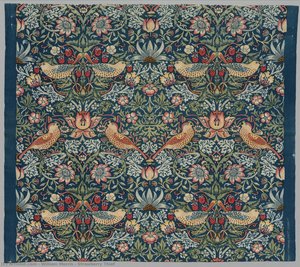 Strawberry Thief1936
 The Little Tree (Hammersmith Rug)1895
 Snakeshead1900
 Design for1881

Есе до твору
 Victorian Botanical Art: A Professional Guide to Sourcing Timeless Floral Reproductions for Luxury Hotel InteriorsElevate hospitality interiors with premium Victorian botanical art reproductions. A professional guide for hotel designers on sourcing hand…
 10 Iconic Textile Masterpieces That Redefined the World of ArtJourney through history with 10 legendary textile masterpieces that redefined art. From iconic tapestries to fine fiber arts, explore the s…
 The Art of the Matrix: Exploring the Technical Lineage of Woodcut and IntaglioExplore the technical mastery of woodcut and intaglio through history. Discover the secrets of the artist's matrix today.