 Перейти до друку
 Розгорнути текст







































 Для творів мистецтва або репродукцій, розмір яких перевищує 105 см (приблизно 41 дюйм) з будь-якого боку, рама доставляється у вигляді розібраного комплекту. Такий метод гарантує безпечну доставку та запобігає пошкодженням під час транспортування.


A Satirical Mirror to Enlightenment Excess
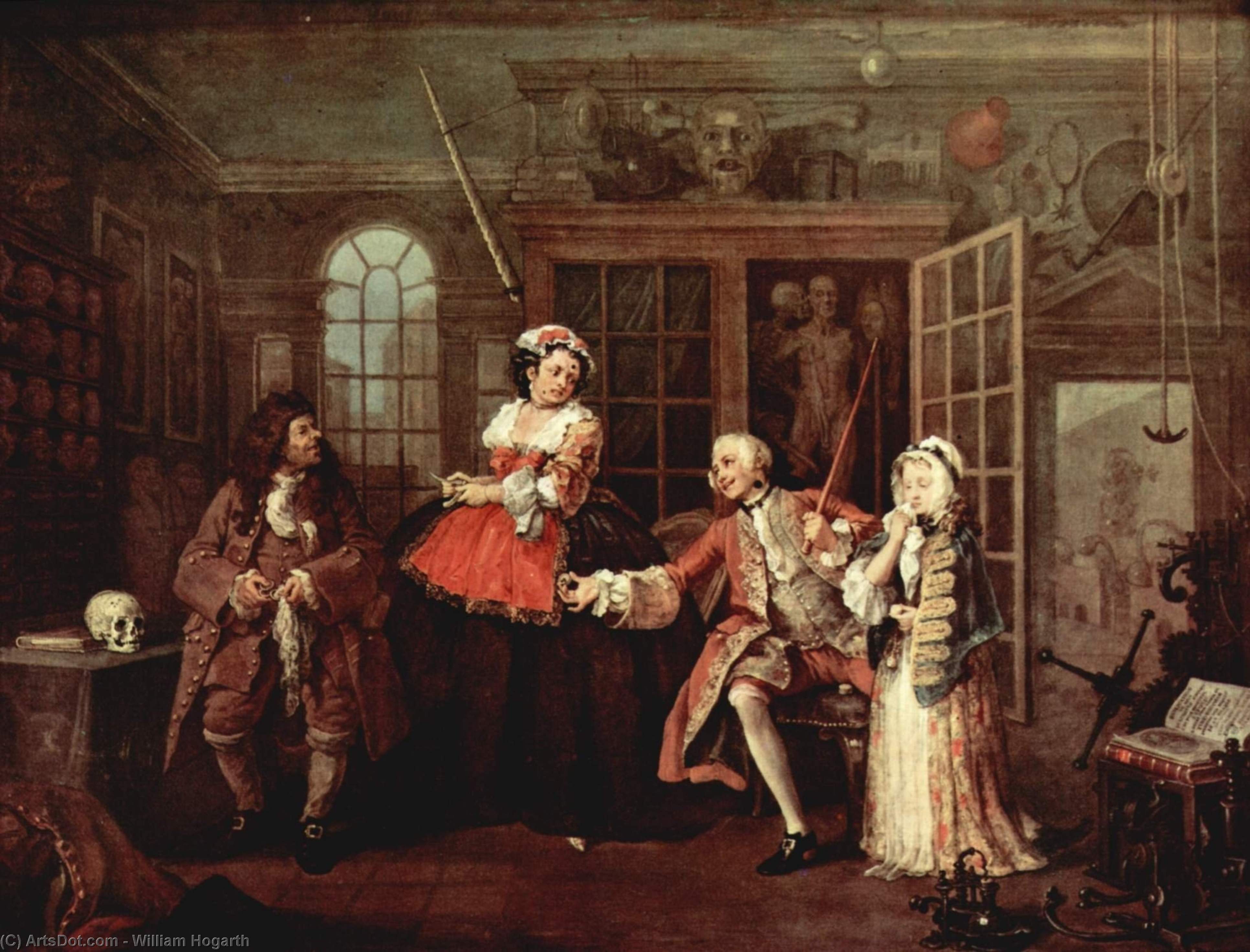
In the vibrant yet biting world of 18th-century London, William Hogarth’s “Visit with the Quack Doctor” emerges as a profound theatrical performance captured in paint. Painted around 1745, this masterpiece of the Rococo era serves as much more than a mere medical consultation; it is a searing indictment of the intellectual pretensions and societal hypocrisies that defined Georgian England. The scene unfolds within a room brimming with life, where a physician examines a patient amidst a crowd of observers whose detached curiosity adds a layer of dramatic tension to the composition. Hogarth meticulously arranges his figures with a sense of stagecraft, inviting the viewer to step into a narrative that is as much about the folly of human nature as it is about the dubious medical practices of the age.
The atmosphere of the painting is thick with a palpable sense of unease and disillusionment. As one gazes upon the gathered individuals, there is an unmistakable feeling of being a witness to a charlatanism in progress. Hogarth’s ability to capture the psychological depth of his subjects—conveying suspicion, vanity, and even fear—transforms the canvas into a window through which we glimpse the anxieties of a society caught between burgeoning scientific inquiry and a lingering belief in superstition. For the discerning collector or interior designer, this piece offers a captivating intellectual depth, providing a conversation piece that challenges the viewer to look beneath the surface of social decorum.
Mastery of Line and Symbolic Depth
Technically, “Visit with the Quack Doctor” showcases Hogarth’s extraordinary command over texture and light. Drawing from his roots as an engraver, the artist utilizes a precise linework and tonal shading that lends a remarkable realism to the scene. One can almost feel the weight of the worn fabric on the patient’s clothing and the smooth, polished surface of the dining table. This meticulous attention to detail creates an immersive experience, pulling the viewer into the very heart of the room. The use of light and shadow is particularly effective, creating dramatic contrasts that emphasize the characters' expressions and heighten the sense of potential deception inherent in the quack’s visit.
Beyond its visual realism, the painting is a rich tapestry of symbolic meaning. Hogarth embeds subtle warnings within the composition to provoke contemplation. A skull positioned prominently in the lower left corner serves as a stark memento mori, a chilling reminder of mortality that stands in sharp contrast to the surrounding ostentation and frivolity. Furthermore, the presence of clocks throughout the room acts as a visual metaphor for the relentless march of time, suggesting the futility of pursuing ephemeral pleasures and the vanity of unchecked ambition. It is this seamless blend of technical brilliance and profound symbolism that makes Hogarth’s work an enduring emblem of artistic vision, offering timeless insights into the complexities of the human condition.
Питання та відповіді
Яка сприймається яскравість твору «Visit with the Quack Doctor» роботи Вільям Хоґарт?
Відчутна яскравість твору «Visit with the Quack Doctor» роботи Вільям Хоґарт становить deep_shadow. Її можна підібрати відповідно до освітлення в запланованому інтер'єрі.
Якому етапу кар'єри Вільям Хоґарт відповідає дата створення «Visit with the Quack Doctor» (1745 рік)?
Дата 1745 дозволяє віднести «Visit with the Quack Doctor» до Mature Period творчого розвитку Вільям Хоґарт.
Яким чином твір "Visit with the Quack Doctor" перегукується з іншими роботами Вільям Хоґарт?
«Visit with the Quack Doctor» належить до Rococo творчості Вільям Хоґарт, чиї характерні теми включають moral critique, social satire, observation, human behavior, genre painting.
 Переглянути в інтер'єрі
 Надіслати як листівку
 Поділитися
 Деталі витвору
 Посібник

 Завантажити
 Схожі екземпляри
 Рентгенівське дослідження
 Слайд-шоу
 Q&A
Q&A Статистика