

 Переглянути в інтер'єрі
 Надіслати як листівку
 Поділитися
 Детальніше

 Завантажити
 Схожі експонати
 Рентгенівське дослідження
 Слайд-шоу
The Spell
 Pre-Raphaelite
 1864
1864 78.0 x 157.0 cm
 Читати далі
Олійная репродукція ручної роботи
Написана вручну олією на полотні у вашому розмірі та рамі, виготовлена на замовлення нашими художниками. ( Замовити принт Купити цифрове зображення)




































Обирайте з наших стандартних розмірів, що відповідають оригінальним пропорціям твору мистецтва.

Ви можете вказати власні розміри, щоб репродукція ідеально підійшла до конкретної рами або інтер'єру. Якщо вибраний вами розмір не відповідає пропорціям оригіналу, ми або обріжемо полотно, або доповнимо картину додатковими елементами, промальованими вручну. Цифровий макет буде надіслано вам на затвердження перед початком виробництва.
Зверніть увагу, що попередній перегляд на екрані не відображає фактичне обрізання або розширення зображення. Тільки макет точно покаже остаточну композицію.
Хоча ми можемо виготовити виріб у нестандартному розмірі, для збереження оригінальних пропорцій рекомендуємо обирати варіанти зі встановленого списку.
Після оформлення замовлення команда OriginalUniqueArt.com зв'яжеться з клієнтом електронною поштою для отримання інструкцій та надасть попередній макет
Доставка по всьому світу () за 3–4 тижні замість стандартних 5 тижнів. (31 Серпень). Без жодних компромісів у якості.

Безкоштовна експрес-доставка по всьому світу

Високоякісне лляне полотно

Повне страхове покриття доставки

Гарантія відшкодування митних зборів

Гарантія точного відтворення кольорів

Політика повернення протягом 60 днів (лише у разі виявлення дефектів)

Гарантія повернення 100% коштів

Пропозиція на оптові замовлення
 Скляний варіант доступний лише для розмірів до 110 см

The Spell
Матеріал репродукції
Розмір репродукції
-


Підсумкова вартість
$ 300
Artist Background
William Fettes Douglas was a Scottish artist known for his portraits and historical paintings. He was born in 1822 and died in 1891, leaving behind a legacy of beautiful works of art. Some of his notable pieces include Sir William Fettes Douglas (1822–1891), Artist, Self Portrait, which can be found on OriginalUniqueArt.com.Painting Description
The painting The Spell depicts a man in a black robe standing next to a table with books on it. The man appears to be looking at the books or possibly reading them. There are several other people present in the scene as well, some of whom may also be engaged in reading or studying. The presence of various objects such as a chair, a bowl, a cup, a spoon, a knife, and a bottle suggests that this could be a study area or a gathering place for individuals who are interested in reading or discussing various topics.Similar Artists and Paintings
Other notable artists whose works can be found on OriginalUniqueArt.com include John Graham Gilbert and John Henry Lorimer. Some of their famous pieces include Sir John Watson Gordon (1788–1864), Artist and Sir Robert Stodart Lorimer (1864–1929), Architect. These paintings showcase the artists' skill and attention to detail, much like The Spell by William Fettes Douglas.- Painting size: 78 x 157 cm
- Painting media: Oil On Canvas
- Painting date: 1864
- Painting location: National Galleries of Scotland (United Kingdom)
For more information on William Fettes Douglas and his works, visit OriginalUniqueArt.com or the National Galleries of Scotland website.
Біографія митця
The Visionary of Edinburgh: The Life and Legacy of Sir William Fettes Douglas
In the heart of nineteenth-century Edinburgh, a period defined by both industrial progress and a deep reverence for the arcane, Sir William Fettes Douglas emerged as a painter of profound spiritual and intellectual depth. Born on March 12th, 1822, Douglas was a man whose very lineage whispered of tradition and prestige. As the son of James Douglas, an esteemed accountant for the Commercial Bank of Scotland, and the grand-nephew of the illustrious Sir William Fettes, his upbringing was steeped in the cultural fabric of Scotland’s elite. Yet, beneath this veneer of aristocratic stability lay a restless, searching spirit that would eventually lead him away from the ledger books of banking and toward the ethereal realms of the Pre-Raphaelite aesthetic.
Douglas’s path to mastery was notably unconventional. Eschewing the rigid confines of formal academic training in his early years, he embraced a more intimate, self-directed method of discovery. His education at the High School of Edinburgh provided the foundation, but it was through diligent sketching and the mentorship of fellow artists like Alexander Fraser and even the legendary James Abbott MacKenzie Whistler that his draughtsmanship began to flourish. This period of independent study instilled in him a lifelong commitment to meticulous observation—a trait that would become his hallmark. He did not merely seek to paint what he saw, but to capture the atmospheric subtleties and the hidden, often mystical, truths residing within the physical world.
A Tapestry of Myth, Mystery, and Meticulous Detail
The true ascent of Douglas’s career began in 1845 with his debut at the Royal Scottish Academy. It was here that the art world first encountered his unique ability to imbue canvas with a palpable spiritual resonance. Heavily influenced by the aesthetic philosophies of John Ruskin and the evocative imagery of Dante Gabriel Rossetti, Douglas turned his gaze toward themes of mythology, folklore, and biblical narrative. His work became a bridge between the tangible and the transcendent, where every brushstroke served to explore complex notions of mortality, symbolism, and psychological depth.
His masterpieces from the mid-nineteenth century serve as windows into a world of enchantment and scholarly intrigue. Consider his evocative works such as:
- The Ruby Ring (1853): A piece that exemplifies his ability to weave narrative tension with jewel-like precision.
- The Alchemist (1855): A profound exploration of transformation and the esoteric pursuit of knowledge.
- The Spell (1864): Currently housed in the National Galleries of Scotland, this work showcases his mastery of light and shadow, depicting a scene of quiet, ritualistic intensity that leaves the viewer suspended in a moment of magic.
- The Summons to the Secret Tribunal (1860): A captivating composition where books, clocks, and papers create an atmosphere of heavy mystery and intellectual weight.
In these paintings, Douglas utilized a technique characterized by an unwavering commitment to accuracy. His ability to render textures—the cold gleam of metal, the weathered grain of ancient wood, or the soft glow of candlelight—created a sense of hyper-reality that heightened the supernatural elements of his subjects.
Ascension and Historical Significance
As his reputation grew, so too did his influence within the Scottish art establishment. Douglas was not merely a practitioner of his craft but a true connoisseur and leader of his era. His rise to the position of President of the Royal Scottish Academy marked the pinnacle of his professional achievements, signaling the respect he commanded among his peers. He became a central figure in the Victorian intellectual landscape, representing a movement that sought to find meaning and beauty in the shadows of history and the depths of the human psyche.
The historical significance of Sir William Fettes Douglas lies in his role as a bridge between the classical traditions of Scotland and the burgeoning romanticism of the Pre-Raphaelite Brotherhood. He brought a uniquely Scottish sensibility—one of scholarly rigor and atmospheric gloom—to the broader European movement. Even today, his works remain vital touchstones for those studying the intersection of art, mysticism, and the Victorian obsession with the archaeological and the ancient. Through his meticulous hand, Douglas ensured that the ephemeral whispers of myth and folklore were etched permanently into the annals of art history.

William Fettes Douglas
1822 - 1881
Короткі факти
- Artistic Movement Or Style: Pre-Raphaelite
- Artists Or Movements Influenced By This Artist: ['Romanticism']
- Artists Who Influenced This Artist:
- John Ruskin
- Edward Burne-Jones
- Date Of Birth: 1822
- Date Of Death: 1891
- Full Name: William Fettes Douglas
- Nationality: Scottish
- Notable Artworks:
- The Summons to the Secret Tribunal
- Stonehaven Harbour
- Place Of Birth: Edinburgh, Scotland
Пов'язані статті
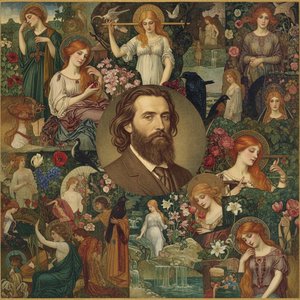
25 шедеврів Данте Габріеля Россетті: мистецтво, краса та декор для вашого дому
Відкрийте 25 захопливих шедеврів Данте Габріеля Россетті! Пориньте у світ прерафаелітів, символізму та неймовірної краси. Купуйте репродукції картин онлайн на OriginalUniqueArt.com – декор для вашого дому з музейною якістю.

Sir John Everett Millais: Pre-Raphaelite Rebellion & Victorian Narrative Detail
Explore the revolutionary art of Sir John Everett Millais & the Pre-Raphaelite Brotherhood. Discover their radical realism, symbolic narratives, and lasting impact on Victorian aesthetics. A deep dive into 19th-century masterpieces.

The Pre-Raphaelite Brotherhood: Rebellion, Romance & Medieval Revival
Explore the captivating world of the Pre-Raphaelite Brotherhood! Discover their rebellious spirit, iconic masterpieces & lasting influence on art history. Learn about Rossetti, Millais & more.

Pre-Raphaelite Romanticism: A Guide to Vivid Detail and Medieval Beauty in Victorian Art
Explore the vivid detail and medieval beauty of Pre-Raphaelite Romanticism. Discover the history of masters like Rossetti and Millais through our expert guide to Victorian art, perfect for collectors and professionals seeking authentic, museum-quality reproductions.

John William Waterhouse: Pre-Raphaelite Mythmaker & Poetic Depictions of Female Identity
Explore the captivating world of John William Waterhouse, a master of Pre-Raphaelite painting. Discover his iconic depictions of mythology and female identity in this expert guide.

