

 Переглянути в інтер'єрі
 Надіслати як листівку
 Поділитися
 Детальніше

 Завантажити
 Схожі експонати
 Рентгенівське дослідження
 Слайд-шоу
 Статистика
Self-Portrait


 Читати далі
Олійная репродукція ручної роботи
Написана вручну олією на полотні у вашому розмірі та рамі, виготовлена на замовлення нашими художниками. ( Перейти до друку Перейти до цифрових зображень)




P118B $10

P118H $10

P118W $10

P438Z $10

P508JH $12

P508YH $12

P805H $10

P805Z $10

P919BZ $10

P919G $10

P919XJ $10

P959ZH $10

P968JZ $12

W106C $8

W218G $10

W218JH $8

W218Y $10

W307PJ $10

W316G $10

W316PJ $8

W316Y $10

W398PJ $8

W4111J $10

W500HY $15

W500JH $15

W692G $12

W849H $8

W940BG $15

W953PJ $8




Обирайте з наших стандартних розмірів, що відповідають оригінальним пропорціям твору мистецтва.

Ви можете вказати власні розміри, щоб репродукція ідеально підійшла до конкретної рами або інтер'єру. Якщо вибраний вами розмір не відповідає пропорціям оригіналу, ми або обріжемо полотно, або доповнимо картину додатковими елементами, промальованими вручну. Цифровий макет буде надіслано вам на затвердження перед початком виробництва.
Зверніть увагу, що попередній перегляд на екрані не відображає фактичне обрізання або розширення зображення. Тільки макет точно покаже остаточну композицію.
Хоча ми можемо виготовити виріб у нестандартному розмірі, для збереження оригінальних пропорцій рекомендуємо обирати варіанти зі встановленого списку.
Після оформлення замовлення команда OriginalUniqueArt.com зв'яжеться з клієнтом електронною поштою для отримання інструкцій та надасть попередній макет
Доставка по всьому світу () за 3–4 тижні замість стандартних 5 тижнів. (8 Вересень). Без жодних компромісів у якості.

Безкоштовна експрес-доставка по всьому світу

Високоякісне лляне полотно

Повне страхове покриття доставки

Гарантія відшкодування митних зборів

Гарантія точного відтворення кольорів

Політика повернення протягом 100 днів (тільки у разі виявлення дефектів)

Гарантія повернення 100% коштів

Пропозиція на оптові замовлення
 Скляний варіант доступний лише для розмірів до 110 см

Self-Portrait
Матеріал репродукції
Розмір репродукції
-


Підсумкова вартість
$ 300
A Glimpse Through the Looking Glass: The Soul of a Self-Portrait
In this evocative 1983 self-portrait by William Aubrey Walmsley, we are invited into an intimate encounter with the artist himself. The painting presents a man of seasoned wisdom, his face framed by the soft textures of white hair and a well-groomed mustache that speaks to a life lived with purpose. Clad in a classic black hat and a formal tie, the subject possesses a dignified presence that transcends a mere likeness. The composition is masterfully tight, allowing the viewer to drift into the depths of his gaze, which serves as the emotional anchor of the entire work. There is a profound sense of introspection here, as if the artist is not merely capturing his physical features but attempting to map the very contours of his inner consciousness.
The technical execution of this piece relies on a striking, almost dreamlike color palette that elevates the portrait from realism into the realm of expressive impressionism. Dominated by vibrant washes of yellow and deep, resonant blues, the painting vibrates with an unexpected energy. These colors do not merely decorate the skin; they permeate the atmosphere, creating a luminous aura around the subject. The interplay between the warm, sun-drenched yellows and the cool, nocturnal blues creates a visual tension that mirrors the complexity of human identity. This stylistic choice suggests a mastery of light and shadow, where the boundaries between the physical man and his surrounding environment begin to blur into a singular, poetic expression.
For the discerning collector or interior designer, this artwork offers much more than aesthetic beauty; it provides a focal point of profound character. The piece carries an inherent weight of history, reflecting the legacy of a man whose life was intertwined with the precision of automotive design and the grit of industrial evolution. To hang such a reproduction in a curated space is to introduce a conversation piece that invites contemplation. Whether placed in a sophisticated study, a modern gallery-style living room, or a quiet reading nook, the portrait radiates an aura of intellectual depth and timeless elegance. It is a work that does not merely occupy a wall but breathes life into a room, offering a window into a moment of quiet, artistic reflection.
Біографія митця
William Aubrey Walmsley (1923–2003): A Pioneer of Functional Art
William Aubrey Walmsley, known as Bill, was born October 9, 1923, in Tuscumbia, Alabama, although his family soon moved to Pueblo, Colorado, where he finished high school. His college career at the University of Alabama in Tuscaloosa was augmented by study abroad and in New York; he earned his BFA in 1951 and MA in 1953. It is the “additional study” section of his vita which gives one the most insight into his spirit of adventure and shrewd appraisal of his educational opportunities. Bill Walmsley, child of the Depression Era in America, managed a continental education on the slender resources provided him by the GI Bill after the war, and then in New York by means of his own careful planning and hard work: for, as he said to his students, “you have to be the one that criticizes...get to the point you criticize yourself. And know what you know. That’s the reason I thought I needed to go to Paris and that’s the reason I thought I had to go to New York.”- Early Life & Military Service: Walmsley enlisted in the Cheshire Yeomanry Regiment during the 1914-18 war, where he suffered an injury to his leg. This formative experience instilled a resilience and determination that would shape his later pursuits.
- Family Roots & Architectural Influence: His family’s coal transporting business profoundly impacted his worldview, fostering an appreciation for craftsmanship and practical design—influences evident in his subsequent artistic endeavors.
- Education Abroad & Artistic Vision: Walmsley pursued postgraduate studies at the University of Kentucky (1960), prioritizing intellectual enrichment alongside artistic exploration. He recognized the importance of broadening horizons beyond domestic boundaries.
The Swallow Sidecar Company and Automotive Innovation
Walmsley’s professional trajectory took a decisive turn in 1922 with the co-founding of the Swallow Sidecar Company, initially utilizing an ex-war department Triumph motorcycle chassis. This venture showcased his ability to blend artistic sensibilities with engineering precision—a hallmark of functional art and a precursor to the Jaguar Car Company’s success. The company's early designs embodied the aesthetic principles of Art Nouveau, emphasizing organic forms and harmonious proportions.- Design Philosophy: Walmsley championed a holistic approach to design, prioritizing both visual appeal and practical functionality.
- Technical Expertise: He possessed considerable skill in chassis construction and fabrication, reflecting his family’s heritage in industrial trades.
A Singular Artistic Voice: Lithography & Beyond
Walmsley established a print studio at Florida State University in 1962, marking a pivotal moment in his artistic career. He embraced lithography as his primary medium, recognizing its capacity for nuanced tonal gradations and expressive textures—techniques that would become synonymous with his distinctive style. His prints explored themes of nature, mythology, and human emotion with remarkable sensitivity and imagination.- Lithographic Technique: Walmsley mastered the intricacies of lithography, achieving exceptional results through meticulous preparation and printing processes.
- Recurring Motifs & Symbolism: Recurring motifs—such as stylized flora and fauna—carried symbolic significance within his artworks, reflecting a deep engagement with artistic tradition.
The “Bad Painting Series” and Artistic Experimentation
Walmsley’s final decade was characterized by a series of self-portraits titled "Death of Art" and "Oh Joy, Garbage Day"—bold statements that challenged conventional notions of beauty and artistic merit. These works demonstrated his willingness to push boundaries and confront uncomfortable truths—a testament to his unwavering commitment to artistic integrity.- Conceptual Approach: Walmsley’s self-portraits engaged in a dialogue with art history, questioning established conventions and exploring existential themes.
- Color Palette & Texture: He employed unconventional color palettes and textural surfaces—reflecting his desire to disrupt expectations and provoke contemplation.
Legacy & Recognition
William Aubrey Walmsley’s influence extended beyond his artistic output, shaping the landscape of printmaking education and fostering a spirit of critical inquiry among aspiring artists. His work is held in prestigious collections worldwide, including the Chicago Art Institute, Smithsonian Museum of American Art, Metropolitan Museum of Art, Tate Gallery (London), Brooklyn Museum of Art, High Museum of Art—a testament to his enduring artistic vision. He was awarded an Arts Council Fellowship in 1980 for his lithographs and honored as a past President and Emeritus Printmaker of the Southern Graphics Council in 2002. His legacy continues to inspire artists today. Notable Achievements: * Designed a motorcycle sidecar on a watsonian chassis, attached to an ex-war department triumph, known as the 'ot-as-ell'. * Registered the design officially in april 1921 and advertised it at £28. * Co-founded the swallow sidecar company in 1922, with the first cars produced in 1927.
Вілліям Авбері Уолмслі
1923 - 2003 , США
Короткі факти
- Artistic Movement Or Style: Функціональне мистецтво; Ар Нуво
- Artists Or Movements Influenced By This Artist: ['Кубізм']
- Artists Who Influenced This Artist: ['Не визначено']
- Date Of Birth: 1923
- Date Of Death: 2003
- Full Name: William Aubrey Walmsley
- Nationality: Британський-американський
- Notable Artworks:
- Still Life
- Серія «Погане живопис»
- Place Of Birth: Tuscumbia, США
Пов'язані статті
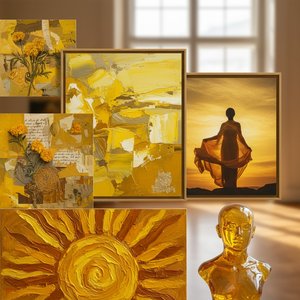
The Golden Hue: Exploring Symbolism & Emotion in Yellow Art
Explore the rich symbolism & emotional power of yellow in art history! From Van Gogh to Kandinsky, discover how artists used this vibrant hue. Expert analysis & high-quality reproductions at OriginalUniqueArt.

Топ-10 знаменитих картин у відтінках сіро-блакитного: мистецтво для вашого дому
Пориньте у світ сіро-блакитного кольору! Від Моне до Ренуара – топ-10 знаменитих картин, що зачаровують глибиною відтінків. Історія мистецтва, техніки та натхнення для вашого дому. Знайдіть репродукцію мрії на OriginalUniqueArt.com!
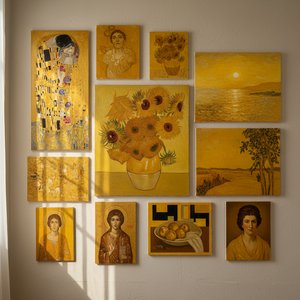
Топ-10 шедеврів живопису в відтінках жовтої охри: історія та натхнення для вашого дому
Відкрийте для себе 10 шедеврів живопису, де жовта охра – головний герой! Історія Ван Гога, Моне та інших геніїв. Натхнення для вашого дому від OriginalUniqueArt.com. Репродукції картин преміум-класу онлайн.

The Allure of Azure: Exploring the Symbolic & Aesthetic Depths of Blue in Art History
Explore the rich history of blue in art! Discover its symbolism, from ancient pigments to modern masterpieces by Kandinsky & Seurat. Uncover the psychological impact and cultural meanings behind this captivating hue.
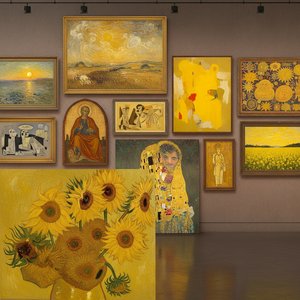
Топ-10 шедеврів живопису в домінуючих відтінках хромової жовтизни | OriginalUniqueArt.com
Відкрийте для себе 10 найвідоміших картин, де домінує хромова жовтизна! Ван Гог, Моне та інші майстри. Історія мистецтва, техніки живопису та ідеї декору від OriginalUniqueArt.com. Дослідіть колекцію онлайн!