 Переглянути в інтер'єрі
 Надіслати як листівку
 Поділитися
 Деталі витвору
 Посібник

 Завантажити
 Схожі екземпляри
 Рентгенівське дослідження
 Слайд-шоу
 Питання та відповіді
 Статистика
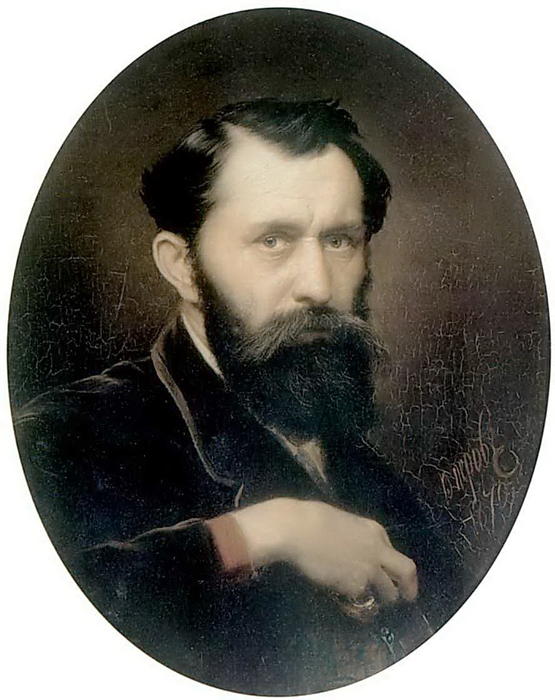
Self-portrait

- 63.0 x 52.0 cm


 Розгорнути текст
Отримайте файл, готовий до друку, якість якого значно перевищує якість веб-попереднього перегляду. Кожне цифрове зображення, яке ми продаємо, створене на основі високої роздільної здатності з нашої бази даних — зазвичай від 5 000 до 15 000 пікселів по ширині — тому ви можете впевнено друкувати у великому форматі, робити щільну обрізку або відтворювати найдрібніші деталі.
Жоден файл не залишається в нашій студії без уваги. Експерт із цифрової обробки звіряє кольори з оригінальною картиною та за потреби коригує їх, після чого покращує чіткість і деталізацію за допомогою професійних інструментів ретушування — завжди зберігаючи вірність мазкам пензля та стилю художника. Результатом є зображення, яке виглядає як справжня картина, а не як відскановане фото з накладеними фільтрами.
Ви затверджуєте результат перед завершенням замовлення: протягом 72 годин наш експерт надішле зображення електронною поштою для вашого перегляду. Не задоволені результатом? Ви можете попросити про внесення змін чи виправлень або отримати відшкодування, якщо якість не відповідає вашим очікуванням.
Саме на таку якість покладаються видавництва, дизайн-студії, галереї та друкарні.
Цифрове зображення
Завантажте файл високої роздільної здатності для особистого використання, друку та творчих проєктів. ( Перейти до друку Замовити картину ручної роботи)
Переваги кожного замовлення цифрових зображень
Експертна цифрова доставка з гарантією якості
Обираючи OriginalUniqueArt.com, ви отримуєте не просто зображення — ви отримуєте професійно вдосконалений цифровий витвір мистецтва, створений з надзвичайною точністю та підкріплений гарантією задоволення. Ось усе, що автоматично додається до вашого замовлення:

Швидка доставка на email
Ваш цифровий файл із зображенням високої роздільної здатності буде надісланий вам електронною поштою протягом 72 годин після оформлення замовлення — він буде готовий до негайного використання.

Цифровий файл із покращенням ШІ
Ваш витвір мистецтва професійно оптимізовано за допомогою передових інструментів штучного інтелекту та ручної корекції, що забезпечує максимальну деталізацію, чіткість і точність передачі кольорів.

Безкоштовне повторне завантаження назавжди
Випадково видалили або втратили файл? Не хвилюйтеся — ми надішлемо його вам повторно в будь-який час безкоштовно.

Без митних зборів — завжди
Насолоджуйтесь вашим витвором мистецтва миттєво без жодних мит, зборів або плати за доставку — цифрові завантаження завжди не оподатковуються.

Гарантія точності кольорів
Ми гарантуємо максимально точне відтворення оригінальних кольорів на вашому цифровому зображенні завдяки використанню професійних інструментів та систем управління кольором.

100-денна гарантія задоволення
Якщо ви не задоволені придбаним цифровим зображенням, ми внесемо правки або повернемо 100% вартості протягом 100 днів — без зайвих запитань.

Гарантія повернення 100% коштів
Незадоволені покупкою? Отримайте повне повернення коштів протягом 100 днів після отримання цифрового файлу — без зайвих запитань.

Знижки на оптові замовлення
Купуйте 3 зображення — заощаджуйте 10% — Купуйте 5 — заощаджуйте 15% — Купуйте 10+ — заощаджуйте 20%. Чудово підходить для творчих проєктів, галерей та агентств.
Self-Portrait by Vasily Grigoryevich Perov: A Glimpse into the Soul of a Realist
The Self-portrait by Vasily Grigoryevich Perov, created in 1870, is a captivating example of Realism that continues to fascinate art enthusiasts worldwide. This oil on canvas painting measures 63 x 52 cm and stands as a testament to the artist's skill in capturing an accurate depiction of visual reality while simultaneously revealing profound psychological depth.
Artistic Context and Style: The Rise of Russian Realism
Perov was a key figure in the Russian Realist movement, which emerged in the mid-19th century as a reaction against Romantic idealism. Realism sought to depict life as it truly was, focusing on everyday subjects and social issues with unflinching honesty. Perov’s work had a significant impact on the development of art in Russia, influencing subsequent generations of artists who embraced this commitment to portraying reality without embellishment. The Self-portrait showcases Perov's ability to blend elements of realism with a deep understanding of human emotion. The painting is characterized by its use of earthy tones, subtle lighting, and an emphasis on texture, which creates a sense of depth and dimensionality. This meticulous attention to detail was central to the Realist aesthetic.
A Detailed Examination: Technique and Composition
The Self-portrait demonstrates Perov’s mastery of oil painting techniques. The artist employs subtle gradations of color and light to model the face and clothing, creating a sense of volume and realism. Noticeable brushstrokes add texture and vitality to the surface, preventing the image from appearing overly smooth or artificial. The composition is carefully considered; the subject's face is centrally positioned within an oval frame, drawing the viewer’s eye directly to his gaze. The dark background serves to isolate Perov, intensifying the focus on his expression and conveying a sense of introspection. The lighting appears soft and diffused, highlighting the textures of the man’s clothing and facial features.
Symbolism and Emotional Impact: A Portrait of Introspection
Beyond its technical brilliance, the Self-portrait resonates with viewers due to its emotional depth. Perov's expression is serious, perhaps even melancholic, inviting speculation about his inner thoughts and feelings. The long beard and hair, rendered with meticulous detail, suggest a man of intellect and experience. The overall somber mood, created by the muted color palette and dark background, contributes to an atmosphere of formality and introspection. While Perov was known for depicting scenes of social hardship in his other works (such as The Queue at The Fountain and A Meal in the Monastery), this self-portrait offers a more personal glimpse into the artist's own psyche.
Perov and His Contemporaries: A Legacy of Realism
Vasily Grigoryevich Perov (1834 – 1882) was born in Tobolsk, Russia. His early life was marked by complexity due to his illegitimacy, a circumstance that likely informed his later social commentary through art. He received training at the Alexander Stupin Art School and the Moscow School of Painting. Perov’s contributions to the art world are not limited to his Self-portrait. Other artists who explored the Realist style include Jean Baptiste Camille Corot and Albert Edelfelt. For example, Corot’s A Ford with Large Trees and Edelfelt's Conveying a Child showcase the versatility and range of Realism.
Питання та відповіді
Скільки років було Василій Григорійович Першов, коли створювався твір "Self-portrait" у 1870 році?
Василій Григорійович Першов створив(ла) «Self-portrait» у віці 37 років. Митець народився(лася) у 1833, а дата створення твору — 1870.
До якого стилю належить "Self-portrait"?
«Self-portrait» роботи Василій Григорійович Першов належить до течії Realism. Цей напрям визначає стилістичний контекст твору.
Яка частина дому найкраще підійде для репродукції «Self-portrait»?
Рекомендованим простором для «Self-portrait» роботи Василій Григорійович Першов є Вітальня. Звісно, цю пропозицію можна адаптувати під ваш інтер'єр.
Біографія митця
A Life Etched in Realism: Vasily Perov and the Soul of Russia
Vasily Grigoryevich Perov, born Vasily Vasiliev on January 21, 1834, in the remote Siberian town of Tobolsk, was not merely a painter; he was a chronicler of his time, a voice for the voiceless, and a pivotal figure in the evolution of Russian art. His life story is inextricably linked to the social realities he so powerfully depicted on canvas – a narrative marked by both hardship and an unwavering commitment to portraying the truth, however uncomfortable it may be. Born out of wedlock to Baron Grigory Kridener, a provincial prosecutor, and Akulina Ivanova, Perov’s early years were shaped by circumstances that instilled within him a profound sensitivity to social inequalities and a deep understanding of the struggles faced by ordinary Russians. The adoption of the surname “Perov,” derived from the Russian word for ‘feather,’ a subtle nod to his early aptitude for calligraphy – foreshadowed his meticulous attention to detail, a characteristic that would define his artistic approach. His formal artistic journey commenced at the Alexander Stupin Art School in Arzamas, where he honed fundamental skills before enrolling at the Moscow School of Painting, Sculpture and Architecture in 1853. This period proved crucial, not only for developing his technical proficiency but also for exposing him to a diverse range of artistic influences that would shape his unique vision. Early recognition arrived swiftly – silver and gold medals awarded by the Imperial Academy of Arts for works such as “Commissary of Rural Police Investigating” and, most notably, "Sermon in a Village" in 1861—a painting that catapulted him into national prominence and secured him the coveted opportunity to study abroad.The Voice of the Voiceless: Themes and Techniques
Perov’s artistic vision was fundamentally rooted in a profound commitment to portraying Russian society with unflinching honesty, rejecting the idealized depictions prevalent among his contemporaries. Instead, he chose to focus on the lives of those often overlooked – peasants, laborers, the marginalized, and the forgotten souls inhabiting the fringes of 19th-century Russia. His paintings weren’t simply representations of reality; they were potent social commentaries, exposing the hardships, injustices, and spiritual emptiness that permeated Russian society at the time. “Sermon in a Village,” for instance, subtly critiques religious hypocrisy by depicting a congregation largely disengaged during a sermon, while "The Queue at the Fountain" starkly illustrates the daily struggles of rural life – the long waits, the meager resources, and the pervasive sense of hardship. His technique was characterized by an extraordinary level of detail, often employing somber color palettes and masterful use of light and shadow to create dramatic effect. He wasn’t interested in romanticizing poverty or suffering; rather, he sought to present it with dignity and empathy, forcing viewers to confront uncomfortable truths about their own society. Works like “The Last Journey,” depicting a peasant funeral procession, and "Troika: Apprentice Workmen Carrying Water" are poignant examples of his ability to evoke profound emotional responses through realistic portrayals of everyday life. Perov’s skill extended beyond oil painting; he was also a skilled etcher, as evidenced by the powerful monochromatic work “Naushnitsa. Before the storm,” which showcases his mastery of chiaroscuro and intricate detail.Founding a Movement: The Peredvizhniki
Perov's artistic sensibilities aligned perfectly with the burgeoning spirit of artistic rebellion that culminated in the formation of the Peredvizhniki (Wanderers) in 1870. This collective of Russian realist painters broke away from the constraints imposed by the Imperial Academy, establishing an independent society dedicated to exhibiting art throughout Russia – reaching audiences beyond the confines of St. Petersburg and Moscow. The Peredvizhniki aimed to bring art directly to the people, fostering a deeper understanding of social issues through their work, and promoting a uniquely Russian artistic identity. Perov wasn’t merely a member; he was a founding force, instrumental in shaping the movement's ideals and advocating for its principles. His commitment to portraying the lives of ordinary Russians resonated deeply with the Peredvizhniki's mission, solidifying his position as a leading figure within the group. The Wanderers’ exhibitions became immensely popular, attracting large crowds and sparking important conversations about art, society, and national identity.Major Achievements and Artistic Style
Perov’s artistic output spanned several decades, producing a remarkably consistent body of work characterized by its realism, social commentary, and emotional depth. He was particularly celebrated for his depictions of peasant life – scenes of rural hardship, poverty, and resilience. Key works include “The Queue at the Fountain,” a powerful depiction of a long line of peasants waiting for water; "The Last Journey," portraying a somber funeral procession; “Troika: Apprentice Workmen Carrying Water,” capturing the arduous labor of young men transporting heavy loads; and “Sermon in a Village,” a subtle critique of religious hypocrisy. His portraits, often depicting ordinary people with unflinching honesty, are equally compelling. He also explored themes of social injustice and human suffering, as seen in works like "The Drowned Woman," a haunting portrayal of a policeman discovering the body of a drowned woman. Perov’s artistic style was characterized by meticulous detail, somber color palettes, and a masterful use of light and shadow to create dramatic effect. He avoided idealized representations, opting instead for a raw and honest depiction of reality—a hallmark of his distinctive realism.Legacy and Enduring Influence
Vasily Perov's untimely death from tuberculosis in 1882 at the age of 48 marked a significant loss for Russian art. However, his legacy continued to inspire generations of artists who followed in his footsteps. His influence can be seen in the works of Ilya Repin and Vasily Surikov, both masters of realist painting who further developed the tradition he helped establish. Perov’s paintings remain relevant today not only for their artistic merit but also for their enduring social commentary – serving as a powerful reminder of the hardships faced by ordinary people throughout history and continuing to provoke empathy and understanding. His works are now housed in prominent collections, including the Tropinin Gallery and the Moscow Museum of Contemporary Art, ensuring that his vision continues to resonate with audiences worldwide. *Perov’s contribution extends beyond mere artistic skill; he was a social conscience etched onto canvas, a voice for the voiceless, and a pioneer of Russian realism.* He left behind a body of work that not only documented his time but also challenged it, forever changing the landscape of Russian art.
Василій Григорійович Першов
1833 - 1882 , Росія
Короткі факти
- Artistic Movement Or Style: Реалізм
- Artists Or Movements Influenced By This Artist:
- Ілля Рєпін
- Реалістичний рух
- Artists Who Influenced This Artist:
- Степан Рєпін
- Василь Суриков
- Date Of Birth: 2 січня 1834
- Date Of Death: 29 травня 1882
- Full Name: Василій Григорійович Перов
- Nationality: Російський
- Notable Artworks:
- Проповідь у селі
- Черга біля фонтану
- Останній шлях
- Place Of Birth: Тобольськ, Росія