
 Переглянути в інтер'єрі
 Надіслати як листівку
 Поділитися
 Деталі витвору
 Посібник

 Завантажити
 Схожі екземпляри
 Рентгенівське дослідження
 Слайд-шоу
 Питання та відповіді
 Статистика
Incorrigible One

- 87.0 x 113.0 cm


 Розгорнути текст
Гікле / Художній принт
Друк جيкле або на полотні музейної якості з оперативним виготовленням та різноманітними варіантами фінішної обробки. ( Замовити картину ручної роботи Перейти до цифрових зображень)




P118B ₴10

P118H ₴10

P118W ₴10

P438Z ₴10

P508JH ₴12

P508YH ₴12

P805H ₴10

P805Z ₴10

P919BZ ₴10

P919G ₴10

P919XJ ₴10

P959ZH ₴10

P968JZ ₴12

W106C ₴8

W218G ₴10

W218JH ₴8

W218Y ₴10

W307PJ ₴10

W316G ₴10

W316PJ ₴8

W316Y ₴10

W398PJ ₴8

W4111J ₴10

W500HY ₴15

W500JH ₴15

W692G ₴12

W849H ₴8

W940BG ₴15

W953PJ ₴8




Обирайте з наших стандартних розмірів, що відповідають оригінальним пропорціям твору мистецтва.

Введіть необхідну ширину та висоту, щоб принт ідеально підійшов до вашої рами або стіни. Принт можна лише обрізати, але не можна зробити більшим за оригінал, тому при зміні пропорцій частина зображення буде втрачена. Перед друком ми надсилаємо вам цифровий макет для затвердження. Зображення на цій сторінці не відображає реальну обрізку — її можна побачити лише на макеті.
Доставка по всьому світу () за 2 тижні замість стандартних 4/5 тижнів. (8 Листопад)

Безкоштовна експрес-доставка по всьому світу

Високоякісне лляне полотно

Повне страхове покриття доставки

Гарантія повернення митних зборів

Гарантія точного відтворення кольорів

Політика повернення протягом 100 днів (лише у разі виявлення дефектів)

Гарантія повернення 100% коштів

Пропозиція на оптові замовлення
 Скляний варіант доступний лише для розмірів до 110 см

Incorrigible One
Гікле / Художній принт
Розмір репродукції
-


Підсумкова вартість
₴ 3637
A Moment of Unyielding Spirit
In the profound depths of Vasily Grigoryevich Perov’s 1873 masterpiece, Incorrigible One, we are thrust into a visceral scene of tension and social friction. The painting captures a raw, cinematic moment: a man in a striking red shirt is being forcibly restrained, his hands bound behind his back. This central figure, the eponymous "incorrigible" soul, stands as a defiant focal point amidst a landscape of looming authority. Surrounding him, two men engage in a grim dialogue of discipline; one holds a whip, a symbol of impending retribution, while another stands sentinel with a stick. The setting—an outdoor space characterized by rugged stone walls and the rustic presence of a horse—adds a layer of earthy realism that grounds the drama in the tangible, often harsh, reality of 19th-century Russian life.
Perov’s mastery of Critical Realism is on full display here. Rather than seeking to beautify the scene, he employs a meticulous technique to document the psychological weight of the encounter. The artist uses light and shadow to sculpt the figures, drawing our eyes to the vibrant crimson of the captive's shirt, which serves as both a visual anchor and a metaphor for his burning, unextinguished spirit. Every detail, from the texture of the brickwork to the curious, watchful gaze of the horse, is rendered with an observational precision that invites the viewer to step into the frame and feel the heavy atmosphere of the courtyard.
The Soul of the Peredvizhniki Movement
To understand this work, one must look toward the historical heartbeat of the Peredvizhniki (The Wanderers) movement, of which Perov was a founding pillar. This era of Russian art sought to move away from the polished, academic traditions of the past and instead bring art to the people, focusing on the poignant, often uncomfortable truths of social inequality and peasant life. In Incorrigible One, Perov does not merely paint a scene of punishment; he paints a commentary on the struggle between individual will and societal control. The presence of the fireplace in the background and the quiet benches suggest a domesticity that has been interrupted by this sudden act of coercion, creating a jarring contrast between peace and violence.
For the discerning collector or interior designer, this painting offers more than just aesthetic value; it provides a profound narrative depth. The composition’s balance of movement and stillness makes it an extraordinary centerpiece for a room that demands conversation and intellectual engagement. Whether placed in a sophisticated study or a grand gallery-style living space, the artwork’s rich textures and emotive power serve as a window into a bygone era of social awakening. It is a piece that resonates with anyone who appreciates art that dares to look closely at the human condition, making it an enduring choice for those seeking a high-quality reproduction that embodies both historical significance and timeless emotional impact.
Питання та відповіді
Для чого рекомендується використовувати репродукцію «Incorrigible One»?
Рекомендований спосіб використання «Incorrigible One» роботи Василій Григорійович Першов — це Conversation. Також він може слугувати для інших цілей.
Як я можу придбати цифровий файл «Incorrigible One» роботи Василій Григорійович Першов?
«Incorrigible One» доступний у форматі завантаження цифрового зображення високої роздільної здатності, який можна придбати безпосередньо на сторінці Цифрове зображення високої якості.
Наскільки світлим є твір "Incorrigible One" загалом?
За рівнем сприйнятої яскравості, «Incorrigible One» роботи Василій Григорійович Першов є deep_shadow.
Біографія митця
A Life Etched in Realism: Vasily Perov and the Soul of Russia
Vasily Grigoryevich Perov, born Vasily Vasiliev on January 21, 1834, in the remote Siberian town of Tobolsk, was not merely a painter; he was a chronicler of his time, a voice for the voiceless, and a pivotal figure in the evolution of Russian art. His life story is inextricably linked to the social realities he so powerfully depicted on canvas – a narrative marked by both hardship and an unwavering commitment to portraying the truth, however uncomfortable it may be. Born out of wedlock to Baron Grigory Kridener, a provincial prosecutor, and Akulina Ivanova, Perov’s early years were shaped by circumstances that instilled within him a profound sensitivity to social inequalities and a deep understanding of the struggles faced by ordinary Russians. The adoption of the surname “Perov,” derived from the Russian word for ‘feather,’ a subtle nod to his early aptitude for calligraphy – foreshadowed his meticulous attention to detail, a characteristic that would define his artistic approach. His formal artistic journey commenced at the Alexander Stupin Art School in Arzamas, where he honed fundamental skills before enrolling at the Moscow School of Painting, Sculpture and Architecture in 1853. This period proved crucial, not only for developing his technical proficiency but also for exposing him to a diverse range of artistic influences that would shape his unique vision. Early recognition arrived swiftly – silver and gold medals awarded by the Imperial Academy of Arts for works such as “Commissary of Rural Police Investigating” and, most notably, "Sermon in a Village" in 1861—a painting that catapulted him into national prominence and secured him the coveted opportunity to study abroad.The Voice of the Voiceless: Themes and Techniques
Perov’s artistic vision was fundamentally rooted in a profound commitment to portraying Russian society with unflinching honesty, rejecting the idealized depictions prevalent among his contemporaries. Instead, he chose to focus on the lives of those often overlooked – peasants, laborers, the marginalized, and the forgotten souls inhabiting the fringes of 19th-century Russia. His paintings weren’t simply representations of reality; they were potent social commentaries, exposing the hardships, injustices, and spiritual emptiness that permeated Russian society at the time. “Sermon in a Village,” for instance, subtly critiques religious hypocrisy by depicting a congregation largely disengaged during a sermon, while "The Queue at the Fountain" starkly illustrates the daily struggles of rural life – the long waits, the meager resources, and the pervasive sense of hardship. His technique was characterized by an extraordinary level of detail, often employing somber color palettes and masterful use of light and shadow to create dramatic effect. He wasn’t interested in romanticizing poverty or suffering; rather, he sought to present it with dignity and empathy, forcing viewers to confront uncomfortable truths about their own society. Works like “The Last Journey,” depicting a peasant funeral procession, and "Troika: Apprentice Workmen Carrying Water" are poignant examples of his ability to evoke profound emotional responses through realistic portrayals of everyday life. Perov’s skill extended beyond oil painting; he was also a skilled etcher, as evidenced by the powerful monochromatic work “Naushnitsa. Before the storm,” which showcases his mastery of chiaroscuro and intricate detail.Founding a Movement: The Peredvizhniki
Perov's artistic sensibilities aligned perfectly with the burgeoning spirit of artistic rebellion that culminated in the formation of the Peredvizhniki (Wanderers) in 1870. This collective of Russian realist painters broke away from the constraints imposed by the Imperial Academy, establishing an independent society dedicated to exhibiting art throughout Russia – reaching audiences beyond the confines of St. Petersburg and Moscow. The Peredvizhniki aimed to bring art directly to the people, fostering a deeper understanding of social issues through their work, and promoting a uniquely Russian artistic identity. Perov wasn’t merely a member; he was a founding force, instrumental in shaping the movement's ideals and advocating for its principles. His commitment to portraying the lives of ordinary Russians resonated deeply with the Peredvizhniki's mission, solidifying his position as a leading figure within the group. The Wanderers’ exhibitions became immensely popular, attracting large crowds and sparking important conversations about art, society, and national identity.Major Achievements and Artistic Style
Perov’s artistic output spanned several decades, producing a remarkably consistent body of work characterized by its realism, social commentary, and emotional depth. He was particularly celebrated for his depictions of peasant life – scenes of rural hardship, poverty, and resilience. Key works include “The Queue at the Fountain,” a powerful depiction of a long line of peasants waiting for water; "The Last Journey," portraying a somber funeral procession; “Troika: Apprentice Workmen Carrying Water,” capturing the arduous labor of young men transporting heavy loads; and “Sermon in a Village,” a subtle critique of religious hypocrisy. His portraits, often depicting ordinary people with unflinching honesty, are equally compelling. He also explored themes of social injustice and human suffering, as seen in works like "The Drowned Woman," a haunting portrayal of a policeman discovering the body of a drowned woman. Perov’s artistic style was characterized by meticulous detail, somber color palettes, and a masterful use of light and shadow to create dramatic effect. He avoided idealized representations, opting instead for a raw and honest depiction of reality—a hallmark of his distinctive realism.Legacy and Enduring Influence
Vasily Perov's untimely death from tuberculosis in 1882 at the age of 48 marked a significant loss for Russian art. However, his legacy continued to inspire generations of artists who followed in his footsteps. His influence can be seen in the works of Ilya Repin and Vasily Surikov, both masters of realist painting who further developed the tradition he helped establish. Perov’s paintings remain relevant today not only for their artistic merit but also for their enduring social commentary – serving as a powerful reminder of the hardships faced by ordinary people throughout history and continuing to provoke empathy and understanding. His works are now housed in prominent collections, including the Tropinin Gallery and the Moscow Museum of Contemporary Art, ensuring that his vision continues to resonate with audiences worldwide. *Perov’s contribution extends beyond mere artistic skill; he was a social conscience etched onto canvas, a voice for the voiceless, and a pioneer of Russian realism.* He left behind a body of work that not only documented his time but also challenged it, forever changing the landscape of Russian art.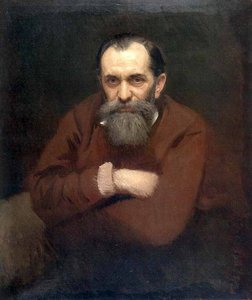
Василій Григорійович Першов
1833 - 1882 , Росія
Короткі факти
- Artistic Movement Or Style: Реалізм
- Artists Or Movements Influenced By This Artist:
- Ілля Рєпін
- Реалістичний рух
- Artists Who Influenced This Artist:
- Степан Рєпін
- Василь Суриков
- Date Of Birth: 2 січня 1834
- Date Of Death: 29 травня 1882
- Full Name: Василій Григорійович Перов
- Nationality: Російський
- Notable Artworks:
- Проповідь у селі
- Черга біля фонтану
- Останній шлях
- Place Of Birth: Тобольськ, Росія
Пов'язані статті

Vasily Vereshchagin: Realism, War & Subversion in 19th-Century Russian Painting
Explore the powerful realism of Vasily Vereshchagin's war paintings & Central Asian scenes. Discover how this Russian master challenged artistic conventions and offered a brutal, honest depiction of 19th-century conflict. Learn about his legacy for discerning collectors.

Vasily Surikov: Historical Epic & Psychological Realism in 19th-Century Russian Painting
Explore the powerful historical paintings of Vasily Surikov, a leading figure of Russian Realism. Discover his dramatic compositions, psychological depth & lasting influence on 19th-century art. Learn about collecting Surikov's masterpieces.

Vladimir Makovsky: Realism, Social Commentary & Russian Life in Late 19th-Century Painting
Explore the captivating world of Vladimir Makovsky, a leading Russian realist painter. Discover his insightful depictions of 19th-century life, social commentary & legacy with OriginalUniqueArt.

Russian Realism: The Soulful Power of Truth and the Unyielding Spirit of the Peredvizhniki
Explore the profound depth of Russian Realism. From the social truths of the Peredvizhniki to epic folklore, discover the soulful power of masters like Perov and Yaroshenko through our expert art history insights and museum-quality reproductions.

Discover Russian Realism: Soulful Masterpieces and the Timeless Spirit of the Peredvizhniki for Your Modern Home
Elevate your home with the soulful beauty of Russian Realism. Discover exquisite hand-painted reproductions of Peredvizhniki masterpieces, from lyrical landscapes to profound portraits, curated to bring historical depth and timeless elegance to your modern interior design.