

 Переглянути в інтер'єрі
 Надіслати
 Поділитися
 Деталі
 Посібник

 Завантажити
 Схожі предмети колекціонування
 Рентгенівське дослідження
 Слайд-шоу
 Статистика переглядів
Mary Anne Heide Norris


 Читати далі
Олійная репродукція ручної роботи
Написана вручну олією на полотні у вашому розмірі та рамі, виготовлена на замовлення нашими художниками. ( Перейти до друку Перейти до цифрових зображень)




P118B ₴10

P118H ₴10

P118W ₴10

P438Z ₴10

P508JH ₴12

P508YH ₴12

P805H ₴10

P805Z ₴10

P919BZ ₴10

P919G ₴10

P919XJ ₴10

P959ZH ₴10

P968JZ ₴12

W106C ₴8

W218G ₴10

W218JH ₴8

W218Y ₴10

W307PJ ₴10

W316G ₴10

W316PJ ₴8

W316Y ₴10

W398PJ ₴8

W4111J ₴10

W500HY ₴15

W500JH ₴15

W692G ₴12

W849H ₴8

W940BG ₴15

W953PJ ₴8




Обирайте з наших стандартних розмірів, що відповідають оригінальним пропорціям твору мистецтва.

Ви можете вказати власні розміри, щоб репродукція ідеально підійшла до конкретної рами або інтер'єру. Якщо вибраний вами розмір не відповідає пропорціям оригіналу, ми або обріжемо полотно, або доповнимо картину додатковими елементами, промальованими вручну. Цифровий макет буде надіслано вам на затвердження перед початком виробництва.
Зверніть увагу, що попередній перегляд на екрані не відображає фактичне обрізання або розширення зображення. Тільки макет точно покаже остаточну композицію.
Хоча ми можемо виготовити виріб у нестандартному розмірі, для збереження оригінальних пропорцій рекомендуємо обирати варіанти зі встановленого списку.
Після оформлення замовлення команда OriginalUniqueArt.com зв'яжеться з клієнтом електронною поштою для отримання інструкцій та надасть попередній макет
Доставка по всьому світу () за 3–4 тижні замість стандартних 5 тижнів. (7 Жовтень). Без жодних компромісів у якості.

Безкоштовна експрес-доставка по всьому світу

Високоякісне лляне полотно

Повне страхове покриття доставки

Гарантія повернення митних зборів

Гарантія точного відтворення кольорів

Політика повернення протягом 100 днів (лише у разі виявлення дефектів)

Гарантія повернення 100% коштів

Знижка на оптові замовлення
 Скляний варіант доступний лише для розмірів до 110 см

Mary Anne Heide Norris
Техніка репродукції
Розмір репродукції
-


Загальна вартість
₴ 13335
A Portrait of Refined Grace: Thomas Sully’s Mary Anne Heide Norris
Thomas Sully's "Mary Anne Heide Norris," painted in 1830, is more than just a likeness; it’s a carefully constructed tableau of wealth, status, and the idealized femininity prized within American society of the early 19th century. This exquisite portrait, now residing at the Philadelphia Museum of Art, offers a captivating glimpse into the life of a prominent local family and showcases Sully's mastery of capturing both physical beauty and subtle psychological depth.
The subject herself, Mary Anne Heide Norris, is presented with an almost ethereal quality. Dressed in a sumptuous black silk gown adorned with delicate lace and a luxurious fur stole, she embodies the elegance expected of a woman of her station. The pearl necklace, a symbol of wealth and refinement, accentuates her features, while the carefully arranged flowers – likely roses – hint at a cultivated sensibility and an appreciation for beauty. Sully’s meticulous attention to detail is immediately apparent in the rendering of the fabric's texture, the sheen of the pearls, and the delicate folds of the fur, demonstrating his skill as a painter who could capture the tactile qualities of materials.
The Romantic Palette and Subtle Drama
Sully’s style firmly places “Mary Anne Heide Norris” within the Romantic tradition, though with a distinctly American sensibility. He eschews the stark realism favored by earlier portraitists in favor of a softer, more atmospheric approach. The muted palette – dominated by deep blacks, rich browns, and subtle hints of rose pink – creates a sense of quiet drama and intimacy. Sully masterfully employs chiaroscuro, using light and shadow to sculpt Mary Anne’s form and draw the viewer's eye to her face. Note how the light catches the curve of her neck and highlights the delicate features of her hands resting gracefully on the table.
The background landscape, rendered in a hazy, atmospheric style, serves not merely as a backdrop but as an integral part of the composition. The dark wall behind Mary Anne creates a sense of enclosure and privacy, while the distant sky suggests both grandeur and a hint of melancholy. This carefully orchestrated interplay between figure and setting elevates the portrait beyond a simple representation of a woman; it becomes a meditation on beauty, status, and the complexities of domestic life.
A Window into 19th-Century American Society
To fully appreciate “Mary Anne Heide Norris,” one must consider the social context in which it was created. The early 1830s marked a period of rapid growth and transformation in America, as the nation moved towards its own distinct cultural identity. Portraiture played a crucial role in solidifying social hierarchies and documenting the achievements of prominent families. Sully’s work reflects this trend, presenting Mary Anne not just as an individual but as a representative of her family's wealth, influence, and social standing.
Furthermore, the portrait speaks to the prevailing ideals of femininity during that era – a blend of virtue, modesty, and refined beauty. Mary Anne’s composed demeanor, elegant attire, and carefully arranged pose all contribute to this idealized representation. The inclusion of her husband's pendant portrait (now lost) would have further emphasized their union and the importance of family within American society.
Capturing a Moment in Time: Reproduction and Legacy
Today, “Mary Anne Heide Norris” stands as a testament to Thomas Sully’s artistic skill and his ability to capture the essence of his subjects. Reproductions offer an accessible way to experience this remarkable portrait, allowing viewers to appreciate its beauty and historical significance without the constraints of travel or museum visits. When selecting a reproduction, consider the quality of materials and printing techniques – a faithful rendering will truly do justice to Sully’s original masterpiece.
Beyond its aesthetic appeal, “Mary Anne Heide Norris” provides valuable insights into the social, cultural, and artistic landscape of early 19th-century America. It is a poignant reminder of a bygone era, offering a glimpse into the lives of those who shaped the nation’s identity and left an enduring legacy through their art.
Запитання та відповіді
Де я можу знайти статистику про «Mary Anne Heide Norris» Томас Саллі?
Для «Mary Anne Heide Norris» існує сторінка Статистика, на якій відображено щомісячну кількість переглядів цього твору та інших робіт митця з розподілом за країнами та мовами.
Яку насиченість та інтенсивність має «Mary Anne Heide Norris» Томас Саллі?
Кольори твору «Mary Anne Heide Norris» Томас Саллі демонструють Balanced Soft насиченість із Balanced інтенсивністю.
Який художник та який стиль стоять за "Mary Anne Heide Norris"?
«Mary Anne Heide Norris» була створена Томас Саллі у стилі Romanticism. Автор та художній напрям визначають традицію цього твору.
Де варто розмістити репродукцію «Mary Anne Heide Norris» Томас Саллі?
Формат Portrait для твору «Mary Anne Heide Norris» Томас Саллі рекомендовано розміщувати у Living Room. Формат та простір разом допомагають визначитися з розташуванням репродукції.
Скільки років було Томас Саллі, коли створювався твір "Mary Anne Heide Norris" у 1830 році?
Коли у 1830 році було створено «Mary Anne Heide Norris», художнику Томас Саллі (народився/лася у 1783) було 47 років.
Хто є автором твору "Mary Anne Heide Norris"?
«Mary Anne Heide Norris» було створено Томас Саллі. Інформація на цій сторінці описує оригінальний твір Томас Саллі.
Яка дата створення «Mary Anne Heide Norris» Томас Саллі?
Створення «Mary Anne Heide Norris» Томас Саллі датоване 1830 роком.
Біографія митця
A Transatlantic Brushstroke: The Life and Art of Thomas Sully
Thomas Sully’s story is one of remarkable journeys – a transatlantic passage not just across oceans, but through artistic styles and cultural landscapes. Born in 1783 under the skies of Horncastle, Lincolnshire, England, his life unfolded as a captivating blend of theatrical beginnings, European refinement, and ultimately, an American identity forged through brushstrokes. His early years were marked by an itinerant childhood, traveling with his family’s acting troupe across Britain before settling in Charleston, South Carolina, in 1792. This exposure to the vibrant world of performance – the demands of capturing fleeting expressions and embodying characters – profoundly shaped his artistic sensibilities, instilling a keen awareness of human psychology and the power of visual storytelling. Initially drawn to the stage himself as a tumbler, Sully’s innate talent quickly found expression in a different medium: painting. An apprenticeship with an insurance broker provided him with a foundational understanding of detail and precision, but it was the guidance of Charles Fraser, a local artist, and later his brother-in-law Jean Belzons, that truly ignited his passion for miniature painting – a delicate art form that honed his observational skills and established a solid base for his future career.From Miniature to Monumental: Forging an American Style
Sully’s artistic development wasn't confined by geographical boundaries; it was a dynamic process of adaptation and refinement. A pivotal moment in his journey arrived with his studies in London from 1808 to 1809, under the tutelage of Benjamin West, a celebrated portraitist and figure of the Royal Academy. While West’s influence was undoubtedly significant, it was the encounter with Thomas Lawrence that truly resonated deeply within Sully's artistic soul. Lawrence’s elegant style – characterized by its graceful lines, masterful use of light and texture, and remarkable ability to capture both likeness and character – captivated Sully, shaping his approach to portraiture for years to come. Upon returning to America in 1809, Sully absorbed these influences, adapting them to create a distinctly American style that blended European sophistication with a uniquely New World sensibility. He wasn’t simply copying; he was synthesizing, forging an artistic voice that reflected the burgeoning identity of the United States. His portraits weren't merely representations of wealth or status; they were explorations of personality, imbued with psychological depth and emotional resonance – capturing not just what people looked like, but *how* they felt. This approach quickly established him as a leading portraitist in Philadelphia, a city that became his artistic home for much of his career.The Influence of Lawrence and the Development of His Technique
Sully’s stylistic evolution is inextricably linked to Thomas Lawrence. The influence of Lawrence's technique – particularly his use of *sfumato* (a subtle blurring of lines) and his ability to create a sense of atmospheric depth – is readily apparent in Sully’s portraits. He meticulously studied Lawrence’s compositions, color palettes, and brushwork, striving to emulate the artist’s signature elegance and warmth. However, Sully didn't simply mimic; he adapted these influences to suit the American context. He developed a looser, more expressive style than Lawrence, incorporating elements of Romanticism – a movement that emphasized emotion, individualism, and the beauty of nature – into his work. This resulted in portraits with a heightened sense of drama and psychological intensity. Sully’s technique involved layering thin glazes of paint to achieve luminous effects and subtle gradations of tone. He was also a master of capturing fleeting expressions, skillfully rendering the nuances of human emotion through carefully observed details of the face and eyes. His meticulous attention to detail – honed during his apprenticeship with an insurance broker – ensured that every portrait possessed a remarkable sense of realism and immediacy.Notable Portraits and Historical Works
Sully’s prolific output spanned over seven decades, resulting in more than 2,300 paintings – portraits, miniatures, landscapes, and historical scenes. Among his most celebrated works are portraits of prominent figures from the early 19th century, including Thomas Jefferson, John Quincy Adams, Andrew Jackson, and numerous members of Philadelphia’s elite society. His portrait of Marquis de Lafayette is particularly noteworthy for its dynamic composition and evocative portrayal of the French hero. However, Sully wasn't limited to individual portraits; he also ventured into historical painting with works such as *The Passage of the Delaware* (1819), a dramatic depiction of George Washington’s iconic crossing of the river – a piece that demonstrated his ability to handle large-scale compositions and imbue them with powerful narrative. This willingness to engage with historical subjects broadened his appeal and solidified his place in the American art world. His paintings often depicted scenes from the Revolutionary War, capturing the spirit of patriotism and heroism that defined the nation’s founding era.A Legacy of Influence and Enduring Beauty
Thomas Sully's legacy extends far beyond the individual portraits that hang in museums and private collections across America and Europe. He was a dedicated teacher, mentoring numerous young artists who went on to achieve success in their own right. His influence can be seen in the work of Marcus Aurelius Root, one of the pioneers of American photography, who admired Sully’s meticulous attention to detail and his ability to capture the essence of his subjects. Furthermore, Sully's commitment to cultural enrichment is evident in his involvement with Philadelphia’s Musical Fund Society, a testament to his belief that art plays a vital role in fostering community and elevating the human spirit. Today, Thomas Sully’s paintings continue to captivate audiences with their beauty, elegance, and enduring power – a lasting reminder of an artist who skillfully blended European sophistication with uniquely American sensibilities. His work stands as a significant contribution to both American portraiture and the broader history of 19th-century art.
Томас Саллі
1783 - 1872 , Великобританія
Довідкова інформація
- Artistic Movement Or Style: Романтизм, Неокласицизм
- Artists Or Movements Influenced By This Artist: ['Американський портрет']
- Artists Who Influenced This Artist:
- Бенджамін Вест
- Томас Лоуренс
- Date Of Birth: 1783
- Date Of Death: 1872
- Full Name: Thomas Sully
- Nationality: Британський-американський
- Notable Artworks:
- Прохід Делавэр
- Портрети Джефферсона
- Портрети Адамса
- Place Of Birth: Horncastle, UK
Схожі статті

The Enduring Legacy of Oil on Canvas: Technique, History & Aesthetic Impact
Explore the rich history & techniques of oil painting – from Renaissance masters to Impressionism. Discover pigments, layering methods, and why this timeless medium endures. Expert insights for artists & art enthusiasts.
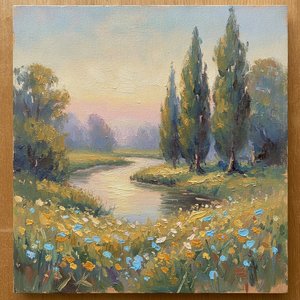
The Timeless Charm of Oil on Board: Reimagining Texture and Light through the Impressionist Lens
Discover the profound intimacy of oil on panel. Explore how Impressionist masters used rigid supports to capture light, texture, and impasto depth through exquisite, handmade oil reproductions for discerning collectors.

Oil on Canvas: A Historical & Technical Exploration of a Timeless Artistic Medium
Explore the rich history & enduring techniques of oil painting on canvas. Discover the science behind its longevity, conservation practices, and contemporary relevance. Expert insights for art enthusiasts.

Вікові традиції олійного живопису: техніка, історія та сучасна практика
Дізнайтеся про вікову історію олійного живопису, техніки майстрів та сучасні тенденції. Відкрийте світ класичного мистецтва та натхнення для власної творчості!

The Enduring Power of Painting: A Historical & Contemporary Exploration of Form and Emotion
Explore the rich history & enduring techniques of oil painting with OriginalUniqueArt. Discover masterpieces, learn about art collecting, and find authentic handmade reproductions crafted by skilled artists.