

 Переглянути в інтер'єрі
 Надіслати
 Поділитися
 Деталі
 Посібник

 Завантажити
 Схожі предмети колекціонування
 Рентгенівське дослідження
 Слайд-шоу
 Статистика переглядів
The South Gate, Exeter


 Читати далі
Гікле / Художній принт
Музейна якість друку جيкле або на полотні з оперативним виготовленням та різноманітними варіантами фінішної обробки. ( Купити картину ручної роботи Перейти до цифрових зображень)




P118B $10

P118H $10

P118W $10

P438Z $10

P508JH $12

P508YH $12

P805H $10

P805Z $10

P919BZ $10

P919G $10

P919XJ $10

P959ZH $10

P968JZ $12

W106C $8

W218G $10

W218JH $8

W218Y $10

W307PJ $10

W316G $10

W316PJ $8

W316Y $10

W398PJ $8

W4111J $10

W500HY $15

W500JH $15

W692G $12

W849H $8

W940BG $15

W953PJ $8




Обирайте з наших стандартних розмірів, що відповідають оригінальним пропорціям твору мистецтва.

Ви можете вказати власні розміри, щоб репродукція ідеально підійшла до конкретної рами або інтер'єру. Якщо обраний вами розмір не відповідає пропорціям оригіналу, ми або обріжемо полотно, або розширимо зображення за допомогою дзеркального відображення чи суцільної заливки країв. Перед початком виробництва вам буде надіслано цифровий макет для затвердження.
Будь ласка, зверніть увагу, що попередній перегляд на екрані не відображає фактичне обрізання або розширення. Тільки макет точно покаже фінальну композицію.
Хоча можливість замовлення індивідуальних розмірів доступна, ми рекомендуємо обирати формат із попередньо визначеного списку, щоб зберегти оригінальні пропорції.
Доставка по всьому світу () за 2 тижні замість стандартних 4/5 тижнів. (26 Вересень)

Безкоштовна експрес-доставка по всьому світу

Високоякісне лляне полотно

Повне страхове покриття доставки

Гарантія повернення митних зборів

Гарантія точного відтворення кольорів

Політика повернення протягом 100 днів (лише у разі виявлення дефектів)

Гарантія повернення 100% коштів

Знижка на оптові замовлення
 Скляний варіант доступний лише для розмірів до 110 см

The South Gate, Exeter
Гікле / Художній принт
Розмір репродукції
-


Загальна вартість
$ 80
A Snapshot of a Bustling Era: Thomas Rowlandson’s “The South Gate, Exeter”
Thomas Rowlandson's watercolor, "The South Gate, Exeter," isn’t merely a depiction of a street scene; it’s a vibrant portal into the heart of Georgian England. Painted around 1810, this work captures a moment of intense urban life within the historic South Gate area of Exeter, offering a captivating glimpse into the daily rhythms and social dynamics of the time. Rowlandson, a master of satirical observation, doesn’t simply record; he breathes life into his subject, imbuing it with a palpable sense of energy and human interaction.
The composition immediately draws the eye to the central focus: the South Gate itself, rendered as a sturdy, imposing structure that anchors the scene. Flanking this grand entrance are buildings – shops and residences – layered with detail, each contributing to the overall density of the streetscape. Notice the careful arrangement of figures; they aren’t isolated individuals but rather part of a complex tapestry of activity—a merchant haggling over prices, children playing near a horse-drawn cart, shoppers navigating the crowded thoroughfare, and even a gentleman observing the scene with an air of detached amusement. Rowlandson's skill lies in his ability to compress this multitude of elements into a single, dynamic image.
The Art of Satirical Observation: Rowlandson’s Technique
Rowlandson’s distinctive style is immediately recognizable through his loose, expressive brushwork and the watercolor medium itself. The colors are rich and layered, creating a sense of depth and texture that belies the relatively flat perspective. He employs washes of color to build up form, allowing for subtle gradations in tone and light – a diffused daylight suggesting an overcast day. The lines are predominantly loose and gestural, conveying movement and immediacy. The artist’s hand is clearly visible in the application of paint, adding to the work's authenticity and charm.
Crucially, Rowlandson wasn’t interested in photographic realism; he prioritized capturing the *essence* of a scene – its atmosphere, its energy, and its social commentary. The slightly exaggerated proportions of figures, the crowded composition, and the overall sense of bustling activity all contribute to this effect. The artist's use of color is particularly noteworthy, with vibrant hues used for clothing and details, contrasting against the more muted tones of the buildings.
Historical Context: Exeter in the Early 19th Century
To fully appreciate “The South Gate, Exeter,” it’s essential to understand its historical context. Exeter, a significant trading center in Devon, was experiencing considerable growth during this period. The city's South Gate, as depicted by Rowlandson, represented the gateway to this thriving commercial hub. The scene captures a moment of relative prosperity, reflecting the economic vitality of the region. The presence of shops and merchants suggests a bustling marketplace, while the diverse array of figures hints at the social stratification within the community.
Furthermore, Rowlandson’s work reflects the broader artistic trends of the time – particularly the rise of Romanticism. While not strictly adhering to the movement's idealized aesthetic, his focus on capturing everyday life and portraying human emotion aligns with its core principles. The painting offers a glimpse into the lives of ordinary people, inviting viewers to contemplate their experiences and interactions.
Symbolic Layers: A Window into Georgian Society
Beyond its immediate visual appeal, “The South Gate, Exeter” is rich in symbolic meaning. The crowded marketplace represents the social hub of the city, a place where commerce, gossip, and community life intersected. The figures themselves embody various aspects of Georgian society – merchants, laborers, shoppers, and onlookers—each contributing to the complex tapestry of urban existence. Even the gate itself can be interpreted as a symbol of authority and control, guarding access to the heart of the city.
Rowlandson’s work serves as a valuable historical document, offering insights into the social customs, economic activities, and cultural values of 19th-century England. It's a testament to his keen eye for detail and his ability to capture the essence of a bygone era.
Біографія митця
A Life Etched in Satire: The World of Thomas Rowlandson
Thomas Rowlandson, a name synonymous with Georgian England’s sharpest wit and most biting satire, emerged from the bustling streets of London as a defining voice of his era. Born on July 13th, 1757 – baptized later that month – in Old Jewry, he inherited not just a surname but also a legacy of artistic talent nurtured by his family’s struggles and his uncle’s support. His early life was marked by financial hardship, a move to Richmond, North Yorkshire, and a childhood spent honing his observational skills and sketching with remarkable precision. This foundation would prove crucial in shaping his distinctive style – one that blended delicate draughtsmanship with audacious exaggeration, transforming the mundane into the absurd and holding a mirror up to the follies of society. Rowlandson’s journey wasn't merely about documenting his time; it was an act of critical engagement, a deliberate challenge to the established order through the power of visual commentary.Early Years and Artistic Training
Rowlandson’s formal artistic education began at the Royal Academy in 1772, where he spent six formative years refining his skills under the tutelage of various masters. This period was further enriched by a brief sojourn to Paris, where he studied under Jean-Baptiste Pigalle, absorbing continental techniques and broadening his artistic horizons. However, it’s important to note that Rowlandson's training wasn't solely confined to formal institutions; his early talent manifested itself in the margins of his schoolbooks – playful sketches capturing the personalities of his teachers and classmates. This innate ability to observe and depict human character foreshadowed a career dedicated to visual storytelling with a mischievous edge, establishing him as an artist who understood the power of subtle detail and expressive gesture. The influence of artists like Peter Paul Rubens and Thomas Gainsborough undoubtedly shaped his early style, providing a foundation upon which he would build his own unique satirical voice.The Rise of Caricature and Collaboration
Rowlandson’s transition from portraiture to caricature was not merely a pragmatic response to financial pressures following his aunt's death; it represented a profound artistic awakening. He recognized the potential of exaggeration and distortion to expose hypocrisy, challenge authority, and provoke laughter – all while offering insightful commentary on the social landscape. This shift led him to collaborate with Rudolph Ackermann, a prominent publisher and art dealer, forging a partnership that proved remarkably fruitful. Together, they produced some of Rowlandson’s most celebrated works, including *The Schoolmaster's Tour* (1809), a series of plates accompanied by verses from Dr. William Combe, and the iconic *Tour of Dr. Syntax in Search of the Picturesque* (1812). These collaborative ventures showcased Rowlandson’s ability to seamlessly blend visual artistry with narrative storytelling, creating works that were both humorous and thought-provoking. The *Dr. Syntax* series, with its subsequent installments – *Dr. Syntax in Search of Consolation* (1820) and *The Third Tour of Dr. Syntax in Search of a Wife* (1821) – captivated audiences with their whimsical scenarios and Rowlandson’s masterful illustrations, solidifying his reputation as a leading artist of the era.Satirical Themes and Social Commentary
Rowlandson's art wasn't simply about creating amusing images; it was a deliberate act of social critique. His caricatures targeted politicians, aristocrats, merchants, and everyday citizens alike, exposing their vanity, corruption, and moral failings with unflinching honesty. He fearlessly lampooned the excesses of the wealthy, the pretensions of the elite, and the follies of popular culture. His work reflected a deep understanding of the political climate and social customs of Georgian England, offering a sharp-eyed perspective on the challenges and contradictions of his time. Beyond the overtly satirical, Rowlandson also produced a wealth of illustrations for novels and topographical works, demonstrating his versatility as an artist and his ability to adapt his style to different genres and subject matters. His legacy lies not only in his humorous depictions but also in his astute observations about human nature – tendencies towards vanity, hypocrisy, and absurdity that remain remarkably consistent across centuries.A Lasting Legacy
Thomas Rowlandson’s influence extends far beyond the immediate popularity of his works during his lifetime. His art is preserved in numerous museum collections worldwide, offering a valuable glimpse into Georgian society through the eyes of a keen observer and skilled satirist. His caricatures continue to resonate with audiences today, reminding us of the enduring power of humor as a tool for social commentary. The delicate color washes and precise reed-pen outlines that characterized his style are instantly recognizable, solidifying his place in art history as one of the most important satirical artists of the 18th century. Exploring Rowlandson’s work is not merely an exercise in appreciating artistic skill; it's an invitation to engage with a complex and fascinating era – an era defined by both its grandeur and its follies, its triumphs and its shortcomings. His art serves as a testament to the power of visual storytelling and the enduring relevance of satire as a means of challenging authority and provoking thought.
Томас Роландсон
1756 - 1827 , Великобританія
Довідкова інформація
- Artistic Movement Or Style: Карикатура, сатира
- Artists Or Movements Influenced By This Artist:
- Діллі Рей
- Акерман
- Artists Who Influenced This Artist:
- Рубенс
- Гейнсборо
- Date Of Birth: 13 лип 1757
- Date Of Death: 21 квіт 1827
- Full Name: Thomas Rowlandson
- Nationality: Британський
- Notable Artworks:
- Школаря́й Тур
- Доктор Сінтакс
- Зневага
- Place Of Birth: Лондон, Велика Британія
Схожі статті

Топ-10 легендарних акварелей, що змінили світ мистецтва | OriginalUniqueArt
Відкрийте для себе 10 легендарних акварелей від Turner, Monet та інших майстрів! Історія мистецтва, техніки живопису та натхнення для декору вашого дому. Купуйте репродукції картин аквареллю преміум-якості на OriginalUniqueArt.com.

Ephemeral Visions: Exploring the History & Emotional Resonance of Watercolor Painting
Explore the captivating history of watercolor painting, from ancient techniques to modern masters like Kandinsky & Blake. Discover essential artists, collecting tips & the emotional power of this luminous medium. Expert insights for art enthusiasts.
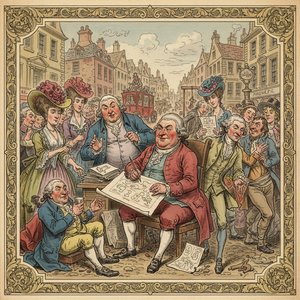
Thomas Rowlandson: Satire, Society & the Art of Caricature in Georgian England
Explore the witty world of Thomas Rowlandson, master Georgian caricaturist! Discover his satirical prints & insightful social commentary on 18th-century England. Learn about his life, techniques, and enduring influence.

Ephemeral Visions: Exploring the Artistic Legacy & Contemporary Practice of Watercolor Painting
Explore the captivating world of watercolor painting! Discover its rich history, essential techniques, influential artists & collecting tips. A comprehensive guide for art enthusiasts from OriginalUniqueArt.

Ephemeral Visions: Exploring the Artistic Legacy & Nuances of Watercolor Painting
Explore the captivating world of watercolor painting! Discover its rich history, essential techniques, influential artists & collecting tips from art experts. A comprehensive guide for enthusiasts.
