De Stijl · 1930
Simultaneous Counter Composition. (Тео ван Дусбург, 1930)
Тео ван Дусбург (1883–1931) створив Simultaneous Counter Composition.. Дата створення — 1930. Він належить до напряму De Stijl. Виконано в Painting. Екземпляр зберігається в Музей сучасного мистецтва (MoMA) у Нью-Йорк, Сполучені Штати Америки. Розмір: 50 × 49 cm
- 1930
- Painting
- 50 × 49 cm
- Музей сучасного мистецтва (MoMA), Нью-Йорк

 Переглянути в інтер'єрі

 Картина олією ручної роботи
 Надіслати як листівку
 Поділитися
 Інформаційна картка


 Завантажити
 Схожі екземпляри
 Рентгенівське дослідження
 Слайд-шоу
 Питання та відповіді

 Статистика
Simultaneous Counter Composition. коротко
- Назва
- Simultaneous Counter Composition.
- Художник
- Тео ван Дусбург (1883–1931)
- Рік народження митця
- Утрехт, Нідерланди
- Дата
- 1930
- Матеріал
- Painting
- Розміри
- 50 × 49 cm
- Де подивитися
- Музей сучасного мистецтва (MoMA), Нью-Йорк, Сполучені Штати Америки
- Рух
- De Stijl
- Сюжет
- abstract art, geometric shapes, primary colors, compositional study, modernism, de stijl
Що зображено на Simultaneous Counter Composition.?
The Geometry of Inner Harmony: Exploring Theo van Doesburg's Abstraction
To stand before Theo van Doesburg’s Simultaneous Counter Composition is not merely to observe paint on canvas; it is to step into a meticulously constructed intellectual space where color and form engage in a vibrant, calculated dialogue. This piece, dating from 1930, stands as a powerful testament to the revolutionary spirit of De Stijl, the movement that sought to purify art down to its most essential geometric truths. Van Doesburg, an architect of abstraction, believed that true reality could be found not in the messy chaos of visible nature, but in the underlying harmony of pure lines and primary colors. The painting immediately envelops the viewer in a field of structured energy, inviting the eye to wander across its carefully balanced quadrants.
A Masterclass in Primary Structure
The composition itself is breathtaking in its deliberate organization. Divided into distinct yet interconnected sections—left, center, and right—the canvas pulses with a controlled chromatic symphony. We see the bold interplay of red, yellow, blue, black, and white, colors that carry immense symbolic weight within modernist thought. These hues are not simply placed side-by-side; they interact, their adjacency creating optical vibrations. The varying sizes and shapes of the squares suggest a dynamic tension, as if opposing forces—structure versus fluidity, chaos versus order—are locked in a perfect, silent negotiation. It is an exercise in visual equilibrium, where every seemingly arbitrary block contributes to the whole.
Historical Echoes: De Stijl's Vision
Understanding this work requires acknowledging its historical cradle: the fervor of Neoplasticism. Van Doesburg was instrumental in guiding art away from mere representation and toward a universal language built on abstraction. This painting embodies that quest for universal harmony, echoing the philosophical underpinnings of the early 20th century desire to rebuild culture after periods of immense upheaval. The rigid geometry is not a limitation, but rather an assertion of underlying cosmic order—a belief that even in the most abstract arrangement, there exists profound, discernible beauty and balance.
Bringing Geometric Vibrancy Home
For the collector or designer seeking to infuse a space with intellectual depth and vibrant energy, Simultaneous Counter Composition offers unparalleled impact. Its bold, graphic nature means it functions as both a striking piece of art and a powerful architectural accent. Reproducing this work allows one to bring the disciplined passion of early modernism into contemporary living. Imagine its clean lines juxtaposed against soft furnishings or rich wood tones; the painting acts as a brilliant focal point, demanding contemplation while simultaneously providing visual rest through its inherent balance.
Emotional Resonance and Technique
The emotional impact of this piece is one of exhilarating clarity. It feels both rigorously intellectual and deeply soulful. The technique, characterized by flat planes of color meeting at sharp, decisive edges, celebrates the purity of the painted surface. When considering a reproduction, note how the vibrancy of these primary colors—the way they seem to vibrate against each other—is crucial. Owning this piece is owning a conversation between structure and spirit, a vibrant reminder that even in apparent complexity, perfect harmony can be found.
У якому музеї зберігається Simultaneous Counter Composition.?
Музей сучасного мистецтва (MoMA)
Нью-Йорк, Сполучені Штати Америки
Витоки та історія Музею сучасного мистецтва (MoMA) Фундамент Музею сучасного мистецтва (MoMA) був закладений у 1929 році. Створена завдяки ініціативе Еббі Олдріч Рокфеллер, Ліллі П. Блісс та Мері Куїнн Салліван, ця установа з'явилася на світ у період глибоких глобальних трансформацій.


Зображення високої роздільної здатності Simultaneous Counter Composition.

Суспільне надбання: художник помер у 1931 році.
Інші розміри, кадри та цитування →Тео ван Дусбург, Simultaneous Counter Composition. (1930), Музей сучасного мистецтва (MoMA). Суспільне надбання
Відповіді на запитання про Simultaneous Counter Composition.
Де можна побачити оригінал «Simultaneous Counter Composition.» роботи Тео ван Дусбург?
«Simultaneous Counter Composition.» роботи Тео ван Дусбург експонується в Музей сучасного мистецтва (MoMA), Нью-Йорк, Сполучені Штати Америки. У описі музею йдеться про оригінальний твір, а не про репродукції.
У якому році було створено «Simultaneous Counter Composition.» роботи Тео ван Дусбург?
«Simultaneous Counter Composition.» датована 1930 роком. Ця дата дозволяє визначити місце твору в творчому шляху Тео ван Дусбург та відповідну епоху.
Яка техніка була використана для створення «Simultaneous Counter Composition.» роботи Тео ван Дусбург?
«Simultaneous Counter Composition.» виконано в техніці Painting.
Які реальні розміри має «Simultaneous Counter Composition.» роботи Тео ван Дусбург?
Розміри оригіналу «Simultaneous Counter Composition.» роботи Тео ван Дусбург становлять 50 x 49 cm. Репродукції можна замовити в інших розмірах із збереженням тих самих пропорцій.
Що зображено на творі «Simultaneous Counter Composition.» роботи Тео ван Дусбург?
Сюжетами твору "Simultaneous Counter Composition." є abstract art, geometric shapes, primary colors, compositional study, modernism, de stijl.
Чи є «Simultaneous Counter Composition.» роботи Тео ван Дусбург суспільним надбанням?
Щодо авторського права, «Simultaneous Counter Composition.» є є суспільним надбанням — термін дії авторського права закінчився.
Якому художнику приписують роботу "Simultaneous Counter Composition."?
«Simultaneous Counter Composition.» приписують Тео ван Дусбург.
До якого стилю належить "Simultaneous Counter Composition."?
«Simultaneous Counter Composition.» роботи Тео ван Дусбург належить до течії De Stijl. Цей напрям визначає стилістичний контекст твору.
Яке місце посідає «Simultaneous Counter Composition.» у творчому шляху Тео ван Дусбург?
«Simultaneous Counter Composition.» належить до Neoplasticism Period Тео ван Дусбург.
Про художника Тео ван Дусбург

1883–1931, Нідерланди
Тео ван Дусбург
The Architect of Abstraction: A Life in Geometric Harmony Theo van Doesburg, born Christian Emil Marie Küpper in 1883 in Utrecht, Netherlands, wasn’t merely a painter; he was a revolutionary force who fundamentally reshaped the very foundations of modern art. His journey began amidst the lingering echoes of Impressionism and Post-Impressionism – initially mirroring styles reminiscent of Vincent van Gogh – both in subject matter and emotional intensity. However, this early phase served as a crucial prelude, a necessary stepping stone toward the radical transformation that would define his enduring legacy. A pivotal moment arrived in 1913 with his encounter with Wassily Kandinsky’s *Rückblicke*.
Також за участю Тео ван Дусбург
 Counter composition XV1925
 Rhythm of a Russian Dance
 Troelstra1910
 Study for Composition VIII (The Cow)1918

Есе до твору Simultaneous Counter Composition.
 Beyond Color: Why Monochromatic Art is the Ultimate High-Impact Trend for Modern InteriorsDiscover why monochromatic art is the ultimate high-impact trend for modern spaces. Explore how bold textures and minimalist aesthetics cre…
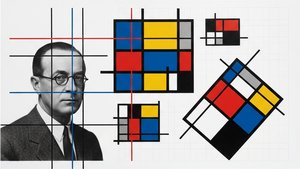 Theo van Doesburg: Pioneering De Stijl & the Evolution of Neo-PlasticismExplore the revolutionary De Stijl movement & Neo-Plasticism with our expert guide. Discover Piet Mondrian, Theo van Doesburg, and the last…
 Тріумф Трьох Палітр: Емоційний Резонанс та Ідентичність у Виборі Мистецького ВіддзеркаленняДослідіть психологію мистецтва та зв'язок між вашими уподобаннями і особистістю. Відкрийте, як соціальний контекст та історія впливають на …