Expressionism · 1915
Rocks, Gloucester (Стюарт Дэвис, 1915)
Стюарт Дэвис (1892–1964) створив Rocks, Gloucester. Дата створення — 1915. Він належить до напряму Expressionism. Виконано в Oil On Canvas. Екземпляр зберігається в New Orleans Museum of Art у Новий Орлеан, Сполучені Штати Америки. Розмір: 76 × 91 cm
- 1915
- Oil On Canvas
- 76 × 91 cm
- New Orleans Museum of Art, Новий Орлеан

 Переглянути в інтер'єрі

 Картина олією ручної роботи
 Надіслати як листівку
 Поділитися
 Інформаційна картка


 Завантажити
 Схожі екземпляри
 Рентгенівське дослідження
 Слайд-шоу
 Питання та відповіді

 Статистика
Rocks, Gloucester коротко
- Назва
- Rocks, Gloucester
- Художник
- Стюарт Дэвис (1892–1964)
- Рік народження митця
- Філадельфія, Сполучені Штати Америки
- Дата
- 1915
- Матеріал
- Oil On Canvas
- Розміри
- 76 × 91 cm
- Де подивитися
- New Orleans Museum of Art, Новий Орлеан, Сполучені Штати Америки
- Період
- Early Modern
- Сюжет
- american landscape, mountain peaks”, “bold colors”, “dynamic composition”, “abstract forms”, “urban energy”
Що зображено на Rocks, Gloucester?
Rocks, Gloucester: A Transitional Masterpiece by Stuart Davis
Stuart Davis’s “Rocks, Gloucester,” painted in 1915, stands as a crucial bridge between the artist's early realist explorations and his eventual embrace of abstract expressionism. This vibrant landscape, measuring 76 x 91 cm, offers a compelling glimpse into the burgeoning artistic currents of early 20th-century America, particularly the shift away from traditional representation championed by figures like Robert Henri. The painting’s immediate impact lies in its bold use of color – a fiery palette dominated by reds, oranges, and yellows – which immediately evokes a sense of energy and dynamism. Davis wasn't simply depicting rocks; he was attempting to capture the frenetic pace of modern life, as he himself described, translating the “dynamics of city lights and sounds” onto canvas.
A Style in Formation: Expressionism and the American Landscape
“Rocks, Gloucester” exemplifies a transitional style, leaning heavily towards Expressionism while retaining elements of Davis’s earlier training. The visible brushwork, textured surface, and distorted forms – particularly evident in the jagged peaks of the mountains – betray an emotional intensity that anticipates his later abstract works. The artist's deliberate use of color isn't purely representational; it’s a vehicle for conveying feeling, mirroring the anxieties and excitement of a nation undergoing rapid transformation. The flattened perspective further emphasizes this emotional impact, prioritizing the viewer’s experience over strict adherence to realistic spatial relationships. This approach aligns with the broader artistic experimentation taking place at the time, fueled by influences from European modernism and the desire to forge a distinctly American aesthetic.
Technique and Materials: Oil on Canvas – A Gesture of Form
- Oil on Canvas: The painting is executed in oil on canvas, a technique that allows for rich color saturation and substantial textural variation.
- Visible Brushwork: Davis’s loose, gestural brushstrokes are immediately apparent, contributing to the painting's energetic feel and conveying a sense of immediacy.
- Layered Color: The use of layered colors creates depth and volume within the mountain forms, though the overall effect remains somewhat flattened, prioritizing emotional resonance over photographic realism.
- Undulating Foreground: The large, yellow-ochre mass in the foreground anchors the composition and adds to the sense of solidity and weight.
Symbolic Resonance: Mountains as Metaphor
Beyond its aesthetic qualities, “Rocks, Gloucester” carries symbolic weight. Mountains have long represented strength, resilience, and even the sublime – concepts deeply rooted in human experience. In Davis’s hands, they become a visual embodiment of these ideas, reflecting the challenges and aspirations of a nation grappling with modernity. The dark purple and grey sky provides a dramatic counterpoint to the warm tones below, further amplifying the sense of grandeur and perhaps hinting at an underlying tension between nature's power and humanity's place within it. The artist’s signature in the upper right corner confirms this work as a pivotal moment in Davis’s artistic evolution.
У якому музеї зберігається Rocks, Gloucester?
New Orleans Museum of Art
Новий Орлеан, Сполучені Штати Америки
Вікно у Новий Орлеан: Душа мистецтва в Музеї мистецтв Нового Орлеана Розташований у життєствердних обіймах Сіті-парку, цього розлогого міського оазису, що за масштабами перевершує навіть Центральний парк, Музей мистецтв Нового Орлеана (NOMA) є чимось значно більшим, ніж просто сховищем шедеврів; він є глибоким відображенням унікальної ідентичності Луїзіани та свідченням її незламного творчого духу. Заснований у 1911 році візіонером Айзеком Дельгадо, NOMA розпочав свій шлях із простої, але амбітної мети: забезпечити Новому Орлеану надійну гавань, де мистецтво могло б бути шановане, виставлене та прославлене кожним. Сьогодні цей основоположний принцип резонує в залах музею, пропонуючи відвідувачам захопливу подорож крізь понад п'ять тисячоліть мистецьких зусиль — від стародавньоєгипетських артефактів до сучасних творінь, що пульсують енергією сучасного міста.


Зображення високої роздільної здатності Rocks, Gloucester

Захищено авторським правом: ці файли призначені лише для особистого ознайомлення і не надають права на переопублікацію.
Стюарт Дэвис, Rocks, Gloucester (1915).
Стюарт Дэвис (1892–1964), Rocks, Gloucester, 1915, oil on canvas, New Orleans Museum of Art, Новий Орлеан, Сполучені Штати Америки. Зображення: OriginalUniqueArt.com.
Відповіді на запитання про Rocks, Gloucester
Де сьогодні можна побачити «Rocks, Gloucester» роботи Стюарт Дэвис?
Оригінал твору «Rocks, Gloucester» можна побачити в New Orleans Museum of Art, Новий Орлеан, Сполучені Штати Америки.
У якому році було створено «Rocks, Gloucester» роботи Стюарт Дэвис?
«Rocks, Gloucester» датована 1915 роком. Ця дата дозволяє визначити місце твору в творчому шляху Стюарт Дэвис та відповідну епоху.
Яка техніка була використана для створення «Rocks, Gloucester» роботи Стюарт Дэвис?
Техніка виконання «Rocks, Gloucester» роботи Стюарт Дэвис — Oil On Canvas. Репродукції мають на меті відтворити вигляд цієї техніки.
Які розміри оригіналу "Rocks, Gloucester"?
Розмір оригіналу «Rocks, Gloucester» роботи Стюарт Дэвис становить 76 x 91 cm.
Які сюжети зображені у «Rocks, Gloucester» роботи Стюарт Дэвис?
Тематика, представлена у «Rocks, Gloucester» роботи Стюарт Дэвис, включає american landscape, mountain peaks”, “bold colors”, “dynamic composition”, “abstract forms”, “urban energy”, “1915 art”. Разом вони підсумовують зміст твору.
Чи є «Rocks, Gloucester» роботи Стюарт Дэвис суспільним надбанням?
«Rocks, Gloucester» роботи Стюарт Дэвис перебуває у все ще перебуває під захистом авторського права. Цей статус визначає правила відтворення зображення твору.
Хто є автором "Rocks, Gloucester"?
Автором твору «Rocks, Gloucester» є Стюарт Дэвис. Робота внесена до каталогу під іменем Стюарт Дэвис.
До якого стилю належить "Rocks, Gloucester"?
«Rocks, Gloucester» роботи Стюарт Дэвис належить до течії Expressionism. Цей напрям визначає стилістичний контекст твору.
Який етап творчого розвитку Стюарт Дэвис представляє твір "Rocks, Gloucester"?
«Rocks, Gloucester» належить до Transitional Style творчого шляху Стюарт Дэвис. Ця класифікація пов’язує твір із етапом становлення митця.
Про художника Стюарт Дэвис
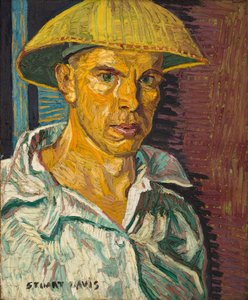
1892–1964, Сполучені Штати Америки
Стюарт Дэвис
Stuart Davis: A Pioneer of American Modernism Stuart Davis, born Edward Stuart Davis on December 7, 1892, in Philadelphia, Pennsylvania, was immersed in an artistic environment from a young age. His father, Edward Wyatt Davis, served as the art editor for *The Philadelphia Press*, while his mother, Helen Stuart Davis, was a sculptor—a lineage that undeniably fostered his early fascination with visual arts. From childhood, he absorbed the spirit of observation and experimentation that would characterize his entire artistic career. Davis received formal training at the Robert Henri School of Art in New York City from 1909 to 1912 under the guidance of Robert Henri himself.
Також за участю Стюарт Дэвис
 Одол
 Lucky Strike1924
 T View1951
 Sixth Avenue El1931
Есе до твору Rocks, Gloucester
 Clyfford Still's Abstract Expressionism: A Study of Color, Form & the Existential LandscapeExplore the profound world of Clyfford Still's Abstract Expressionism with OriginalUniqueArt. Discover his unique style, existential themes…
 American abstract expressionist paintersJackson Pollock used his drip technique in 1949 to create Number 1, while Jasper Johns used impasto in 1959 for his work False Start.
 Mastering the Face of a Nation: The Top 25 Gilbert Stuart Artworks1796 marked the creation of the Athenaeum Portrait. How did Stuart use light and shadow to define the very soul of a nascent nation?