Pop Art/Conceptual art · 1962
Objectivity (Сол Левітт, 1962)
Сол Левітт (1928–2007) створив Objectivity. Дата створення — 1962. Він належить до напряму Pop Art/Conceptual art. Виконано в Mixed Media. Розмір: 128 × 128 cm
- 1962
- Mixed Media
- 128 × 128 cm

 Переглянути в інтер'єрі

 Картина олією ручної роботи
 Надіслати як листівку
 Поділитися
 Інформаційна картка


 Завантажити
 Схожі екземпляри
 Рентгенівське дослідження
 Слайд-шоу
 Питання та відповіді

 Статистика
Objectivity коротко
- Назва
- Objectivity
- Художник
- Сол Левітт (1928–2007)
- Рік народження митця
- Гартфорд, Сполучені Штати Америки
- Дата
- 1962
- Матеріал
- Mixed Media
- Розміри
- 128 × 128 cm
- Період
- Modern
- Сюжет
- grid, text, minimalism, conceptual, repetition, objectivity
Що зображено на Objectivity?
Objectivity by Sol LeWitt: A Grid of Conceptual Precision
Sol LeWitt's "Objectivity," created in 1962, is a seminal work within the realms of Minimalism and Conceptual Art. This striking piece challenges traditional notions of artistic representation, prioritizing idea and system over subjective expression or illusionistic depiction. Measuring an impressive 128 x 128 cm, it commands attention with its rigorous structure and deliberate repetition.
Composition and Technique: A Three-Dimensional Grid
"Objectivity" presents as a square canvas meticulously divided into a three-dimensional grid of twenty-five squares. Each row contains five squares across and five down. The word "OBJECTIVITY," rendered in bold blue capital letters, is repeated five times across the rows. However, it's not simply a straightforward repetition. Each square displays two letters – “OB,” “JE,” “CT,” and “IV” – with the rightmost squares completing the word “ITY.” A key element of the work lies in its layering: the top row projects outward from the canvas surface, while subsequent rows recede further back, creating a subtle illusion of depth. The background color shifts progressively from orange in the upper row to increasingly darker shades of red as one descends, contributing to a sense of diminishing visibility and an overall darkening effect.
Style and Historical Context: Minimalism and Conceptualism
“Objectivity” emerged during a pivotal period in art history. The late 1950s and early 1960s witnessed the rise of Minimal Art, which rejected Abstract Expressionism’s emphasis on gesture and emotion, favoring instead geometric forms, industrial materials, and a reduction to essential elements. Simultaneously, Conceptual Art began to gain momentum, prioritizing the idea behind the artwork over its physical manifestation. LeWitt's work brilliantly embodies both movements. "Objectivity" exemplifies Minimalism through its grid structure, precise geometry, and serial repetition. It aligns with Conceptualism by foregrounding the underlying concept – in this case, a meditation on objectivity itself – and minimizing the artist’s hand in the final product. The systematic nature of the piece reflects LeWitt's interest in mathematical principles and logical systems.
Symbolism and Emotional Impact: Questioning Perception
The title "Objectivity" is inherently provocative, given the work's visual complexity and layered construction. By repeatedly presenting the word within a receding grid, LeWitt seems to question the very notion of objective truth or perception. The darkening effect as one descends suggests that objectivity becomes increasingly elusive, obscured by layers of interpretation and perspective. The rigid structure can evoke feelings of detachment, artificiality, and even a subtle unease. While seemingly impersonal, "Objectivity" invites viewers to contemplate the complexities of seeing and understanding, prompting reflection on how our perceptions are shaped by context and distance.
Materials and Legacy
LeWitt utilized mixed media in “Objectivity,” primarily employing cardboard or similar rigid material painted with acrylics. The choice of materials reinforces the work's industrial aesthetic and its rejection of traditional artistic techniques. "Objectivity" remains a significant piece within LeWitt’s oeuvre, demonstrating his pioneering approach to artmaking and solidifying his place as a key figure in 20th-century art. Its influence can be seen in subsequent generations of artists exploring conceptual frameworks and systematic processes.
Зображення високої роздільної здатності Objectivity
Protected by copyright: these files are for personal reference, not a licence to republish.
Сол Левітт, Objectivity (1962).
Відповіді на запитання про Objectivity
У якому році було створено «Objectivity» роботи Сол Левітт?
«Objectivity» датована 1962 роком. Ця дата дозволяє визначити місце твору в творчому шляху Сол Левітт та відповідну епоху.
Яка техніка була використана для створення «Objectivity» роботи Сол Левітт?
«Objectivity» виконано в техніці Mixed Media.
Які розміри оригінального твору «Objectivity» роботи Сол Левітт?
«Objectivity» має розмір 128 x 128 cm в оригіналі. Оригінальні розміри є корисним орієнтиром під час вибору розміру репродукції.
Що зображено на творі «Objectivity» роботи Сол Левітт?
«Objectivity» роботи Сол Левітт зображує: grid, text, minimalism, conceptual, repetition, objectivity, geometric.
Чи можна вільно відтворювати зображення «Objectivity» роботи Сол Левітт?
«Objectivity» роботи Сол Левітт перебуває у все ще перебуває під захистом авторського права. Цей статус визначає правила відтворення зображення твору.
Якому художнику приписують роботу "Objectivity"?
Автором твору «Objectivity» є Сол Левітт. Робота внесена до каталогу під іменем Сол Левітт.
До якого художнього напряму належить «Objectivity» роботи Сол Левітт?
Мистецький напрям, до якого належить «Objectivity» роботи Сол Левітт, — це Pop Art/Conceptual art. Така класифікація дозволяє розмістити цей твір у контексті суміжних митців та творів мистецтва.
До якого періоду творчості Сол Левітт належить твір "Objectivity"?
«Objectivity» належить до Mature Period творчого шляху Сол Левітт. Ця класифікація пов’язує твір із етапом становлення митця.
Скільки років було Сол Левітт, коли було створено «Objectivity»?
Сол Левітт створив(ла) «Objectivity» у віці 34 років. Митець народився(лася) у 1928, а дата створення твору — 1962.
Про художника Сол Левітт

1928–2007, Сполучені Штати Америки
Сол Левітт
Архітектор ідей: Життя та спадщина Соломона Льюїтта У безмежних просторах модернізму двадцятого століття мало хто з діячів відкинув таку довгу або інтелектуально глибоку тінь, як Соломон Льюїтт. Народившись 9 вересня 1928 року в Хартфорді, штат Коннектикут, у сім'ї єврейських іммігрантів з Росії, шлях Льюїтта був визначений прагненням до чистої думки, а не просто до фізичного виконання. Його ранні роки були сповнені суворої аналітичної цікавості — риси, що виплекалася під час навчання в Сіракузькому університеті між 1945 та 1949 роками. Цей академічний фундамент у математиці та геометрії згодом став самим серцебиттям його художньої мови, дозволяючи йому відкинути декоративну надмірність традиційного мистецтва, щоб оголити скелетну красу логіки та структури.
Також за участю Сол Левітт
 Serial Project #1 ABCD1966
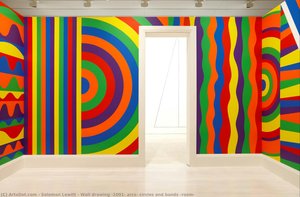 Wall drawing #1091: arcs, circles and bands (room)2003
 Distorted Cubes Bozuk Küpler
 Wall Drawing #3911983
Есе до твору Objectivity
 Geometry with Purpose: Distinguishing Suprematism from ConstructivismMaster the differences between Suprematism and Constructivism with our expert guide. Discover the soul of the Russian avant-garde now.
 Beyond the Object: Top 10 Masterpieces of Conceptual ArtExplore 10 iconic works of Conceptual Art by Duchamp and Ono. Discover the power of ideas on OriginalUniqueArt.com.
 Expressionism vs. New Objectivity: Emotion vs. Precision in German ArtMaster the tension between Expressionist emotion and New Objectivity precision. Explore the soul of German modern art now.