 Переглянути в інтер'єрі
 Надіслати як листівку
 Поділитися
 Детальніше

 Завантажити
 Схожі експонати
 Рентгенівське дослідження
 Слайд-шоу
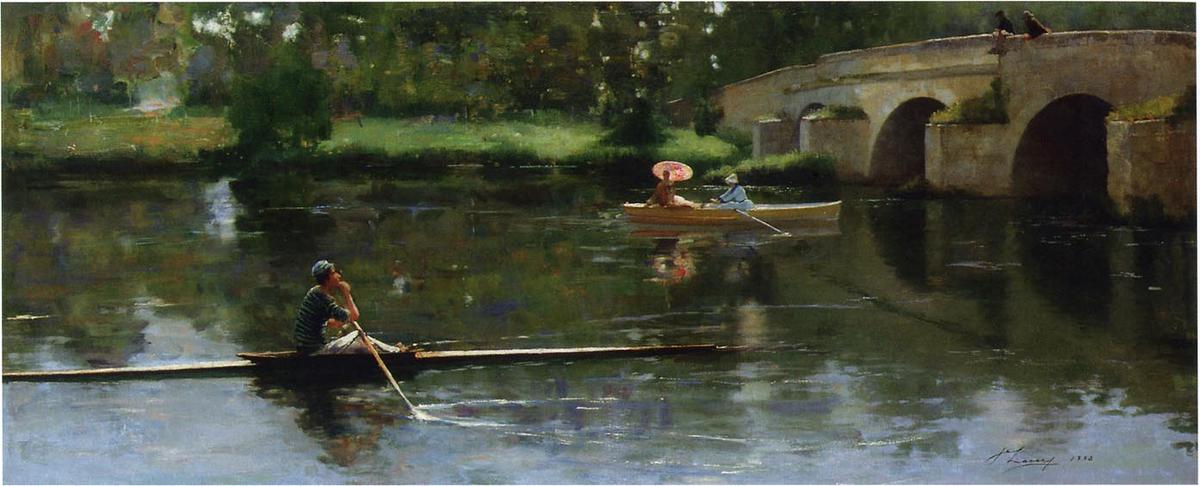
Bridge at Grez

 Читати далі
Олійная репродукція ручної роботи
Написана вручну олією на полотні у вашому розмірі та рамі, виготовлена на замовлення нашими художниками. ( Замовити принт Купити цифрове зображення)




































Обирайте з наших стандартних розмірів, що відповідають оригінальним пропорціям твору мистецтва.

Ви можете вказати власні розміри, щоб репродукція ідеально підійшла до конкретної рами або інтер'єру. Якщо вибраний вами розмір не відповідає пропорціям оригіналу, ми або обріжемо полотно, або доповнимо картину додатковими елементами, промальованими вручну. Цифровий макет буде надіслано вам на затвердження перед початком виробництва.
Зверніть увагу, що попередній перегляд на екрані не відображає фактичне обрізання або розширення зображення. Тільки макет точно покаже остаточну композицію.
Хоча ми можемо виготовити виріб у нестандартному розмірі, для збереження оригінальних пропорцій рекомендуємо обирати варіанти зі встановленого списку.
Після оформлення замовлення команда OriginalUniqueArt.com зв'яжеться з клієнтом електронною поштою для отримання інструкцій та надасть попередній макет
Доставка по всьому світу () за 3–4 тижні замість стандартних 5 тижнів. (18 Серпень). Без жодних компромісів у якості.

Безкоштовна експрес-доставка по всьому світу

Високоякісне лляне полотно

Повне страхове покриття доставки

Гарантія відшкодування митних зборів

Гарантія точного відтворення кольорів

Політика повернення протягом 60 днів (лише у разі виявлення дефектів)

Гарантія повернення 100% коштів

Пропозиція на оптові замовлення
 Скляний варіант доступний лише для розмірів до 110 см

Bridge at Grez
Матеріал репродукції
Розмір репродукції
-


Підсумкова вартість
$ 325
Опис твору
Bridge at Grez: A Moment of Tranquility by Sir John Lavery
“Bridge at Grez” is a captivating landscape painting by the renowned Irish artist, Sir John Lavery, offering a glimpse into a serene riverside scene. Executed in 1896, this work exemplifies Lavery’s Impressionistic style and his ability to capture fleeting moments of natural beauty with remarkable sensitivity.
Subject & Composition: An Idyllic Riverside Scene
The painting depicts a tranquil river setting dominated by a graceful stone bridge receding into the distance. Two boats gently rest on the water in the foreground, adding a touch of human presence to the otherwise untouched landscape. The composition is carefully balanced; the bridge serves as a central focal point, drawing the viewer's eye deeper into the scene. Trees line the riverbank on the left, providing verticality and framing the view. A relatively low horizon emphasizes the expansive sky and water, contributing to the overall sense of spaciousness and calm. The boats are strategically placed – one closer to the viewer and another further away – creating a compelling illusion of depth.
Impressionistic Technique & Color Palette
Lavery’s “Bridge at Grez” is firmly rooted in the Impressionist tradition. He employs loose, visible brushstrokes that capture the fleeting effects of light and atmosphere rather than striving for photographic realism. The color palette is dominated by harmonious greens, blues, and browns, reflecting the natural environment. Subtle touches of pink appear in the figures' clothing and as reflections on the water’s surface, adding a delicate vibrancy to the scene. The artist skillfully uses atmospheric perspective – objects in the distance are rendered lighter and less detailed than those in the foreground – further enhancing the sense of depth and space. The textures created by Lavery’s brushwork bring the painting to life; the shimmering water contrasts with the weathered solidity of the stone bridge, while the foliage appears richly textured.
Historical Context & Emotional Resonance
Painted during a period of relative peace and prosperity in Europe, “Bridge at Grez” evokes a sense of nostalgia for a bygone era. The scene captures a moment of leisure and enjoyment of nature, reflecting the values of Edwardian society. Lavery’s choice of location – Grez-sur-Loing, a popular artists' colony – further situates the painting within a vibrant artistic community. Beyond its aesthetic appeal, “Bridge at Grez” conveys feelings of peace, serenity, and tranquility. The bridge itself can be interpreted as a symbol of connection or transition, while the boats suggest recreation and an appreciation for the natural world. This artwork is more than just a landscape; it's an invitation to pause, reflect, and find solace in the beauty of the moment.
Sir John Lavery: The Artist Behind the Masterpiece
- Born: Belfast, Ireland (1856)
- Died: 1941
Sir John Lavery RA was a highly regarded Irish painter renowned for his captivating portraits and evocative depictions of wartime scenes. Born in Belfast, he demonstrated artistic talent early on, attending Haldane Academy in Glasgow during the 1870s before further honing his skills at the Académie Julian in Paris in the early 1880s. He became a sought-after society painter after receiving a commission to paint Queen Victoria's state visit to the Glasgow International Exhibition in 1888, relocating to London shortly thereafter. Lavery was notably influenced by James McNeill Whistler and his work reflects a keen eye for light and color, characteristic of the Impressionist movement.
Біографія митця
A Life Painted in Light and Shadow: The Story of Sir John Lavery
Sir John Lavery, a name synonymous with elegance and social grace in early 20th-century Britain, was far more than just a portrait painter. Born in the heart of Belfast in 1856, his life unfolded as a captivating tapestry woven from threads of artistic innovation, political intrigue, and an unwavering pursuit of beauty. From his humble beginnings amidst the burgeoning cultural scene of Ireland to his prominent place within London’s high society, Lavery's journey is a testament to talent, adaptability, and a remarkable ability to capture the essence of his time.
His early years were marked by hardship and displacement. Orphaned at a young age, he found himself navigating the complexities of family life in rural County Down before eventually relocating to Ayrshire, Scotland, where he received his initial artistic training. This formative period instilled within him a deep appreciation for observation and a nascent understanding of composition – skills that would prove invaluable as he embarked on his artistic career. It was in Glasgow, a city renowned for its thriving art community, that Lavery truly began to hone his craft, absorbing the influences of the Glasgow School and developing a distinctive style characterized by a delicate balance between realism and Impressionistic flair.
The Influence of Whistler and the Parisian Awakening
Lavery’s artistic trajectory took a decisive turn upon his arrival in Paris in the early 1880s. Immersed in the vibrant artistic atmosphere of the city, he encountered the groundbreaking work of James McNeill Whistler, an American painter who profoundly impacted Lavery's aesthetic sensibilities. Whistler’s emphasis on tonal harmony, atmospheric effects, and a refined sense of color – a deliberate rejection of mere representation – resonated deeply with Lavery, shaping his approach to composition and brushwork. This influence is readily apparent in many of his portraits, where subtle gradations of tone create a luminous quality that transcends simple likeness.
Beyond Whistler’s direct impact, Lavery also absorbed the lessons of French Impressionism, embracing its techniques for capturing fleeting moments of light and color. However, unlike some of his contemporaries who fully embraced Impressionism's radical departure from traditional form, Lavery skillfully integrated these influences into a uniquely personal style – one that retained a sense of elegance and formality while simultaneously reflecting the dynamism of the modern world. His early works, often depicting scenes of everyday life and landscapes, demonstrate this synthesis beautifully, showcasing his ability to capture both the beauty of the natural world and the nuances of human interaction.
From Courtship to Conflict: Portraits of Power
Lavery’s career truly ascended to prominence with his commission to paint Queen Victoria's visit to the Glasgow International Exhibition in 1888. This prestigious assignment catapulted him into the orbit of British high society, opening doors to a clientele that included royalty, aristocracy, and prominent political figures. He became renowned for his ability to capture not just physical likeness but also the personality and social standing of his subjects – a skill that made him one of the most sought-after portraitists of his era.
Throughout the Edwardian period, Lavery’s studio buzzed with activity as he painted portraits of Winston Churchill, H.H. Asquith, Lord Derby, and numerous other influential figures. His work during this time reflects the social and political tensions of the age, capturing the grandeur of the British Empire while subtly hinting at the growing anxieties surrounding Irish nationalism and the looming threat of war. His portraits weren’t merely decorative; they were carefully constructed statements about status, power, and identity.
A Wartime Vision: Documenting a Nation
The outbreak of World War I dramatically altered Lavery's artistic focus. Appointed an official war artist by the British government, he shifted his attention away from commissioned portraits and towards documenting the realities of the conflict. Unlike many of his contemporaries who focused on scenes of battle, Lavery chose to depict the logistical challenges and technological advancements of the war effort – capturing images of boats, aeroplanes, and airships that offered a unique perspective on Britain’s wartime preparations.
Despite suffering a near-fatal accident during a Zeppelin bombing raid, Lavery continued his work as an official artist, producing a series of evocative paintings that provide valuable insights into the social and technological landscape of the era. These works, often imbued with a sense of melancholy and uncertainty, reflect the profound impact of war on British society.
Legacy and Enduring Influence
Sir John Lavery’s legacy extends far beyond his impressive body of work. He was a charismatic figure who effortlessly navigated the complex social currents of his time, becoming a symbol of the Edwardian era's cultural dynamism. His portraits remain highly prized for their elegance, technical skill, and insightful characterizations – testaments to his exceptional talent as a painter. Furthermore, Lavery’s contribution to Irish art is undeniable, with his iconic portrait of Michael Collins serving as a powerful symbol of national identity.
His paintings continue to be exhibited in museums and private collections around the world, ensuring that his artistic vision will endure for generations to come. Sir John Lavery's life – a blend of artistic innovation, social engagement, and historical significance – stands as an enduring testament to the power of art to capture both the beauty and complexity of the human experience.

Саймон Лавері
1856 - 1941 , Ірландія
Короткі факти
- Artistic Movement Or Style: імпресіонізм, портретна живопис
- Artists Or Movements Influenced By This Artist: ['Глаґовська школа']
- Artists Who Influenced This Artist: ['Джеймс Макнейл Уістлер']
- Date Of Birth: 1856
- Date Of Death: 1941
- Full Name: Sir John Lavery
- Nationality: Ірландець
- Notable Artworks:
- Портрети
- Сцени війни
- Place Of Birth: Бelfast, Ірландія
Пов'язані статті

Топ-25 шедеврів Джона Констебла: пейзажі Англії для вашого дому | OriginalUniqueArt
Відкрийте для себе 25 найкращих шедеврів Джона Констебла! Англійські пейзажі, романтизм та емоційне світло в живописі. Репродукції картин високої якості для вашого дому від OriginalUniqueArt.com. Дослідіть повну колекцію онлайн!
Топ-25 шедеврів Джошуа Рейнольдса: портрети епохи та розкіш для вашого дому
Відкрийте для себе 25 найкращих шедеврів Джошуа Рейнольдса! Портрети епохи Просвітництва, бароко та рококо. Історія мистецтва, техніка живопису та розкішний декор дому на OriginalUniqueArt.com. Дослідіть повну колекцію онлайн!

Топ-25 шедеврів Альфреда Джеймса Міннінгса: мистецтво коней та англійської глибинки | OriginalUniqueArt
Відкрийте 25 найкращих картин Альфреда Джеймса Міннінгса! Дослідіть шедеври англійського імпресіонізму, мистецтво коней та пейзажі Англії. Купуйте репродукції високої якості для вашого дому на OriginalUniqueArt.com.
Sir John Lavery: A Study in Scottish Impressionism & the Portraiture of a Generation
Explore the life & art of Sir John Lavery, a master of Scottish Impressionism and renowned portraitist. Discover his captivating works, Irish heritage, and lasting legacy with OriginalUniqueArt.

Джон Сінґер Са́рджент: 25 шедеврів американського імпресіонізму для вашого дому | OriginalUniqueArt
Відкрийте 25 найкращих картин Джона Сінґера Са́рджента – американського імпресіоніста, майстра портретів та елегантного живопису. Історія мистецтва, техніки та натхнення для вашого дому від OriginalUniqueArt.com! Дослідіть повну колекцію онлайн.