
 Переглянути в інтер'єрі
 Надіслати як листівку
 Поділитися
 Деталі витвору
 Посібник

 Завантажити
 Схожі екземпляри
 Рентгенівське дослідження
 Слайд-шоу
 Статистика
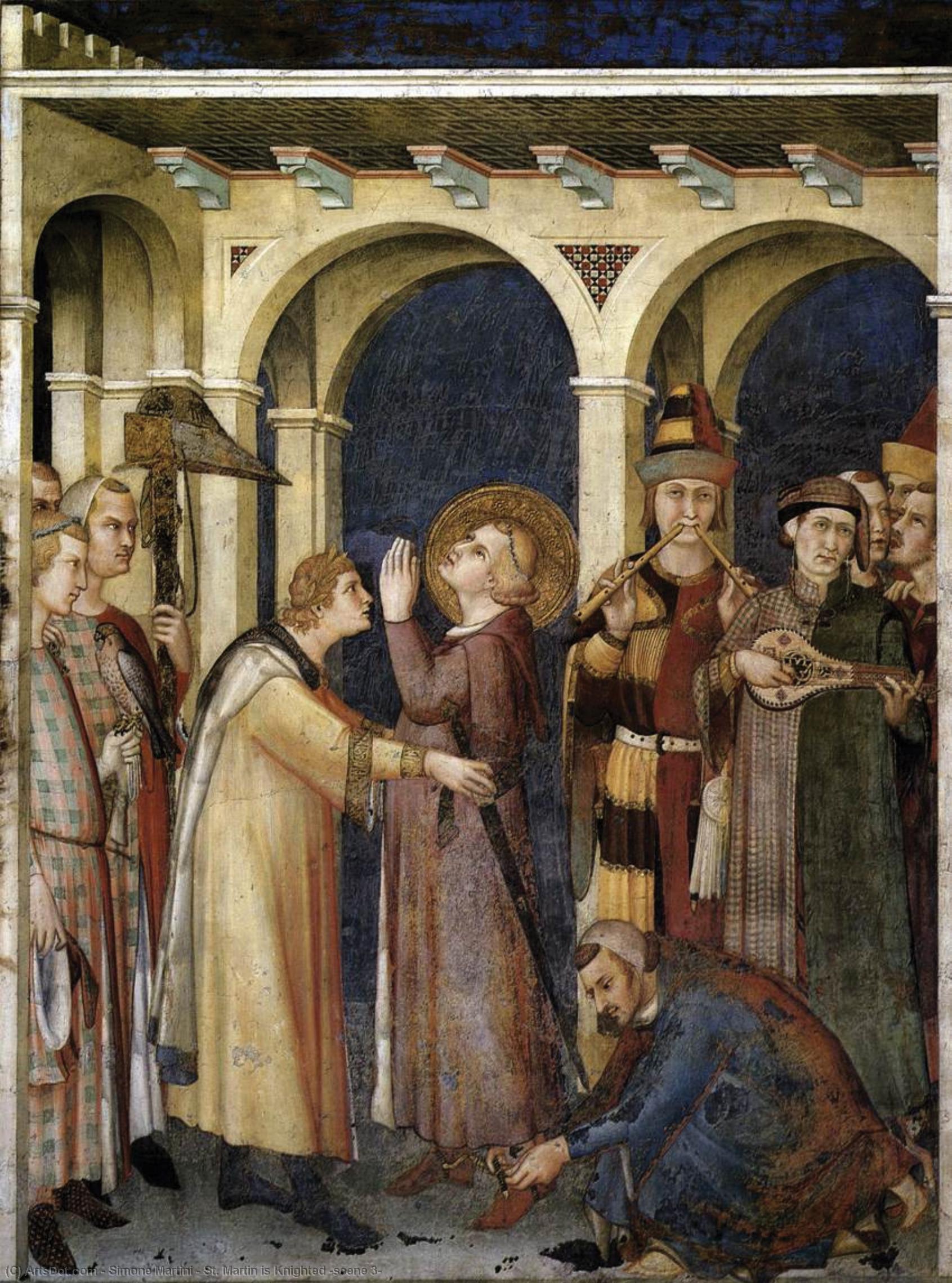
St. Martin is Knighted (scene 3)
 Tempera On Panel
- WallArt
- Late Gothic Style
 1312
1312- Late Medieval
 265.0 x 200.0 cm
 Розгорнути текст
Придбайте цифрову копію високої роздільної здатності з покращеною якістю, що значно перевершує онлайн-перегляд.
Кожен файл ретельно підготовлений нашими фахівцями за допомогою сучасних інструментів та професійної ручної ретуші. Ми гарантуємо виняткову чіткість, точну передачу кольору та високу деталізацію кожного зображення.
Фінальний файл надсилається електронною поштою протягом 72 годин і оптимізований для негайного використання у професійних виданнях та друкованих матеріалах. Таку якість обирають провідні дизайнерські студії, видавництва та галереї.
Цифрове зображення
Завантажте файл високої роздільної здатності для особистого використання, друку та творчих проєктів. ( Перейти до друку Замовити картину ручної роботи)
Переваги кожного замовлення цифрових зображень
Експертна цифрова доставка з гарантією якості
Обираючи OriginalUniqueArt.com, ви отримуєте не просто зображення — ви отримуєте професійно вдосконалений цифровий витвір мистецтва, створений з надзвичайною точністю та підкріплений гарантією задоволення. Ось усе, що автоматично додається до вашого замовлення:

Швидка доставка на email
Ваш цифровий файл із зображенням високої роздільної здатності буде надісланий вам електронною поштою протягом 72 годин після оформлення замовлення — він буде готовий до негайного використання.

Цифровий файл із покращенням ШІ
Ваш витвір мистецтва професійно оптимізовано за допомогою передових інструментів штучного інтелекту та ручної корекції, що забезпечує максимальну деталізацію, чіткість і точність передачі кольорів.

Безкоштовне повторне завантаження назавжди
Випадково видалили або втратили файл? Не хвилюйтеся — ми надішлемо його вам повторно в будь-який час безкоштовно.

Без митних зборів — завжди
Насолоджуйтесь вашим витвором мистецтва миттєво без жодних мит, зборів або плати за доставку — цифрові завантаження завжди не оподатковуються.

Гарантія точності кольорів
Ми гарантуємо максимально точне відтворення оригінальних кольорів на вашому цифровому зображенні завдяки використанню професійних інструментів та систем управління кольором.

100-денна гарантія задоволення
Якщо ви не задоволені придбаним цифровим зображенням, ми внесемо правки або повернемо 100% вартості протягом 100 днів — без зайвих запитань.

Гарантія повернення 100% коштів
Незадоволені покупкою? Отримайте повне повернення коштів протягом 100 днів після отримання цифрового файлу — без зайвих запитань.

Знижки на оптові замовлення
Купуйте 3 зображення — заощаджуйте 10% — Купуйте 5 — заощаджуйте 15% — Купуйте 10+ — заощаджуйте 20%. Чудово підходить для творчих проєктів, галерей та агентств.
A Sacred Encounter: The Grace of St. Martin
In the quiet, luminous world of Simone Martini’s St. Martin is Knighted (scene 3), we are invited to witness a moment that transcends the boundaries of mere historical record, entering instead the realm of divine encounter. Created around 1312, this masterpiece captures a pivotal chapter in the life of St. Martin, the Roman soldier whose legendary compassion—clothing a beggar in the biting winter cold—led to his spiritual recognition. Here, the scene focuses on the solemnity of the accolade, where Martini depicts the ceremonial crowning by Bishop Fulco degli Albizzi. It is a profound meditation on faith and humility, rendered with a delicate touch that makes the sacred feel intimately present.
The composition breathes with the refined elegance of the International Gothic style. Martini, a master of the Sienese school, eschews heavy, monumental forms in favor of a lyrical grace. The figures are characterized by flowing lines and exquisitely sculpted drapery that seems to move with a life of its own. As one observes the kneeling St. Martin, his posture of earnest petition conveys a palpable sense of vulnerability and devotion. This is balanced by the spiritual authority of Bishop Albizzi, whose presence radiates holiness through the subtle use of a halo and a commanding yet merciful gesture. The surrounding onlookers—a kneeling woman and figures engaged with books and vessels—weave a tapestry of communal piety, suggesting that this act of divine benediction is witnessed and shared by the entire faithful community.
Technique and the Radiance of Siena
The emotional depth of this work is inseparable from Martini’s technical brilliance. Utilizing tempera paint on panel, the artist achieved a level of luminosity that remains breathtaking centuries later. The medium allowed for a meticulous application of color, creating subtle gradations that lend volume to the heavy robes and a celestial glow to the skin tones. This technique enables a play of light that seems to emanate from within the painting itself, particularly noticeable in the brilliant highlights of the liturgical garments and the soft, atmospheric depth of the setting.
Beyond its visual splendor, the painting serves as a window into the cultural zenith of Siena, Italy. During this era, Siena was a thriving center of economic and artistic innovation, fueled by the prosperity of the wool trade. The patronage of influential families like the Albizzi clan provided the fertile ground necessary for such spiritual narratives to flourish. For the modern collector or interior designer, a reproduction of this work offers more than just decoration; it brings into a space a sense of historical continuity and refined ornamentation. The painting’s ability to evoke reverence and contemplation makes it an ideal centerpiece for those seeking to infuse their surroundings with an atmosphere of peace, sophistication, and timeless spiritual truth.
Питання та відповіді
Які емоції викликають кольори «St. Martin is Knighted (scene 3)» роботи Сімоне Маттіні?
«St. Martin is Knighted (scene 3)» роботи Сімоне Маттіні поєднує в собі Earthy палітру та Spiritual тональність.
Яка техніка виконання у «St. Martin is Knighted (scene 3)» роботи Сімоне Маттіні?
«St. Martin is Knighted (scene 3)» виконано в техніці Tempera On Panel.
Скільки людей переглядають "St. Martin is Knighted (scene 3)"?
Для «St. Martin is Knighted (scene 3)» існує сторінка Статистика переглядів, на якій відображено щомісячну кількість переглядів цього твору та інших робіт митця з розподілом за країнами та мовами.
Біографія митця
A Sienese Master of Elegance and Grace
Simone Martini, born around 1284 in the heart of Siena, Italy, stands as a pivotal figure in the transition from medieval to Renaissance art. He wasn’t merely a painter; he was an architect of elegance, a master of line and color who infused his works with a courtly refinement that distinguished him from contemporaries like Giotto. While historical accounts vary regarding his early training—some suggest apprenticeship under Duccio di Buoninsegna, the leading Sienese artist of the time, while others point to Florence and the influence of Giotto—Martini undeniably forged a unique artistic path. His brother-in-law, Lippo Memmi, was also an artist with whom he frequently collaborated, further enriching the vibrant artistic landscape of Siena. The city itself played a crucial role in shaping Martini’s aesthetic; Siena, a thriving center of commerce and culture, fostered an environment where art flourished, blending religious devotion with worldly sophistication.
The Flourishing of International Gothic
Martini's style is immediately recognizable for its departure from the more monumental forms favored in Florence. He embraced a delicate sensibility, characterized by flowing lines, soft decorative details, and an overall sense of grace. This aesthetic wasn’t born in isolation; it was profoundly influenced by external forces. The Via Francigena, a major pilgrimage route traversing Europe, brought with it artistic currents from France—particularly the refined elegance of French manuscript illumination and ivory carving. These influences are readily apparent in Martini's work, manifesting as intricate patterns, elongated figures, and a heightened attention to surface ornamentation. He didn’t simply copy these styles; he synthesized them with existing Sienese traditions, creating something entirely new. His paintings weren’t merely representations of religious scenes but rather elegant narratives imbued with emotional depth and visual poetry. The Saint Louis of Toulouse Crowning Robert of Anjou, painted in 1317 during a sojourn in Naples, exemplifies this masterful blend of narrative skill and refined composition. The work showcases Martini’s ability to depict complex scenes with clarity and grace, while simultaneously imbuing them with a sense of courtly splendor.
From Siena to Avignon: A Courtly Appointment
Martini's reputation extended beyond the borders of Italy, leading to a significant turning point in his career. In 1336, he accepted a commission from Pope Benedict XII to create frescoes for the Papal Palace in Avignon, France—a move that placed him at the heart of European power and patronage. This appointment wasn’t merely about artistic skill; it was a testament to Martini's ability to cater to the tastes of a sophisticated courtly audience. While in Avignon, he entered into a remarkable intellectual circle, befriending Francesco Petrarca—better known as Petrarch, the renowned humanist poet. The connection with Petrarch is particularly poignant, as Vasari and other sources suggest that Martini painted a portrait of Laura de Noves, Petrarch’s lifelong muse. Though the portrait itself is lost to time, its very existence speaks volumes about Martini's status as a celebrated artist capable of capturing not only physical likeness but also the essence of beauty and inspiration. The Annunciation with St. Margaret and St. Ansanus, created during his time in Florence before moving to Avignon, is a testament to this period, showcasing delicate beauty and refined aesthetic.
Major Works and Artistic Techniques
Simone Martini’s oeuvre is remarkably diverse, encompassing a range of subjects and styles within the broader framework of International Gothic art. His most celebrated works include the Maestà fresco in the Palazzo Pubblico in Siena—a monumental depiction of the Virgin Mary with Christ Child and the Saints—and numerous altarpieces and panel paintings. Martini’s mastery of color is particularly evident in his use of vibrant hues, often applied in thin, translucent glazes that create a shimmering effect. His meticulous attention to detail is equally impressive, as seen in the intricate patterns of his drapery, the delicate rendering of facial features, and the elaborate ornamentation of his architectural settings. The influence of French manuscript illumination is palpable throughout his work, particularly in the use of gold leaf, vibrant colors, and stylized figures. Martini’s compositions are often characterized by a sense of dynamism and movement, achieved through carefully arranged groupings of figures and a subtle interplay of light and shadow. The Saint Catherine of Alexandria Polyptych, for example, demonstrates his ability to create complex narratives with clarity and grace, while simultaneously imbuing them with a sense of spiritual depth.
Legacy and Enduring Influence
Simone Martini’s impact on the development of European art cannot be overstated. He played a crucial role in disseminating the International Gothic style—a movement characterized by its elegance, refinement, and emphasis on decorative detail—across the continent. His influence extended to generations of artists who followed, shaping the course of late medieval and early Renaissance painting. Martini’s work wasn’t simply about technical skill; it was about creating a visual language that resonated with the sensibilities of his time—a language of beauty, grace, and spiritual devotion. Even today, his paintings continue to captivate viewers with their exquisite detail, harmonious compositions, and enduring sense of elegance. His frescoes in San Francesco d’Assisi demonstrate his mastery of large-scale decorative painting, while works like the Saint Louis of Toulouse Crowning Robert of Anjou showcase his unparalleled command of color and form. Simone Martini died in Avignon in 1344, leaving behind a legacy that continues to inspire awe and admiration centuries later—a testament to the enduring power of art to transcend time and touch the human spirit.

Сімоне Маттіні
1284 - 1344 , Італія
Короткі факти
- Artistic Movement Or Style: Міжнародний готизм
- Artists Or Movements Influenced By This Artist: ['Міжнародний готизм']
- Artists Who Influenced This Artist:
- Дульо ді Буонансега
- Джото ді Бондоне
- Date Of Birth: c. 1284
- Date Of Death: 1344
- Full Name: Сімоне Маттіні
- Nationality: Італійський
- Notable Artworks:
- Проголошення з Маргаритою
- Маґдебір
- Аннунциація
- Place Of Birth: Сьєна, Італія