
 Переглянути в інтер'єрі
 Надіслати як листівку
 Поділитися
 Деталі витвору
 Посібник

 Завантажити
 Схожі екземпляри
 Рентгенівське дослідження
 Слайд-шоу
 Питання та відповіді
 Статистика
Sheep by the Sea


 Розгорнути текст
Гікле / Художній принт
Друк جيкле або на полотні музейної якості з оперативним виготовленням та різноманітними варіантами фінішної обробки. ( Замовити картину ручної роботи Перейти до цифрових зображень)




P118B ₴10

P118H ₴10

P118W ₴10

P438Z ₴10

P508JH ₴12

P508YH ₴12

P805H ₴10

P805Z ₴10

P919BZ ₴10

P919G ₴10

P919XJ ₴10

P959ZH ₴10

P968JZ ₴12

W106C ₴8

W218G ₴10

W218JH ₴8

W218Y ₴10

W307PJ ₴10

W316G ₴10

W316PJ ₴8

W316Y ₴10

W398PJ ₴8

W4111J ₴10

W500HY ₴15

W500JH ₴15

W692G ₴12

W849H ₴8

W940BG ₴15

W953PJ ₴8




Обирайте з наших стандартних розмірів, що відповідають оригінальним пропорціям твору мистецтва.

Введіть необхідну ширину та висоту, щоб принт ідеально підійшов до вашої рами або стіни. Принт можна лише обрізати, але не можна зробити більшим за оригінал, тому при зміні пропорцій частина зображення буде втрачена. Перед друком ми надсилаємо вам цифровий макет для затвердження. Зображення на цій сторінці не відображає реальну обрізку — її можна побачити лише на макеті.
Доставка по всьому світу () за 2 тижні замість стандартних 4/5 тижнів. (9 Листопад)

Безкоштовна експрес-доставка по всьому світу

Високоякісне лляне полотно

Повне страхове покриття доставки

Гарантія повернення митних зборів

Гарантія точного відтворення кольорів

Політика повернення протягом 100 днів (лише у разі виявлення дефектів)

Гарантія повернення 100% коштів

Пропозиція на оптові замовлення
 Скляний варіант доступний лише для розмірів до 110 см

Sheep by the Sea
Гікле / Художній принт
Розмір репродукції
-


Підсумкова вартість
₴ 3637
Rosa Bonheur’s “Sheep by the Sea”: A Moment of Tranquility Captured in Impressionistic Detail
The painting "Sheep by the Sea" by Rosa Bonheur stands as a testament to the artist's unwavering dedication to direct observation and her masterful ability to convey emotion through meticulous technique. Completed in 1867, this serene depiction captures a fleeting glimpse of pastoral life amidst the coastal landscape of Scotland—a scene that resonates with both beauty and profound artistic intention. Bonheur’s commitment to capturing the essence of nature is evident not only in its subject matter but also in her distinctive approach to painting itself.- Subject Matter: Bonheur focused on a simple yet evocative tableau – a flock of sheep grazing peacefully in a meadow bordering the sea. This deliberate choice reflects Bonheur’s fascination with animal life and her desire to portray animals within their natural habitat, rejecting the theatrical conventions favored by artists like Sir Edwin Landseer.
- Style: “Sheep by the Sea” exemplifies Impressionism, prioritizing capturing fleeting impressions of light and atmosphere over precise representation. The brushstrokes are loose and textured, creating a palpable sense of movement and immediacy—a characteristic hallmark of Bonheur’s artistic vision.
- Technique: Bonheur employed thick impasto technique – applying paint in heavy layers – to build up texture and imbue the canvas with luminosity. This method allowed her to capture the shimmering quality of sunlight reflecting off the water and grass, enhancing the painting's visual richness. The artist’s preparatory sketches reveal a painstaking process of anatomical study, demonstrating Bonheur’s meticulous attention to detail before embarking on the final oil paint execution.
Historical Context: Bonheur’s Patronage and Artistic Rivalry
“Sheep by the Sea” gained prominence thanks to its commission from Empress Eugénie de Montijo, wife of Napoleon III—a figure celebrated for her patronage of the arts. This royal endorsement underscored Bonheur's reputation as a leading female artist during the Belle Époque, aligning her work with the broader cultural trends of the era. However, Bonheur’s success wasn’t solely attributable to royal favor; she faced competition from Sir Edwin Landseer, whose sentimental landscapes depicting domesticated animals achieved considerable popularity among the upper classes in England and France. Unlike Landseer's emotionally charged compositions—designed to elicit admiration for rural virtues—Bonheur deliberately avoided theatrical drama, prioritizing a quiet contemplation of the natural world.Symbolism: Tranquility and Observation’s Reward
Beyond its aesthetic qualities, “Sheep by the Sea” embodies deeper symbolic resonances. The sheep themselves represent innocence, simplicity, and pastoral contentment – values championed by Bonheur's Saint-Simonian upbringing. Simultaneously, the coastal setting symbolizes openness to nature and a rejection of artificial constraints—a visual declaration of Bonheur’s artistic philosophy. The painting serves as an emblem of Bonheur’s unwavering belief in the transformative power of observation and her conviction that art could capture moments of profound beauty and serenity.Emotional Impact: A Window into Bonheur's Soul
Rosa Bonheur sought to convey not just what she saw but how she felt—a feat accomplished with remarkable sensitivity. “Sheep by the Sea” evokes a feeling of peaceful stillness, inviting viewers to immerse themselves in the tranquil beauty of the Scottish Highlands. The painting’s luminous palette and textured brushstrokes communicate an emotional depth that transcends mere visual representation, reflecting Bonheur's profound connection to the natural world and her enduring legacy as one of Impressionism’s most accomplished practitioners.Питання та відповіді
Яка орієнтація має «Sheep by the Sea» роботи Роза Бонхур?
Формат твору "Sheep by the Sea" — Landscape. Це допоможе вам під час планування місця розміщення репродукції.
Чи можу я детальніше розглянути "Sheep by the Sea"?
Сторінка Рентгенівське дослідження для твору «Sheep by the Sea» роботи Роза Бонхур — це інтерактивний візуалізатор, що дозволяє досліджувати одинадцять оптичних шарів зображення, включаючи рентгенівський зріз.
Де я можу придбати цифрове зображення «Sheep by the Sea» роботи Роза Бонхур?
Щоб отримати цифровий файл твору «Sheep by the Sea» роботи Роза Бонхур, замовте завантаження цифрового зображення високої роздільної здатності на його сторінці Цифрове зображення високої якості.
Біографія митця
A Life Immersed in the Animal World
Rosa Bonheur, born Marie-Rosalie Bonheur in 1822 Bordeaux, France, wasn’t simply a painter of animals; she was an interpreter of their very essence. Her name resonates through art history as a beacon of realism and a testament to female artistic ambition in a period dominated by male figures. Born into a family steeped in artistic tradition – her father, Oscar-Raymond Bonheur, was a landscape and portrait painter – young Rosalie’s path wasn’t predetermined but nurtured. The family’s embrace of Saint-Simonianism, a progressive socialist philosophy advocating for equal education for both sexes, proved particularly formative, instilling in Rosa a sense of independence and intellectual curiosity that would define her life and work. Tragedy struck early with the loss of her mother at age eleven, yet the Bonheur household remained a haven for creativity and unconventional thinking. This unique upbringing laid the foundation for an artist who would challenge societal norms as boldly as she captured the raw beauty of the natural world.From Humble Beginnings to Salon Success
The family’s relocation to Paris in 1828 marked a turning point, providing Rosa with access to formal artistic training. Initially, her studies followed conventional lines – copying from drawings and sketching plaster models. However, it was the animals surrounding Paris that truly captured her imagination. Horses, cattle, sheep, goats—she observed them relentlessly, not merely as subjects for art but as living beings deserving of meticulous study. This dedication to direct observation became the cornerstone of her artistic style. Her father actively encouraged this passion, even bringing live animals into their studio for Rosa to dissect and analyze. This hands-on approach, combined with visits to Parisian abattoirs to understand animal anatomy, set her apart from many contemporaries who relied on second-hand depictions. Her breakthrough arrived in 1849 with *Ploughing in the Nivernais*, a work that garnered immediate attention at the Paris Salon and signaled the arrival of a significant new talent. But it was *The Horse Fair*, completed between 1853 and 1855, that cemented her international fame. This monumental canvas, now housed in New York’s Metropolitan Museum of Art, pulsates with energy and anatomical precision, depicting the chaotic yet captivating spectacle of a bustling horse market. Even Queen Victoria herself was captivated by its power and realism.A Style Rooted in Realism and Observation
Rosa Bonheur's artistic style wasn’t about romanticizing animals; it was about portraying them with unwavering honesty and detail. She eschewed sentimentality, opting instead for a scientific approach to her subjects. Her paintings are characterized by their anatomical accuracy, dynamic compositions, and an ability to capture the unique personality of each creature. This commitment to realism extended beyond mere physical representation. Bonheur sought to understand the animals’ movements, behaviors, and even their emotional states. She often worked *en plein air*, directly observing her subjects in their natural environments, a practice that further enhanced the authenticity of her work. Her technique involved careful layering of paint and a masterful use of light and shadow to create depth and texture, bringing each animal vividly to life on canvas. The influence of artists like Nicolas Poussin and Peter Paul Rubens is evident in her compositions, but she always prioritized direct observation over idealized representation.A Pioneer for Women in Art
Rosa Bonheur’s legacy extends far beyond her artistic achievements; she became an icon for women striving for recognition in the male-dominated art world. She defied convention not only through her professional success but also through her personal choices. Famously, she often wore men's clothing while working with animals, citing practicality and freedom of movement – a bold statement that challenged societal expectations. She secured commissions from governments and private collectors alike, proving that female artists could achieve the same level of acclaim as their male counterparts. Her success paved the way for future generations of women artists, inspiring them to pursue their passions without compromise. Bonheur’s life story serves as a powerful example of artistic independence and determination. Her paintings continue to be celebrated in major museums worldwide, serving as a reminder of her enduring contribution to art history and her unwavering commitment to portraying the beauty and dignity of the animal kingdom.Enduring Influence and Lasting Legacy
The impact of Rosa Bonheur’s work continues to resonate today. Her dedication to realism influenced countless artists, and her paintings remain admired for their technical skill and emotional depth. She demonstrated that art could be both scientifically accurate and profoundly moving, bridging the gap between observation and interpretation. Beyond her artistic contributions, Bonheur's life story serves as a powerful example of female empowerment and artistic independence. She challenged societal norms, defied expectations, and ultimately achieved lasting recognition on her own terms. Her legacy is not merely one of beautiful paintings but also of courage, determination, and a unwavering commitment to her craft. Her work continues to inspire artists and art lovers alike, reminding us of the power of observation, the beauty of the natural world, and the importance of pursuing one’s passions with conviction.
Роза Бонхур
1822 - 1899 , Франція
Короткі факти
- Artistic Movement Or Style: Реалізм, Живопис тварин
- Artists Or Movements Influenced By This Artist: ['Імпресіонізм']
- Artists Who Influenced This Artist:
- Ніколя Пуссен
- П’єр Пауль Рубенс
- Date Of Birth: 16 березня 1822
- Date Of Death: 25 травня 1899
- Full Name: Marie-Rosalie Bonheur
- Nationality: Французька
- Notable Artworks:
- «Посіви в Неврэн»
- «Ярмарок коней»
- Place Of Birth: Бурдо, Франція
Пов'язані статті

За межами світла та кольору: Імпресіонізм проти постімпресіонізму для вибагливого колекціонера
Поглиблене дослідження імпресіонізму та постімпресіонізму для досвідчених колекціонерів. Аналіз ключових художників, інвестиційний потенціал та поради щодо інтеграції в інтер'єр.

25 шедеврів Поля Сезанна: подорож у світ імпресіонізму та натюрморту | OriginalUniqueArt
Відкрийте 25 найвідоміших картин Поля Сезанна! Дослідіть імпресіонізм, натюрморти та пейзажі художника. Купіть високоякісні репродукції та знайдіть ідеальний декор для вашого дому на OriginalUniqueArt.com.
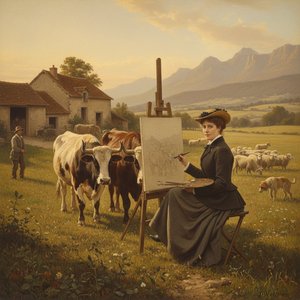
Rosa Bonheur: Realism, Rural Life & Redefining Women's Roles in 19th-Century Art
Explore the life & art of Rosa Bonheur, a pioneering Realist painter who redefined women's roles in 19th-century France. Discover her iconic animal paintings and lasting influence on art history. Learn more at OriginalUniqueArt.

Топ-10 знаменитих картин у відтінках м’якої зеленої середини: мистецтво для вашого дому | OriginalUniqueArt.com
Відкрийте для себе 10 найвідоміших картин у відтінках м’якої зеленої середини! Дізнайтесь історії Моне, Дега та інших майстрів імпресіонізму. Репродукції картин преміум-класу для вашого дому – на OriginalUniqueArt.com.

Топ-10 шедеврів імпресіонізму: мистецтво миттєвості для вашого дому
Пориньте у світ імпресіонізму! Відкрийте 10 культових картин Моне, Ренуара та Дега. Історія мистецтва, кольори та техніка – все для натхнення вашого дому. Репродукції музейної якості на OriginalUniqueArt.com.