Переглянути в інтер'єрі
 Надіслати як листівку
 Поділитися
 Деталі витвору
 Посібник

 Завантажити
 Схожі екземпляри
 Рентгенівське дослідження
 Слайд-шоу
 Статистика
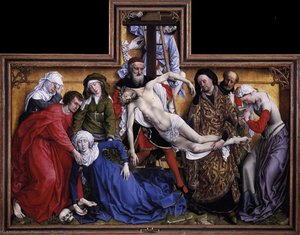
Lamentation
 Early Netherlandish Painting
 1441
1441 32.0 x 47.0 cm
 Музеи Королевские Искусств Бельгии
 Розгорнути текст
Олійная репродукція ручної роботи
Написана вручну олією на полотні у вашому розмірі та рамі, виготовлена на замовлення нашими художниками. ( Перейти до друку Перейти до цифрових зображень)




P118B ₴10

P118H ₴10

P118W ₴10

P438Z ₴10

P508JH ₴12

P508YH ₴12

P805H ₴10

P805Z ₴10

P919BZ ₴10

P919G ₴10

P919XJ ₴10

P959ZH ₴10

P968JZ ₴12

W106C ₴8

W218G ₴10

W218JH ₴8

W218Y ₴10

W307PJ ₴10

W316G ₴10

W316PJ ₴8

W316Y ₴10

W398PJ ₴8

W4111J ₴10

W500HY ₴15

W500JH ₴15

W692G ₴12

W849H ₴8

W940BG ₴15

W953PJ ₴8




Обирайте з наших стандартних розмірів, що відповідають оригінальним пропорціям твору мистецтва.

Введіть необхідну ширину та висоту, щоб картина підійшла до вашої рами або стіни. Оскільки це ручний розпис, для зміни пропорцій художник може дописати трохи більше по краях або дещо обрізати композицію — вибір за вами. Перед початком роботи ми надішлемо вам цифровий макет для затвердження. Зображення, показане на цій сторінці, не є реальним результатом — лише макет відображає майбутній вигляд.
Після оформлення замовлення команда OriginalUniqueArt.com зв'яжеться з клієнтом електронною поштою для отримання інструкцій та надасть попередній макет
Доставка по всьому світу () за 3–4 тижні замість стандартних 5 тижнів. (27 Жовтень). Без жодних компромісів у якості.

Безкоштовна експрес-доставка по всьому світу

Високоякісне лляне полотно

Повне страхове покриття доставки

Гарантія повернення митних зборів

Гарантія точного відтворення кольорів

Політика повернення протягом 100 днів (лише у разі виявлення дефектів)

Гарантія повернення 100% коштів

Пропозиція на оптові замовлення
 Скляний варіант доступний лише для розмірів до 110 см

Lamentation
Матеріал репродукції
Розмір репродукції
-


Підсумкова вартість
₴ 15687
A Scene of Profound Grief: Rogier van der Weyden’s *Lamentation* (1441)
This deeply moving painting by Rogier van der Weyden, created in 1441, offers a poignant depiction of the *Lamentation*, a pivotal moment in the Passion of Christ. The artwork encapsulates the sorrow and despair following Christ’s death, rendered with the meticulous detail and emotional intensity characteristic of Early Netherlandish painting. Measuring 32 x 47 cm, this intimate scale invites close contemplation of its powerful subject matter.Stylistic Mastery & Technical Innovation
Van der Weyden was a master of his craft, and *Lamentation* exemplifies his signature style. The composition is deliberately structured around a triangular form – Christ’s body forming the base, with the grieving figures converging upwards. This creates a sense of stability amidst the emotional turmoil. Notice the precise linearity defining each figure and object; forms are sharply delineated yet softened by Van der Weyden's masterful use of oil paint. He employed the glazing technique – layering translucent washes of color – to achieve an extraordinary luminosity and richness of texture, a hallmark of the period. The limited perspective, typical of Early Netherlandish art, doesn’t diminish the depth but rather focuses attention on the emotional weight of the scene.Decoding the Symbolism
Beyond its immediate depiction of grief, *Lamentation* is rich in symbolic meaning. The skull at the base of Christ's body serves as a stark memento mori, reminding viewers of mortality and the fleeting nature of life. The cloth draped over Christ’s body represents his burial shroud, while the expressions of anguish on the faces of Mary, John the Evangelist, Nicodemus, and other mourners convey profound sorrow. Even the carefully chosen colors – deep reds, blues, and browns – contribute to the somber atmosphere. Subtle gold leaf highlights, particularly around Christ’s halo, symbolize his divinity even in death.Historical Context & Artistic Influence
Rogier van der Weyden (c. 1400-1464) was a leading figure of the Early Netherlandish school, alongside Jan van Eyck and Robert Campin. Born in Tournai (modern-day Belgium), he became renowned for his emotionally resonant works that blended realism with spiritual depth. His paintings were highly sought after by European nobility and courts, influencing artists across the continent. Van der Weyden’s emphasis on naturalism and expressive pathos set a new standard for religious painting, moving away from the more stylized conventions of earlier Gothic art. He surpassed even Jan van Eyck in popularity during his lifetime.Emotional Resonance & Interior Design
*Lamentation* is not merely a historical artifact; it’s an emotionally charged work that continues to resonate with viewers today. The painting evokes feelings of empathy, sorrow, and contemplation. Its somber palette and dignified composition make it a compelling focal point for any interior. A high-quality reproduction would be particularly well-suited to contemplative spaces – libraries, studies, or bedrooms – adding a touch of historical gravitas and artistic sophistication. The painting’s intimate scale also makes it ideal for smaller rooms where its details can be fully appreciated. Consider pairing it with muted tones and natural materials to enhance its sense of quiet reverence.Further Exploration
- Explore other works by Rogier van der Weyden at the St Janskerk in Middelburg, Belgium, which houses his renowned *Middelburg Altar*.
- Discover more about Early Netherlandish painting and its techniques through resources available online and at major art museums.
- Consider how the themes of grief, loss, and faith are explored in other artistic traditions.
Питання та відповіді
Хто є автором "Lamentation"?
Автором твору «Lamentation» є Рогорій ван дер Вейден. Робота внесена до каталогу під іменем Рогорій ван дер Вейден.
Який відтінок переважає у творі "Lamentation"?
У «Lamentation» роботи Рогорій ван дер Вейден переплітаються Від бурштинового до шафранового відтінки.
Де можна побачити оригінал «Lamentation» роботи Рогорій ван дер Вейден?
Оригінал твору «Lamentation» можна побачити в Музеи Королевские Искусств Бельгии, Брюссель, Бельгія.
Біографія митця
A Master of Emotion: The Life and Legacy of Rogier van der Weyden
Rogier de la Pasture – known to history as Rogier van der Weyden – emerged from the bustling city of Tournai, Belgium, around 1400, as a pivotal figure in the burgeoning world of Early Netherlandish painting. While the details of his early life remain somewhat shrouded in mystery, it’s believed he initially honed his skills not with brush and pigment alone, but through a rigorous apprenticeship as a goldsmith. This formative training instilled within him an unwavering dedication to meticulous detail and a refined sensibility for craftsmanship – qualities that would become instantly recognizable hallmarks of his artistic style. The precision demanded by working with precious metals undoubtedly translated into the exquisite rendering of textures, fabrics, and expressions that define his most celebrated masterpieces. He wasn’t merely depicting reality; he was meticulously recreating it, imbued with an almost reverent attention to detail, striving to capture not just what *was*, but how it *felt*.From Tournai to Brussels: A Rising Star
By 1427, van der Weyden had ascended to the rank of master within the esteemed Guild of Saint Luke in Tournai – a significant milestone that solidified his position as a professional artist and opened doors to prestigious commissions. His rise continued dramatically when he entered the service of Philip the Good, Duke of Burgundy, in 1435 – a patronage that would profoundly shape his career for the remainder of his life. Serving as court painter afforded him not only financial security and access to an elite circle of influence but also exposure to some of the most discerning eyes of the era. It was during this period, amidst the opulent courts of Burgundy, that van der Weyden’s artistic vision truly began to mature, moving away from the somewhat rigid conventions of earlier Netherlandish painters towards a more emotionally resonant and naturalistic approach. He wasn't simply painting religious scenes; he was striving to evoke genuine feeling in the viewer, to create an experience that transcended mere observation – a profound shift in the way art engaged with its audience.The Language of Feeling: Style and Technique
Rogier van der Weyden’s artistic signature is immediately recognizable through several defining characteristics. His palette was remarkably rich and diverse, a vibrant tapestry of colors carefully chosen to avoid repetition and create depth and complexity within his compositions. He possessed an extraordinary ability to convey profound emotion – *pathos* – particularly in depictions of religious subjects like the *Lamentation*, where grief and sorrow are palpable. This emotional intensity wasn’t achieved through dramatic gestures or exaggerated expressions; rather, it was subtly woven into the very fabric of the painting, conveyed through delicate nuances of facial expression, body language, and composition. His figures, while adhering to the conventions of the time – often depicted with a dignified, almost sculptural quality – demonstrate a growing interest in realistic representation – not just in anatomy and drapery, but also in capturing the psychological states of his subjects. They possess an air of solemnity and reverence, lending them a timeless quality. He masterfully employed oil paint, building up layers of translucent glazes to achieve luminous effects and create a sense of depth and realism that was revolutionary for its time. The use of *chiaroscuro* – the dramatic interplay of light and shadow – further heightened the emotional impact of his works.Notable Works and Enduring Masterpieces
Throughout his prolific career, van der Weyden produced numerous works that stand as testaments to his artistic prowess. *St Luke Drawing a Portrait of the Madonna*, housed in the Museum of Fine Arts, Boston, showcases his mastery of oil on panel and meticulous observation. The *Lamentation*, residing in the Musée des Beaux-Arts Tournai, Belgium, is perhaps his most celebrated work – a powerfully emotive depiction of Christ’s mourning, renowned for its dramatic use of *chiaroscuro* and its ability to evoke profound sorrow in the viewer. Multiple versions of *The Deposition* exist, each demonstrating his skill in conveying grief and drama with breathtaking sensitivity. The *Annunciation*, a masterpiece of refined style and attention to detail, exemplifies his ability to imbue even the most traditional subjects with a sense of freshness and vitality. And finally, the intricate and richly detailed *Bladelin Triptych* stands as a monumental achievement – a complex altarpiece that showcases the full range of van der Weyden’s artistic abilities. These works, and many others, continue to captivate audiences today, solidifying his position as one of the most important painters of the 15th century.Lasting Influence: A Legacy Forged in Paint
Van der Weyden's influence extended far beyond the borders of his native Flanders. His works were highly sought after throughout Europe, particularly in Italy and Spain, where they introduced a new level of emotional depth and naturalism to local artistic traditions. Although his fame experienced a period of relative decline in the 17th century, a rediscovery during the 19th century cemented his place as one of the most important painters of the 15th century. He stands alongside Jan van Eyck and Robert Campin as one of the “three great” Early Flemish masters, each contributing uniquely to the development of Northern Renaissance art. His innovative techniques and emotionally charged compositions paved the way for future generations of artists, inspiring countless imitators and influencing the course of Western painting for centuries to come. He helped establish oil painting as the dominant medium and elevated the status of the artist within society, transforming them from skilled craftsmen into revered creators. Rogier van der Weyden’s legacy continues to resonate today, a testament to his enduring genius and his profound understanding of the human condition.
Рогорій ван дер Вейден
1400 - 1464 , Бельгія
Короткі факти
- Artistic Movement Or Style: Ранньонідерландське живопис
- Artists Or Movements Influenced By This Artist:
- Італьянський Ренесанс
- Іспанська живопис
- Artists Who Influenced This Artist:
- Робер Кампін
- Ян ван Ейк
- Date Of Birth: c. 1400
- Date Of Death: 1464
- Full Name: Rogier van der Weyden
- Nationality: Бельгійський
- Notable Artworks:
- Скорбна сцена
- Плачуща Діва
- Поховання Христа
- Place Of Birth: Tournai, Бельгія
Пов'язані статті

Hugo van der Goes: Devotion, Innovation & the Psychological Depth of Early Netherlandish Painting
Explore the revolutionary art of Hugo van der Goes – a master of Early Netherlandish painting renowned for his dramatic realism, psychological depth & profound influence on Renaissance artists. Discover his iconic works and lasting legacy.

Рембрандт ван Рейн: Топ-25 шедеврів для вашого дому | OriginalUniqueArt
Пориньте у світ Рембрандта ван Рейна! 25 культових шедеврів бароко, портретів та біблійних сцен. Купіть високоякісні репродукції картин Рембрандта для вашого дому на OriginalUniqueArt.com – музейне мистецтво онлайн!

Топ-10 шедеврів Раннього Нідерландського Відродження: мистецтво для вашого дому | OriginalUniqueArt
Відкрийте для себе 10 шедеврів Раннього Нідерландського Відродження! Історія ван Ейка, Рогіра ван дер Вейдена та інших майстрів. Картини епохи Ренесансу для вашого дому – придбайте розкішні репродукції на OriginalUniqueArt.com.

Топ-10 шедеврів раннього нідерландського живопису: мистецтво для вашого дому від OriginalUniqueArt
Відкрийте для себе 10 шедеврів раннього нідерландського живопису! Дізнайтесь історії ван Ейка, ван дер Вейдена та інших майстрів. Купіть високоякісні репродукції картин на OriginalUniqueArt.com і додайте елегантності вашому дому.

Rogier van der Weyden: Emotion, Innovation & the Early Netherlandish Renaissance
Explore the revolutionary art of Rogier van der Weyden, a pivotal figure of the Early Netherlandish Renaissance. Discover his emotional realism, innovative compositions, and lasting impact on painting history.