

 Переглянути в інтер'єрі
 Надіслати як листівку
 Поділитися
 Деталі витвору
 Посібник

 Завантажити
 Схожі екземпляри
 Рентгенівське дослідження
 Слайд-шоу
 Статистика
Odalisk


 Розгорнути текст
Мистецький твір, представлений на цій сторінці, захищений законом про авторське право, що унеможливлює легальне створення або продаж його ідентичної репродукції. Цей захист забезпечується відповідно до міжнародних угод, таких як Бернська конвенція та національним законодавством, зокрема положеннями, що викладені в Законодавство США про авторське право — Розділ 17. Всі права захищені. Будь-яке використання без дозволу заборонено.
Як шанобливу та законну альтернативу, ми пропонуємо унікальні картини ручної роботи, створені натхненням від оригіналу. Наші досвідчені професійні художники ретельно вивчають стиль, настрій та художню сутність оригіналу, щоб створити новий, неповторний твір, який викликає ті ж почуття, — залишаючись при цьому самобутнім творінням.
Цей метод повністю відповідає нормам авторського права, оскільки він не передбачає копіювання чи дублювання захищеного твору мистецтва. Натомість це творче переосмислення — створення нового малюнка під впливом оригіналу, який не є його точним відтворенням.
Олійная репродукція ручної роботи
Написана вручну олією на полотні у вашому розмірі та рамі, виготовлена на замовлення нашими художниками. ( Перейти до друку Перейти до цифрових зображень)




P118B ₴10

P118H ₴10

P118W ₴10

P438Z ₴10

P508JH ₴12

P508YH ₴12

P805H ₴10

P805Z ₴10

P919BZ ₴10

P919G ₴10

P919XJ ₴10

P959ZH ₴10

P968JZ ₴12

W106C ₴8

W218G ₴10

W218JH ₴8

W218Y ₴10

W307PJ ₴10

W316G ₴10

W316PJ ₴8

W316Y ₴10

W398PJ ₴8

W4111J ₴10

W500HY ₴15

W500JH ₴15

W692G ₴12

W849H ₴8

W940BG ₴15

W953PJ ₴8




Обирайте з наших стандартних розмірів, що відповідають оригінальним пропорціям твору мистецтва.

Введіть необхідну ширину та висоту, щоб картина підійшла до вашої рами або стіни. Оскільки це ручний розпис, для зміни пропорцій художник може дописати трохи більше по краях або дещо обрізати композицію — вибір за вами. Перед початком роботи ми надішлемо вам цифровий макет для затвердження. Зображення, показане на цій сторінці, не є реальним результатом — лише макет відображає майбутній вигляд.
Після оформлення замовлення команда OriginalUniqueArt.com зв'яжеться з клієнтом електронною поштою для отримання інструкцій та надасть попередній макет
Доставка по всьому світу () за 3–4 тижні замість стандартних 5 тижнів. (26 Жовтень). Без жодних компромісів у якості.

Безкоштовна експрес-доставка по всьому світу

Високоякісне лляне полотно

Повне страхове покриття доставки

Гарантія повернення митних зборів

Гарантія точного відтворення кольорів

Політика повернення протягом 100 днів (лише у разі виявлення дефектів)

Гарантія повернення 100% коштів

Пропозиція на оптові замовлення
 Скляний варіант доступний лише для розмірів до 110 см

Odalisk
Матеріал репродукції
Розмір репродукції
-


Підсумкова вартість
₴ 13454
Odalisk: A Symphony of Contrasts by Robert Rauschenberg
Robert Rauschenberg’s “Odalisk,” created in 1958, stands as an arresting testament to the artist's pioneering approach to assemblage and collage—a method that irrevocably altered the landscape of postwar American art. More than just a sculpture; it’s a carefully orchestrated dialogue between disparate materials and concepts, inviting viewers into a contemplation of order amidst chaos and stability interwoven with spontaneity. The artwork resides in Museo Robert Brady, nestled amongst lush gardens in Cuernavaca, Mexico, offering visitors a chance to immerse themselves in its captivating visual language.Composition and Materials: An Unexpected Harmony
The sculpture’s foundation is deceptively simple—a grey cube topped with a white pillow-like form—yet this foundational stability belies the dynamism that erupts from above. Rising from the cube is a slender, white column supporting a large rectangular box whose sides are adorned with meticulously layered collage imagery. These images aren't merely decorative; they represent fragments of everyday life – newspaper clippings, fabric scraps, and abstract shapes—creating a deliberately jarring juxtaposition against the geometric precision of the base and column. Adding to this complexity is a section of black netting draped across the front of the box, acting as both visual barrier and textural element. Crucially, perched atop the box resides a live rooster, an organic intrusion that disrupts the sculpture’s formal structure and introduces an element of unpredictable vitality.Technique and Style: Assemblage Elevated
Rauschenberg's technique exemplifies the core tenets of assemblage—combining found objects with painted surfaces—a style deeply rooted in Surrealist influences but decisively pushing beyond traditional artistic boundaries. The meticulous layering of collage materials demonstrates a profound understanding of visual texture and materiality, mirroring the artist’s fascination with exploring the relationship between art and reality. Paint is applied strategically to create tonal variations and highlight specific areas within the composition, while the netting contributes a contrasting textural surface that engages the viewer's tactile senses. The overall aesthetic leans heavily into Pop Art sensibilities—embracing commonplace materials and imagery in ways that challenge conventional notions of artistic seriousness.Symbolism and Interpretation: Order Versus Chaos
“Odalisk” operates on multiple symbolic levels, prompting viewers to consider themes of duality and transformation. The geometric cube represents stability and rationality, countered by the chaotic collage imagery – a deliberate reflection of the artist’s engagement with the anxieties of the Cold War era. The rooster embodies spontaneity and instinct, symbolizing freedom within a constrained environment. Furthermore, the juxtaposition of organic life and manufactured form speaks to broader questions about humanity's interaction with nature and its capacity for creating art that transcends mere representation.Emotional Impact: A Visual Meditation
Ultimately, “Odalisk” succeeds in eliciting an emotional response through its visual complexity and unsettling juxtapositions. It compels contemplation—encouraging viewers to consider the interplay between opposing forces and to appreciate the beauty inherent in imperfection. The sculpture’s deliberate ambiguity invites personal interpretation, fostering a dialogue between art and experience that lingers long after initial observation. Its presence within Museo Robert Brady underscores the enduring legacy of Rauschenberg's groundbreaking vision – a vision that continues to inspire artists and collectors alike.Питання та відповіді
У якому році та до якого напряму належить твір "Odalisk"?
«Odalisk» роботи Роберт Раушенберг датований 1958 роком і належить до Pop Art.
Де я можу завантажити «Odalisk» роботи Роберт Раушенберг?
Цифрове зображення твору «Odalisk» роботи Роберт Раушенберг доступне для завантаження на сторінці Завантажити цифрове зображення: завантаження цифрового зображення високої роздільної здатності.
Кольори у творі "Odalisk" виглядають насиченими чи ніжними?
Кольори в «Odalisk» роботи Роберт Раушенберг мають Balanced насиченість.
Біографія митця
A Life Forged in Transition
Robert Rauschenberg, born Milton Ernest Rauschenberg in 1925 amidst the oil-rich landscapes of Port Arthur, Texas, was an artist whose very existence seemed to echo the dynamic energy and transformative spirit he brought to the art world. His childhood wasn’t defined by a single location; his father's profession necessitated a nomadic lifestyle, traversing diverse terrains that subtly instilled within him a receptiveness to varied visual stimuli and a willingness to embrace change. This early exposure fostered a sensibility attuned to the textures and rhythms of American life—an undercurrent profoundly shaping his artistic explorations. Though initially drawn towards pharmacology at the University of Texas, Rauschenberg’s path swiftly diverged, leading him into art – first through necessity during wartime service in the Navy, then with focused study at the Kansas City Art Institute and crucially, at Black Mountain College in North Carolina. It was within this hothouse of avant-garde thought, alongside luminaries like Josef Albers, Merce Cunningham, John Cage, and Cy Twombly, that his experimental spirit truly ignited. This environment wasn’t merely educational; it was a crucible forging a new artistic sensibility, laying the groundwork for an approach fundamentally challenging established norms. He absorbed the radical ideas of Dadaism, particularly its critique of art's institutions and its embrace of chance, alongside the conceptual explorations of Marcel Duchamp, whose “readymades” questioned the very definition of what constituted art. This confluence of influences would profoundly shape his own artistic trajectory.The Birth of the “Combine”
Rauschenberg’s most enduring legacy lies in his revolutionary "Combines," artworks that deliberately blurred the boundaries between painting, sculpture, and assemblage. These weren't simply paintings *or* sculptures; they were complex constructions incorporating found objects – everything from everyday detritus like tires and wood scraps to photographs, newspaper clippings, even taxidermied animals. This radical departure wasn’t about novelty for its own sake; it was a fundamental questioning of what constituted art itself. His style evolved as a conscious rejection of the prevailing Abstract Expressionist aesthetic, moving away from the intensely personal and emotionally charged canvases of artists like Jackson Pollock. Instead, Rauschenberg sought to engage with the world around him, reflecting the complexities and contradictions of modern American life. The Combines were born out of a desire to dismantle traditional artistic categories and create works that actively engaged with their environment. He believed in incorporating chance, spontaneity, and the unexpected into his creative process, allowing the inherent qualities of found objects to contribute their own narratives to the artwork. Monogram, created in 1954, exemplifies this approach perfectly – a seemingly simple painting featuring a stuffed goat head mounted on an automobile tire, a jarring juxtaposition that forces the viewer to confront the relationship between nature and industry, beauty and decay. This willingness to embrace the unconventional wasn’t merely aesthetic; it was philosophical, reflecting a broader cultural shift questioning traditional values and hierarchies. The Combines weren't just objects; they were statements—fragments of a rapidly changing world reassembled into something new and challenging.Expanding Horizons: Silkscreen, Performance, and Beyond
Rauschenberg’s artistic explorations didn’t remain confined to the Combines. He continually pushed boundaries, experimenting with new techniques and materials throughout his career. His engagement with silkscreen printing in the early 1960s, exemplified by works like Retroactive I & II, allowed him to incorporate images from newspapers and magazines, reflecting the political and social anxieties of the era and anticipating Pop Art’s embrace of popular imagery. He saw the potential for mass media – advertisements, news photographs – to be integrated into his art, creating a dialogue between high art and low culture. The Overseas Tech Series (1964), created during his travels in Italy and France, further explored this theme by combining photographs taken abroad with silkscreened images, reflecting the cultural exchange and globalization of the time. However, Rauschenberg’s influence extended far beyond the visual arts; his collaborations with choreographer Merce Cunningham were equally significant. These partnerships resulted in groundbreaking performance pieces that seamlessly integrated dance and visual art, creating immersive experiences challenging conventional notions of artistic expression. He wasn't simply creating objects or images; he was constructing environments, orchestrating events—a holistic approach to artmaking anticipating the multimedia installations of later generations. His work with John Cage on musical compositions demonstrated a similar interest in chance and indeterminacy, further blurring the lines between disciplines.Key Themes & Influences
- Dada & Marcel Duchamp: Rauschenberg’s use of found objects and rejection of traditional artistic values were directly influenced by the Dada movement's anti-art stance and Duchamp’s concept of “readymades.”
- Abstract Expressionism’s Aftermath: He consciously moved away from the emotional intensity and subjective expression of Abstract Expressionism, seeking a more objective and inclusive approach to artmaking.
- Popular Culture & Mass Media: Rauschenberg embraced imagery from newspapers, magazines, and advertising, reflecting the growing influence of mass media on American society.
- Collaboration & Interdisciplinarity: His collaborations with Merce Cunningham and John Cage demonstrated his belief in the power of artistic exchange and the blurring of disciplinary boundaries.
- Chance & Spontaneity: He incorporated elements of chance into his creative process, allowing for unexpected juxtapositions and a sense of openness to new possibilities.
A Lasting Legacy
Robert Rauschenberg’s impact on American art is undeniable. He played a crucial role in bridging the gap between Abstract Expressionism and Pop Art, paving the way for subsequent artists who embraced appropriation, collage, and mixed media. His “Combines” fundamentally redefined the very definition of art, challenging traditional notions of painting and sculpture and expanding the possibilities of artistic expression exponentially. He wasn’t simply creating objects; he was constructing environments reflecting the complexities and contradictions of modern life. Rauschenberg's willingness to experiment with materials, his embrace of chance operations, and his engagement with popular culture served as a powerful inspiration for countless artists who followed in his wake. His work continues to be exhibited in major museums worldwide, serving as a vital source of inspiration for contemporary artists exploring the intersection of art, technology, and everyday life. He left behind not just a body of artwork but a legacy of innovation, challenging us to reconsider our assumptions about what art can be and how it interacts with the world around us. His influence resonates today in the work of artists who continue to push boundaries and explore new forms of creative expression, solidifying his place as one of the most important and influential figures in 20th-century art.
Роберт Раушенберг
1925 - 2008 , Сполучені Штати Америки
Короткі факти
- Artistic Movement Or Style: Поп-арт, Неодада
- Artists Or Movements Influenced By This Artist: ['Абстрактний експресіонізм']
- Artists Who Influenced This Artist: ['Марсель Дюшан']
- Date Of Birth: 1925
- Date Of Death: 2008
- Full Name: Robert Rauschenberg
- Nationality: Американський
- Notable Artworks:
- Monogram
- Untitled (Runt)
- Black Painting
- Place Of Birth: Порт Артур, США
Пов'язані статті

The Enduring Form: Exploring Themes & Techniques in Sculpture Across Historical Periods
Explore the rich history of sculpture from ancient masterpieces to contemporary innovations. Discover key techniques, influential artists & investment potential for discerning art collectors.

10 легендарних бронзових скульптур, що змінили мистецтво | OriginalUniqueArt
Відкрийте 10 легендарних бронзових скульптур, що змінили хід мистецтва! Дізнайтесь історії Мікеланджело, Родена та інших геніїв. Репродукції картин преміум-класу для вашого дому – на OriginalUniqueArt.com
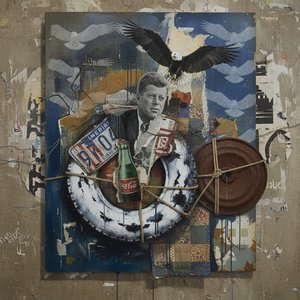
Robert Rauschenberg: Bridging Painting & Life – A Comprehensive Exploration of Combines, Silkscreens, and the Erasure of Boundaries
Explore the revolutionary art of Robert Rauschenberg – Combines, silkscreens & more. Discover his impact on Pop Art, investment potential & collecting insights for discerning art collectors.

The Enduring Form: Sculpture Across History, Technique & Emotional Resonance
Explore the rich history of sculpture with OriginalUniqueArt. Discover key techniques, influential artists & investment potential for discerning collectors. Expert insights into valuing and collecting timeless masterpieces.

Mixed Media Art for Hospitality: A Professional Guide to Texture, Layering, and High-Impact Interior Design
Elevate hospitality interiors with professional mixed media art. Our guide explores texture, layering, and durability for hotel designers and procurement managers seeking high-impact, custom-commissioned artworks that define luxury guest experiences.

