Showing at Tattersall's
Олія на твердій основі
British Modernism
1919
58.0 x 71.0 cm
Ашмолеанський музей мистецтва та археології
Олійная репродукція ручної роботи
Написана вручну олією на полотні у вашому розмірі та рамі, виготовлена на замовлення нашими художниками. ( Замовити принт
Купити цифрове зображення)
P118B $10
P118H $10
P118W $10
P438Z $10
P508JH $12
P508YH $12
P805H $10
P805Z $10
P919BZ $10
P919G $10
P919XJ $10
P959ZH $10
P968JZ $12
W106C $8
W218G $10
W218JH $8
W218Y $10
W307PJ $10
W316G $10
W316PJ $8
W316Y $10
W398PJ $8
W4111J $10
W500HY $15
W500JH $15
W692G $12
W849H $8
W940BG $15
W953PJ $8
Обирайте з наших стандартних розмірів, що відповідають оригінальним пропорціям твору мистецтва.
Ви можете вказати власні розміри, щоб репродукція ідеально підійшла до конкретної рами або інтер'єру. Якщо вибраний вами розмір не відповідає пропорціям оригіналу, ми або обріжемо полотно, або доповнимо картину додатковими елементами, промальованими вручну. Цифровий макет буде надіслано вам на затвердження перед початком виробництва.
Зверніть увагу, що попередній перегляд на екрані не відображає фактичне обрізання або розширення зображення. Тільки макет точно покаже остаточну композицію.
Хоча ми можемо виготовити виріб у нестандартному розмірі, для збереження оригінальних пропорцій рекомендуємо обирати варіанти зі встановленого списку.
Після оформлення замовлення команда OriginalUniqueArt.com зв'яжеться з клієнтом електронною поштою для отримання інструкцій та надасть попередній макет
Доставка по всьому світу () за 3–4 тижні замість стандартних 5 тижнів. (21 Серпень). Без жодних компромісів у якості.
Безкоштовна експрес-доставка по всьому світу
Високоякісне лляне полотно
Повне страхове покриття доставки
Гарантія відшкодування митних зборів
Гарантія точного відтворення кольорів
Політика повернення протягом 60 днів (лише у разі виявлення дефектів)
Гарантія повернення 100% коштів
Пропозиція на оптові замовлення
Showing at Tattersall's
Матеріал репродукції
Розмір репродукції
-
Підсумкова вартість
$ 300
Опис твору
A Vibrant Snapshot of Racing Tradition: Examining Robert Bevan’s “Showing at Tattersall’s”
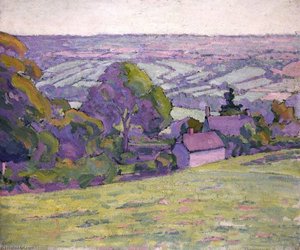
Robert Bevan's "Showing at Tattersall’s," completed in 1919, stands as a remarkable testament to British Modernism and a captivating portrayal of the social fabric surrounding horse racing during its golden age. Currently residing within the Ashmolean Museum’s collection in Oxford, this oil on panel painting transcends mere depiction; it captures an atmosphere brimming with energy and ambition—a feeling palpable even through reproductions. Bevan's masterful use of color and composition elevates the scene beyond a simple record of an event, transforming it into a symbol of dynamism and aspiration.The Scene Unfolds: Composition and Color Palette
At first glance, “Showing at Tattersall’s” presents a bustling tableau—a horse race unfolding against the backdrop of London’s streets. Bevan skillfully employs diagonal lines to guide the viewer's eye across the canvas, emphasizing the movement of the horses as they surge forward. The dominant hue is a striking shade of blue, chosen not just for its visual impact but also perhaps to represent prestige and nobility—associations fitting for Tattersall’s auction house, renowned for its history of selling thoroughbred racehorses. Complementing this bold color are warmer tones – reds and yellows – emanating from the spectators and highlighting the excitement of the competition. These contrasting hues create a harmonious balance that underscores the painting's emotional resonance.Bevan’s Style: Fauvist Influences and Camden Town Group Aesthetic
Bevan’s artistic approach aligns closely with the burgeoning Fauvist movement, spearheaded by artists like Matisse and Derain. Like his contemporaries, Bevan prioritized expressive color over strict realism, prioritizing emotion and sensation above meticulous detail. This stylistic choice is evident in the textured brushstrokes that imbue the canvas with a palpable sense of immediacy. Furthermore, Bevan’s affiliation with the Camden Town Group—a collective dedicated to documenting urban life—is discernible in the painting's depiction of London’s environment. The artist skillfully captures the gritty realism of the city alongside the grandeur of the horse racing spectacle, reflecting the group’s broader ambition to portray modern Britain in all its complexity.Symbolism Beyond the Race Track
Beyond the immediate visual drama of the race itself, “Showing at Tattersall’s” carries deeper symbolic significance. The horses represent not only physical prowess but also status and success—aspirations shared by both participants and observers. The positioning of figures around the horses underscores the importance of social interaction and hierarchy within this cultural institution. Bevan's deliberate framing invites contemplation on themes of ambition, tradition, and the pursuit of excellence – ideas that resonate powerfully even today.Emotional Impact: Capturing a Moment in Time
Ultimately, Bevan’s “Showing at Tattersall’s” succeeds in conveying an unforgettable impression—a snapshot of a pivotal moment in British cultural history. The painting's vibrant colors and dynamic composition evoke feelings of exhilaration and anticipation, transporting the viewer back to 1919 London. It serves as a poignant reminder that art can capture not just what is seen but also what is felt—a legacy cemented by Bevan’s enduring contribution to Modern British Art.Біографія митця
Robert Polhill Bevan (1865–1925): British Painter & Camden Town Group Founder
Robert Polhill Bevan, born in Hove in 1865, occupies a pivotal yet often understated position within the narrative of early 20th-century British art. Emerging from a Quaker background steeped in banking connections – his parents were Richard Alexander Bevan and Laura Maria Polhill – he defied conventional expectations to become a daring innovator, a key figure in the transition from Impressionism towards more radical explorations of color and form. His journey was one of constant experimentation, absorbing influences from across Europe while forging a distinctly personal artistic vision that would profoundly impact the development of modern art in Britain. Bevan’s early education at Westminster School of Art under Fred Brown provided a solid foundation, but it was his subsequent studies at the Académie Julian in Paris that truly ignited his creative spark. There, he encountered a constellation of rising stars – Paul Sérusier, Pierre Bonnard, Édouard Vuillard, and Maurice Denis – artists who were challenging academic conventions and embracing new approaches to painting. These encounters proved formative, exposing Bevan to the principles of synthetism and laying the groundwork for his future explorations.Brittany, Fauvism, and The Pursuit of Pure Color
The influence of Brittany on Bevan’s artistic development cannot be overstated. Two significant journeys in 1890 and 1891 immersed him in the atmosphere of Pont-Aven, a small coastal town that had become a magnet for artists seeking an alternative to Parisian salon culture. The bold colors and simplified forms championed by artists like Gauguin resonated deeply with Bevan, influencing his early drawings and prints. He was particularly drawn to the expressive use of pigment—a deliberate rejection of Impressionistic optical blending—and sought to capture the essence of Breton landscape through a technique that prioritized color over meticulous detail. This fascination with pure color foreshadowed the emergence of Fauvism on the continent, demonstrating Bevan’s willingness to embrace artistic movements that prioritized emotional impact and visual vibrancy. His painting “Courtyard” stands as a remarkable example of this proto-Fauvist approach, showcasing his bold chromatic palette and expressive brushwork—a stylistic choice that distinguished him from many of his contemporaries. The encounter with Gauguin wasn't merely inspirational; it fundamentally altered Bevan’s artistic sensibilities, prompting him to reconsider the role of color in conveying emotion and capturing the immediacy of experience.The Camden Town Group & Collaborative Artistic Vision
Bevan was not an artist who worked alone; he actively sought connection with like-minded individuals, playing a crucial role in the formation of several influential art groups. As a founding member of the Camden Town Group—alongside artists such as Spencer Gore and Charles Ginner—he joined forces with fellow painters determined to depict modern urban life and challenge established artistic norms. This collective spirit extended to his involvement with the London Group and the Cumberland Market Group, further demonstrating his commitment to progressive artistic movements. The group’s aim was to move beyond traditional academic painting, exploring new techniques and subjects that reflected the realities of contemporary British society—a bold undertaking that demanded a willingness to experiment and embrace unconventional approaches. Bevan's collaboration with fellow artists fostered a dynamic exchange of ideas, shaping his artistic vision and contributing to the broader evolution of British art during this period. He was particularly interested in capturing the atmosphere of London’s Camden Town—a vibrant hub of bohemian culture—through canvases infused with bold color and expressive brushstrokes.Technique & Artistic Expression: Divisionism and Beyond
Bevan's artistic technique evolved considerably throughout his career, reflecting his ongoing engagement with innovative approaches to painting. Initially influenced by Impressionistic principles—particularly the observation of light and color—he gradually adopted a divisionist or pointillist method, championed by artists like Georges Seurat. This technique involved applying tiny dots of pigment onto canvas, rather than blending colors together—a deliberate departure from Impressionism that prioritized visual impact and textural richness. His painting “Ploughing on the Downs” exemplifies this stylistic choice, demonstrating his mastery of divisionist principles and capturing the grandeur of the Sussex landscape with remarkable precision. Furthermore, Bevan’s exploration extended beyond divisionism; he experimented with various mediums and techniques—including lithography—to convey his artistic vision in diverse ways. His willingness to embrace experimentation underscored his belief that art should serve as a vehicle for conveying emotion and capturing the essence of experience—a conviction that resonated throughout his oeuvre.Legacy & Recognition: A Lasting Impression
Robert Polhill Bevan’s legacy extends far beyond his individual paintings. He is rightfully recognized as a pioneer of modern British art, particularly for his early adoption of Fauvist principles and his unwavering commitment to exploring innovative artistic techniques. His influence on subsequent generations of painters is undeniable, shaping the trajectory of British painting in the years leading up to World War I. Bevan’s contribution to the Camden Town Group was instrumental in fostering a collective artistic vision that challenged academic conventions and embraced new approaches to depicting modern life—a pivotal moment in British art history. He remained active until his death in 1925, continuing to produce paintings and prints that reflected his lifelong fascination with landscape and his dedication to capturing the beauty of the natural world. Bevan’s work is held in prominent collections across Britain and internationally—including Tate Gallery, Brighton Art Gallery, and The Fitzwilliam Museum—ensuring that his artistic vision continues to inspire audiences today. His bold experimentation and unwavering belief in expressive color cemented his place as one of the most important figures in British Modernism.Роберт Полхилл Бевен
1865 - 1925 , Великобританія
Короткі факти
- Artistic Movement Or Style: Фавизм, Дівізіонізм
- Artists Or Movements Influenced By This Artist: ['Камден Таун Группа']
- Artists Who Influenced This Artist:
- Валтер Сікерт
- Павло Gauguin
- Date Of Birth: 1865
- Date Of Death: 1925
- Full Name: Robert Polhill Bevan
- Nationality: Британський
- Notable Artworks:
- Поля у Блекдаун-Хиллс
- Курячий гніздо
- Дім Кенсінгтонський
- Place Of Birth: H Hove, Великобританія

Скляний варіант доступний лише для розмірів до 110 см