Переглянути в інтер'єрі
 Надіслати як листівку
 Поділитися
 Детальніше

 Завантажити
 Схожі експонати
 Рентгенівське дослідження
 Слайд-шоу
 Статистика
The survivor


 Читати далі
Гікле / Художній принт
Музейна якість друку جيкле або на полотні з оперативним виготовленням та різноманітними варіантами фінішної обробки. ( Замовити репродукцію ручної роботи Перейти до цифрових зображень)




P118B $10

P118H $10

P118W $10

P438Z $10

P508JH $12

P508YH $12

P805H $10

P805Z $10

P919BZ $10

P919G $10

P919XJ $10

P959ZH $10

P968JZ $12

W106C $8

W218G $10

W218JH $8

W218Y $10

W307PJ $10

W316G $10

W316PJ $8

W316Y $10

W398PJ $8

W4111J $10

W500HY $15

W500JH $15

W692G $12

W849H $8

W940BG $15

W953PJ $8




Обирайте з наших стандартних розмірів, що відповідають оригінальним пропорціям твору мистецтва.

Ви можете вказати власні розміри, щоб репродукція ідеально підійшла до конкретної рами або інтер'єру. Якщо обраний вами розмір не відповідає пропорціям оригіналу, ми або обріжемо полотно, або розширимо зображення за допомогою дзеркального відображення чи суцільної заливки країв. Перед початком виробництва вам буде надіслано цифровий макет для затвердження.
Будь ласка, зверніть увагу, що попередній перегляд на екрані не відображає фактичне обрізання або розширення. Тільки макет точно покаже фінальну композицію.
Хоча можливість замовлення індивідуальних розмірів доступна, ми рекомендуємо обирати формат із попередньо визначеного списку, щоб зберегти оригінальні пропорції.
Доставка по всьому світу () за 2 тижні замість стандартних 4/5 тижнів. (13 Вересень)

Безкоштовна експрес-доставка по всьому світу

Високоякісне лляне полотно

Повне страхове покриття доставки

Гарантія відшкодування митних зборів

Гарантія точного відтворення кольорів

Політика повернення протягом 100 днів (тільки у разі виявлення дефектів)

Гарантія повернення 100% коштів

Пропозиція на оптові замовлення
 Скляний варіант доступний лише для розмірів до 110 см

The survivor
Гікле / Художній принт
Розмір репродукції
-


Підсумкова вартість
$ 80
A Disturbing Domesticity: Unveiling René Magritte’s ‘The Survivor’
This 1950 oil painting by René Magritte is a masterclass in unsettling juxtaposition. It presents a seemingly ordinary domestic interior disrupted by the stark presence of a rifle, creating a powerful and enduring image that lingers long after viewing. The work isn't about glorifying weaponry or depicting heroic action; it’s about the insidious creep of violence into everyday life, and the anxieties simmering beneath a veneer of civility.Style & Technique: Surrealism Through Defamiliarization
Magritte, a pivotal figure in the Surrealist movement, employs his signature technique of *defamiliarization* here. Rather than relying on fantastical imagery, he renders commonplace objects with meticulous realism and places them within unexpected contexts. The painting’s strength lies in its hyper-realistic execution – observe the detailed wood grain of the floorboards, the subtle texture of the wallpaper, and the metallic sheen of the rifle itself. This precision amplifies the unsettling effect; Magritte doesn't distort reality, he *questions* it. His brushwork is controlled, building depth through layered colors, reminiscent of his earlier Impressionistic explorations but now serving a dramatically different emotional purpose.Composition & Color: A Study in Tension and Contrast
The composition centers the rifle as its dominant element, drawing the eye immediately to its dark form. Strong vertical lines – the gun itself, the wall paneling – create a sense of rigidity and formality, contrasted by the grounding stability of the horizontal floorboards. The repeating pattern of the wallpaper adds to this feeling of order, ironically highlighting the implied chaos signaled by the crimson stain beneath the weapon. The color palette is largely composed of warm tones—muted oranges and browns evoking aged elegance but also hinting at decay. This warmth is brutally interrupted by the rifle’s stark blackness and, crucially, the shocking splash of dark red – an undeniable symbol of bloodshed. Directional lighting casts long shadows, further emphasizing the gun's presence and contributing to the overall mood of mystery and foreboding.Historical Context & Symbolism: Echoes of Post-War Trauma
Created in 1950, just five years after the end of World War II, ‘The Survivor’ deeply resonates with the anxieties of a world grappling with immense loss and trauma. While Magritte rarely directly addressed political events, his work often reflects a broader sense of unease and disillusionment. The rifle isn't presented as an emblem of power or glory; it simply *exists*, casually leaning against a wall within what appears to be a comfortable home. This juxtaposition forces the viewer to confront the insidious presence of violence within everyday life. The opulent setting could symbolize societal structures, suggesting that brutality can lurk beneath even the most refined and orderly surfaces. The bloodstain isn’t merely graphic; it's a stark reminder of mortality and the fragility of peace.Emotional Impact & Interpretation: A Lingering Disquiet
‘The Survivor’ is not designed for passive enjoyment. It evokes feelings of discomfort, anxiety, and perhaps even dread. Magritte masterfully creates psychological tension, leaving much open to interpretation. Is this a scene depicting past violence? A looming threat? Or a meditation on the inherent destructive potential within humanity itself? The painting's power resides in its ambiguity; it doesn’t offer answers but compels us to confront uncomfortable questions about our world and ourselves. It is a hauntingly beautiful work that continues to resonate with viewers, serving as a potent reminder of the darkness that can exist even within seemingly civilized settings. It serves as a powerful statement on the human condition and the ever-present shadow of conflict.Key Features for Collectors & Designers
- Subject Matter: Still life with symbolic elements, exploring themes of violence, peace, and societal anxieties.
- Style: Surrealism, characterized by realism combined with unsettling juxtapositions.
- Color Palette: Warm tones (oranges, browns) contrasted with stark black and crimson red.
- Emotional Impact: Evokes feelings of discomfort, anxiety, and contemplation.
- Interior Design Applications: A striking focal point for living rooms, studies, or hallways. Its somber tones pair well with minimalist or mid-century modern aesthetics. Consider placement to encourage thoughtful conversation and reflection.
Біографія митця
Early Life and the Seeds of Surrealism
René Magritte, born René François Ghislain Magritte on November 21, 1898, in Lessines, Belgium, emerged into a world that would profoundly shape his enigmatic artistic vision. His early years were marked by an unsettling event – the suicide of his mother when he was just thirteen. The image of her body being recovered from the River Sambre, with her dress obscuring her face, became a haunting motif that would subtly permeate his later work, manifesting in veiled figures and a persistent exploration of hidden realities. This early trauma instilled within him a fascination with mystery, loss, and the unsettling power of what remains unseen. While details of his childhood remain somewhat elusive, it’s clear this formative experience laid the groundwork for his lifelong questioning of perception and representation. He began drawing lessons at age ten, revealing an innate inclination towards visual expression, but initially explored Impressionism before embarking on a path that would lead him to become one of the most significant figures in Surrealist art.Artistic Development and Influences
Magritte’s artistic journey was not immediate or straightforward. He studied at the Académie Royale des Beaux-Arts in Brussels, yet found its traditional methods stifling. His early work experimented with Futurism and Cubism, absorbing elements of these avant-garde movements but ultimately rejecting their purely formal concerns. It wasn't until encountering Giorgio de Chirico’s painting *The Song of Love* in 1922 that Magritte discovered a resonance that would irrevocably alter his artistic course. De Chirico’s dreamlike landscapes and unsettling juxtapositions unlocked within Magritte a new way of seeing – a world where the familiar could be rendered strange, and the ordinary imbued with profound mystery. This encounter sparked his commitment to Surrealism, though he often maintained a unique distance from its more overtly psychological or automatic approaches. He preferred a meticulous, almost clinical precision in his painting, using realistic techniques to depict illogical scenarios.The Heart of Surrealism: Challenging Reality
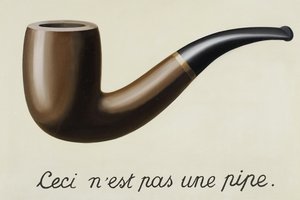
By 1926, Magritte had fully embraced the tenets of Surrealism, producing *Le Jockey Perdu (The Lost Jockey)*, widely considered his first truly surrealist work. However, his brand of Surrealism was distinct. He wasn’t interested in exploring the subconscious through free association or dream imagery in the manner of some of his contemporaries. Instead, Magritte sought to challenge viewers' perceptions of reality by presenting ordinary objects in unexpected contexts, forcing them to question their assumptions about the world around them. Iconic works like *The Treachery of Images (This is not a pipe)* (1929) brilliantly deconstructs the relationship between image and object, reminding us that a representation is never the thing itself. *Les Amants (The Lovers)* (1927-1928), with its shrouded figures, echoes the trauma of his mother’s death while simultaneously exploring themes of concealment and intimacy. *Time Transfixed* (1938) presents a locomotive bursting through a brick wall, disrupting our sense of space and time. And *The Human Condition* (1933), a canvas within a canvas, blurs the boundaries between representation and reality, prompting us to consider how we perceive and interpret the world.Later Life, Recognition, and Enduring Legacy
Despite initial struggles for recognition, Magritte’s work gradually gained prominence, particularly in the United States with exhibitions in 1936 and later retrospective shows at the Museum of Modern Art (1965) and the Metropolitan Museum of Art (1992). He remained politically engaged throughout his life, advocating for artistic autonomy. He continued to refine his signature style, exploring themes of repetition, illusion, and the power of language in paintings that are both intellectually stimulating and visually arresting. Magritte died on August 15, 1967, leaving behind a body of work that continues to captivate and challenge audiences worldwide. His influence extends far beyond the realm of painting, impacting pop art, minimalist art, conceptual art, and even advertising and film. Today, his paintings are held in major museum collections around the globe, including the Musées royaux des beaux-arts de Belgique in Brussels, which houses the Magritte Museum – dedicated entirely to his work and boasting the world’s largest collection of his creations.- Museum Collections: Musées royaux des beaux-arts de Belgique, Brussels; Magritte Museum.
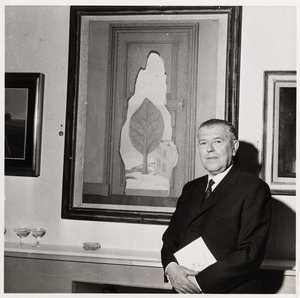
Рене Маґрітт
1898 - 1967 , Бельгія
Короткі факти
- Artistic Movement Or Style: Сюрреалізм
- Artists Or Movements Influenced By This Artist:
- Поп-арт
- Мінімалізм
- Концептуальне мистецтво
- Artists Who Influenced This Artist: ['Джорджо де Кіріко']
- Date Of Birth: 21 листопада 1898
- Date Of Death: 15 серпня 1967
- Full Name: René François Ghislain Magritte
- Nationality: Бельгійський
- Notable Artworks:
- Любовні
- Обман зображень
- Застиглий час
- Умова людини
- Place Of Birth: Лесене, Бельгія
Пов'язані статті
The Treachery of Images: Decoding René Magritte’s Surrealist Philosophy and the Paradox of Representation
Explore the profound mystery of René Magritte’s 'The Treachery of Images.' Dive into an expert analysis of his Surrealist philosophy, the paradox of representation, and how he challenged reality through the interplay of language and visual perception.

The Enduring Legacy of Oil on Canvas: Technique, History & Aesthetic Impact
Explore the rich history & techniques of oil painting – from Renaissance masters to Impressionism. Discover pigments, layering methods, and why this timeless medium endures. Expert insights for artists & art enthusiasts.
Топ-10 шедеврів сюрреалізму: картини, що змінили мистецтво | OriginalUniqueArt
Відкрийте для себе 10 шедеврів сюрреалізму від Далі, Магрітта та інших геніїв! Історія створення, унікальні техніки та вплив на мистецтво. Купуйте репродукції картин високої якості для вашого інтер'єру на OriginalUniqueArt.com.

Oil on Canvas: A Historical & Technical Exploration of a Timeless Artistic Medium
Explore the rich history & enduring techniques of oil painting on canvas. Discover the science behind its longevity, conservation practices, and contemporary relevance. Expert insights for art enthusiasts.

The Treachery of Images: Decoding René Magritte’s Surrealist Vision and the Paradox of Representation
Delve into the profound mysteries of René Magritte’s Surrealism. Explore an expert analysis of 'The Treachery of Images,' decoding the philosophical paradoxes and visual subversions that redefined modern art history for collectors and connoisseurs alike.