() ·

Картина, створена вручну спеціально для вас

Le Beau Monde

Олійная репродукція ручної роботи

Написана вручну олією на полотні у вашому розмірі та рамі, виготовлена на замовлення нашими художниками. ( Перейти до друку Перейти до цифрових зображень)

Опис експоната

Explore René Magritte’s 'Le Beau Monde,' a surreal masterpiece blending reality & illusion. Discover its dreamlike composition, unique style & timeless appeal. #Magritte #Surrealism

Біографія митця

Рене Маґрітт – бельгійський сюрреаліст, що створював загадкові та дивовижні картини, які кидають виклик нашому сприйняттю реальності. Відкрийте світ його шедеврів! #Маґрітт #Сюрреалізм

від ·

Розділ 1

Якого розміру вона має бути?

Гортайте, щоб змінити розмір; на зображенні ліворуч показано рамку її справжньої ширини. Пропорції оригіналу збережено.

Стандартний розмір
індивідуальний розмір
CM
INCH

Обирайте з наших стандартних розмірів, що відповідають оригінальним пропорціям твору мистецтва.

ширина
висота

Введіть необхідну ширину та висоту, щоб картина підійшла до вашої рами або стіни. Оскільки це ручний розпис, для зміни пропорцій художник може дописати трохи більше по краях або дещо обрізати композицію — вибір за вами. Перед початком роботи ми надішлемо вам цифровий макет для затвердження. Зображення, показане на цій сторінці, не є реальним результатом — лише макет відображає майбутній вигляд.

Розділ 2

Яким має бути спосіб доставки?

Оберіть тип країв натяжного полотна

Оберіть свою раму

Corner sample of the WhiteWrap canvas edge finish, stretched on масив дерева bars
Білий край ₴1
Corner sample of the BlurSideWrap canvas edge finish, stretched on масив дерева bars
Розмитий край ₴1
Corner sample of the ExtendedWrap canvas edge finish, stretched on масив дерева bars
З розширенням ₴1
Corner sample of the P118B picture frame: формований полістирол, 5 cm wide and 3 cm thick
P118B ₴10
Corner sample of the P118H picture frame: формований полістирол, 5 cm wide and 3 cm thick
P118H ₴10
Corner sample of the P118W picture frame: формований полістирол, 5 cm wide and 3 cm thick
P118W ₴10
Corner sample of the P438Z picture frame: формований полістирол, 5.5 cm wide and 3.5 cm thick
P438Z ₴10
Corner sample of the P508JH picture frame: формований полістирол, 7 cm wide and 3.5 cm thick
P508JH ₴12
Corner sample of the P508YH picture frame: формований полістирол, 7 cm wide and 3.5 cm thick
P508YH ₴12
Corner sample of the P805H picture frame: формований полістирол, 5 cm wide and 3.5 cm thick
P805H ₴10
Corner sample of the P805Z picture frame: формований полістирол, 5 cm wide and 3.5 cm thick
P805Z ₴10
Corner sample of the P919BZ picture frame: формований полістирол, 7 cm wide and 3.5 cm thick
P919BZ ₴10
Corner sample of the P919G picture frame: формований полістирол, 7 cm wide and 3.5 cm thick
P919G ₴10
Corner sample of the P919XJ picture frame: формований полістирол, 7 cm wide and 3.5 cm thick
P919XJ ₴10
Corner sample of the P959ZH picture frame: формований полістирол, 5 cm wide and 3 cm thick
P959ZH ₴10
Corner sample of the P968JZ picture frame: формований полістирол, 6 cm wide and 4 cm thick
P968JZ ₴12
Corner sample of the W106C picture frame: масив дерева, 5 cm wide and 3 cm thick
W106C ₴8
Corner sample of the W218G picture frame: масив дерева, 5 cm wide and 3 cm thick
W218G ₴10
Corner sample of the W218JH picture frame: масив дерева, 5 cm wide and 3 cm thick
W218JH ₴8
Corner sample of the W218Y picture frame: масив дерева, 5 cm wide and 3 cm thick
W218Y ₴10
Corner sample of the W307PJ picture frame: масив дерева, 6 cm wide and 3 cm thick
W307PJ ₴10
Corner sample of the W316G picture frame: масив дерева, 6 cm wide and 3 cm thick
W316G ₴10
Corner sample of the W316PJ picture frame: масив дерева, 6 cm wide and 3 cm thick
W316PJ ₴8
Corner sample of the W316Y picture frame: масив дерева, 6 cm wide and 3 cm thick
W316Y ₴10
Corner sample of the W398PJ picture frame: масив дерева, 5 cm wide and 3 cm thick
W398PJ ₴8
Corner sample of the W4111J picture frame: масив дерева, 6.5 cm wide and 3.5 cm thick
W4111J ₴10
Corner sample of the W500HY picture frame: масив дерева, 7 cm wide and 5 cm thick
W500HY ₴15
Corner sample of the W500JH picture frame: масив дерева, 7 cm wide and 5 cm thick
W500JH ₴15
Corner sample of the W692G picture frame: масив дерева, 8 cm wide and 4 cm thick
W692G ₴12
Corner sample of the W849H picture frame: масив дерева, 5 cm wide and 3 cm thick
W849H ₴8
Corner sample of the W940BG picture frame: масив дерева, 7.5 cm wide and 4.5 cm thick
W940BG ₴15
Corner sample of the W953PJ picture frame: масив дерева, 6 cm wide and 3.5 cm thick
W953PJ ₴8
Corner sample of the H24-GOLD picture frame: різьблене дерево з левкасом, 10 cm wide and 6 cm thick
H24-GOLD ₴30
Corner sample of the H24-SILVER picture frame: різьблене дерево з левкасом, 10 cm wide and 6 cm thick
H24-SILVER ₴30
Corner sample of the H36-GOLD picture frame: різьблене дерево з левкасом, 15 cm wide and 6.5 cm thick
H36-GOLD ₴45
Corner sample of the H36-SILVER picture frame: різьблене дерево з левкасом, 15 cm wide and 6.5 cm thick
H36-SILVER ₴45

Багет: . Загальний розмір із рамою: .

Розділ 3

Хто це малює, і чи має щось змінитися?

Приклади того, що можна змінити: замінити обличчя на фото клієнта; додати домашню тварину (наприклад, замінити кота на собаку); додати приховане повідомлення на фоні; змінити пейзаж або елементи фону.
Після оформлення замовлення команда OriginalUniqueArt.com надішле клієнту електронний лист із запитом інструкцій та надасть попередній макет для перегляду

Доставка по всьому світу () за 3–4 тижні замість стандартних 5 тижнів. (7 Листопад). Без жодних компромісів у якості.

Розділ 4

Останні штрихи

Табличка, як у музеї?

Деталі гравірування на бронзовій табличці

This elegant plaque features the artist's name and the title of the artwork, finely engraved for a timeless presentation.

It is made from bronze with a refined, elegant finish. The text is precisely laser-engraved for a sharp and permanent result. Measuring 9x2 cm, the plaque is compact yet easy to read. It's built to be durable and scratch-resistant, offering a professional, museum-quality look. Mounting is simple thanks to the included adhesive backing.

Деталі прозорої акрилової таблички

The plaque includes essential engraved details such as the artist's name, the title of the artwork, the date it was created, the type of media used-like oil on canvas or watercolor-a brief description of the piece, and a QR code that links to the complete artwork information.

It is crafted from clear acrylic, offering a sleek, modern appearance. The text is UV-engraved in black to ensure strong visual contrast. With a size of 10x15 cm, it ensures optimal readability. It comes equipped with two metal hooks for secure wall mounting. The plaque is designed to be weather-resistant, making it suitable for various environments, and it includes interactive features that work seamlessly with smartphone scanning.

Деталі чорної акрилової таблички

This elegant plaque includes engraved information such as the artist's name, the title of the artwork, the date it was created, the type of media used (like oil on canvas or watercolor), a short description of the artwork, and a QR code for quick access to more information.

The plaque itself is made from refined black acrylic with a premium finish. The text is laser-engraved in white for high contrast and readability. Its size is 10x15 cm, designed to be easy to read. It comes with two metal hooks for professional mounting. The design is sleek and fits any interior style. It is also weather-resistant and durable, with built-in digital integration for mobile compatibility.

Захисний лак?

Коли вам це потрібно?

Розділ 5

Ваша картина, згідно із вашим замовленням

Le Beau Monde

Матеріал репродукції

Розмір репродукції

-

Видатний майстер-художник

Більше деталізації, витонченості та додаткового часу на створення твору

-

Рама для репродукції

-

-

Для творів мистецтва або репродукцій, розмір яких перевищує 105 см (приблизно 41 дюйм) з будь-якого боку, рама доставляється у вигляді розібраного комплекту. Такий метод гарантує безпечну доставку та запобігає пошкодженням під час транспортування.

Потребує професійного збирання — це не продукт для самостійного виготовлення (DIY).
Комплект має бути зібраний, а полотно натягнуте досвідченим майстром багетних робіт із використанням клейового дерева (не входить у комплект), щипців для натягування полотна та затискачів, щоб підрамник залишався рівним під час висихання клею. Неправильне збирання або нерівномірне натягування полотна може призвести до незворотного пошкодження твору мистецтва, що не підпадає під дію нашої гарантії.

  • У комплект входять усі бруски з цільного дерева, точно вирізані за розміром.

  • Збирається за допомогою гвинтів, що входять до комплекту, а також клейового розчину для кутових з'єднань, який не входить до комплекту і має бути підготовлений вашим майстром.

  • Потрібні професійні інструменти, які не входять до комплекту: щипці для натягування полотна (натягувач) та затискачі, щоб утримувати рейки рівно під час висихання клею.

Важливо:
Для з'єднання кутів потрібен клей для дерева, перекладини необхідно затиснути струбцинами до повного висихання клею, а для натягування полотна на зібрану раму знадобляться щипці для натягування полотна. Жоден із цих інструментів не входить до комплекту. Будь ласка, проконсультуйтеся з досвідченим майстром багетного оформлення перед замовленням рами такого розміру.

Етикетка експоната

-

-

Захисний лак

Глянцевий лак (підсилює яскравість кольорів, захищає від світла та вологи)

-

Персоналізувати мій витвір

Приклади можливих змін: заміна обличчя на фото клієнта; додавання домашньої тварини (наприклад, заміна кота на собаку); додавання прихованого повідомлення на фоні; зміна пейзажу або елементів фону.

-

Прискорено

Доставка по всьому світу () за 3–4 тижні замість стандартних 5 тижнів. (7 Листопад). Без компромісів у якості.

-

Експрес-доставка

Доставка по всьому світу () протягом 5 тижнів. (14 Листопад).

Включено в ціну

Підсумкова вартість

₴ 13469

Загальна вартість ₴ 13469

Скляний варіант доступний лише для розмірів до 110 см

До кожного замовлення додається

  • Безкоштовна експрес-доставка по всьому світу
  • Високоякісне лляне полотно
  • Повне страхове покриття доставки
  • Гарантія повернення митних зборів
  • Гарантія точного відтворення кольорів
  • Політика повернення протягом 100 днів (лише у разі виявлення дефектів)
  • Гарантія повернення 100% коштів
  • Пропозиція на оптові замовлення

Le Beau Monde: A Surrealist Reverie by René Magritte

Le Beau Monde (“The Beautiful World”) is a quintessential example of René Magritte’s signature surrealist style, inviting viewers into a world where the familiar becomes unsettlingly strange. Painted sometime during his prolific career, this work encapsulates Magritte's lifelong exploration of perception, reality, and the power of representation.

Subject & Composition

The painting presents an impossible scene: a large, rectangular prism seemingly suspended in a cloud-filled sky. Draped with vibrant blue curtains – suggesting an interior space inexplicably existing outdoors – the prism dominates the composition. Below, on a flat plane that could be land or simply another surface, rests a single green apple and a small plant. This juxtaposition of elements—the architectural form against the natural world, the indoor versus outdoor—creates a deliberate sense of disorientation. The verticality of the prism and curtains is powerfully contrasted by the expansive horizontality of the sky and ground plane, drawing the eye upwards while simultaneously grounding it with the earthly objects below.

Style & Technique

Magritte masterfully employs a realistic technique to depict utterly unrealistic scenarios. His brushwork is meticulous, rendering each element – from the texture of the clouds to the sheen on the apple – with precise detail. This hyperrealism amplifies the surreal effect; by presenting illogical combinations with such clarity, Magritte forces us to question what we see and how we interpret it. The painting’s style firmly places it within the Surrealist movement, which sought to unlock the creative potential of the unconscious mind.

Historical Context & Influences

Born in Belgium in 1898, René Magritte initially experimented with Impressionism and Futurism before fully embracing Surrealism in the 1920s. He was deeply influenced by the writings of Sigmund Freud and sought to visually represent the illogicality and dreamlike quality of the subconscious. Unlike some Surrealists who embraced automatism (spontaneous creation), Magritte favored a more calculated approach, carefully constructing his images with precise symbolism. His work emerged during a period of significant social and political upheaval, reflecting a broader sense of uncertainty and disillusionment following World War I.

Symbolism & Interpretation

The symbolism in Le Beau Monde is deliberately ambiguous, inviting multiple interpretations. The prism could represent the constraints of human perception or the artificial structures we impose on reality. The curtains hint at concealment and illusion – what lies *behind* the perceived world? The apple, a recurring motif in Magritte’s work, often symbolizes temptation, knowledge, or simply the everyday object elevated to symbolic significance. The overall effect is one of quiet mystery, prompting viewers to contemplate the nature of reality itself.

Emotional Impact & Aesthetic Appeal

Le Beau Monde evokes a sense of both wonder and unease. The dreamlike quality of the painting creates a captivating atmosphere, while its inherent illogicality challenges our expectations. Its restrained color palette – blues, greens, and soft whites – contributes to the overall mood of serenity tinged with melancholy. This artwork is not merely a visual experience; it’s an invitation to philosophical contemplation.

Collecting & Interior Design

A reproduction of Le Beau Monde would be a striking addition to any art collection or interior space. Its surrealist aesthetic lends itself well to modern and contemporary settings, adding a touch of intellectual sophistication and visual intrigue. The painting’s cool color palette complements minimalist décor while providing a captivating focal point. It's an ideal piece for those seeking artwork that sparks conversation and encourages deeper thought.

Питання та відповіді

Де я можу знайти статистику про «Le Beau Monde» роботи Рене Маґрітт?

Сторінка Статистика переглядів для роботи «Le Beau Monde» роботи Рене Маґрітт містить статистику публічних переглядів: кількість щомісячних відвідувань цього твору, порівняння з найбільш популярними роботами митця та географію відвідувачів.

Хто є автором твору "Le Beau Monde"?

Автором твору «Le Beau Monde» є Рене Маґрітт. Робота внесена до каталогу під іменем Рене Маґрітт.

Наскільки гармонійно поєднуються кольори у творі "Le Beau Monde"?

«Le Beau Monde» роботи Рене Маґрітт демонструє Висока колірна єдність колірну гармонію.

Більше про цю картину

Переглянути в інтер'єрі Перегляд в AR Перейти до друку Перейти до цифрових зображень Надіслати як листівку
Деталі витвору Посібник Додати до улюблених Завантажити Схожі екземпляри Рентгенівське дослідження Слайд-шоу Питання та відповіді Статистика

У цифрах

  • 29доступні варіанти обрамлення
  • стандартні розміри, у власних пропорціях
  • 5тижнів на написання та доставку

Про оригінал

Рене Маґрітт

Рене Маґрітт

1898 - 1967, Бельгія

Короткі факти про Рене Маґрітт

  • Artistic Movement Or Style: Сюрреалізм
  • Artists Or Movements Influenced By This Artist:
    • Поп-арт
    • Мінімалізм
    • Концептуальне мистецтво
  • Artists Who Influenced This Artist: ['Джорджо де Кіріко']
  • Date Of Birth: 21 листопада 1898
  • Date Of Death: 15 серпня 1967
  • Full Name: René François Ghislain Magritte
  • Nationality: Бельгійський
  • Notable Artworks:
    • Любовні
    • Обман зображень
    • Застиглий час
    • Умова людини
  • Place Of Birth: Лесене, Бельгія

Біографія митця

Early Life and the Seeds of Surrealism

René Magritte, born René François Ghislain Magritte on November 21, 1898, in Lessines, Belgium, emerged into a world that would profoundly shape his enigmatic artistic vision. His early years were marked by an unsettling event – the suicide of his mother when he was just thirteen. The image of her body being recovered from the River Sambre, with her dress obscuring her face, became a haunting motif that would subtly permeate his later work, manifesting in veiled figures and a persistent exploration of hidden realities. This early trauma instilled within him a fascination with mystery, loss, and the unsettling power of what remains unseen. While details of his childhood remain somewhat elusive, it’s clear this formative experience laid the groundwork for his lifelong questioning of perception and representation. He began drawing lessons at age ten, revealing an innate inclination towards visual expression, but initially explored Impressionism before embarking on a path that would lead him to become one of the most significant figures in Surrealist art.

Artistic Development and Influences

Magritte’s artistic journey was not immediate or straightforward. He studied at the Académie Royale des Beaux-Arts in Brussels, yet found its traditional methods stifling. His early work experimented with Futurism and Cubism, absorbing elements of these avant-garde movements but ultimately rejecting their purely formal concerns. It wasn't until encountering Giorgio de Chirico’s painting *The Song of Love* in 1922 that Magritte discovered a resonance that would irrevocably alter his artistic course. De Chirico’s dreamlike landscapes and unsettling juxtapositions unlocked within Magritte a new way of seeing – a world where the familiar could be rendered strange, and the ordinary imbued with profound mystery. This encounter sparked his commitment to Surrealism, though he often maintained a unique distance from its more overtly psychological or automatic approaches. He preferred a meticulous, almost clinical precision in his painting, using realistic techniques to depict illogical scenarios.

The Heart of Surrealism: Challenging Reality

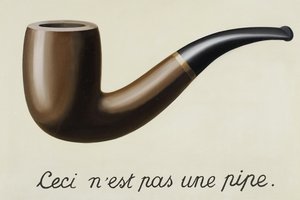
By 1926, Magritte had fully embraced the tenets of Surrealism, producing *Le Jockey Perdu (The Lost Jockey)*, widely considered his first truly surrealist work. However, his brand of Surrealism was distinct. He wasn’t interested in exploring the subconscious through free association or dream imagery in the manner of some of his contemporaries. Instead, Magritte sought to challenge viewers' perceptions of reality by presenting ordinary objects in unexpected contexts, forcing them to question their assumptions about the world around them. Iconic works like *The Treachery of Images (This is not a pipe)* (1929) brilliantly deconstructs the relationship between image and object, reminding us that a representation is never the thing itself. *Les Amants (The Lovers)* (1927-1928), with its shrouded figures, echoes the trauma of his mother’s death while simultaneously exploring themes of concealment and intimacy. *Time Transfixed* (1938) presents a locomotive bursting through a brick wall, disrupting our sense of space and time. And *The Human Condition* (1933), a canvas within a canvas, blurs the boundaries between representation and reality, prompting us to consider how we perceive and interpret the world.

Later Life, Recognition, and Enduring Legacy

Despite initial struggles for recognition, Magritte’s work gradually gained prominence, particularly in the United States with exhibitions in 1936 and later retrospective shows at the Museum of Modern Art (1965) and the Metropolitan Museum of Art (1992). He remained politically engaged throughout his life, advocating for artistic autonomy. He continued to refine his signature style, exploring themes of repetition, illusion, and the power of language in paintings that are both intellectually stimulating and visually arresting. Magritte died on August 15, 1967, leaving behind a body of work that continues to captivate and challenge audiences worldwide. His influence extends far beyond the realm of painting, impacting pop art, minimalist art, conceptual art, and even advertising and film. Today, his paintings are held in major museum collections around the globe, including the Musées royaux des beaux-arts de Belgique in Brussels, which houses the Magritte Museum – dedicated entirely to his work and boasting the world’s largest collection of his creations.
  • Museum Collections: Musées royaux des beaux-arts de Belgique, Brussels; Magritte Museum.
Magritte's enduring legacy lies in his ability to make us see the familiar anew, to question our assumptions about reality, and to appreciate the power of art to provoke thought and inspire wonder. He wasn’t simply painting images; he was crafting visual paradoxes that continue to resonate with viewers decades after their creation, solidifying his position as a true master of Surrealism and a pivotal figure in 20th-century art.