
 Переглянути в інтер'єрі
 Надіслати як листівку
 Поділитися
 Деталі витвору
 Посібник

 Завантажити
 Схожі екземпляри
 Рентгенівське дослідження
 Слайд-шоу
 Q&A
Q&A Статистика
Attempting the Impossible

- 105.0 x 81.0 cm


 Розгорнути текст
Отримайте файл, готовий до друку, якість якого значно перевищує якість веб-попереднього перегляду. Кожне цифрове зображення, яке ми продаємо, створене на основі високої роздільної здатності з нашої бази даних — зазвичай від 5 000 до 15 000 пікселів по ширині — тому ви можете впевнено друкувати у великому форматі, робити щільну обрізку або відтворювати найдрібніші деталі.
Жоден файл не залишається в нашій студії без уваги. Експерт із цифрової обробки звіряє кольори з оригінальною картиною та за потреби коригує їх, після чого покращує чіткість і деталізацію за допомогою професійних інструментів ретушування — завжди зберігаючи вірність мазкам пензля та стилю художника. Результатом є зображення, яке виглядає як справжня картина, а не як відскановане фото з накладеними фільтрами.
Ви затверджуєте результат перед завершенням замовлення: протягом 72 годин наш експерт надішле зображення електронною поштою для вашого перегляду. Не задоволені результатом? Ви можете попросити про внесення змін чи виправлень або отримати відшкодування, якщо якість не відповідає вашим очікуванням.
Саме на таку якість покладаються видавництва, дизайн-студії, галереї та друкарні.
Цифрове зображення
Завантажте файл високої роздільної здатності для особистого використання, друку та творчих проєктів. ( Перейти до друку Замовити картину ручної роботи)
Переваги кожного замовлення цифрових зображень
Експертна цифрова доставка з гарантією якості
Обираючи OriginalUniqueArt.com, ви отримуєте не просто зображення — ви отримуєте професійно вдосконалений цифровий витвір мистецтва, створений з надзвичайною точністю та підкріплений гарантією задоволення. Ось усе, що автоматично додається до вашого замовлення:

Швидка доставка на email
Ваш цифровий файл із зображенням високої роздільної здатності буде надісланий вам електронною поштою протягом 72 годин після оформлення замовлення — він буде готовий до негайного використання.

Цифровий файл із покращенням ШІ
Ваш витвір мистецтва професійно оптимізовано за допомогою передових інструментів штучного інтелекту та ручної корекції, що забезпечує максимальну деталізацію, чіткість і точність передачі кольорів.

Безкоштовне повторне завантаження назавжди
Випадково видалили або втратили файл? Не хвилюйтеся — ми надішлемо його вам повторно в будь-який час безкоштовно.

Без митних зборів — завжди
Насолоджуйтесь вашим витвором мистецтва миттєво без жодних мит, зборів або плати за доставку — цифрові завантаження завжди не оподатковуються.

Гарантія точності кольорів
Ми гарантуємо максимально точне відтворення оригінальних кольорів на вашому цифровому зображенні завдяки використанню професійних інструментів та систем управління кольором.

100-денна гарантія задоволення
Якщо ви не задоволені придбаним цифровим зображенням, ми внесемо правки або повернемо 100% вартості протягом 100 днів — без зайвих запитань.

Гарантія повернення 100% коштів
Незадоволені покупкою? Отримайте повне повернення коштів протягом 100 днів після отримання цифрового файлу — без зайвих запитань.

Знижки на оптові замовлення
Купуйте 3 зображення — заощаджуйте 10% — Купуйте 5 — заощаджуйте 15% — Купуйте 10+ — заощаджуйте 20%. Чудово підходить для творчих проєктів, галерей та агентств.
Exploring the Paradox of Creation: René Magritte’s “Attempting the Impossible”
René Magritte's "Attempting the Impossible," painted in 1928, isn’t merely a depiction of an artist and his muse; it’s a masterful distillation of Surrealist principles—a deliberate provocation designed to unsettle viewers and invite contemplation about the nature of representation itself. The painting captures a moment frozen in time: a man dressed impeccably in a suit and tie stands beside a nude woman, holding a paintbrush poised before her face as if attempting to capture her essence on canvas. This seemingly straightforward tableau belies a complex web of symbolism and artistic innovation that speaks volumes about Magritte’s intellectual engagement with the anxieties of his era.A Surrealist Dialogue Between Reality and Illusion
Magritte firmly established himself within the burgeoning Surrealist movement spearheaded by André Breton, rejecting rational thought in favor of exploring the subconscious mind. “Attempting the Impossible” exemplifies this ethos through its unsettling juxtaposition of familiar elements—a man, a woman, a paintbrush, bowls—arranged in an illogical configuration that defies conventional visual logic. The nude woman’s obscured face is particularly significant; it represents not just physical vulnerability but also the elusive nature of identity and perception. Magritte deliberately obscures what we *should* see, forcing us to confront the limitations of our gaze and questioning whether art can ever truly grasp or convey the complexities of human experience. Breton championed the idea that art should liberate the imagination from the constraints of reason, and Magritte brilliantly embodies this ambition.Technique and Composition: Mastering Illusion
Magritte’s meticulous technique contributes powerfully to the painting's overall effect. Executed in oil on canvas, he employed a smooth blending style—characteristic of École de Paris—that lends an air of understated elegance to the scene. However, it is his masterful use of color and perspective that elevates “Attempting the Impossible” beyond mere visual representation. The muted palette – predominantly browns and creams – reinforces the painting’s sense of stillness and contemplation. Furthermore, Magritte utilizes a slightly flattened perspective, subtly manipulating spatial depth to heighten the feeling of unease and disorientation. This deliberate distortion underscores the Surrealist preoccupation with destabilizing accepted notions of reality.Historical Context: The Aftermath of Dada and Nietzsche
The painting emerged from the intellectual ferment following World War I, influenced by thinkers like Friedrich Nietzsche who questioned traditional morality and championed the idea that truth is subjective. Dada’s rejection of logic and reason fueled a desire to dismantle established artistic conventions—a rebellion against bourgeois values that Magritte wholeheartedly embraced. Surrealism sought to tap into the primal forces of emotion and instinct, rejecting academic art's focus on idealized beauty in favor of confronting disturbing images and unsettling ideas. “Attempting the Impossible” reflects this spirit of defiance, presenting a visual paradox that challenges viewers to reconsider their assumptions about what constitutes genuine artistic expression.Emotional Resonance: A Meditation on Representation
Ultimately, "Attempting the Impossible" resonates deeply with its viewer through its exploration of fundamental questions concerning perception and representation. Magritte’s deliberate obfuscation invites us to consider how art shapes our understanding of the world—and conversely, how our perceptions constrain artistic endeavors. The painting lingers in the mind long after viewing, prompting reflection on themes of vulnerability, desire, and the impossibility of capturing the intangible essence of human experience. It serves as a poignant reminder that true artistry lies not merely in replicating reality but in transforming it into something profoundly evocative and intellectually stimulating—a testament to Magritte’s enduring legacy as one of Surrealism's most astute innovators.Питання та відповіді
Чи доступне завантаження "Attempting the Impossible" у високій роздільній здатності?
«Attempting the Impossible» доступний у форматі завантаження цифрового зображення високої роздільної здатності, який можна придбати безпосередньо на сторінці Цифрове зображення високої якості.
Звідки приходять відвідувачі «Attempting the Impossible» роботи Рене Маґрітт?
Статистика про «Attempting the Impossible» роботи Рене Маґрітт доступна на сторінці Статистика переглядів твору: щомісячна кількість переглядів цього твору, кількість переглядів робіт художника, а також розподіл останніх відвідувачів за країнами та мовами.
Якому етапу кар'єри Рене Маґрітт відповідає дата створення «Attempting the Impossible» (1928 рік)?
Зважаючи на дату створення — 1928, твір "Attempting the Impossible" належить до Mature Period творчості Рене Маґрітт.
Біографія митця
Early Life and the Seeds of Surrealism
René Magritte, born René François Ghislain Magritte on November 21, 1898, in Lessines, Belgium, emerged into a world that would profoundly shape his enigmatic artistic vision. His early years were marked by an unsettling event – the suicide of his mother when he was just thirteen. The image of her body being recovered from the River Sambre, with her dress obscuring her face, became a haunting motif that would subtly permeate his later work, manifesting in veiled figures and a persistent exploration of hidden realities. This early trauma instilled within him a fascination with mystery, loss, and the unsettling power of what remains unseen. While details of his childhood remain somewhat elusive, it’s clear this formative experience laid the groundwork for his lifelong questioning of perception and representation. He began drawing lessons at age ten, revealing an innate inclination towards visual expression, but initially explored Impressionism before embarking on a path that would lead him to become one of the most significant figures in Surrealist art.Artistic Development and Influences
Magritte’s artistic journey was not immediate or straightforward. He studied at the Académie Royale des Beaux-Arts in Brussels, yet found its traditional methods stifling. His early work experimented with Futurism and Cubism, absorbing elements of these avant-garde movements but ultimately rejecting their purely formal concerns. It wasn't until encountering Giorgio de Chirico’s painting *The Song of Love* in 1922 that Magritte discovered a resonance that would irrevocably alter his artistic course. De Chirico’s dreamlike landscapes and unsettling juxtapositions unlocked within Magritte a new way of seeing – a world where the familiar could be rendered strange, and the ordinary imbued with profound mystery. This encounter sparked his commitment to Surrealism, though he often maintained a unique distance from its more overtly psychological or automatic approaches. He preferred a meticulous, almost clinical precision in his painting, using realistic techniques to depict illogical scenarios.The Heart of Surrealism: Challenging Reality
By 1926, Magritte had fully embraced the tenets of Surrealism, producing *Le Jockey Perdu (The Lost Jockey)*, widely considered his first truly surrealist work. However, his brand of Surrealism was distinct. He wasn’t interested in exploring the subconscious through free association or dream imagery in the manner of some of his contemporaries. Instead, Magritte sought to challenge viewers' perceptions of reality by presenting ordinary objects in unexpected contexts, forcing them to question their assumptions about the world around them. Iconic works like *The Treachery of Images (This is not a pipe)* (1929) brilliantly deconstructs the relationship between image and object, reminding us that a representation is never the thing itself. *Les Amants (The Lovers)* (1927-1928), with its shrouded figures, echoes the trauma of his mother’s death while simultaneously exploring themes of concealment and intimacy. *Time Transfixed* (1938) presents a locomotive bursting through a brick wall, disrupting our sense of space and time. And *The Human Condition* (1933), a canvas within a canvas, blurs the boundaries between representation and reality, prompting us to consider how we perceive and interpret the world.Later Life, Recognition, and Enduring Legacy
Despite initial struggles for recognition, Magritte’s work gradually gained prominence, particularly in the United States with exhibitions in 1936 and later retrospective shows at the Museum of Modern Art (1965) and the Metropolitan Museum of Art (1992). He remained politically engaged throughout his life, advocating for artistic autonomy. He continued to refine his signature style, exploring themes of repetition, illusion, and the power of language in paintings that are both intellectually stimulating and visually arresting. Magritte died on August 15, 1967, leaving behind a body of work that continues to captivate and challenge audiences worldwide. His influence extends far beyond the realm of painting, impacting pop art, minimalist art, conceptual art, and even advertising and film. Today, his paintings are held in major museum collections around the globe, including the Musées royaux des beaux-arts de Belgique in Brussels, which houses the Magritte Museum – dedicated entirely to his work and boasting the world’s largest collection of his creations.- Museum Collections: Musées royaux des beaux-arts de Belgique, Brussels; Magritte Museum.
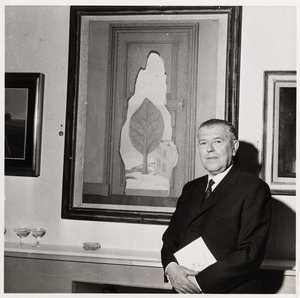
Рене Маґрітт
1898 - 1967 , Бельгія
Короткі факти
- Artistic Movement Or Style: Сюрреалізм
- Artists Or Movements Influenced By This Artist:
- Поп-арт
- Мінімалізм
- Концептуальне мистецтво
- Artists Who Influenced This Artist: ['Джорджо де Кіріко']
- Date Of Birth: 21 листопада 1898
- Date Of Death: 15 серпня 1967
- Full Name: René François Ghislain Magritte
- Nationality: Бельгійський
- Notable Artworks:
- Любовні
- Обман зображень
- Застиглий час
- Умова людини
- Place Of Birth: Лесене, Бельгія