Високе Відродження · 1520
The Transfiguration (detail) (Рафаель Санті, 1520)
Рафаель Санті (1483–1520) створив The Transfiguration (detail). Дата створення — 1520. Він належить до напряму Високе Відродження. Виконано в Олія на панелі.
- 1520
- Олія на панелі

 Переглянути в інтер'єрі

 Картина олією ручної роботи
 Надіслати як листівку
 Поділитися
 Інформаційна картка


 Завантажити
 Схожі екземпляри
 Рентгенівське дослідження
 Слайд-шоу
 Питання та відповіді

 Статистика
The Transfiguration (detail) коротко
- Назва
- The Transfiguration (detail)
- Художник
- Рафаель Санті (1483–1520)
- Рік народження митця
- Урбіно, Італія
- Дата
- 1520
- Матеріал
- Олія на панелі
- Період
- — Відродження
Що зображено на The Transfiguration (detail)?
A Divine Revelation Captured in Light and Color
The Raphael (Raffaello Sanzio Da Urbino)’s *The Transfiguration*, completed in 1520, stands as an unparalleled achievement of High Renaissance artistry—a testament to Raphael’s mastery of perspective, color theory, and humanist ideals. Currently residing within the Pinacoteca Vaticana, this monumental painting transcends mere representation; it embodies a profound spiritual narrative rooted in Christian theology. Commissioned by Cardinal Giulio de' Medici (later Pope Clement VII), *The Transfiguration* exemplifies the artistic fervor that characterized Rome during its papal ascendancy.- Subject Matter: The artwork depicts the biblical episode recounted in Matthew, Mark, and Luke—Jesus’ ascension to Mount Tabor alongside Moses and Elijah. This dramatic scene portrays Christ transforming before his disciples' eyes into a radiant figure bathed in heavenly light, symbolizing divine glory and spiritual transcendence.
- Style & Technique: Raphael skillfully employs pyramidal composition—a hallmark of Renaissance art—to create stability and grandeur. The meticulous attention to detail is evident throughout the painting, from the folds of Christ’s robe to the expressions on the faces of Moses and Elijah, demonstrating Raphael's dedication to anatomical accuracy and realistic portrayal. Fresco technique was utilized, ensuring durability and preserving the vibrancy of color for centuries.
Historical Context: The Renaissance Spirit Embodied
Painted at the apex of the Italian Renaissance—a period marked by intellectual curiosity, artistic innovation, and humanist revival—*The Transfiguration* reflects the broader cultural landscape of its time. Raphael’s work aligns seamlessly with the prevailing fascination for classical ideals and biblical narratives, demonstrating a desire to elevate human experience through contemplation of divine beauty. The painting's placement within the cathedral of S. Giusto in Narbonne underscores its significance as a devotional artwork intended to inspire awe and reverence.
Symbolism: Light, Revelation, and Heavenly Grace
The pervasive luminescence dominating *The Transfiguration* serves as a central symbol—representing divine illumination and spiritual enlightenment. Moses and Elijah, figures revered for their prophetic roles in Jewish tradition, stand alongside Christ, symbolizing law and prophecy respectively – representing the Old Testament and New Testament faiths united. The birds perched atop Mount Tabor are interpreted as emblems of freedom and divine grace, furthering the painting’s overarching message of redemption and spiritual ascension.
Emotional Impact: A Moment Frozen in Time
*The Transfiguration* continues to captivate viewers with its breathtaking beauty and profound emotional resonance. Raphael's masterful manipulation of color—particularly the golden hues illuminating Christ—evokes feelings of serenity, majesty, and spiritual contemplation. The painting’s enduring appeal lies in its ability to convey a timeless narrative of faith, hope, and divine revelation—a masterpiece that secures Raphael’s place among the greatest artists of all time.
Discover More About This Iconic Artwork
For a deeper understanding of *The Transfiguration* and its artistic legacy, explore resources such as Wikipedia (
Зображення високої роздільної здатності The Transfiguration (detail)

Суспільне надбання: художник помер у 1520 році.
Інші розміри, кадри та цитування →Рафаель Санті, The Transfiguration (detail) (1520). Суспільне надбання
Відповіді на запитання про The Transfiguration (detail)
У якому році було створено «The Transfiguration (detail)» роботи Рафаель Санті?
«The Transfiguration (detail)» роботи Рафаель Санті було створено у 1520 році.
Яка техніка використана у творі "The Transfiguration (detail)"?
Для створення «The Transfiguration (detail)» Рафаель Санті використав(ла) техніку Олія на панелі. Саме ця техніка визначає матеріальну природу оригінального твору.
Чи не захищений твір "The Transfiguration (detail)" авторським правом?
«The Transfiguration (detail)» роботи Рафаель Санті перебуває у є суспільним надбанням — термін дії авторського права закінчився. Цей статус визначає правила відтворення зображення твору.
Хто є автором твору "The Transfiguration (detail)"?
«The Transfiguration (detail)» приписують Рафаель Санті.
До якого стилю належить "The Transfiguration (detail)"?
Мистецький напрям, до якого належить «The Transfiguration (detail)» роботи Рафаель Санті, — це Високе Відродження. Така класифікація дозволяє розмістити цей твір у контексті суміжних митців та творів мистецтва.
До якого періоду творчості Рафаель Санті належить твір "The Transfiguration (detail)"?
«The Transfiguration (detail)» належить до Mature Period творчого шляху Рафаель Санті. Ця класифікація пов’язує твір із етапом становлення митця.
Скільки років було Рафаель Санті, коли було створено «The Transfiguration (detail)»?
Рафаель Санті створив(ла) «The Transfiguration (detail)» у віці 37 років. Митець народився(лася) у 1483, а дата створення твору — 1520.
Чи є твір «The Transfiguration (detail)» авторства Рафаель Санті суспільним надбанням, і чому?
«The Transfiguration (detail)» за авторством Рафаель Санті перебуває у є суспільним надбанням — термін дії авторського права закінчився. Термін дії авторського права розраховується з року смерті митця; Рафаель Санті помер(ла) у 1520.
Про художника Рафаель Санті

1483–1520, Італія
Рафаель Санті
Життя та постать Рафаеля Рафаель, відомий в історії під різними іменами, серед яких Раффаелло Санціо, Раффаелло Санті та Раффаелло Санціо да Урбіно, був центральною постаттю італійського Високого Відродження. Його життя було визначене подвійним майстерством у живописі та архітектурі — такою універсальністю, що дозволяла йому безшовно переходити від інтимного масштабу портрета до монументальних вимог папського будівництва. Він народився 6 квітня 1483 року в Урбіно, Італія, у світі, сповненому інтелектуальної та мистецької активності. Його кар'єра відзначилася неймовірною продуктивністю, що вимагала управління великою майстернею для задоволення потреб його покровителів.
Також за участю Рафаель Санті
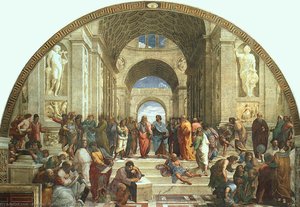 Афінська школа1511
 Сікстінська Мадонна1513
 Трансфігурація Ісуса Христа1520
 Шлюб Діви Марії1504
Есе до твору The Transfiguration (detail)
 Who Made The Transfiguration? The Story of Raphael's Final MasterpieceDiscover the artist behind The Transfiguration and the dramatic shift in style that defines this High Renaissance masterpiece
 Masterpieces of Perfection: The Top 25 Greatest Artworks by RaphaelJourney through the sublime beauty of the High Renaissance with our curated list of Raphael's top 25 masterpieces. From iconic Madonnas to …
 16th century Italian paintersMasterpieces by Titian, Michelangelo, and Raphael define the Italian Renaissance. Explore the full collection online at OriginalUniqueArt.c…