
 Переглянути в інтер'єрі
 Надіслати як листівку
 Поділитися
 Деталі витвору
 Посібник

 Завантажити
 Схожі екземпляри
 Рентгенівське дослідження
 Слайд-шоу
 Питання та відповіді
 Статистика
Radha in the Moonlight

- 146.0 x 105.0 cm


 Розгорнути текст
Гікле / Художній принт
Друк جيкле або на полотні музейної якості з оперативним виготовленням та різноманітними варіантами фінішної обробки. ( Замовити картину ручної роботи Перейти до цифрових зображень)




P118B ₴10

P118H ₴10

P118W ₴10

P438Z ₴10

P508JH ₴12

P508YH ₴12

P805H ₴10

P805Z ₴10

P919BZ ₴10

P919G ₴10

P919XJ ₴10

P959ZH ₴10

P968JZ ₴12

W106C ₴8

W218G ₴10

W218JH ₴8

W218Y ₴10

W307PJ ₴10

W316G ₴10

W316PJ ₴8

W316Y ₴10

W398PJ ₴8

W4111J ₴10

W500HY ₴15

W500JH ₴15

W692G ₴12

W849H ₴8

W940BG ₴15

W953PJ ₴8




Обирайте з наших стандартних розмірів, що відповідають оригінальним пропорціям твору мистецтва.

Введіть необхідну ширину та висоту, щоб принт ідеально підійшов до вашої рами або стіни. Принт можна лише обрізати, але не можна зробити більшим за оригінал, тому при зміні пропорцій частина зображення буде втрачена. Перед друком ми надсилаємо вам цифровий макет для затвердження. Зображення на цій сторінці не відображає реальну обрізку — її можна побачити лише на макеті.
Доставка по всьому світу () за 2 тижні замість стандартних 4/5 тижнів. (4 Листопад)

Безкоштовна експрес-доставка по всьому світу

Високоякісне лляне полотно

Повне страхове покриття доставки

Гарантія повернення митних зборів

Гарантія точного відтворення кольорів

Політика повернення протягом 100 днів (лише у разі виявлення дефектів)

Гарантія повернення 100% коштів

Пропозиція на оптові замовлення
 Скляний варіант доступний лише для розмірів до 110 см

Radha in the Moonlight
Гікле / Художній принт
Розмір репродукції
-


Підсумкова вартість
₴ 3651
A Vision of Divine Love: Raja Ravi Varma’s *Radha in the Moonlight*
Raja Ravi Varma's *Radha in the Moonlight*, painted in 1890, stands as a pinnacle of Indian Romanticism and a testament to his unparalleled skill in synthesizing Western academic training with deeply rooted Hindu iconography. This captivating portrait transcends mere representation; it embodies the essence of the ‘uttama nayika,’ the ideal woman figure from classical Sanskrit literature – a being of profound beauty, intelligence, and spiritual grace. The painting’s enduring appeal lies not just in its technical brilliance but also in its ability to evoke a timeless narrative of love, devotion, and the merging of earthly and divine realms.
- Subject & Narrative: At its heart, *Radha in the Moonlight* depicts Radha, the beloved consort of Krishna, poised on the precipice of their legendary romance. The scene captures a moment of anticipation, perhaps just as Krishna emerges from the trees, hinting at the passionate love play that defines their mythology.
- Technique & Style: Ravi Varma’s mastery is immediately apparent in his meticulous rendering of form and texture. Executed with the precision characteristic of academic painting – a style he adopted after studying in London – the work showcases a remarkable understanding of light, shadow, and anatomical detail. The use of rich pigments, particularly in the vibrant hues of Radha's attire and the shimmering water, contributes to the painting’s luminous quality.
- Historical Context: Created during a period of significant cultural exchange between India and Europe, *Radha in the Moonlight* reflects Ravi Varma’s innovative approach. He skillfully adapted European techniques – particularly in his use of perspective and composition – while firmly grounding them within the conventions of Indian art tradition. His royal patronage further enabled him to explore ambitious themes and experiment with scale, culminating in works that were both groundbreaking and deeply resonant with contemporary audiences.
Symbolism & Iconography
The painting is laden with symbolic meaning, drawing upon a rich tapestry of Hindu mythology and iconography. The presence of the *pooja thali* – a platter adorned with flowers and sweetmeats – immediately establishes Radha’s role as a devotee engaged in ritual worship. This gesture signifies her reverence for Krishna and underscores the central theme of their relationship: a harmonious blend of earthly love and divine devotion. The rocks upon which she sits represent stability and grounding, while the glimmering water symbolizes purity and transformation. The setting itself – a serene landscape with trees and mountains – evokes a sense of timelessness and spiritual refuge.
- Krishna’s Absence: Notably, Krishna himself is absent from the scene. This deliberate omission emphasizes Radha's central role as the object of devotion and highlights her inner world of longing and yearning.
- Traditional Attire: Radha’s traditional Indian attire – a *sari* – further reinforces her identity as an embodiment of classical Indian aesthetics and values. The intricate details of her clothing, rendered with exquisite precision, speak to the importance of adornment and beauty in Hindu culture.
Emotional Impact & Artistic Legacy
*Radha in the Moonlight* possesses a profound emotional impact, captivating viewers with its serene beauty and evocative atmosphere. Ravi Varma’s ability to convey Radha's inner state – her intelligence, sensitivity, and longing – elevates this painting beyond a mere depiction of a mythological figure. It is a powerful meditation on love, devotion, and the human condition. Raja Ravi Varma’s work has had an enduring legacy, influencing generations of Indian artists and solidifying his place as one of the most important figures in the history of modern Indian art. This reproduction offers a unique opportunity to experience the full beauty and emotional depth of this iconic masterpiece.
Size:** 146 x 105 cm Date:** 1890 Artist:** Raja Ravi Varma (1848-1906)Питання та відповіді
Які реальні розміри має «Radha in the Moonlight» роботи Раджа Раві Варма?
Розміри оригіналу «Radha in the Moonlight» роботи Раджа Раві Варма становлять 146 x 105 cm. Репродукції можна замовити в інших розмірах із збереженням тих самих пропорцій.
Чи можу я переглянути "Radha in the Moonlight" у форматі повноекранного слайд-шоу?
«Radha in the Moonlight» роботи Раджа Раві Варма можна переглянути у форматі слайд-шоу на сторінці Слайд-шоу цього твору.
Який розмір друку рекомендується для «Radha in the Moonlight»?
Для роботи "Radha in the Moonlight" рекомендується розмір друку Large. Також доступні інші розміри з тими ж пропорціями.
Біографія митця
The Princely Brush: Raja Ravi Varma and the Dawn of Modern Indian Painting
Raja Ravi Varma, a name that echoes through the halls of Indian art history, was more than just a painter; he was a cultural architect who skillfully blended European academic techniques with the vibrant soul of Hindu mythology. Born on April 29, 1848, in the opulent confines of Kilimanoor Palace near Trivandrum, Kerala, his life unfolded as a remarkable synthesis of aristocratic privilege and an innate artistic spirit. He wasn’t merely capturing images; he was breathing life into ancient stories, imbuing them with human emotion and psychological depth – a revolutionary shift for Indian art at the time. Ravi Varma's lineage traced back to the royal family of Kilimanoor, a dynasty deeply intertwined with the Travancore kingdom, a connection that provided him with unparalleled access to courtly life and artistic traditions. His uncle, Raja Raja Varma, a respected artist himself, nurtured young Ravi’s talent, introducing him to the fundamentals of drawing and painting within the established Tanjore School framework. However, Ravi's ambition extended far beyond mere imitation; he yearned to master techniques that would allow him to portray not just likeness but also the very essence of human experience – joy, sorrow, longing, and devotion.A Fusion of Worlds: Technique and Inspiration
Raja Ravi Varma’s artistic journey took a dramatic turn during his travels and through interactions with British officials stationed in India. He became utterly captivated by the realism and technical precision of European academic painting, meticulously studying its principles – perspective, anatomy, light, and shadow. Unlike many of his contemporaries who simply adopted these styles superficially, Ravi Varma ingeniously adapted them to serve distinctly Indian subjects. His canvases transformed into vibrant stages for scenes from the Ramayana, the Mahabharata, and the Puranas, populated by gods and goddesses rendered with a newfound naturalism that was both startlingly familiar and profoundly moving. He didn’t merely illustrate religious narratives; he imbued them with human emotion and psychological complexity, creating figures that seemed to breathe with life. This wasn't simply copying Western styles; it was a deliberate act of translation – taking the tools of European art and applying them to the rich tapestry of Indian mythology. His mastery of oil painting, a relatively new medium in India at the time, allowed him to achieve an unprecedented level of detail and luminosity, further enhancing the emotional impact of his work. Consider, for example, *Hansa Damayanthi*, where the heroine’s longing gaze and delicate posture convey a depth of feeling previously unseen in Indian art. *The Maharani of Travancore*, with its regal composure and intricate detailing, exemplifies Varma's ability to capture both outward appearance and inner character – a testament to his profound understanding of human psychology.Democratizing Art: Lithographs and Public Appeal
Recognizing that original paintings were largely inaccessible to the common Indian population, Raja Ravi Varma embarked on a bold initiative: establishing the Raja Ravi Varma Fine Arts Lithographic Press in 1894. This groundbreaking venture allowed for the mass production of affordable lithographs based on his most celebrated works. Suddenly, images of Hindu deities and mythological scenes were no longer confined to temples or palaces; they adorned homes across India, becoming objects of worship, cultural pride, and accessible art for a wider audience. The lithographs weren’t merely reproductions; they were carefully crafted interpretations that captured the essence of Varma's originals – his attention to detail, his emotional depth, and his unique artistic vision. This act of “democratizing art” had a profound impact on Indian society, fostering a greater appreciation for visual culture and shaping popular perceptions of religious iconography. The press itself was a remarkable achievement, utilizing German machinery imported specifically for the purpose. It’s worth noting that due to financial difficulties, the press was eventually sold to Germans – a poignant reminder of the challenges faced by an artist striving to break new ground.Royal Patronage and Artistic Travels
Ravi Varma's career unfolded against a backdrop of shifting political landscapes and evolving artistic tastes. He served as a court painter for several princely states, including Travancore, Mewar, Baroda, and Mysore, each experience enriching his artistic repertoire and exposing him to diverse cultural influences. His ability to seamlessly blend traditional Indian aesthetics with European techniques earned him the respect of royalty and connoisseurs alike. He traveled extensively throughout India during the late 19th century, often accompanied by his brother Raja Varma, meticulously documenting people and landscapes for his paintings. These journeys weren’t merely expeditions; they were a quest to understand the soul of India – its customs, traditions, and spiritual beliefs. This deep immersion in Indian culture profoundly shaped his artistic vision, informing his choice of subjects, his portrayal of characters, and his overall aesthetic sensibility.Legacy and Enduring Influence
Raja Ravi Varma passed away on October 2, 1906, leaving behind a legacy that continues to inspire artists and shape the cultural landscape of India. His work transcended mere artistic achievement; it represented a pivotal moment in Indian art history – a bridge between tradition and modernity, between East and West. He challenged conventional norms, embraced innovation, and skillfully blended the rich heritage of Hindu mythology with the techniques of European academic painting. His influence can be seen in the works of subsequent generations of Indian artists who sought to create a distinctly national artistic identity. Museums like The Raja Ravi Varma Heritage Foundation in Bangalore and The Ganesh Shivaswamy Foundation preserve and celebrate his art, ensuring that his vision endures for future generations. His paintings remain powerful testaments to his genius – masterpieces that capture the beauty, spirituality, and cultural richness of India, reminding us of a time when an artist dared to redefine what it meant to be Indian in the modern world.Exploring Varma’s World Today
For those seeking to delve deeper into the world of Raja Ravi Varma, numerous resources are available. The Kiran Nadar Museum of Art in New Delhi houses a significant collection of his works alongside other modern and contemporary Indian artists. Online platforms like OriginalUniqueArt offer high-quality reproductions of his iconic paintings, allowing art enthusiasts worldwide to experience his artistry firsthand. Furthermore, scholarly articles and books continue to shed light on his life, techniques, and lasting impact. The Wikipedia page dedicated to Raja Ravi Varma provides a comprehensive overview of his biography and artistic achievements, while Google Arts & Culture offers insightful stories about his life and work, including contributions from his great-great granddaughter.- Explore artworks: Discover masterpieces like "Portrait of a Gentleman," "Hansa Damayanthi," and "The Maharani of Travancore" through online databases.
- Visit museums: Immerse yourself in Varma’s legacy at The Raja Ravi Varma Heritage Foundation, The Ganesh Shivaswamy Foundation, and the Kiran Nadar Museum of Art.
- Further research: Consult Wikipedia and Google Arts & Culture for detailed biographical information and scholarly insights.
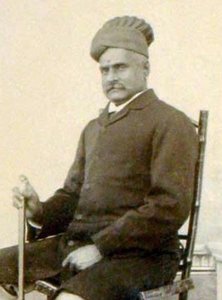
Раджа Раві Варма
1848 - 1906 , Індія
Короткі факти
- Artistic Movement Or Style: Академічний та індыйський синтез
- Artists Or Movements Influenced By This Artist: ['Сучасне індійське мистецтво']
- Artists Who Influenced This Artist: ['Європейські майстри']
- Date Of Birth: 29 квiвітня 1848
- Date Of Death: 2 жовтня 1906
- Full Name: Raja Ravi Varma
- Nationality: Індійський
- Notable Artworks:
- Ганса Дамаянтьї
- Махарані Траванкору
- Place Of Birth: Кiлманоор, Індія
Пов'язані статті

Panoramic Visions of Empire: The Daniells’ Artistic Collaboration & Legacy
Explore the captivating 'Oriental Scenery' by Thomas & William Daniell. Discover their pioneering aquatint prints of India, imperial context, artistic collaboration, and lasting legacy. A deep dive for history lovers.
Joseph Henry Sharp: Capturing the Spirit of the Plains – Life, Art & Legacy
Explore the life & art of Joseph Henry Sharp, a founding member of the Taos Society of Artists renowned for his realistic depictions of Native American culture and Western landscapes. Discover his legacy with OriginalUniqueArt.
Shadow Catcher: Edward S. Curtis & the Ethnographic Portraiture of a Vanishing West
Explore the life & work of Edward S. Curtis, the 'Shadow Catcher,' and his groundbreaking photographic documentation of Native American cultures. Discover iconic images from *The North American Indian* and a critical look at his lasting legacy.

Raja Ravi Varma: Bridging Tradition & Modernity in 19th-Century Indian Art
Explore the life & art of Raja Ravi Varma, a pioneer who fused European techniques with Indian iconography. Discover his iconic paintings, lasting legacy, and influence on modern Indian art at OriginalUniqueArt.
George Catlin: Witnessing & Representing Indigenous Life on the American Frontier
Explore the captivating art of George Catlin, renowned for his vivid portraits & landscapes documenting Native American life on the frontier. Discover a vanishing world through stunning paintings and historical context.

