

 Надіслати
 Поділитися
 Деталі
 Посібник

 Завантажити
 Схожі предмети колекціонування
 Слайд-шоу
 Статистика переглядів
Rape of Proserpine
 Fresco
- Renaissance
 1509
1509- Renaissance
 79.0 x 81.0 cm
 Читати далі
Придбайте цифрову копію високої роздільної здатності з покращеною якістю, що значно перевершує онлайн-перегляд.
Кожен файл ретельно підготовлений нашими фахівцями за допомогою сучасних інструментів та професійної ручної ретуші. Ми гарантуємо виняткову чіткість, точну передачу кольору та високу деталізацію кожного зображення.
Фінальний файл надсилається електронною поштою протягом 72 годин і оптимізований для негайного використання у професійних виданнях та друкованих матеріалах. Таку якість обирають провідні дизайнерські студії, видавництва та галереї.
Цифрове зображення
Завантажте файл високої роздільної здатності для особистого використання, друку та творчих проєктів. ( Перейти до друку Купити картину ручної роботи)
Що входить у кожне замовлення цифрових зображень
Експертна цифрова доставка з гарантією якості
Обираючи OriginalUniqueArt.com, ви отримуєте не просто зображення — ви отримуєте професійно вдосконалений цифровий витвір мистецтва, створений з надзвичайною точністю та підкріплений гарантією задоволення. Ось усе, що автоматично додається до вашого замовлення:

Швидка доставка на email
Ваш цифровий файл із зображенням високої роздільної здатності буде надісланий вам електронною поштою протягом 72 годин після оформлення замовлення — він буде готовий до негайного використання.

Цифровий файл із покращенням ШІ
Ваш витвір мистецтва професійно оптимізовано за допомогою передових інструментів штучного інтелекту та ручної корекції, що забезпечує максимальну деталізацію, чіткість і точність передачі кольорів.

Безкоштовне повторне завантаження назавжди
Випадково видалили або втратили файл? Не хвилюйтеся — ми надішлемо його вам повторно в будь-який час безкоштовно.

Без митних зборів — завжди
Насолоджуйтесь вашим витвором мистецтва миттєво без жодних мит, зборів або плати за доставку — цифрові завантаження завжди не оподатковуються.

Гарантія точності кольорів
Ми гарантуємо максимально точне відтворення оригінальних кольорів на вашому цифровому зображенні завдяки використанню професійних інструментів та систем управління кольором.

100-денна гарантія задоволення клієнта
Якщо ви не задоволені придбаним цифровим зображенням, ми внесемо правки або повернемо 100% вартості протягом 100 днів — без зайвих запитань.

Гарантія повернення 100% коштів
Незадоволені покупкою? Отримайте повне повернення коштів протягом 100 днів після отримання цифрового файлу — без зайвих запитань.

Знижки на оптові замовлення
Купуйте 3 зображення — заощаджуйте 10% — Купуйте 5 — заощаджуйте 15% — Купуйте 10+ — заощаджуйте 20%. Чудово підходить для творчих проєктів, галерей та агентств.
A Celestial Drama in Fresco
In the delicate, sun-drenched fragments of Pinturicchio’s Rape of Proserpine, we encounter a moment of profound mythological upheaval captured with the exquisite grace of the Italian Renaissance. This fresco, once part of a magnificent ceiling within the Palazzo del Magnifico in Siena, serves as a breathtaking window into a world where the divine and the mortal collide. The scene depicts the harrowing abduction of Proserpine by Pluto, a narrative that vibrates with movement and tension. As the goddess is swept away by a group of men on horseback, the viewer is immediately struck by the dynamic composition; there is a palpable sense of urgency in the way the figures surge across the frame, their forms intertwined in a chaotic yet choreographed dance of power and distress.
The artistry of Pinturicchio lies in his ability to balance the raw emotion of the subject matter with a refined, decorative elegance. While the theme is one of violence and loss, the execution remains remarkably poised. The artist utilizes a vibrant palette that breathes life into the ancient story, using rich pigments to highlight the muscularity of the horses and the flowing drapery of the figures. Small, unexpected details—such as the presence of birds watching from the periphery—add a layer of naturalistic charm to the epic drama, grounding the mythological event in a world that feels both otherworldly and intimately real.
The Legacy of the Golden House
To understand the visual language of this masterpiece, one must look back to the shadows of Imperial Rome. Pinturicchio was an artist deeply enamored with antiquity, and in this work, he draws direct inspiration from the Golden House of Nero. The very structure of the composition, designed to mimic a vaulted ceiling, evokes the grandeur of Roman imperial splendor. By integrating motifs derived from ancient sarcophagi and classical architecture, Pinturicchio bridged the gap between the rediscovered glory of the past and the burgeoning humanism of his own era.
This piece was not merely an isolated creation but part of a larger, cohesive decorative program for Pandolfo Petrucci, the ruler of Siena. The room in which this fresco resided was a triumph of Renaissance luxury, featuring intricate stuccowork and majolica tile floors that complemented the narrative intensity of the walls. For the modern collector or interior designer, owning a reproduction of such a work means bringing more than just an image into a space; it means inviting a piece of historical continuity and architectural prestige into the home.
An Invitation to Timeless Elegance
For those seeking to curate an environment of intellectual depth and aesthetic splendor, the Rape of Proserpine offers unparalleled inspiration. The painting’s ability to command attention through its intricate details and emotional resonance makes it a centerpiece capable of transforming any room. Whether placed in a formal study or a grand living area, the work serves as a conversation starter, evoking the sophisticated tastes of the Italian Renaissance masters.
A high-quality reproduction of this fresco allows the delicate textures of the original stuccowork and the luminous quality of the pigments to be appreciated in a contemporary setting. It is an opportunity to surround oneself with the storytelling power of the 16th century, capturing the essence of Pinturicchio’s unique ability to blend Gothic delicacy with Renaissance strength. In every brushstroke of a faithful reproduction, one finds the enduring spirit of an age that celebrated beauty, myth, and the eternal drama of the human condition.
Запитання та відповіді
Яке використання та простір рекомендуються для «Rape of Proserpine» Пинтурикьо?
«Rape of Proserpine» Пинтурикьо рекомендується для Focal, ідеально — у Restaurant. Поєднання способу використання та простору допоможе визначити, де саме пасуватиме репродукція.
Яка техніка виконання та розміри твору «Rape of Proserpine» Пинтурикьо?
Оригінальна робота «Rape of Proserpine» Пинтурикьо — це Fresco, розміром 79 x 81 cm. Техніка та розмір описують оригінальний об'єкт.
Наскільки гармонійними є кольори у творі «Rape of Proserpine» Пинтурикьо?
Кольори твору «Rape of Proserpine» Пинтурикьо демонструють Strong Color Unity гармонію. Гармонія описує взаємозв'язок кольорів між собою.
Біографія митця
Bernardino di Betto, Known as Pinturicchio
Bernardino di Betto, known to the world as Pinturicchio – a nickname affectionately bestowed upon him for his diminutive stature – emerged from the artistic heartland of Perugia in 1454. His life unfolded during a period of immense cultural ferment, the High Renaissance blossoming across Italy, yet Pinturicchio carved out a unique path, one that blended the lingering elegance of Gothic traditions with the burgeoning innovations of the era. While giants like Leonardo da Vinci and Michelangelo strove for anatomical perfection and dramatic realism, Pinturicchio cultivated a style characterized by refined grace, intricate detail, and a vibrant, decorative sensibility. His journey wasn’t one of revolutionary upheaval, but rather of exquisite refinement – a testament to his skill in transforming established forms into something uniquely captivating.Early Years and Training
Pinturicchio’s formative years remain somewhat shrouded in mystery, though it is believed he honed his skills under the guidance of lesser-known Perugian masters like Bonfigli and Fiorenzo di Lorenzo. These early influences undoubtedly instilled in him a deep appreciation for Gothic aesthetics—a preference for luminous colors, stylized figures, and elaborate ornamentation—which would permeate his subsequent artistic endeavors. Giorgio Vasari recounts that Pinturicchio served as an assistant to Pietro Perugino, a leading figure of the Umbrian school, a collaboration that undeniably shaped his artistic development. This connection proved crucial in securing a commission for the Sistine Chapel in Rome during the early 16th century.The Sistine Chapel Frescoes: A Collaboration of Giants
According to Vasari, Pinturicchio served as an assistant to Pietro Perugino, a collaboration that undoubtedly shaped his artistic development. This connection proved crucial in securing a commission for the Sistine Chapel in Rome during the early 16th century. Working alongside some of the most celebrated artists of the time – Sandro Botticelli, Domenico Ghirlandaio, and Luca Signorelli among them – Pinturicchio contributed to this monumental project, though sadly his frescoes were later destroyed to make way for Michelangelo’s *Last Judgement*. This experience, however, served as a crucial stepping stone, exposing him to new influences and solidifying his reputation. The Sistine Chapel was where it is believed that Pinturicchio was collaborating with Perugino to some extent. His fresco, *Assumption of Mary*, executed in 1481 on the altar wall of the Sistine Chapel, was destroyed in 1535 to make way for Michelangelo’s *Last Judgement*.The Borgia Apartments: A Triumph of Decorative Art
The years between 1484 and 1492 marked a period of intense productivity for Pinturicchio, primarily centered in Rome. He received commissions from prominent families like the Della Rovere, adorning chapels within the church of Santa Maria del Popolo with his distinctive style. These works showcased his mastery of fresco technique, characterized by delicate figures, richly ornamented backgrounds, and a penchant for intricate decorative motifs. However, it was his work for Pope Alexander VI – Rodrigo Borgia – that truly cemented his place in art history. Commissioned to decorate the Borgia Apartments within the Vatican Palace between 1492 and 1494, Pinturicchio created a suite of rooms lavishly adorned with frescoes depicting mythological scenes, portraits, and allegorical representations. These apartments, though controversial due to their association with the infamous Borgia family, stand as a remarkable example of Renaissance decorative art, revealing Pinturicchio’s ability to blend classical motifs with his own unique aesthetic sensibility. The use of gold leaf, vibrant colors, and illusionistic techniques created an atmosphere of opulent splendor, reflecting the power and ambition of the papal court.Legacy and Enduring Influence
Pinturicchio's artistic legacy is one of refined elegance and meticulous craftsmanship. While he may not have possessed the same level of fame as some of his contemporaries, his influence on subsequent generations of artists is undeniable. His unique style – a harmonious blend of Gothic grace and Renaissance innovation – resonated with those who appreciated subtlety and detail. He demonstrated an exceptional ability to create visually stunning compositions that were both aesthetically pleasing and intellectually stimulating. His work in the Piccolomini Library in Siena, completed shortly before his death in 1513, showcases a clarity of form and color that foreshadows the High Renaissance style. Pinturicchio’s art continues to captivate viewers today, offering a glimpse into a world of beauty, refinement, and artistic mastery – a world where the delicate touch of a “little painter” left an indelible mark on the landscape of Italian Renaissance art.- Notable Works: Frescoes in the Sistine Chapel (destroyed), Borgia Apartments in the Vatican, Piccolomini Library in Siena
- Influences: Perugino, Umbrian School of Painting, Gothic traditions
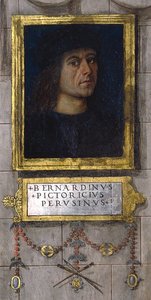
Пинтурикьо
1454 - 1513 , Італія
Коротко про автора
- Artistic Movement Or Style: Ренесанс
- Artists Who Influenced This Artist:
- Перугино
- Бонфілі
- Фиренцо ди Лоренцо
- Date Of Birth: 1454
- Full Name: Bernardino di Betto
- Nationality: Італійський
- Notable Artworks:
- Фрески Сикстинской капеллы
- Апартаменты Борджиа
- Святой Августин
- Place Of Birth: Perugia, Italy