

 Переглянути в інтер'єрі
 Надіслати як листівку
 Поділитися
 Деталі витвору
 Посібник

 Завантажити
 Схожі екземпляри
 Рентгенівське дослідження
 Слайд-шоу
 Статистика
Music Lesson
 Олія на полотні
- Настінне мистецтво
- Rococo
 1760
1760 62.0 x 49.0 cm
 Державні музеї Берліна
 Розгорнути текст
Олійная репродукція ручної роботи
Написана вручну олією на полотні у вашому розмірі та рамі, виготовлена на замовлення нашими художниками. ( Перейти до друку Перейти до цифрових зображень)




P118B ₴10

P118H ₴10

P118W ₴10

P438Z ₴10

P508JH ₴12

P508YH ₴12

P805H ₴10

P805Z ₴10

P919BZ ₴10

P919G ₴10

P919XJ ₴10

P959ZH ₴10

P968JZ ₴12

W106C ₴8

W218G ₴10

W218JH ₴8

W218Y ₴10

W307PJ ₴10

W316G ₴10

W316PJ ₴8

W316Y ₴10

W398PJ ₴8

W4111J ₴10

W500HY ₴15

W500JH ₴15

W692G ₴12

W849H ₴8

W940BG ₴15

W953PJ ₴8




Обирайте з наших стандартних розмірів, що відповідають оригінальним пропорціям твору мистецтва.

Введіть необхідну ширину та висоту, щоб картина підійшла до вашої рами або стіни. Оскільки це ручний розпис, для зміни пропорцій художник може дописати трохи більше по краях або дещо обрізати композицію — вибір за вами. Перед початком роботи ми надішлемо вам цифровий макет для затвердження. Зображення, показане на цій сторінці, не є реальним результатом — лише макет відображає майбутній вигляд.
Після оформлення замовлення команда OriginalUniqueArt.com зв'яжеться з клієнтом електронною поштою для отримання інструкцій та надасть попередній макет
Доставка по всьому світу () за 3–4 тижні замість стандартних 5 тижнів. (26 Жовтень). Без жодних компромісів у якості.

Безкоштовна експрес-доставка по всьому світу

Високоякісне лляне полотно

Повне страхове покриття доставки

Гарантія повернення митних зборів

Гарантія точного відтворення кольорів

Політика повернення протягом 100 днів (лише у разі виявлення дефектів)

Гарантія повернення 100% коштів

Пропозиція на оптові замовлення
 Скляний варіант доступний лише для розмірів до 110 см

Music Lesson
Матеріал репродукції
Розмір репродукції
-


Підсумкова вартість
₴ 13454
A Glimpse into the Rococo Heart of Venice
Pietro Longhi’s “Music Lesson,” painted in 1760, isn't merely a depiction of a musical gathering; it’s a meticulously crafted portal into the vibrant and subtly complex world of 18th-century Venetian society. Far removed from the grand narratives favored by many of his contemporaries, Longhi chose to illuminate the intimate dramas unfolding within the opulent homes of Venice – a departure that cemented his reputation as the ‘Venetian Hogarth,’ capturing the everyday lives with a keen eye for detail and a touch of wry observation. This painting offers a rare intimacy, inviting us into a private salon where social graces, burgeoning desires, and quiet amusement intertwine.

The scene unfolds within a richly appointed interior, dominated by the warm glow of candlelight that casts long shadows and highlights the luxurious textures of the red velvet sofa and dark blue wall adorned with a discreetly placed nude figure – a subtle nod to classical ideals woven into the fabric of Venetian culture. Four figures are engaged in this tableau: a woman seated on the sofa, holding sheet music and seemingly receiving instruction; a man in a black robe, presumably the teacher, gesturing with an open book; another man observing from the side, perhaps awaiting his turn or simply enjoying the performance; and finally, a young woman listening attentively. The composition is carefully balanced, drawing our eye to the central interaction while simultaneously revealing the supporting cast of characters who populate this microcosm of Venetian life.
Masterful Technique and Rococo Charm
Longhi’s skill as a painter lies not only in his ability to capture likenesses but also in his masterful use of color, light, and composition. The warm palette—dominated by reds, golds, and browns—creates an atmosphere of intimacy and comfort, while the strategic placement of candlelight adds depth and drama to the scene. Notice how he employs chiaroscuro – the dramatic contrast between light and shadow – to emphasize key figures and create a sense of movement within the room. The brushwork is remarkably smooth and refined, reflecting Longhi’s training under Antonio Balestra, yet infused with his own distinctive style characterized by a lively energy and a subtle sense of humor.
The painting's adherence to Rococo principles is evident in its emphasis on elegance, grace, and playful ornamentation. The ornate furnishings, the delicate lace sleeves of the woman’s dress, and the overall atmosphere of refined leisure all speak to the prevailing aesthetic sensibilities of the era. However, Longhi doesn’t simply replicate these conventions; he subtly subverts them with his witty observations and understated humor.
Symbolism and Social Commentary
Beyond its surface beauty, “Music Lesson” is rich in symbolic meaning. The music itself represents harmony and social connection, while the attentive young woman suggests a burgeoning interest in the arts and perhaps even romantic possibilities. The presence of the observing man hints at unspoken desires and rivalries within the social circle. Even the discreet nude figure on the wall—a common motif in Venetian art—serves as a reminder of classical ideals and the enduring influence of antiquity. The painting, therefore, offers a subtle commentary on the social dynamics and cultural values of 18th-century Venice – a society where appearances mattered greatly, and where pleasure and refinement were highly prized.
Consider also the detail of the dog mirroring the gesture of the older man; this is a clever visual pun that adds another layer of meaning to the scene. It’s a reminder that Longhi wasn't simply documenting reality; he was actively engaging with it, using his art to explore the complexities of human relationships and social interactions.
Bringing “Music Lesson” Home
A hand-painted reproduction of Pietro Longhi’s “Music Lesson” is more than just a beautiful addition to your home—it's a window into a bygone era. OriginalUniqueArt offers meticulously crafted reproductions that capture the essence of this captivating painting, allowing you to experience the charm and wit of Venetian society firsthand. Whether you are an art enthusiast, a collector, or simply seeking a unique piece of décor, our reproduction will bring a touch of Rococo elegance and historical insight to your space.
Питання та відповіді
Яку атмосферу передає "Music Lesson"?
«Music Lesson» роботи Пietro Longhi описують як твір із Елегантність настроєм. Така класифікація допоможе підібрати відповідний інтер'єр для цієї роботи.
Чи є "Music Lesson" однією з найпопулярніших робіт Пietro Longhi?
«Music Lesson» роботи Пietro Longhi має Визнаний рівень популярності. Ця класифікація відображає ступінь впізнаваності цього твору.
Як мені знайти твори мистецтва, схожі на «Music Lesson» роботи Пietro Longhi?
Сторінка Схожі твори для твору «Music Lesson» роботи Пietro Longhi містить схожі витвори мистецтва.
Біографія митця
A Venetian Chronicler of Daily Life
Pietro Longhi, born Pietro Falca in Venice on November 5th, 1701, wasn’t painting grand historical narratives or mythological scenes; he was capturing the quiet dramas unfolding within the city's elegant homes and bustling streets. He became renowned for his witty genre paintings – intimate glimpses into the lives of 18th-century Venetians, a departure from the prevailing artistic trends of his time. The son of Alessandro Falca, a silversmith, Longhi’s early training began under the Veronese painter Antonio Balestra, who recognized and nurtured the young artist's talent. This foundation in traditional technique would later serve as a subtle counterpoint to the innovative spirit he brought to his chosen subject matter. He adopted the surname “Longhi” upon beginning his artistic career, a symbolic shedding of his father’s trade for the pursuit of painting.From Religious Scenes to Venetian Interiors
Longhi's initial works reflected the expectations of the era: altarpieces and religious themes dominated his early portfolio. His 1732 altarpiece for the church of San Pellegrino demonstrates a skillful command of traditional techniques, showcasing broken brushwork and vibrant color glazes characteristic of Venetian painting. These masterful compositions hark back to the glories of Renaissance art, yet Longhi subtly infused them with a Venetian sensibility—a luminous palette and an attention to atmospheric perspective that distinguished him from many of his contemporaries. However, it was in the late 1730s that Longhi truly found his voice, shifting towards the small-scale genre scenes that would define his legacy. This transition wasn’t merely a change in subject matter; it represented a deliberate engagement with the burgeoning social and cultural shifts of the time. The 18th century witnessed a growing fascination with the private lives of the bourgeoisie, a focus on domesticity and everyday rituals. Longhi masterfully captured this shift, offering viewers a window into Venetian society that was both charming and subtly satirical. He married Caterina Maria Rizzi in 1732, and together they had eleven children, though only three survived to adulthood. This personal life, while not directly reflected in his art, undoubtedly shaped his understanding of the domestic sphere he so frequently depicted.The “Venetian Hogarth” and a Satirical Eye
Longhi quickly earned the moniker "the Venetian William Hogarth," a testament to his ability to infuse seemingly innocuous scenes with layers of social commentary. Like Hogarth, Longhi didn’t shy away from depicting human foibles and societal contradictions. However, while Hogarth's satire was often pointed and moralizing, Longhi’s tended to be more nuanced, imbued with a gentle irony. His paintings are populated with masked figures – a nod to the exuberant Carnival celebrations of Venice – engaged in various activities, from gambling and flirtation to clandestine meetings and dubious transactions. The Concert portrays a richly decorated salon scene where characters engage in polite conversation and subtle gestures of social maneuvering. Longhi’s meticulous attention to detail—the textures of fabrics, the expressions on faces—reveals his profound understanding of human psychology. He wasn't simply recording life as it was; he was offering a sly commentary on its complexities and contradictions. His ability to capture these subtleties is what sets him apart, elevating his genre scenes beyond mere documentation into insightful social observations.Technique, Influence, and Lasting Legacy
Longhi’s technique was as distinctive as his subject matter. He favored small canvases, meticulously rendered with a delicate touch and a keen eye for detail. His interiors are bathed in soft light, creating an atmosphere of intimacy and realism. He possessed a remarkable ability to depict textures – the sheen of silk, the roughness of wood, the delicate folds of fabric – adding depth and authenticity to his scenes. He drew inspiration from earlier Venetian masters like Giuseppe Maria Crespi, whose use of color and expressive brushwork foreshadowed Longhi’s own stylistic innovations. Yet, unlike Crespi, Longhi achieved a remarkable level of psychological realism, capturing not just appearances but also the unspoken emotions that underpinned human behavior. His work resonated with contemporary audiences, who appreciated his ability to capture the spirit of their time. He even served as Director of the Academy of Drawing and Carving from 1763, furthering Venetian artistic tradition. Longhi passed away on May 8th, 1785, leaving behind a body of work that continues to captivate and intrigue viewers today. He remains a vital figure in the history of Venetian art, celebrated for his unique blend of observation, wit, and technical skill – a true chronicler of 18th-century life. ## Notable Works- The Tailor (Gallerie dell'Accademia, Venice)
- The Baptism (Fondazione Querini Stampalia, Venice)
- Painter in his Studio (Ca’ Zenobio, Venice)
- Duck Hunters on the Lagoon

Пietro Longhi
1701 - 1785 , Італія
Короткі факти
- Artistic Movement Or Style: Венеціанське живописство, Рококо
- Artists Or Movements Influenced By This Artist: ['Вільям Хоґарт']
- Artists Who Influenced This Artist:
- Антоній Бальєста
- Джованні Маріо Креспо
- Date Of Birth: 5 листопада 1701
- Date Of Death: 8 травня 1785
- Full Name: Pietro Longhi
- Nationality: Італійський
- Notable Artworks:
- Португалець
- Хрещення
- Маляр у студії
- Place Of Birth: Венеція, Італія
Пов'язані статті
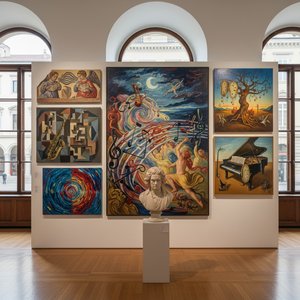
Harmonies on Canvas: Exploring the Visual Representation of Music in Art History
Explore the fascinating history of music's visual representation in art! From ancient symbolism to modern abstraction, discover how artists have captured sound and emotion on canvas. Expert insights & stunning examples.

Pietro Longhi's Venetian Scenes: A Study of Rococo Society & Domestic Life
Explore the captivating world of Pietro Longhi's Venetian scenes! Discover insightful analysis of his Rococo masterpieces & social commentary on 18th-century life. Learn about this 'Venetian Hogarth' and his lasting artistic legacy.

Топ-10 шедеврів рококо: мистецтво для вашого інтер'єру від OriginalUniqueArt.com
Відкрийте для себе 10 шедеврів рококо від Буше, Фрагонара та Ватто! Історія мистецтва, вишукані техніки та натхнення для декору вашого дому. Репродукції картин високої якості – OriginalUniqueArt.com.

The Rococo Aesthetic: Opulence, Rebellion & the Pursuit of Pleasure in 18th-Century Art
Explore the opulent world of Rococo art! Discover its origins, key artists like Watteau & Boucher, and lasting influence on design. Expert insights for collectors & enthusiasts.

Francesco Guardi: Venetian Light, Atmospheric Perspective & the Rococo to Neoclassical Transition
Explore the captivating world of Francesco Guardi, master of Venetian light and atmosphere. Discover his transition from Rococo to Neoclassicism, influence on Impressionism & investment potential with OriginalUniqueArt.